
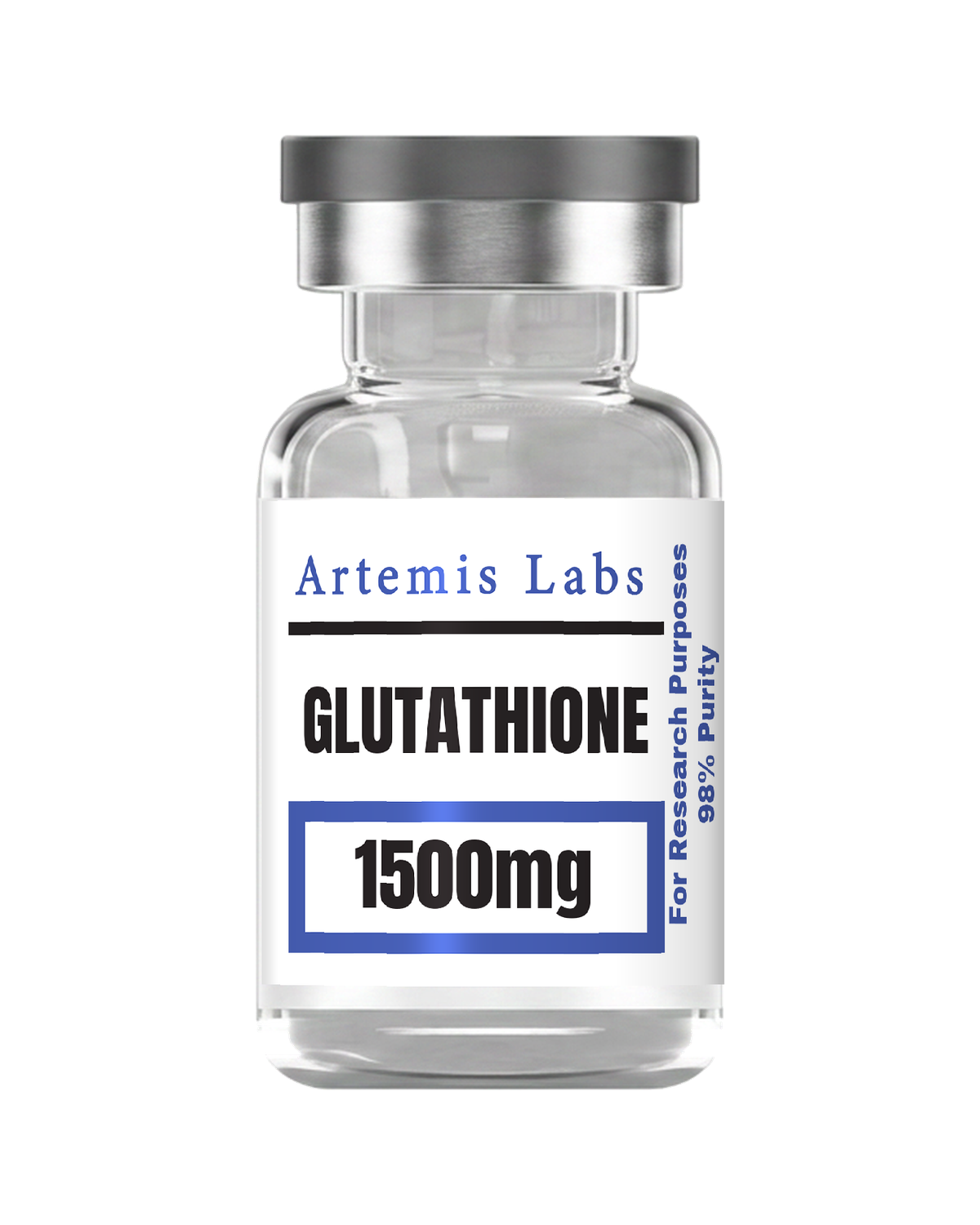
Glutathione 1500mg
$100.00
Glutathione is the cell’s main antioxidant, held at millimolar concentration inside almost every cell you have. It is a peptide, but an unusual one — built by enzymes rather than translated from a gene, and joined by a bond ordinary protein-digesting enzymes cannot cut. That single structural quirk is why getting it into the body is a harder problem than making it.
Continue readingShow less
The delivery problem is the interesting science. A single 3 g oral dose in seven volunteers produced no meaningful rise in plasma glutathione, cysteine or glutamate across 270 minutes (Witschi 1992, PMID 1362956) — consistent with the tripeptide being cleaved at the gut wall before it gets anywhere. A six-month randomised trial (n=54) did report raised glutathione across several compartments, but levels returned toward baseline after washout.
Why the literature looks split. It is split, and the split is methodological rather than a disagreement about biology. Synthesis is rate-limited by glutamate cysteine ligase, which is inhibited by glutathione itself (Meister 1983, PMID 6137189; Lu 2013, PMID 22995213) — so cysteine availability, not glutathione supply, is usually the lever. Any design assuming gut exposure produces systemic elevation needs to measure it rather than assume it.
Lyophilized tripeptide at ≥98% HPLC purity (USP monograph limit NLT 98.0%), batch-specific Certificate of Analysis.
Description
Artemis Labs supplies glutathione as a 1500 mg vial of reduced glutathione (GSH) free acid — white to off-white crystalline powder, also supplied lyophilised — to a purity specification of ≥98% (HPLC), the typical research-grade specification. That figure is a specification, not a measured lot result; lot values are established by HPLC on the accompanying Certificate of Analysis, against the USP Glutathione monograph limit of NLT 98.0% / NMT 101.0% on the dried basis. Supplied as an analytical and biochemical research reagent for in vitro, cell-culture, and IACUC-approved animal workflows, under the Research Use Agreement and State Shipping Restrictions. Not a dietary supplement, drug, or cosmetic; no human-use, dosing, administration, or reconstitution protocols are provided or supported.
Glutathione is a peptide, though not the kind most of this catalogue contains: a tripeptide, γ-Glu-Cys-Gly, assembled non-ribosomally by two ATP-dependent enzymes rather than translated from mRNA. Glutamate cysteine ligase (GCL) joins glutamate to cysteine and glutathione synthetase adds glycine; GCL is rate-limiting and feedback-inhibited by glutathione itself, leaving cysteine availability and GCL expression as the only levers over pool size (Meister, 1983, PMID 6137189; Lu, 2013, PMID 22995213). Its defining feature is the γ-glutamyl isopeptide linkage: the Glu–Cys bond runs from glutamate’s side-chain (C5) carboxyl to cysteine’s α-amino group, not from the α-carboxyl, so this is no conventional α-linked peptide and ordinary peptidases cannot cleave it. It is accordingly not a signalling peptide but a millimolar-concentration intracellular redox buffer — the dominant low-molecular-weight thiol — cycling between GSH and the disulfide GSSG as glutathione peroxidases reduce hydroperoxides at the cost of two GSH (Pei et al., 2023, PMID 36937839). Form disambiguation matters: this is reduced GSH free acid, CAS 70-18-8, C₁₀H₁₇N₃O₆S, MW 307.33 — not oxidised GSSG (CAS 27025-41-8, MW 612.6), not the sodium salt (CAS 34212-83-4, MW 329.31). GSSG appears here solely as an impurity specification (≤1.5%) — the rationale for the desiccated, light-protected cold-storage condition — never as an alternative description of the vial’s contents.
For mechanism context, internal-link investigators to the pyridine-nucleotide and mitochondrial arms of this network: NAD+, because glutathione reductase regenerates GSSG to GSH using NADPH, tying the couple’s recovery rate to pyridine-nucleotide availability (Pei et al., 2023, PMID 36937839); MOTS-c, whose research intersects this pathway through Nrf2 — Nrf2/Keap1–ARE stabilisation coordinately induces the GCL catalytic and modifier subunits that build glutathione (Wild, Moinova & Mulcahy, 2000, PMID 10741850), and an engineered LAT1-targeted MOTS-c analogue activated Nrf2 and preserved GSH and SOD levels in irradiated mouse lung (Zhang et al., 2026, PMID 42142418) — note carefully: that study used the engineered R13A-MOTS-c analogue rather than wild-type MOTS-c, and glutathione peroxidase was not among the enzymes measured; and SS-31 (Elamipretide), which binds cardiolipin and limits its peroxidation, a process counter-balanced in vivo by the GSH/GPX4 axis — GPX4 being the sole enzyme reducing membrane phospholipid hydroperoxides (Yang et al., 2014, PMID 24439385). SS-31 protects the membrane structurally; glutathione is the soluble reducing pool that chemistry draws on.
That same γ-glutamyl linkage makes delivery the central scientific problem of this compound — more interesting than the molecule. Intact GSH is degraded almost exclusively extracellularly, by γ-glutamyltransferase at the cell surface, to cysteinylglycine and then to amino acids that must be re-imported and resynthesised intracellularly (Inoue, 2016, PMID 27095217). The cycle is, in effect, a hydrolytic gate. A single 3 g oral dose in seven volunteers produced no meaningful rise in plasma glutathione, cysteine, or glutamate over 270 minutes (Witschi et al., 1992, PMID 1362956 — n = 7, acute single-dose pharmacokinetics only; reported context, not a protocol). Chronic exposure shifts stored pools modestly and reversibly: a 6-month randomised trial in 54 subjects raised glutathione across whole-blood, erythrocyte, plasma, lymphocyte, and buccal compartments, with values returning toward baseline after washout (Richie et al., 2015, PMID 24791752) — a store shift, not a new steady state, and one a placebo-controlled oral trial failed to reproduce on any oxidative-stress biomarker (Allen & Bradley, 2011, PMID 21875351). Routes bypassing intestinal GGT behave differently: sublingual delivery raised plasma glutathione and the GSH/GSSG ratio relative to oral in a 20-subject crossover (Schmitt et al., 2015, PMID 26262996) — the gate, rather than the molecule, is the operative variable. Delivery is nonetheless no surrogate for effect: a 6-month nebulised trial in 153 subjects confirmed sputum delivery yet found no difference in FEV₁, exacerbations, or quality of life (Griese et al., 2013, PMID 23631796).
Compartmentation compounds the problem. Mitochondria possess no glutathione synthetic machinery and must import GSH across the inner membrane via the dicarboxylate and 2-oxoglutarate carriers, against a charge gradient, to maintain roughly 10–15% of cellular glutathione — the principal defence against respiratory-chain superoxide (Lash, 2006, PMID 16600197; Ribas et al., 2014, PMID 25024695). Selective mitochondrial depletion sensitises cells even where total cellular glutathione appears unchanged, so whole-blood or plasma glutathione — the endpoint most supplementation work reports — is a poor proxy for the compartment that determines cell fate.
One methods point deserves stating plainly, since it silently undermines much published redox-ratio data. Measured GSSG — and therefore the GSH/GSSG ratio — is substantially a sample-handling artefact. Reported blood GSSG spans roughly 1 to more than 500 µmol/L, a spread attributable largely to method rather than biology (Rossi et al., 2002, PMID 11978601), and 5–15% of sample glutathione is artefactually oxidised during acid deproteination unless thiols are blocked first — preventable by N-ethylmaleimide derivatisation ahead of deproteination, with dichloromethane back-extraction (Giustarini et al., 2013, PMID 23928499). A redox-ratio endpoint is interpretable only where the workup blocks thiol oxidation before acid precipitation; the derivatisation chemistry belongs alongside every reported GSH/GSSG value.
Additional information
| Dosage | 1500mg |
|---|
Science & Research
Science & Research
Mechanism of Action (Glutathione Redox Cycling and Conjugation)
Glutathione is the dominant low-molecular-weight thiol in most mammalian cells, held at millimolar concentration, and nearly all of its biochemistry follows from a single atom — the sulfhydryl of its central cysteine. Three structural facts organise the rest of the mechanism: the γ-glutamyl isopeptide linkage, which shields the tripeptide from ordinary peptidases; the cysteinyl thiolate, which attacks electrophiles; and the intermolecular disulfide (GSSG) that forms when two molecules are oxidised together.
- Two-step, ATP-dependent synthesis with a feedback-inhibited rate-limiting step. Glutamate cysteine ligase (GCL) joins glutamate and cysteine to form γ-glutamylcysteine, and glutathione synthetase adds glycine; GCL is the rate-limiting enzyme and is feedback-inhibited by glutathione itself, which is why cysteine availability and GCL expression — not glycine or glutamate supply — are the two levers over pool size (Meister & Anderson, 1983, PMID 6137189; Lu, 2013, PMID 22995213).
- The γ-glutamyl cycle is the central organising fact — and the reason delivery is hard. Because the γ-glutamyl bond resists standard peptidases, intact glutathione is degraded almost exclusively extracellularly, by cell-surface γ-glutamyltransferase (GGT) to cysteinylglycine, then by dipeptidase to free amino acids that are re-imported and resynthesised into glutathione inside the cell (Inoue, 2016, PMID 27095217). The cycle is therefore an amino-acid salvage architecture, not an intact-molecule transport system — a point developed in the delivery subsection below.
- The GSH/GSSG couple and the glutathione peroxidase family. The selenocysteine-dependent glutathione peroxidases (GPX1–4, GPX6) reduce hydrogen peroxide and organic hydroperoxides at the cost of two glutathione molecules per turnover, generating GSSG; glutathione reductase regenerates the reduced form using NADPH supplied by the pentose phosphate pathway. The isoform division of labour is compartmental rather than redundant — cytosolic GPX1, gastrointestinal GPX2, plasma GPX3, and the phospholipid-hydroperoxide-specific GPX4 (Pei et al., 2023, PMID 36937839). The NADPH dependency is what ties the entire redox couple to pyridine-nucleotide availability.
- Phase II conjugation and the mercapturic acid pathway. Glutathione S-transferases — the cytosolic alpha, mu, pi, theta, sigma, zeta and omega classes, plus the membrane-associated MAPEG family and mitochondrial kappa class — catalyse thiolate attack on electrophilic substrates; the resulting S-conjugates are exported by MRP/ABCC transporters and processed to mercapturic acids for excretion. GSTs additionally act through non-catalytic ligand binding and modulation of MAP-kinase signalling, so their role is not confined to detoxification chemistry (Hayes, Flanagan & Jowsey, 2005, PMID 15822171).
- Nrf2/Keap1–ARE transcriptional control. Stabilisation of Nrf2 and its binding at antioxidant-response elements upregulates the GCL catalytic and modifier subunits (GCLC/GCLM) coordinately with GSTs and NQO1, making Nrf2 the master transcriptional determinant of synthetic capacity rather than of moment-to-moment redox state (Wild, Moinova & Mulcahy, 2000, PMID 10741850).
- S-glutathionylation as reversible post-translational regulation. Formation of mixed disulfides between glutathione and reactive protein cysteines regulates metabolic enzymes, ion channels, transcription factors and cytoskeletal proteins, and is reversed enzymatically by glutaredoxins — a signalling role Mieyal and colleagues place on par with phosphorylation (Mieyal et al., 2008, PMID 18774901), with specific implications catalogued across neurodegenerative models (Sabens Liedhegner, Gao & Mieyal, 2012, PMID 22066468).
- GSNO as the nitric-oxide carrier. S-nitrosoglutathione functions as a transnitrosating agent and an intracellular reservoir of nitric-oxide bioactivity, with its own dedicated catabolic enzyme — GSNO reductase (ADH5) — establishing glutathione as a node in nitric-oxide signalling and not only in peroxide handling (Broniowska, Diers & Hogg, 2013, PMID 23416062).
- Mitochondrial compartmentation — the pool that determines cell fate. Mitochondria possess no glutathione synthetic machinery and must import the tripeptide across the inner membrane against a charge gradient via the dicarboxylate and 2-oxoglutarate carriers (Lash, 2006, PMID 16600197). That pool is only ~10–15% of cellular glutathione yet constitutes the principal defence against respiratory-chain superoxide, and selective mitochondrial depletion sensitises cells to death stimuli even when total cellular glutathione appears unchanged (Ribas, García-Ruiz & Fernández-Checa, 2014, PMID 25024695). This compartmental asymmetry is the single most important caveat attached to any whole-blood measurement.
- The glutathione–GPX4 ferroptosis axis is bidirectional. Erastin inhibition of the system xc⁻ cystine/glutamate antiporter starves cells of cysteine and therefore of glutathione, producing an iron-dependent, non-apoptotic death that Dixon and colleagues named ferroptosis (Dixon et al., 2012, PMID 22632970). Because GPX4 is the only enzyme capable of reducing membrane phospholipid hydroperoxides, either glutathione depletion or direct GPX4 inhibition by RSL3 produces lethal lipid peroxidation (Yang et al., 2014, PMID 24439385). The axis is therefore a target in both directions — a fact with direct consequences for experimental design, treated in the counter-evidence subsection.
Research Contexts
Each context below is reported as published findings, with the design limitations placed alongside the numbers rather than deferred to a footnote. None of it constitutes an Artemis Labs efficacy claim, and most of the human literature concerns oral, intravenous, liposomal or nebulised formulations — not the reduced-glutathione reference powder supplied here.
Hepatic Biology and Detoxification
The classical work in this domain established a threshold model rather than a graded one: in acetaminophen hepatotoxicity, covalent binding of the reactive metabolite and subsequent necrosis occur only after hepatic glutathione falls below a critical level, and repletion of cysteine or glutathione is protective — the mechanistic basis on which N-acetylcysteine became the clinical antidote (Mitchell et al., 1973, PMID 4746329). Human liver data are far thinner: an open-label, single-arm study in non-alcoholic fatty liver disease enrolled 34 subjects with 29 completing, applying oral glutathione at 300 mg/day for four months following a three-month lifestyle run-in, and reported significant ALT reduction alongside lower triglycerides, non-esterified fatty acids and ferritin (Honda et al., 2017, PMID 28789631). That trial was uncontrolled, unblinded and preceded by a lifestyle intervention; it is hypothesis-generating only and cannot separate compound effect from regression to the mean.
Neurodegeneration
The strongest human observation in this field is anatomical, not interventional: post-mortem substantia nigra from Parkinson’s disease cases showed glutathione reduced by approximately 40%, a deficit not observed in the other neurodegenerative disorders examined in the same series (Sian et al., 1994, PMID 8080242). The interventions built on that target have failed. An early open-label intravenous report described clinical improvement (Sechi et al., 1996, PMID 8938817), but it was not reproduced under control: intravenous glutathione at 1,400 mg three times weekly for four weeks in 21 subjects produced no significant UPDRS difference versus placebo (Hauser et al., 2009, PMID 19230029), and a Phase IIb intranasal trial in 45 subjects found neither the 100 mg nor the 200 mg three-times-daily arm superior to placebo (Mischley et al., 2017, PMID 28436395). Trial-administered figures are reported as published scientific context only; no route, schedule or quantity is recommended or supported here. The mechanistic reading of a real target with failing interventions is compartmental: the lesion is intracellular and nigral, whereas exogenous glutathione is delivered to an extracellular compartment that the γ-glutamyl cycle immediately dismantles.
Chemoprotection (Toxicity Reduction, Not Anti-Tumour Activity)
This is the domain with the most consistent controlled human signal, and the endpoint is toxicity, not tumour response. In colorectal cancer, 52 subjects receiving glutathione at 1,500 mg/m² intravenously before oxaliplatin showed grade 2–4 neuropathy in 2 versus 11 subjects at eight cycles (P = .003) and 3 versus 8 at twelve cycles (P = .004), while response rates remained statistically indistinguishable at 26.9% versus 23.1% — the co-administration reduced neuropathy without blunting cytotoxic efficacy in that cohort (Cascinu et al., 2002, PMID 12177109). In ovarian cancer, 151 subjects receiving cisplatin with or without glutathione showed 58% versus 39% completing six full-dose cycles (P = 0.04), better preservation of creatinine clearance (P = 0.006) and quality-of-life gains (Smyth et al., 1997, PMID 9261526). Both are oncology-supportive-care trials in supervised clinical settings using intravenous formulations; the finding is dose-tolerance preservation, and it sits in direct tension with the oncology paradox disclosed below.
Dermatology and Melanogenesis (Reported Published Observations Only)
The melanogenesis literature is described here strictly as what published studies observed. Proposed mechanisms include tyrosinase inhibition, interference with tyrosinase intracellular trafficking, quenching of free radicals and peroxides, and a shift in the eumelanin-to-pheomelanin balance — set out alongside an explicit facts-versus-myths critique of the field’s weaker claims (Sonthalia, Daulatabad & Sarkar, 2016, PMID 27088927). The controlled human record is small, short and endpoint-soft. A 4-week randomised trial of oral glutathione at 500 mg/day in 60 subjects reached statistical significance versus placebo at only 2 of 6 measured anatomical sites (right face P = 0.021, left forearm P = 0.036), which is a weak and internally inconsistent result rather than a demonstrated effect (Arjinpathana & Asawanonda, 2012, PMID 20524875). A three-arm comparison of oral glutathione, oxidised glutathione and placebo ran 12 weeks (Weschawalit et al., 2017, PMID 28490897), and a 2×2 oral-plus-topical design in 46 subjects ran 8 weeks (Wahab et al., 2021, PMID 33871071). All three studied oral or topical consumer formulations over 4–12 weeks with small samples and instrument-dependent pigmentation endpoints. Artemis Labs does not offer, support or imply any cosmetic, pigmentation or skin-lightening application for this compound; the literature is catalogued because a research audience is entitled to see it, including its weakness.
Exercise and Metabolic Research
A double-blind crossover study in 8 men applying glutathione at 1 g/day for two weeks reported lower blood lactate accumulation during exercise (3.4 ± 1.1 versus 2.9 ± 0.6 mM) (Aoi et al., 2015, PMID 25685110). An n of 8 in a crossover design is preliminary by any standard and should not be treated as an established physiological effect. In diabetes, stable-isotope work showed that glutathione synthesis is diminished in uncontrolled disease and is restored by supplying cysteine and glycine — locating the defect in precursor supply rather than in enzymatic capacity (Sekhar et al., 2011, PMID 20929994).
Cystic Fibrosis
Cystic fibrosis carries the most mechanistically specific rationale in the entire glutathione literature, because CFTR is itself a glutathione-conducting channel. CF epithelia show abnormal glutathione transport and an extracellular deficit (Gao, Kim & Forman, 1999, PMID 10409237); CFTR has been characterised as the primary apical glutathione transporter (Gould et al., 2012, PMID 22266045); and dysfunction of the glutathione system has been argued to be pivotal to CF pathogenesis rather than incidental to it (Hudson, 2004, PMID 15658882). The definitive trial was nonetheless negative. A randomised study nebulised 646 mg every 12 hours for six months in 153 subjects (73 glutathione, 80 placebo) and found no difference in FEV₁ on the primary analysis (P = 0.180; AUC P = 0.205), in pulmonary exacerbations, or in quality of life — despite confirmed delivery of glutathione to sputum (Griese et al., 2013, PMID 23631796). Honest disclosure cuts both ways here: an exploratory analysis did find a transient advantage of roughly +100 mL and +2.2% predicted FEV₁ over placebo that reached significance at three months and did not persist to the trial’s end. Reporting the trial as flatly null without that signal would be the same selective reporting this page criticises elsewhere. Trial quantities are reported as published context; the primary outcome is the point, and it is a null one.
Aging and Redox Capacity
Stable-isotope flux measurement compared 8 elderly and 8 younger subjects cross-sectionally and found lower glutathione concentrations and lower fractional and absolute synthesis rates in the elderly group. In a separate, second phase, the same 8 elderly subjects were restudied after two weeks of cysteine plus glycine supplementation, with erythrocyte glutathione rising 94.6% and absolute synthesis rate 230.9%, alongside reduced F₂-isoprostanes (Sekhar et al., 2011, PMID 21795440). The design distinction matters and is frequently misreported: the 8-versus-8 comparison is the elderly-versus-young observation, whereas the supplementation effect is a within-subject before-and-after measurement in 8 subjects with no placebo arm and no blinding. It is not a controlled 8-versus-8 trial. The intervention was also precursor amino acids, not glutathione. Independently, age-dependent erythrocyte cysteine efflux has been shown to correlate with glutathione status, consistent with precursor availability as the age-associated constraint (Kumar & Bandyopadhyay, 2013, PMID 23442131).
Delivery and Bioavailability Science
The delivery problem is scientifically more interesting than the molecule, and it is where most vendor claims about this compound quietly break. The γ-glutamyl cycle functions as a hydrolytic gate: intact glutathione presented at a luminal or extracellular surface is cleaved by GGT and dipeptidase, its constituent amino acids absorbed, and glutathione resynthesised intracellularly at whatever rate GCL and cysteine supply permit (Inoue, 2016, PMID 27095217; Lu, 2013, PMID 22995213). Any experimental design that assumes intact-molecule systemic exposure inherits that gate as an untested premise.
Acute oral administration does not raise systemic glutathione. A single 3 g oral dose in 7 volunteers produced no meaningful rise in plasma glutathione, cysteine or glutamate across 270 minutes of sampling (Witschi et al., 1992, PMID 1362956). This is the foundational negative result in the field and it is rarely quoted in commercial material.
Chronic oral administration shifts stores modestly, and the shift reverses. A 6-month randomised trial in 54 subjects comparing 250 and 1,000 mg/day reported increased blood glutathione at 1, 3 and 6 months in both arms, across whole blood, erythrocyte, plasma, lymphocyte and buccal-cell compartments — with values returning toward baseline after washout (Richie et al., 2015, PMID 24791752). The reversibility matters: it indicates a maintained supply-driven equilibrium rather than a durable expansion of synthetic capacity. Vendor copy in this category routinely cites Richie and omits Witschi. Both belong on the same page, because the acute-negative and chronic-positive results are not in conflict — they describe different exposure regimes measured in different compartments, and only presenting both makes the compartment-and-duration dependency visible.
Formulation comparisons exist but rest on thin evidence. A liposomal pilot in 12 subjects, single-arm and one month long, reported increases of up to 40% in whole blood, 25% in erythrocytes, 28% in plasma and 100% in peripheral blood mononuclear cells, with natural-killer cytotoxicity up to 400% higher and 8-isoprostane down 35% (Sinha et al., 2018, PMID 28853742). Those effect sizes are implausibly large for an uncontrolled n = 12 pilot, and the natural-killer figure in particular should be read as an assay observation in a small unblinded cohort, not as a physiological magnitude. A crossover study in 20 subjects with metabolic syndrome compared sublingual glutathione, oral glutathione and N-acetylcysteine, and found the sublingual route raised total and reduced plasma glutathione and the GSH/GSSG ratio relative to oral (P = 0.003) (Schmitt et al., 2015, PMID 26262996). The direction of that result is consistent with bypassing intestinal GGT being the operative variable rather than any property of the formulation excipients — a mechanistically coherent reading, but one drawn from 20 subjects.
The precursor strategy is the mechanistically cleanest route, and its evidence base has a concentration problem. Because GCL is rate-limited by cysteine, delivering cysteine in a form that survives the gut is a more direct intervention than delivering the tripeptide: N-acetylcysteine functions as a cysteine prodrug and is the established acetaminophen antidote (Atkuri et al., 2007, PMID 17602868). The GlyNAC literature combines glycine and N-acetylcysteine on the reasoning that both glutathione constituents may be limiting in aging (Sekhar, 2021, PMID 34587244; Kumar et al., 2023, PMID 35975308). Nearly all of this work traces to a single research group, with small sample sizes and an unusually broad list of reported outcomes across multiple organ systems from single trials. Independent replication by unrelated investigators is the missing piece, and until it exists the GlyNAC result set should be treated as a promising single-laboratory finding rather than an established one. The indirect route — transcriptional upregulation of GCL through Nrf2/ARE — avoids the hydrolytic gate entirely by raising synthetic capacity rather than supplying substrate (Wild, Moinova & Mulcahy, 2000, PMID 10741850).
Compartment selection is the decisive methodological choice. Whole blood, plasma, erythrocyte, lymphocyte and buccal compartments turn over at different rates and respond differently to the same exposure (Richie et al., 2015, PMID 24791752) — and none of them reports on the mitochondrial pool that governs cell fate (Lash, 2006, PMID 16600197; Ribas et al., 2014, PMID 25024695).
Counter-Evidence (Honest Disclosure)
Consistent with the content rules governing every Artemis Labs page, the negative, null and contradictory literature is surfaced here rather than omitted. This compound has an unusually rich counter-evidence set, and none of it appears on the commercial pages that dominate search results for it.
- Oral systemic availability is negligible on acute administration. No meaningful rise in plasma glutathione, cysteine or glutamate followed a single 3 g oral dose in 7 volunteers over 270 minutes (Witschi et al., 1992, PMID 1362956). Any design that assumes gut exposure produces systemic glutathione elevation requires measurement, not assumption.
- The literature on oral glutathione is genuinely split, and the split is methodological. A placebo-controlled oral trial found no change in any oxidative-stress biomarker, including glutathione status itself (Allen & Bradley, 2011, PMID 21875351), directly opposing the positive 6-month result of Richie et al., 2015 (PMID 24791752). The discrepancy is attributed to exposure duration and to compartment choice — plasma turns over rapidly, erythrocytes do not. Compartment and duration therefore determine whether an effect is detected at all, which makes this a live reproducibility hazard rather than a resolved disagreement.
- Delivery was confirmed and the effect was still absent — the cleanest available dissociation. In the 153-subject nebulised cystic-fibrosis trial, sputum glutathione and its metabolites rose as intended, yet there was no reduction in protein or lipid oxidative-damage markers and no anti-inflammatory or antiproteolytic action, alongside null primary clinical endpoints (Griese et al., 2013, PMID 23631796). Delivering glutathione to a tissue and changing that tissue’s redox phenotype are demonstrably separate events. Delivery is not a surrogate for effect, and this trial is the strongest published proof of that in either direction. Reported in full: an exploratory analysis did show a transient FEV₁ advantage over placebo at three months (~+100 mL, +2.2% predicted) that did not persist — a real signal that does not rescue the primary result, and one this page states rather than omits.
- Glutathione synthesis is required for tumour initiation, and glutathione confers therapeutic resistance. Loss of Gclm prevented malignant transformation in a mouse mammary model, and combined inhibition of the glutathione and thioredoxin systems was synergistically lethal to tumour cells (Harris et al., 2015, PMID 25620030). Elevated glutathione preserves intracellular cysteine and detoxifies xenobiotics, and is characterised in cancer biology as a resistance mechanism against chemotherapeutic and radiation-induced oxidative injury (Bansal & Simon, 2018, PMID 29915025). In oncology models, high glutathione is a liability rather than a benefit — which sits in unresolved tension with the chemoprotection trials reported above, where co-administration reduced toxicity without measurably reducing response in those specific cohorts.
- Antioxidant supplementation accelerated tumour progression and doubled metastasis in mouse models. Dietary N-acetylcysteine and vitamin E markedly increased tumour progression and reduced survival in B-RAF- and K-RAS-driven murine lung cancer, acting through reduced reactive-oxygen species, reduced DNA damage and reduced p53 activity (Sayin et al., 2014, PMID 24477002); N-acetylcysteine doubled lymph-node metastases in a melanoma model without changing primary tumour size (Le Gal et al., 2015, PMID 26446958). These are read-across findings and must be labelled as such: the interventions were N-acetylcysteine and vitamin E — reactive-oxygen-species-lowering agents that sit upstream of, and partially overlap, the glutathione axis — not glutathione itself. The inference is suggestive, not identical, and it is presented here because omitting it would be dishonest, not because the equivalence is established.
- Ferroptosis research inverts the premise entirely, and exogenous glutathione can invalidate the assay. Glutathione depletion is a deliberate therapeutic strategy: GPX4 inhibition drives lethal lipid peroxidation (Yang et al., 2014, PMID 24439385), and cystine import through system xc⁻ supplies the cysteine that sustains both glutathione and coenzyme A to suppress ferroptosis, such that Slc7a11 deletion or systemic cyst(e)inase induced tumour-selective ferroptosis in pancreatic models (Badgley et al., 2020, PMID 32241947; mechanistic origin in Dixon et al., 2012, PMID 22632970). In this literature exogenous glutathione or cysteine functions as a rescue agent that can mask the phenotype under study — a recognised and common source of confounded assays. Investigators working in ferroptosis models should treat glutathione as an interfering variable to be controlled, not a neutral additive.
- Measured GSSG — and therefore the GSH/GSSG ratio — is substantially a sample-handling artefact. Reported blood GSSG values span roughly 1 to more than 500 µmol/L across the literature, a range driven largely by method rather than biology (Rossi et al., 2002, PMID 11978601). Quantitatively, 5–15% of sample glutathione is artefactually oxidised during acid deproteination, and the artefact is preventable by derivatising thiols with N-ethylmaleimide before deproteination, followed by dichloromethane back-extraction (Giustarini et al., 2013, PMID 23928499). The practical consequence is unambiguous: redox-ratio endpoints are interpretable only if the workup blocks thiol oxidation before acid precipitation, and any reported GSH/GSSG value should be accompanied by its derivatisation chemistry. A ratio reported without that detail cannot be compared against a ratio that has it.
- Whole-blood and plasma glutathione — the endpoint most supplementation trials use — is a poor proxy for the pool that determines cell fate. Mitochondria hold only ~10–15% of cellular glutathione, cannot synthesise it, and depend on carrier-mediated import; selective mitochondrial depletion sensitises cells even when total glutathione measures normal (Lash, 2006, PMID 16600197; Ribas et al., 2014, PMID 25024695). Any assertion that an intervention “raises glutathione” is, in the usual case, measuring the wrong compartment.
- Severe adverse events reported with intravenous glutathione — framed precisely. The published severe-adverse-event signal for this molecule is concentrated in unregulated parenteral cosmetic use, not in the analytical, in-vitro or supervised-clinical literature. A case report documents Stevens–Johnson syndrome / toxic epidermal necrolysis following intravenous glutathione given for cosmetic purposes (Johnson et al., 2025, PMID 40057759). The compiled adverse-event spectrum across that use setting includes SJS/TEN, severe abdominal pain, thyroid dysfunction, renal dysfunction, air embolism, sepsis arising from unsterile administration, and counterfeit product — with one intravenous trial reporting liver dysfunction in 32% of subjects and one case of anaphylactic shock (Sonthalia et al., 2018, PMID 29445569; see also Sonthalia et al., 2016, PMID 27088927, and a 2025 case-based review, PMID 40013212). Several of these harms are attributable to the administration setting — non-sterile technique, unverified product, absent medical supervision — rather than to the molecule’s intrinsic chemistry, and several are not separable from it on the available evidence. Both halves of that statement are true, and stating the distinction explicitly is the honest position. Blurring it in either direction — implying the compound is harmless, or implying the case reports characterise research-grade analytical material — would misrepresent the literature.
Clinical / Regulatory Status (Reference Only — Not a Claim)
- United States FDA. There is no FDA-approved injectable glutathione product for skin lightening or for general wellness. The agency’s consumer update states that it has not approved any injectable skin-lightening product and identifies risks including infection, damage to nerves and blood vessels, and toxic systemic reactions — FDA consumer update.
- Enforcement precedent (2017). A consent decree of permanent injunction was entered in the District of New Jersey against Flawless Beauty LLC and RDG Imports LLC concerning unapproved and misbranded skin-whitening drugs, including injectables; seized products included Relumins Advanced Glutathione and Tatiomax, and the injunction required recall and destruction — Department of Justice announcement. Cited as a matter of public record establishing that this compound’s cosmetic-injectable market has drawn federal enforcement.
- Compounding (503A). Glutathione is not among the six substances codified at 21 CFR 216.23. FDA’s Pharmacy Compounding Advisory Committee voted 8–5 with one abstention in June 2022 to recommend adding glutathione to the final 503A Bulks List; that vote is advisory and is not binding on FDA. Interim Category 1/2/3 placement is unverified and is not asserted here, and 503B outsourcing-facility status is unknown. Artemis Labs is not a compounding pharmacy, not an outsourcing facility, and does not supply material for compounding.
- Philippines FDA Advisory No. 2019-182. The clearest explicit regulator action on this molecule: injectable glutathione is approved in that jurisdiction only as an adjunct in cisplatin chemotherapy and not for cosmetic skin lightening, on the stated grounds that no published trials or dosing guidelines support the cosmetic use, and citing hepatic, renal and neurologic toxicity, Stevens–Johnson syndrome, HIV/HBV/HCV transmission risk from non-sterile administration, and a theoretical long-term skin-cancer risk premised on melanin suppression — FDA Philippines Advisory 2019-182.
- WADA. Glutathione is not a named prohibited substance on the WADA Prohibited List; the current list should be verified directly at wada-ama.org rather than taken from any vendor page. The route, however, is restricted independently of the substance: Prohibited Method M2.2 prohibits intravenous infusions and injections exceeding 100 mL per 12-hour period except where received in a hospital, during a surgical procedure, or in a clinical diagnostic investigation — a Specified Method since 1 January 2021. USADA states explicitly that intravenous “antioxidant therapies” offered by boutique and concierge clinics fall under this prohibition — USADA IV infusions explanatory note. Any athlete subject to anti-doping jurisdiction should read M2.2 as governing the method regardless of what is infused.
- State-level and shipping restrictions.Unknown. No glutathione-specific state restriction is asserted here, because none has been verified; a fabricated restriction would be as much a failure of accuracy as a fabricated citation. General shipping policy is documented at State Shipping Restrictions.
- Scope of every reference above. All mechanistic material describes in vitro, cell-culture or animal research unless explicitly identified as human trial data. Human trial data described above involved oral, intravenous, intranasal, sublingual, liposomal or nebulised formulations — not the reduced-glutathione research powder supplied here — and are cited as reference context, not as Artemis Labs efficacy or safety claims. No dosing, reconstitution, administration or human-use guidance is provided or supported.
Stacking Rationale
Stacking Rationale
Glutathione sits at the intersection of several pathways that other Artemis Labs reference compounds also engage — thiol redox cycling, Nrf2/ARE-driven antioxidant gene expression, membrane lipid-peroxidation control, and cysteine supply. The rationales below describe published mechanism overlap only, drawn from the literature cited in §3 and on the linked product pages. No human protocols are implied.
-
Glutathione + NAD+ — the tightest biochemical link in the catalogue. Glutathione peroxidases oxidise two GSH to GSSG in the course of reducing hydrogen peroxide and organic hydroperoxides; glutathione reductase then regenerates GSH using NADPH supplied by the pentose phosphate pathway (Pei et al., 2023, PMID 36937839). The GSH/GSSG couple is therefore not self-sustaining — its recycling capacity is tied to pyridine-nucleotide availability, which is precisely what NAD+-axis research interrogates. Note the distinction carefully: the reductase co-factor is NADPH, not NAD+ itself, and the two pools are separately regulated; the pairing is studied because the pyridine-nucleotide network is shared, not because the molecules are interchangeable. This is also the one glutathione pairing the research-supply market has itself converged on — a co-packaged combination sold by multiple suppliers, which is a signal of research interest rather than evidence of an effect.
-
Glutathione + MOTS-c — converging on Nrf2, with the overlap stated only as far as the measurements go. Nrf2/Keap1–ARE stabilisation coordinately upregulates the GCL catalytic and modifier subunits that build glutathione (Wild et al., 2000, PMID 10741850), and an engineered LAT1-targeted analogue, R13A-MOTS-c, activated Nrf2 — nuclear translocation and HO-1 induction, abolished by Nrf2 inhibition or knockout — and preserved GSH and SOD levels in irradiated mouse lung (Zhang et al., 2026, PMID 42142418). Two scope limits belong in the same breath: that study used the engineered R13A analogue, not wild-type MOTS-c (wild-type required roughly twice the concentration to match it), and the authors state explicitly that HO-1 was the only Nrf2 downstream target assessed — NQO1 and GCLC were not examined, and glutathione peroxidase was not measured. Separately, MOTS-c has been identified as targeting SLC7A11, the cystine/glutamate antiporter, in a mechanical-stress (microgravity) spermatogenesis model, where it suppressed ferroptosis (Liu et al., 2026, PMID 41933740) — that study measured neither cysteine nor glutathione; the step from SLC7A11-imported cystine to cysteine to glutathione synthesis is canonical transporter biology and the rate-limiting role of cysteine supply (Lu, 2013, PMID 22995213), not a finding of that paper. What remains genuinely non-obvious, and is well supported, is that glutathione peroxidase cannot function without GSH as its reducing substrate — any intervention that raises GPX activity raises demand on a pool the enzyme consumes two molecules at a time (Pei et al., 2023, PMID 36937839).
-
Glutathione + SS-31 (Elamipretide) — structural membrane protection beside the soluble reducing pool. SS-31 is characterised as a mitochondria-targeted tetrapeptide that binds cardiolipin and limits cardiolipin peroxidation at the inner membrane. In vivo, membrane phospholipid hydroperoxides are counter-balanced by the GSH/GPX4 axis: GPX4 is the only enzyme that reduces phospholipid hydroperoxides in situ, and glutathione depletion or direct GPX4 inhibition produces lethal lipid peroxidation (Yang et al., 2014, PMID 24439385; GPX4’s phospholipid-hydroperoxide specificity, Pei et al., 2023, PMID 36937839). A second, harder constraint makes the pairing mechanistically interesting rather than merely additive: mitochondria carry no glutathione synthetic machinery and must import it through inner-membrane dicarboxylate and 2-oxoglutarate carriers against a charge gradient (Lash, 2006, PMID 16600197; Ribas et al., 2014, PMID 25024695). The mitochondrial pool is the compartment SS-31 research concerns and the compartment whole-blood glutathione measurement fails to report.
-
Glutathione + GHK-Cu — the best-measured glutathione-pathway overlap in this set. In C. elegans, GHK-Cu delayed aging with coordinated mitochondrial regulation and activation of the DAF-16/SKN-1 pathways (FOXO and Nrf2/CNC-family orthologues respectively), and — directly relevant here — upregulated gcs-1, the γ-glutamylcysteine synthetase orthologue that catalyses the rate-limiting step of glutathione synthesis, together with gst-4 (glutathione S-transferase) and sod-3 (Wen, Zhao et al., 2026, PMID 42084774). SKN-1 is the same transcription-factor family that drives GCLC/GCLM expression in mammals and therefore glutathione synthetic capacity (Wild et al., 2000, PMID 10741850). Separately, in a zebrafish-larvae inflammation model GHK-Cu reduced nitric oxide and reactive-oxygen-species levels and improved superoxide dismutase activity (Hu, Zhang & Wang, 2026, PMID 41997403) — SOD was the only antioxidant enzyme measured in that study; no GSH, GSSG, or GPX endpoint was assessed, and the authors are employed by cosmetics-industry entities advocating GHK-Cu as a functional cosmetic ingredient. The C. elegans lifespan result is an invertebrate model finding, not a human longevity claim.
-
Glutathione + 5-Amino-1MQ — a precursor-supply link, stated precisely. 5-Amino-1MQ inhibits nicotinamide N-methyltransferase (NNMT), an enzyme that consumes S-adenosylmethionine (SAM) as its methyl donor. SAM is also the entry metabolite of the transsulfuration pathway, which converts homocysteine-derived sulphur to cysteine — and cysteine availability, together with GCL expression, constitutes one of the only two levers over glutathione pool size, because GCL is rate-limiting and feedback-inhibited by glutathione itself (Meister & Anderson, 1983, PMID 6137189; Lu, 2013, PMID 22995213). The connection is a plausible metabolic-flux hypothesis inferred from established pathway architecture — no published study has measured glutathione synthesis under NNMT inhibition, and it should be treated as an experimental question, not a demonstrated result.
-
Longevity-research context — glutathione slots beside the mitochondrial and antioxidant compounds in longevity-research architecture (MOTS-c, SS-31, GHK-Cu); the oxidative-stress hallmark framing is developed further in the anti-aging peptides guide and the Longevity Quartet brief.
No dosing, frequency, route, or human protocol is provided or implied. Stacking commentary is restricted to in-vitro and preclinical research-design rationale. Two additional cautions apply specifically to glutathione and belong in any experimental design: exogenous glutathione and cysteine act as rescue agents in ferroptosis assays and can mask the phenotype under study (Badgley et al., 2020, PMID 32241947), and in oncology models elevated glutathione is a resistance mechanism rather than a benefit (Harris et al., 2015, PMID 25620030; Bansal and Simon, 2018, PMID 29915025). Co-administration in any redox-endpoint experiment is a confound to control for, not an assumed additive effect.
Common Questions
Common Questions
What is glutathione?
Glutathione is an endogenous tripeptide — L-γ-glutamyl-L-cysteinylglycine, molecular formula C10H17N3O6S, molecular weight 307.33 g/mol, CAS 70-18-8. It is the dominant low-molecular-weight thiol in animal cells, present at millimolar concentration, and its defining chemistry is the sulfhydryl group on the central cysteine residue. That single thiol supports four distinct functions in the published literature: hydroperoxide reduction through the glutathione peroxidases, phase II electrophile conjugation through the glutathione S-transferases, reversible protein S-glutathionylation, and nitric oxide storage as S-nitrosoglutathione. Artemis Labs supplies reduced glutathione (GSH) free acid as a laboratory research reagent. For research use only — not for human or veterinary use.
Is glutathione a peptide?
Yes — with a qualifier that matters more than the answer. Glutathione is a genuine tripeptide, γ-Glu-Cys-Gly, but it is non-ribosomal: it is not transcribed and translated like a signalling peptide, it is assembled enzymatically in two ATP-dependent steps. Glutamate cysteine ligase (GCL) joins glutamate to cysteine, then glutathione synthetase adds glycine; GCL is the rate-limiting step and is feedback-inhibited by glutathione itself (Meister and Anderson, 1983, PMID 6137189; Lu, 2013, PMID 22995213).
The structural nuance is the γ-glutamyl isopeptide bond. The Glu–Cys linkage runs from the γ- (side-chain, C5) carboxyl of glutamate to the α-amino group of cysteine — not from the α-carboxyl, as in an ordinary peptide bond. Only the Cys–Gly bond is a standard α-peptide bond. Because ordinary peptidases act on α-linkages, they cannot cleave the γ-glutamyl bond, and intact glutathione is degraded almost exclusively extracellularly, by γ-glutamyltransferase at the cell surface, into cysteinylglycine and then free amino acids that are re-imported and resynthesised inside the cell (Inoue, 2016, PMID 27095217). This is why writing glutathione as “ECG” in one-letter code is chemically misleading, and it is the same architectural fact that explains the delivery problem described below. Glutathione is a peptide by composition and a metabolite by behaviour; it is not a receptor-binding signalling peptide.
How does glutathione work?
Through the cysteinyl thiol, in five mechanistically distinct ways.
Hydroperoxide reduction. Glutathione peroxidases GPX1–4 and GPX6 — selenocysteine enzymes with a division of labour by compartment (cytosolic GPX1, gastrointestinal GPX2, plasma GPX3, phospholipid-hydroperoxide-specific GPX4) — reduce hydrogen peroxide and organic hydroperoxides at the cost of two GSH oxidised to the disulfide GSSG. Glutathione reductase regenerates GSH using NADPH from the pentose phosphate pathway (Pei et al., 2023, PMID 36937839).
Phase II conjugation. The glutathione S-transferase superfamily (alpha, mu, pi, theta, sigma, zeta and omega classes, plus the MAPEG membrane enzymes and mitochondrial kappa) catalyses thiolate attack on electrophiles; the resulting S-conjugates are exported by MRP/ABCC transporters and excreted as mercapturic acids. GSTs also act non-catalytically as ligand-binding proteins and as modulators of MAP-kinase signalling (Hayes et al., 2005, PMID 15822171).
Protein S-glutathionylation. A reversible mixed disulfide forms on protein cysteines and is reversed by glutaredoxins, regulating metabolic enzymes, ion channels, transcription factors and cytoskeletal proteins — a post-translational modification described in the literature as being on par with phosphorylation in regulatory scope (Mieyal et al., 2008, PMID 18774901; neurodegenerative implications, Sabens Liedhegner et al., 2012, PMID 22066468).
Nitric oxide handling. S-nitrosoglutathione acts as a transnitrosating agent and nitric oxide reservoir, catabolised by GSNO reductase (ADH5) (Broniowska et al., 2013, PMID 23416062).
Transcriptional control of its own supply. Nrf2/Keap1–ARE stabilisation upregulates both GCL subunits coordinately with the GSTs and NQO1 (Wild et al., 2000, PMID 10741850).
One compartmental caveat governs the interpretation of all of the above: mitochondria possess no glutathione synthetic machinery and import glutathione against a charge gradient via the dicarboxylate and 2-oxoglutarate carriers. That pool is roughly 10–15% of cellular glutathione but is the critical defence against respiratory-chain superoxide, and selective mitochondrial depletion sensitises cells even when total cellular glutathione appears normal (Lash, 2006, PMID 16600197; Ribas et al., 2014, PMID 25024695).
What does the latest research show?
The most consequential recent work is bidirectional, and it does not read as a story about raising glutathione.
Glutathione as a therapeutic target to remove, not add. Ferroptosis research inverted the premise: erastin inhibition of system xc⁻ starves cells of cysteine and therefore glutathione (Dixon et al., 2012, PMID 22632970); GPX4 is the sole enzyme reducing membrane phospholipid hydroperoxides, so glutathione depletion or RSL3 produces lethal lipid peroxidation (Yang et al., 2014, PMID 24439385); and Slc7a11 deletion or systemic cyst(e)inase induced tumour-selective ferroptosis in pancreatic models (Badgley et al., 2020, PMID 32241947). In parallel, Gclm loss prevented malignant transformation and combined glutathione/thioredoxin inhibition was synergistically lethal (Harris et al., 2015, PMID 25620030), while glutathione’s preservation of cysteine and detoxification of xenobiotics confers therapeutic resistance (Bansal and Simon, 2018, PMID 29915025).
A methods finding with immediate practical consequence. Reported blood GSSG values span roughly 1 to more than 500 µmol/L — a range driven largely by method rather than biology (Rossi et al., 2002, PMID 11978601) — because 5–15% of sample GSH is artefactually oxidised during acid deproteination unless N-ethylmaleimide derivatisation precedes it, with dichloromethane back-extraction (Giustarini et al., 2013, PMID 23928499). Any GSH/GSSG ratio reported without the derivatisation chemistry described alongside it is of limited interpretability.
Precursor strategies remain the mechanistically cleanest route and the least independently replicated. Glycine plus N-acetylcysteine work reports broad outcome improvements (Sekhar, 2021, PMID 34587244; Kumar et al., 2023, PMID 35975308), building on stable-isotope flux data in which two weeks of cysteine plus glycine raised erythrocyte glutathione 94.6% and absolute synthesis rate 230.9% in 8 elderly participants — an uncontrolled, unblinded before-and-after phase, not a placebo-controlled comparison (Sekhar et al., 2011, PMID 21795440). Nearly all of it traces to a single research group, with small sample sizes and an unusually broad outcome list; independent replication is the missing piece and should be stated as such.
The adverse-event literature has grown, and it is route-specific. Severe events including Stevens–Johnson syndrome and toxic epidermal necrolysis are documented with intravenous glutathione used for unapproved cosmetic purposes (Johnson et al., 2025, PMID 40057759; compiled adverse-event spectrum, Sonthalia et al., 2018, PMID 29445569; PMID 40013212). That signal is concentrated in unregulated parenteral cosmetic administration — not in the analytical or in-vitro research literature — and the distinction should be made precisely rather than blurred in either direction.
Why is there comparatively little product information available on glutathione?
Because the honest answer is unflattering to the category, and most suppliers resolve that by writing less rather than by disclosing more. Three separate problems compound.
The controlled clinical record is weak. Where adequately powered placebo-controlled trials exist, they are largely negative. A placebo-controlled oral trial found no change in any oxidative-stress biomarker, including glutathione status (Allen and Bradley, 2011, PMID 21875351), which sits directly against a six-month randomised trial reporting raised blood glutathione across multiple compartments that returned toward baseline after washout (Richie et al., 2015, PMID 24791752) — a genuine split in the literature attributed to exposure duration and to which compartment was sampled. In Parkinson’s disease, an encouraging open-label intravenous result (Sechi et al., 1996, PMID 8938817) was not reproduced in controlled work (Hauser et al., 2009, PMID 19230029; Phase IIb intranasal, Mischley et al., 2017, PMID 28436395). The cystic fibrosis programme produced the cleanest negative result in the field: nebulised glutathione over six months in 153 participants changed neither FEV₁ nor exacerbations nor quality of life despite confirmed sputum delivery (Griese et al., 2013, PMID 23631796). Delivering glutathione to a tissue and changing that tissue’s redox phenotype are demonstrably different things.
Most human data concerns formulations that are not lyophilised reduced GSH powder. The human record is built on oral capsules, sublingual tablets, liposomal preparations, intravenous infusion and nebulised solution — an n=12 single-arm liposomal pilot with effect sizes implausibly large for its design (Sinha et al., 2018, PMID 28853742), a 20-participant sublingual-versus-oral crossover (Schmitt et al., 2015, PMID 26262996). Reading across from those formulations to a research-grade reduced GSH reference standard is not straightforward, and the γ-glutamyl architecture is the reason: a single 3 g oral dose in seven volunteers produced no meaningful rise in plasma glutathione, cysteine or glutamate across 270 minutes (Witschi et al., 1992, PMID 1362956). Vendor copy routinely cites Richie and omits Witschi. Both belong on the page.
Much of the consumer-market literature concerns an unapproved cosmetic use. The largest body of consumer-facing glutathione writing addresses intravenous skin lightening — a use for which no regulator has granted approval, which carries documented severe adverse events, and which Artemis Labs does not describe, support or supply for. Removing that material from the discussion removes most of what has been written about the compound, and what remains is mechanism, analytical chemistry, and a set of honest negative results.
There is also a measurement problem underneath all three: whole-blood and plasma glutathione, the endpoint most supplementation trials use, is a poor proxy for the mitochondrial pool that determines cell fate (Lash, 2006, PMID 16600197; Ribas et al., 2014, PMID 25024695). Thin product literature is a fair reflection of a thin controlled evidence base — and stating that plainly is more useful to an experimental design than filling the space with mechanism speculation.
How does glutathione compare with NAD+?
They are frequently studied together and are chemically unrelated. Glutathione is a tripeptide (C10H17N3O6S, 307.33 g/mol) whose redox chemistry runs through a cysteine thiol; NAD+ is a pyridine dinucleotide coenzyme with no amino-acid sequence at all. Their functional roles differ in kind: glutathione is a stoichiometric reductant consumed two molecules at a time by the glutathione peroxidases, whereas NAD+ acts as a recycled electron carrier and as a consumed co-substrate for the sirtuin, PARP and CD38 enzyme families.
The link between them is one step removed and worth stating precisely. Glutathione reductase regenerates GSH from GSSG using NADPH, not NAD+ (Pei et al., 2023, PMID 36937839). NADPH and NAD+ are distinct, separately regulated pools; the pentose phosphate pathway supplies the former. The two compounds are studied alongside one another because the pyridine-nucleotide network as a whole gates glutathione recycling capacity — not because supplying one substitutes for the other. Both are supplied strictly as research reagents.
What is the molecular formula and weight?
Reduced glutathione (GSH) free acid — the form Artemis Labs supplies — has molecular formula C10H17N3O6S, average molecular weight 307.33 g/mol, monoisotopic mass 307.0838 Da, CAS 70-18-8. Sequence: γ-Glu-Cys-Gly, full name N-(N-L-γ-glutamyl-L-cysteinyl)glycine. PubChem CID 124886; ChEBI:16856; InChIKey RWSXRVCMGQZWBV-WDSKDSINSA-N; UNII GAN16C9B8O; DTXSID6023101; HMDB0000125; DrugBank DB00143. Melting point 195 °C with decomposition.
Two disambiguations, because the figures circulate interchangeably and should not.
| Form | CAS | Formula | MW (g/mol) |
|---|---|---|---|
| Reduced glutathione (GSH) — this product | 70-18-8 | C10H17N3O6S | 307.33 |
| Glutathione disulfide (GSSG, oxidised) | 27025-41-8 | C20H32N6O12S2 | 612.6 |
| Glutathione sodium salt | 34212-83-4 | — | 329.31 |
Any page quoting molecular weight 612.6 is describing GSSG, not reduced glutathione. For this product GSSG is an impurity specification — conventionally capped at ≤1.5% — and not an alternative description of the material. The sodium-salt CAS is listed for reference only and is not this product’s CAS. No CAS is asserted here for S-acetyl-glutathione, as none has been verified.
Is glutathione approved for human use?
No. Glutathione is not approved for human use, and Artemis Labs supplies it exclusively as a laboratory research reagent — never for human or veterinary use. The following is regulatory reference context, not a claim of any kind.
The US FDA has not approved any injectable glutathione product for skin lightening or general wellness, and its consumer guidance on injectable skin-lightening products cites risks including infection, nerve and blood-vessel damage, and toxic systemic reactions. Enforcement precedent exists: in 2017 the District of New Jersey entered a consent decree of permanent injunction against two companies over unapproved and misbranded skin-whitening drugs including injectables, requiring recall and destruction. Glutathione is not among the substances codified on the 503A bulk-substances list at 21 CFR 216.23; FDA’s Pharmacy Compounding Advisory Committee voted 8–5 with one abstention in June 2022 to recommend its addition, and that recommendation is not binding on FDA. Interim category placement is unverified and is not asserted here; 503B status is unknown.
Internationally, the clearest explicit regulator action is Philippine FDA Advisory No. 2019-182, under which injectable glutathione is approved there only as an adjunct in cisplatin chemotherapy and not for cosmetic use, citing the absence of published trials or dosing guidelines for that use alongside hepatic, renal and neurologic toxicity, Stevens–Johnson syndrome, and bloodborne-infection risk from non-sterile administration.
In sport, glutathione is not a named substance on the WADA Prohibited List (verify against the current edition), but the route is restricted independently: Prohibited Method M2.2 bans intravenous infusions or injections exceeding 100 mL per 12-hour period outside hospital treatment, surgical procedures or clinical diagnostic investigations, and USADA states explicitly that intravenous “antioxidant therapies” from boutique clinics fall under it — a Specified Method since 1 January 2021.
These statements have not been evaluated by the FDA. This product is not intended to diagnose, treat, cure or prevent any disease.
What purity standard does Artemis Labs use?
The analytical specification for reduced glutathione is ≥98% by HPLC — the typical research-grade specification for this compound, consistent with the USP Glutathione monograph limit of not less than 98.0% and not more than 101.0% on the dried basis; ≥99% grades are commercially available. That figure is a specification, not a measured lot result: actual lot values are established by HPLC and reported on the accompanying lot-traceable third-party Certificate of Analysis, which is where the number that matters for an experiment is found.
The specification that most affects data quality on this particular compound is the oxidised-species limit. Glutathione is air- and moisture-sensitive and oxidises to GSSG, so the conventional specification caps GSSG at ≤1.5% — the analytical rationale behind the storage condition (+2 to +8 °C for routine inventory, −20 °C for long-term reference material, tightly closed, desiccated, protected from light). Supplied as white to off-white crystalline powder (also available lyophilised), reduced glutathione free acid, odourless to faintly sulfurous. Analytical solubility on supplier QC: clear colourless in water at 50 mg/mL; approximately 20 mg/mL in water and 10 mg/mL in PBS pH 7.2. The frequently republished figure of 292.5 mg/mL is a computationally predicted value, not a measured one, and is not used here.
For background on how these numbers are generated and read, see the HPLC Testing Explained primer and Reading a Certificate of Analysis guide.
Specifications
Specifications
| Field | Value |
|---|---|
| Chemical name | N-(N-L-γ-glutamyl-L-cysteinyl)glycine — reduced glutathione (GSH), free acid |
| Classification | Endogenous non-ribosomal, enzymatically synthesised γ-glutamyl tripeptide. It is a peptide — but assembled by GCL + glutathione synthetase rather than by the ribosome, and it is not a signalling peptide. |
| Molecular formula | C₁₀H₁₇N₃O₆S |
| Molecular weight (average) | 307.33 g/mol (reduced glutathione free acid) |
| Molecular weight (monoisotopic) | 307.0838 Da |
| Molecular weight — rounding convention | PubChem and ChEBI give 307.33; some supplier documentation prints 307.32. Both describe the same free acid; the difference is rounding, not chemistry. Artemis reports the PubChem/ChEBI value and does not silently “correct” supplier figures. |
| CAS number | 70-18-8 (reduced glutathione, free acid) |
| PubChem CID | 124886 |
| ChEBI | CHEBI:16856 |
| HMDB | HMDB0000125 |
| DrugBank ID | DB00143 |
| UNII | GAN16C9B8O |
| DTXSID | DTXSID6023101 |
| InChIKey | RWSXRVCMGQZWBV-WDSKDSINSA-N (PubChem / ChEBI). A distributor-catalogue variant with an undefined stereocentre circulates; it is not used here. |
| IUPAC name | (2S)-2-amino-5-[[(2R)-1-(carboxymethylamino)-1-oxo-3-sulfanylpropan-2-yl]amino]-5-oxopentanoic acid |
| Sequence / linkage | γ-Glu-Cys-Gly. The Glu–Cys bond is an isopeptide bond from the γ- (side-chain, C5) carboxyl of L-glutamate to the α-amino group of L-cysteine; Cys–Gly is a normal α-peptide bond. One-letter “ECG” is chemically misleading — it implies an α-linkage. |
| Appearance | White to off-white crystalline powder; odourless to faintly sulfurous |
| Melting point | 195 °C (with decomposition) |
| Purity specification | ≥98% (HPLC) — typical research-grade specification; ≥99% grades commercially available. A specification, not a measured lot result; lot values are established by HPLC on the accompanying COA. USP Glutathione monograph limit is NLT 98.0% / NMT 101.0% on the dried basis. |
| Solubility (analytical — supplier QC) | Water: clear, colourless solution at 50 mg/mL; ~20 mg/mL in H₂O; ~10 mg/mL in PBS pH 7.2. The frequently reproduced 292.5 mg/mL water figure is an ALOGPS prediction, not a measured value, and is deliberately not published here. |
| Storage | +2 to +8 °C for routine inventory (24-month supplier stability data); −20 °C for long-term analytical/reference material. Keep tightly closed, desiccated, protected from light. |
| Storage rationale (analytical) | GSH is air- and moisture-sensitive and oxidises to glutathione disulfide (GSSG). The conventional specification caps GSSG at ≤1.5% — that limit is the analytical reason for the storage condition, not a general handling preference. |
| Certificate of Analysis | Lot-specific third-party HPLC Certificate of Analysis; identity and the ≤1.5% GSSG limit reported on the lot document. |
| Vial size | 1500 mg |
Form disambiguation — reduced GSH vs GSSG vs sodium salt
Most confusion in the glutathione literature and in vendor catalogues traces to three distinct chemical entities being described as “glutathione”. Only the first is this product.
| Form | CAS | Molecular formula | Molecular weight | Status for this product |
|---|---|---|---|---|
| Reduced glutathione (GSH), free acid | 70-18-8 | C₁₀H₁₇N₃O₆S | 307.33 g/mol | This is what Artemis Labs supplies. |
| Glutathione disulfide (GSSG, oxidised) | 27025-41-8 | C₂₀H₃₂N₆O₁₂S₂ | 612.6 g/mol | Not supplied. For this product GSSG is an impurity specification (≤1.5%) — not an alternate description of it. Any page quoting MW 612.6 is describing GSSG, not this compound. |
| Glutathione sodium salt | 34212-83-4 | unknown | 329.31 g/mol | Not supplied. Listed only to prevent CAS confusion — do not cite 34212-83-4 as this product’s CAS. |
| S-Acetyl-glutathione | unknown — no verified CAS | unknown | unknown | Not supplied. No CAS is asserted here because none is verified. |
Formulation scope, stated plainly: most human glutathione data was generated with oral, sublingual, liposomal, nebulised, or intravenous formulations that Artemis Labs does not supply. This product is the reduced free acid, supplied as an analytical research reagent.
Reviews (0)
Be the first to review “Glutathione 1500mg”
Related products
longevity-cellular
longevity-cellular
Reviews
There are no reviews yet.