TB-500 is a seven-amino-acid fragment of thymosin beta-4. A plain-language tour of every research area the published record actually covers, and what it does not.
The human skin-wound trials often linked to TB-500 tested thymosin beta-4, the larger parent protein. Here is what those studies reported, and what they did not.
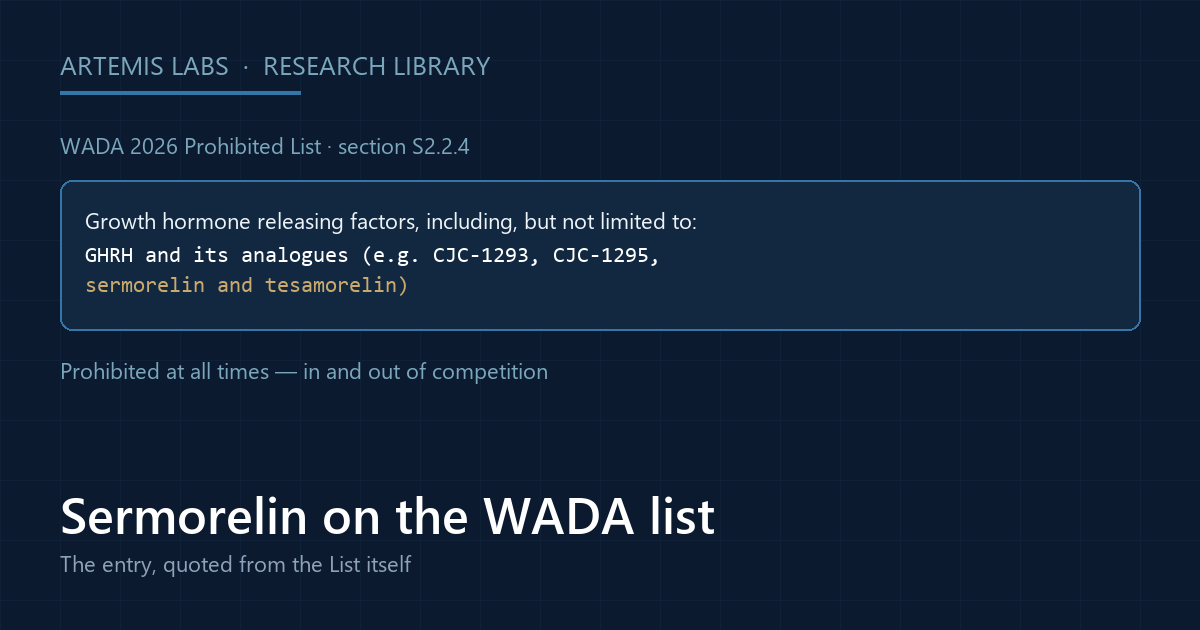
The 2026 WADA Prohibited List names Thymosin-beta4 and its derivatives e.g. TB-500 under section S2.3. Here is the quoted text, the source PDF, and what it covers.
TB-500 is a seven-amino-acid fragment of thymosin beta-4, a 43-amino-acid protein about five times heavier. Here is what the published research actually tested.
TB-500 is a 7-amino-acid fragment of thymosin beta-4. Here is what repair research actually tested, which form it used, and what has never been studied in people.
TB-500 is Ac-LKKTETQ-OH: seven amino acids, MW 889.0, CAS 885340-08-9. The verified identity numbers, plus the 847.0 free-acid mix-up worth avoiding.
What published research reports about TB-500 and thymosin beta-4 safety, including the one human safety study, the negative findings, and the gaps nobody has filled.
No human trial has ever tested TB-500 itself. The eleven human studies people cite all used thymosin beta-4, the larger parent protein. Here is the full list.
A randomized human trial of thymosin beta-4 after a heart attack was null overall, with a signal only in an early-dosing subgroup. Both halves explained.
Two published studies found thymosin beta 4 weakened the gut lining in rats and mice. Here is what they measured, what they did not test, and why we publish it.