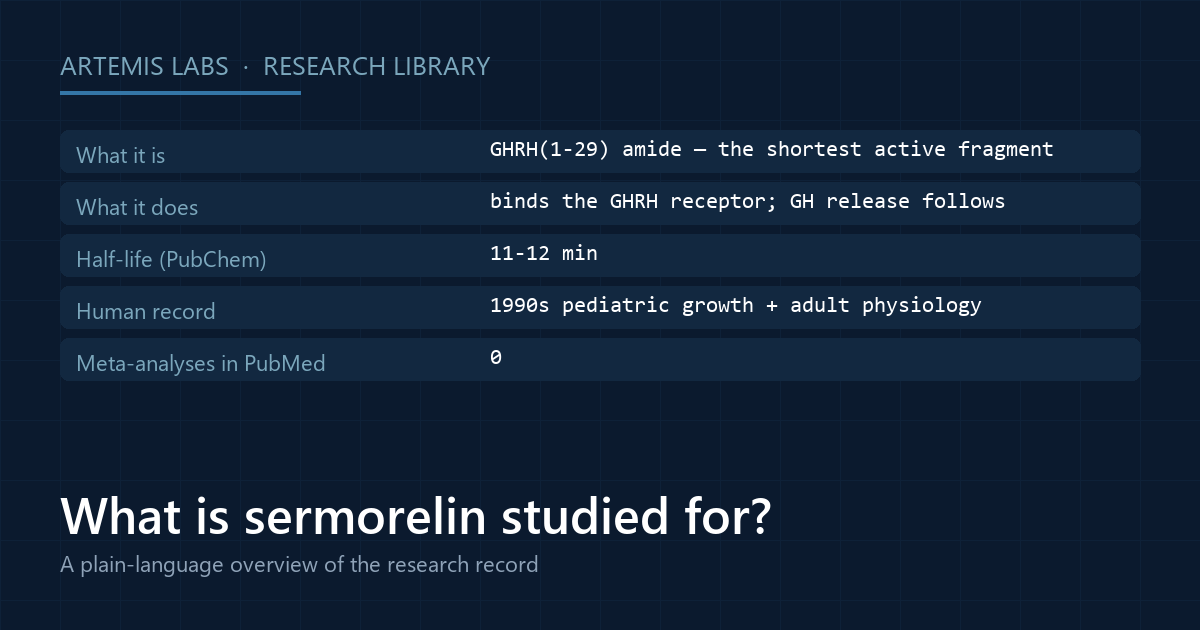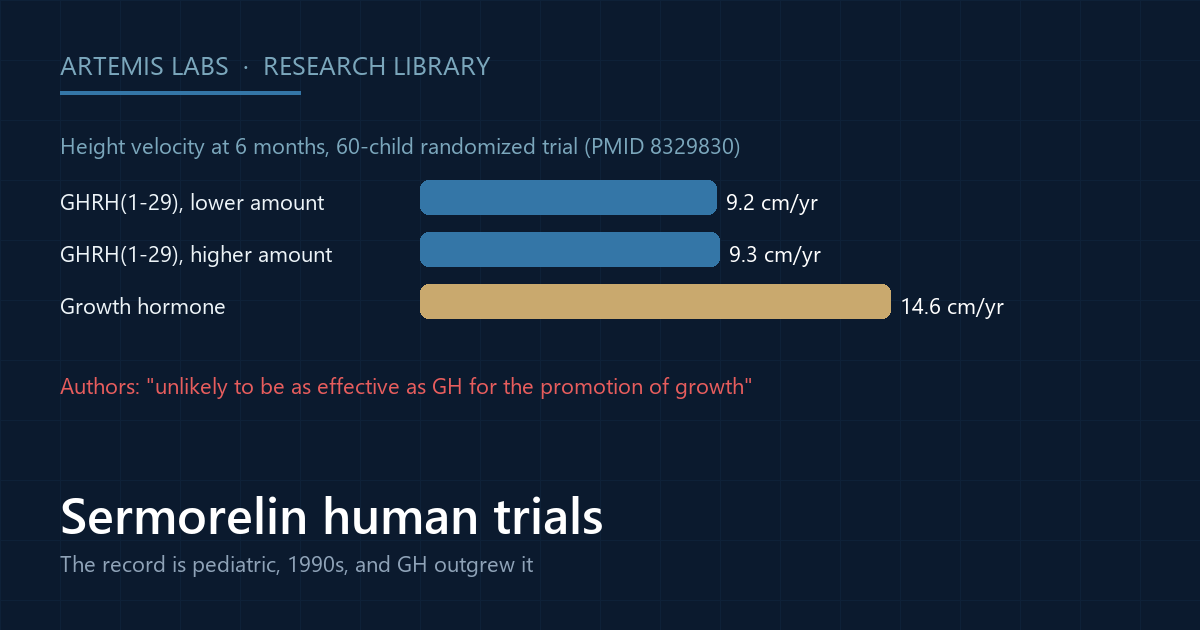
Sermorelin is GHRH(1-29), the shortest fragment of growth hormone-releasing hormone that still works. Its human record is 1990s pediatric growth trials and adult physiology studies, and it has no meta-analysis.
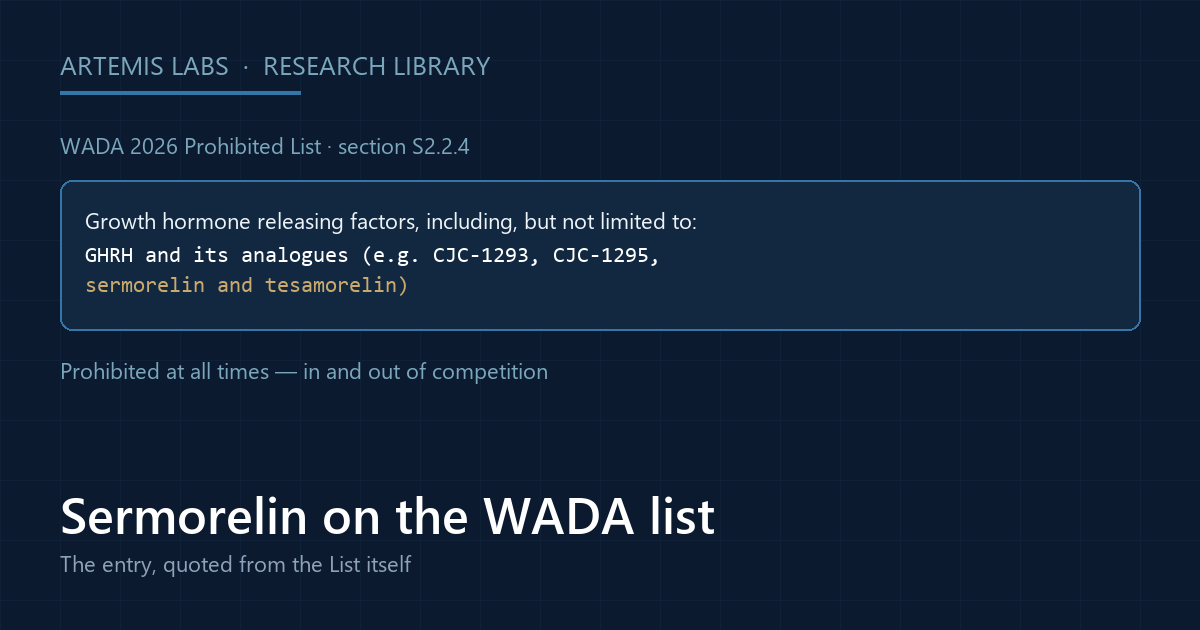
The WADA 2026 Prohibited List names sermorelin, CJC-1295, tesamorelin and ipamorelin by name under section S2.2.4. Here is the entry, quoted from the List itself.
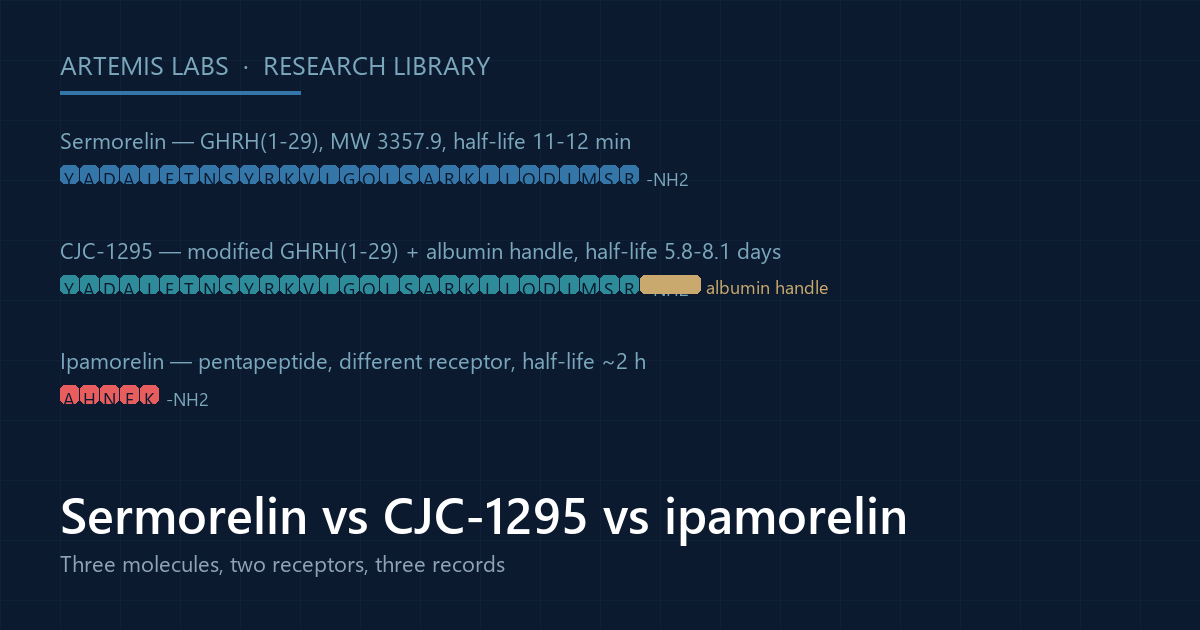
Sermorelin, CJC-1295 and ipamorelin are three different molecules, two receptors and three very different evidence bases. What each one’s published record actually contains.
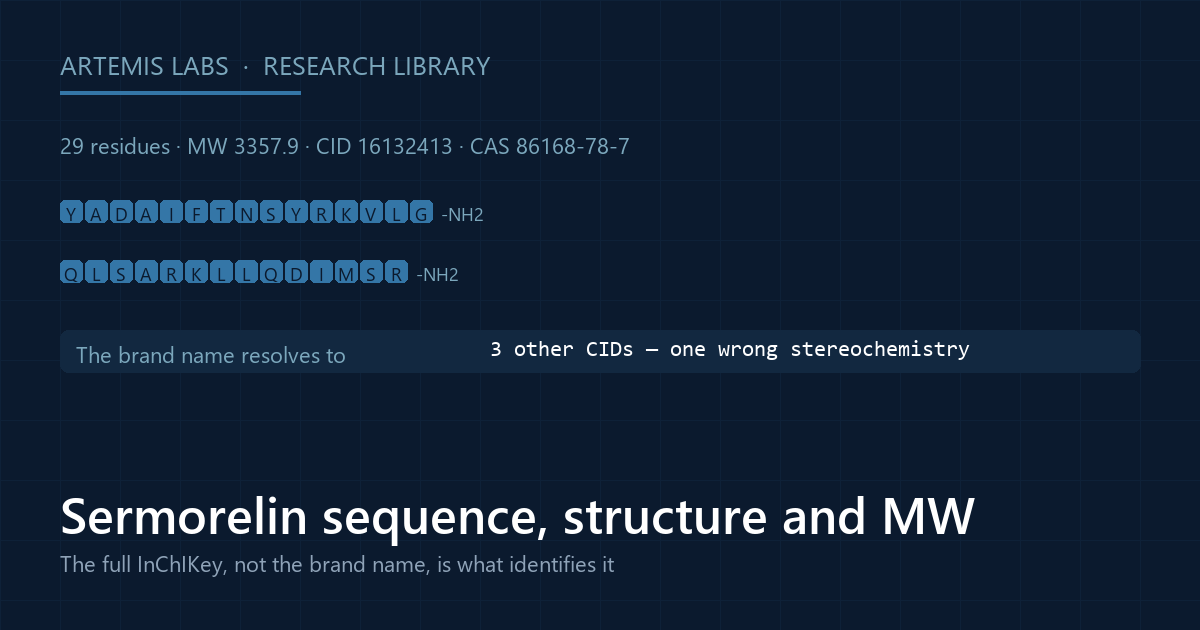
Sermorelin is GHRH(1-29) amide: 29 residues, molecular weight 3357.9, CAS 86168-78-7, PubChem CID 16132413. Why the brand name resolves to three other records, and how sermorelin differs from tesamorelin and native GHRH.
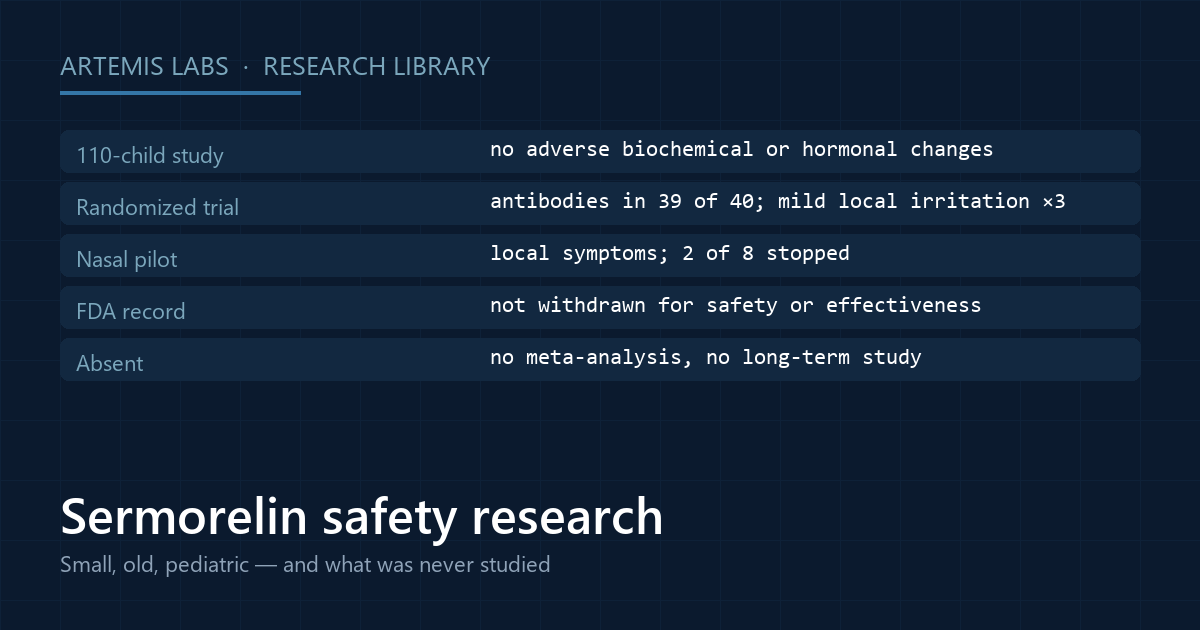
What the sermorelin trials reported on safety: no adverse biochemical changes in the largest pediatric study, near-universal antibody formation in a randomized one, and an FDA determination that discontinuation was not for safety reasons.
Selank is a seven-amino-acid peptide built from tuftsin, studied in Russia since the 1990s. What the published research covers, what the human trials compared it against, and what is missing.
Sermorelin’s human trial record is 1990s pediatric growth studies and adult physiology work. In the one three-arm randomized comparison, growth hormone outgrew it and 39 of 40 treated children developed antibodies.
Selank was tested against alcohol and morphine withdrawal in rodents, with diazepam as the comparator. The published comparison says Selank was slightly inferior — not comparable.
A blood-clotting study found Selank had the strongest anticoagulant effect of three related peptides. A stem cell study reassuring on toxicity also reported a 61% drop in one cell type.
Selank changes the expression of inflammation-related genes in mouse spleen. One study found a three-residue fragment produced largely the same profile — which raises a question about the molecule itself.