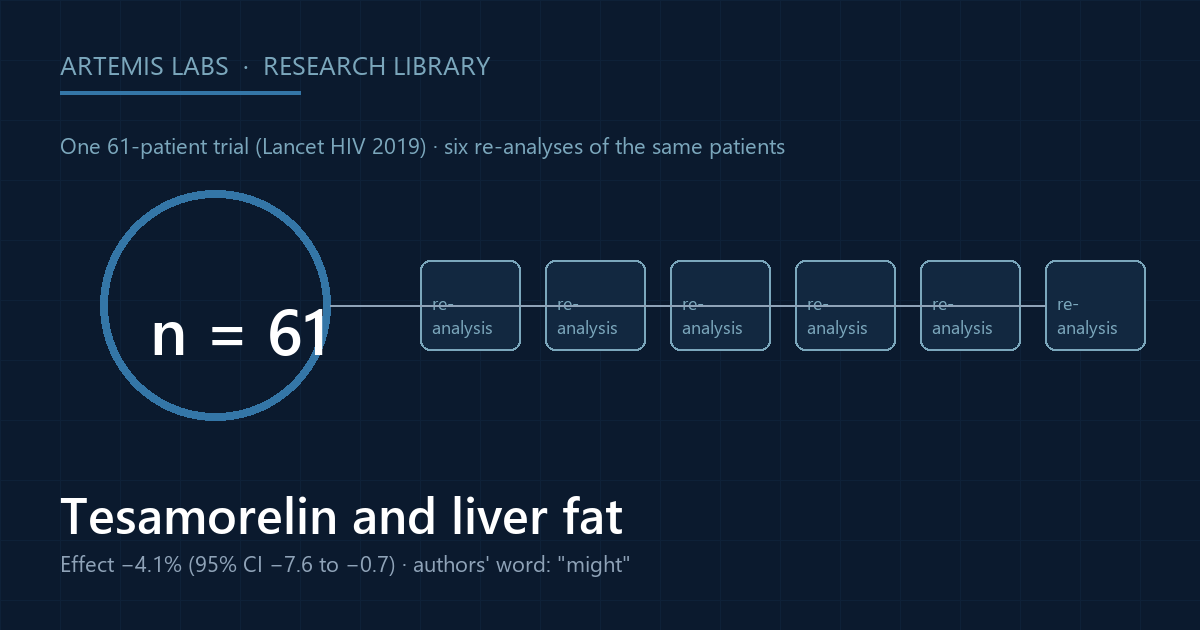
The tesamorelin liver-fat record is one 61-patient trial in people with HIV, published in Lancet HIV 2019 with the word “might”, and at least six later papers that re-analyze the same patients. How re-analysis inflates a lane.
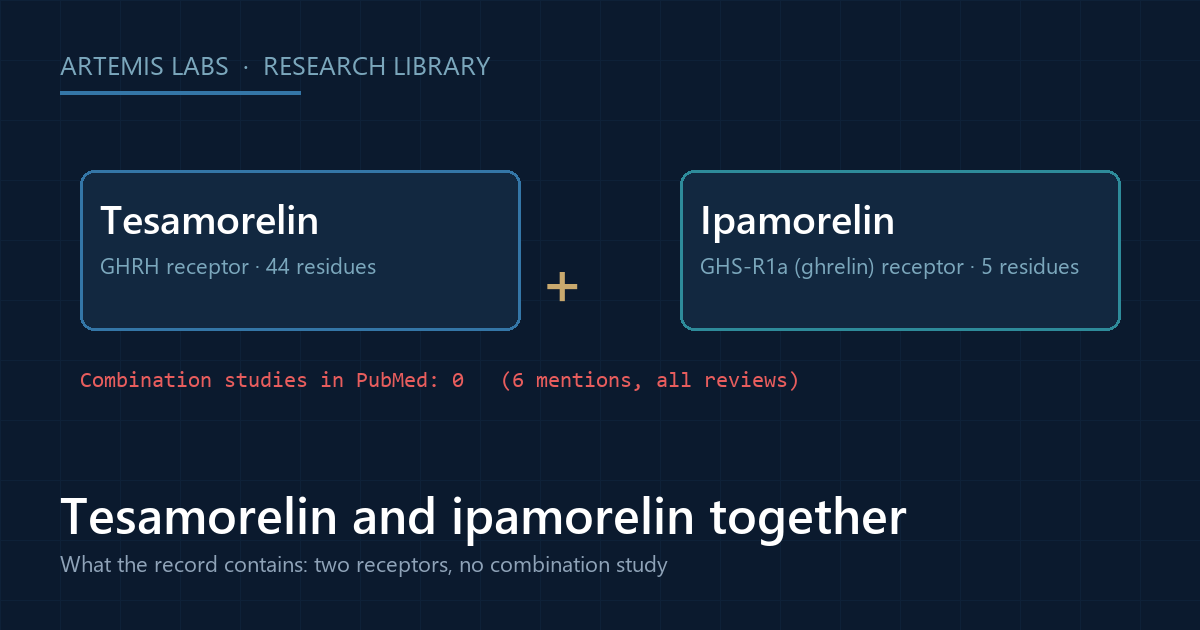
Tesamorelin and ipamorelin act on two different receptors and are sold together as a blend. The published record contains zero studies of the two compounds combined; the six papers that mention both are reviews.
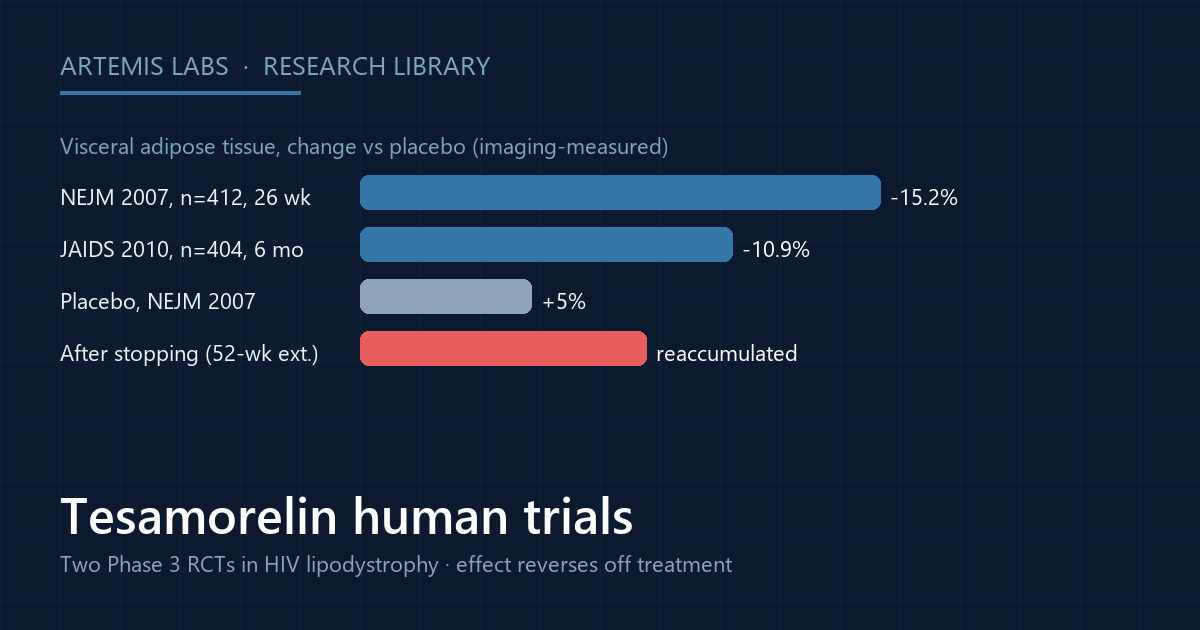
The tesamorelin human trial record: two Phase 3 trials in HIV-associated lipodystrophy, a pooled analysis of 806 patients, two 2026 meta-analyses that disagree, and the reversal the trial authors reported.
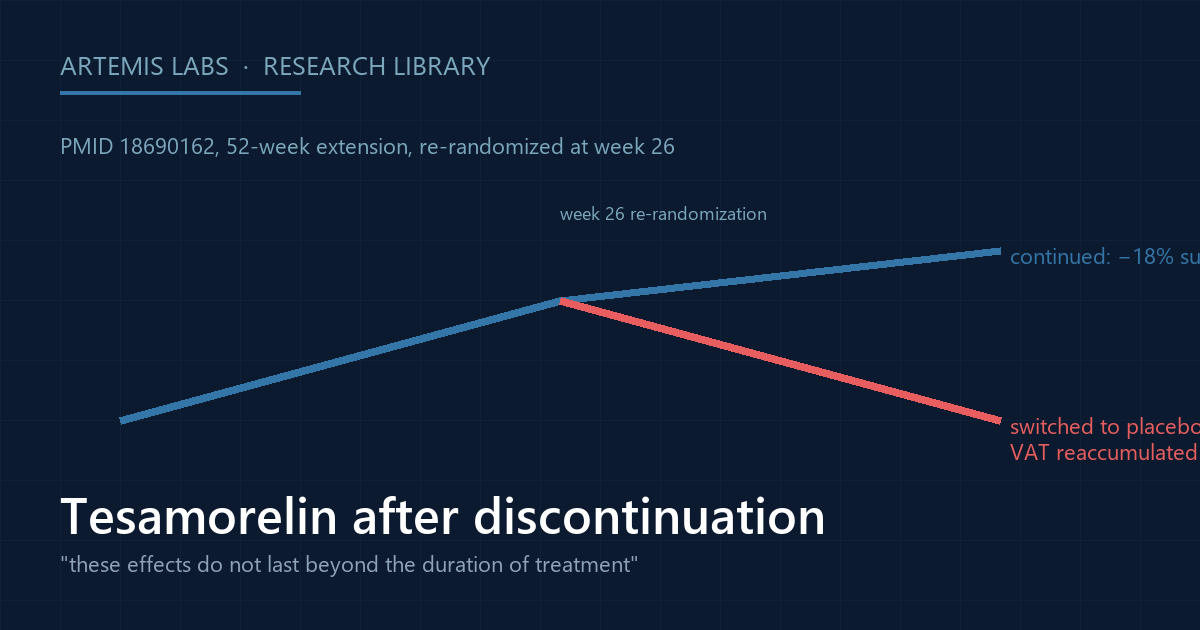
What the tesamorelin trial program reported when treatment stopped: visceral fat reaccumulated, effects did not last beyond treatment, and discontinuation risk was roughly doubled in meta-analysis.
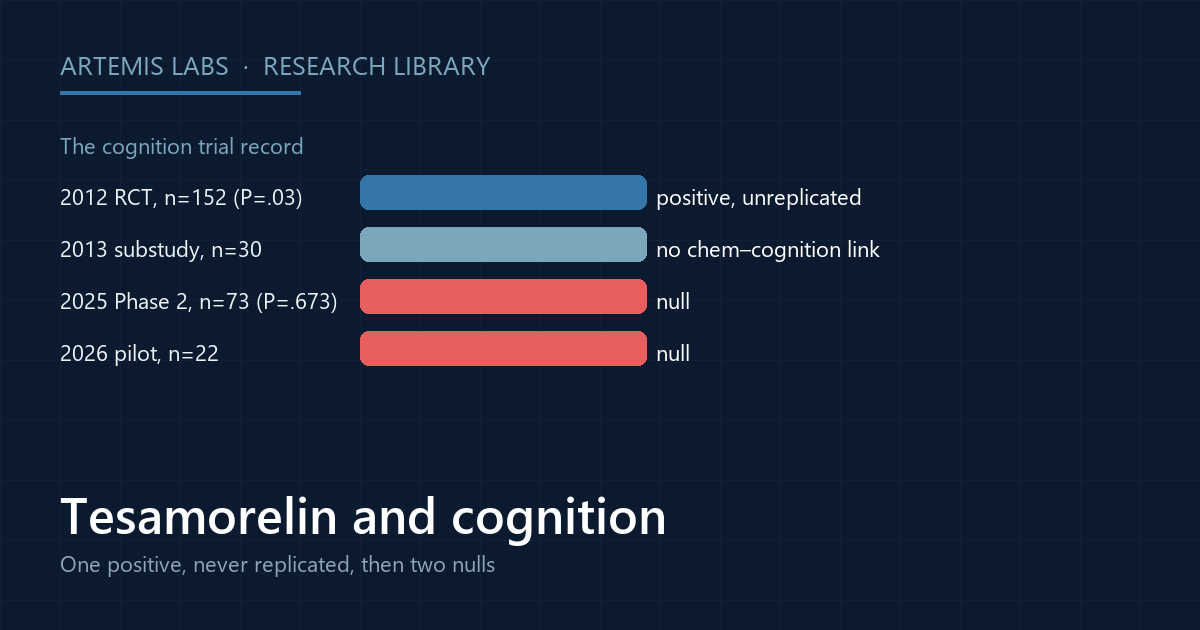
The tesamorelin cognition record: a 2012 trial in 152 older adults reported a favorable effect, never replicated; a 2025 Phase 2 trial and a 2026 pilot were both null. What each study found, in its own words.
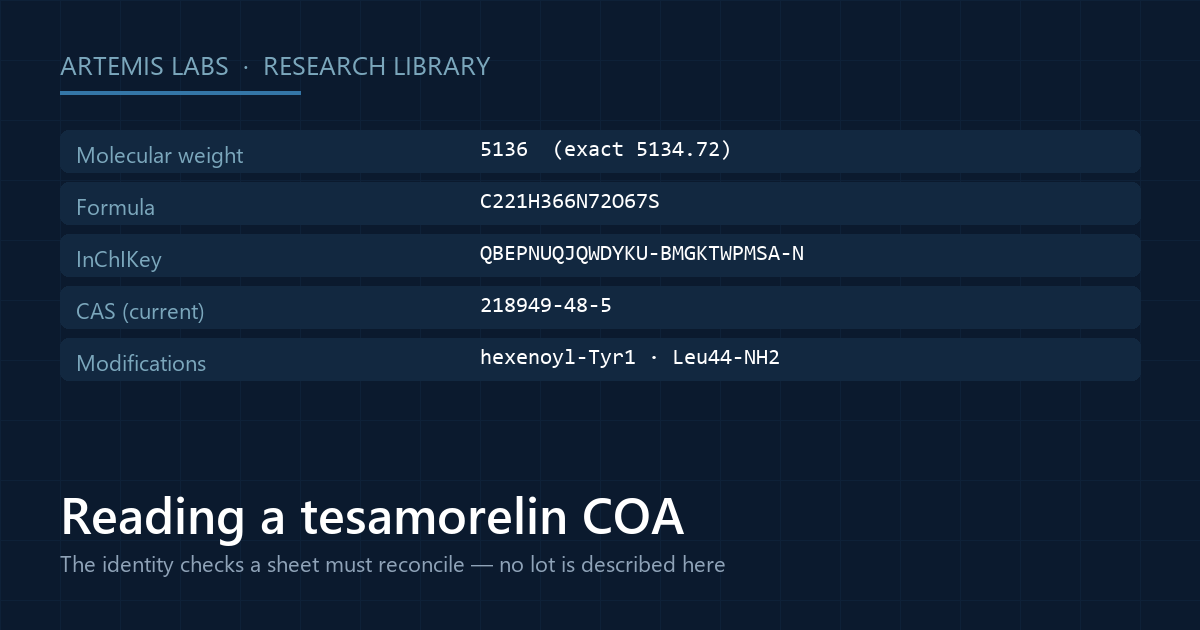
How to read a certificate of analysis for tesamorelin, a 5.1 kDa modified 44-residue peptide: which mass and identifiers a correct sheet shows, and the substitutions a wrong one reveals.
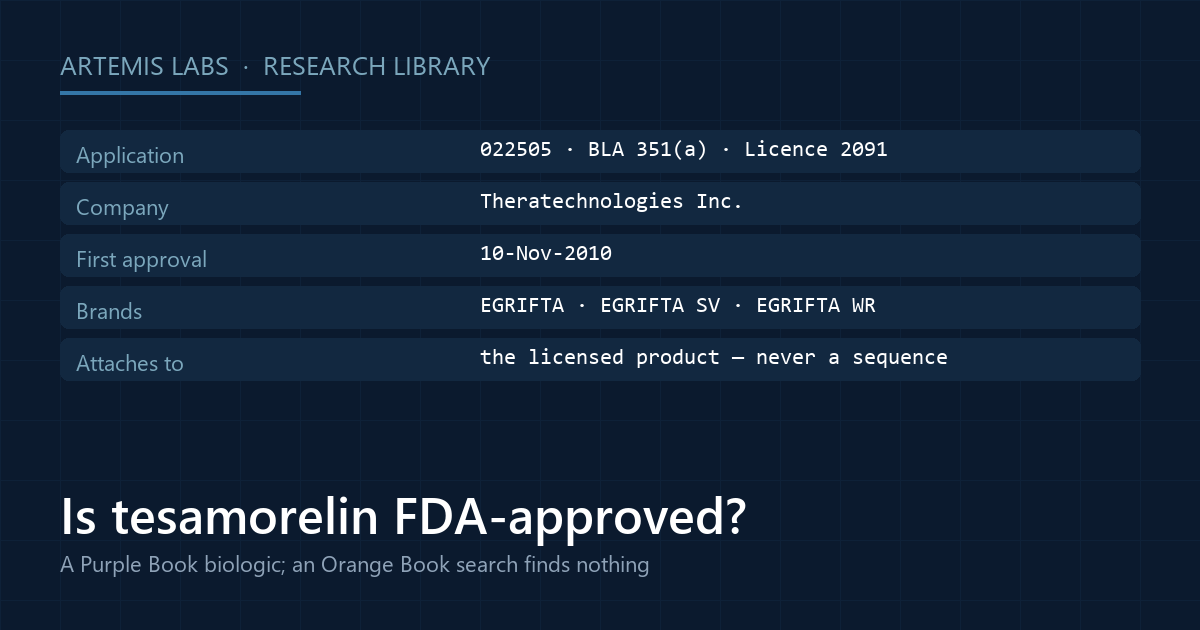
An FDA-approved tesamorelin product exists: EGRIFTA, by Theratechnologies, application 022505, a Purple Book biologic. What that approval covers, why an Orange Book search misses it, and why none of it attaches to a research vial.
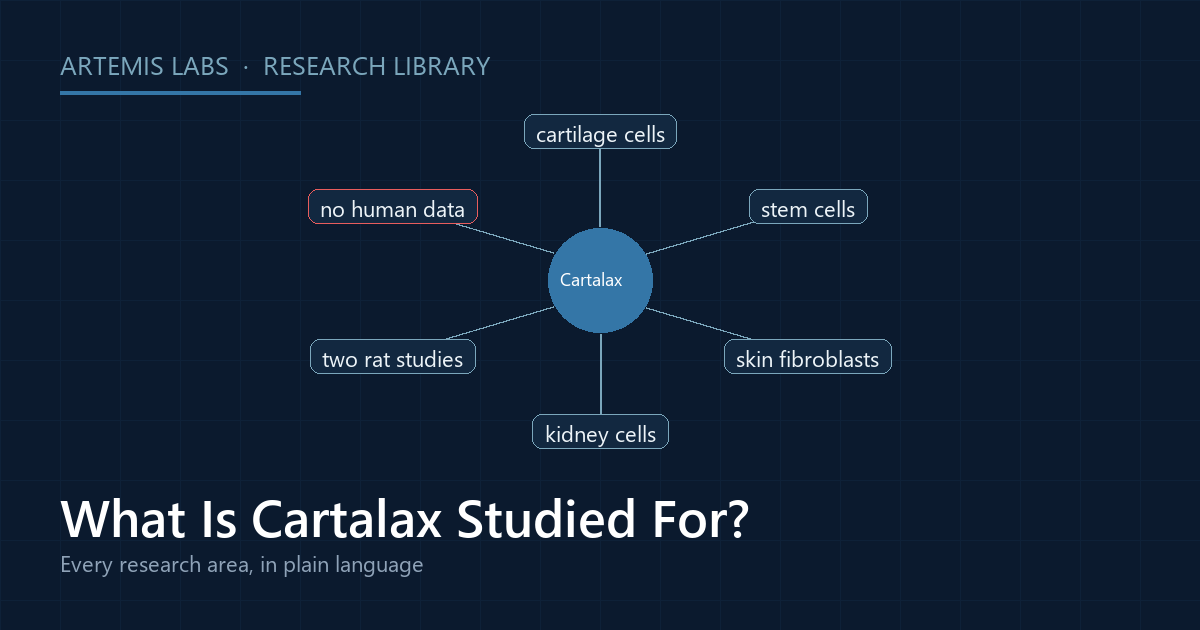
Cartalax (AED, Ala-Glu-Asp) is a three-amino-acid research peptide studied in cell-culture aging models. Every paper comes from one institute; no human data exists.
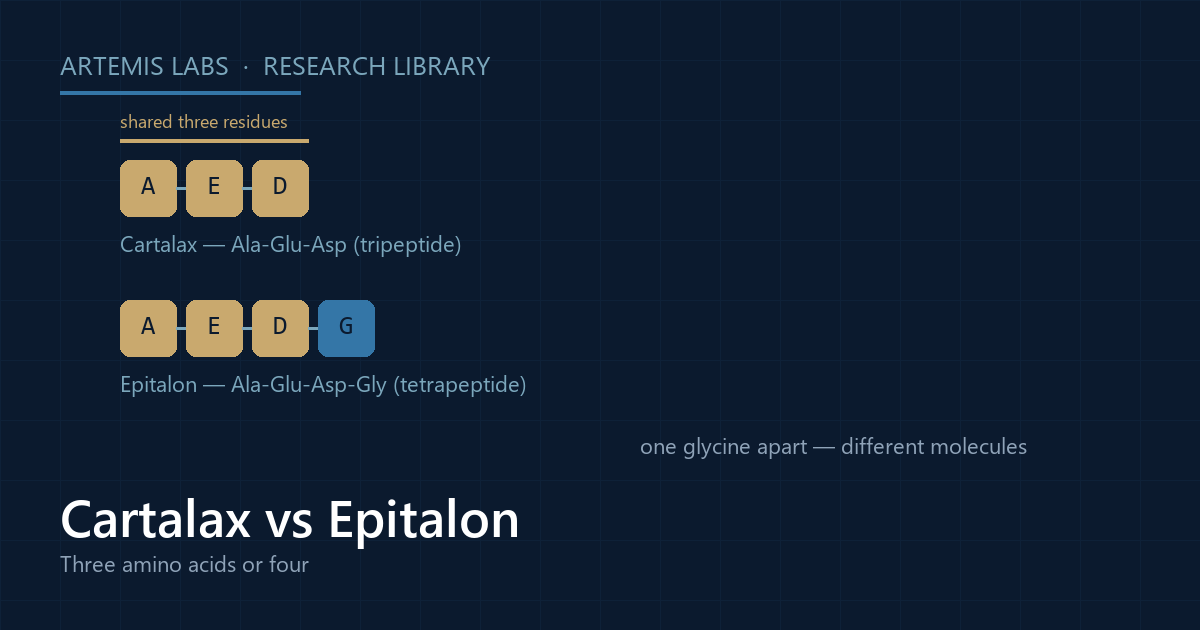
Cartalax (Ala-Glu-Asp) and Epitalon (Ala-Glu-Asp-Gly) are different molecules that get confused constantly. The sequences, weights and why the mix-up inflates Cartalax’s literature.
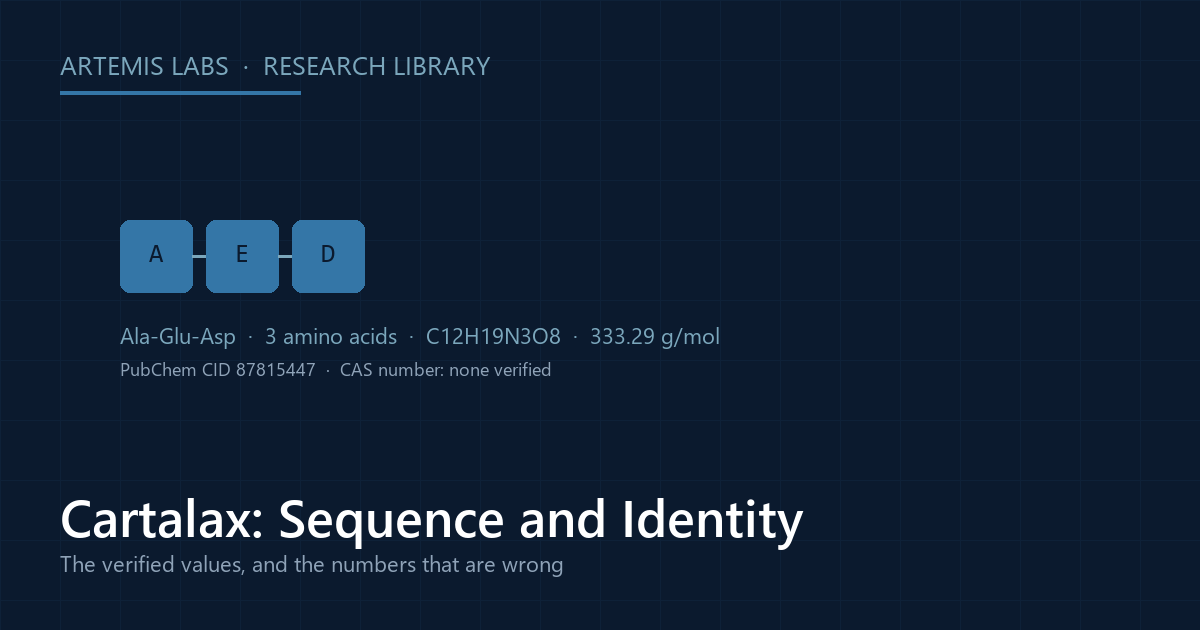
Cartalax (AED) is Ala-Glu-Asp: C12H19N3O8, 333.29 g/mol, PubChem CID 87815447. Why no CAS number is published, and which circulating numbers are wrong.