28
Aug
Aug
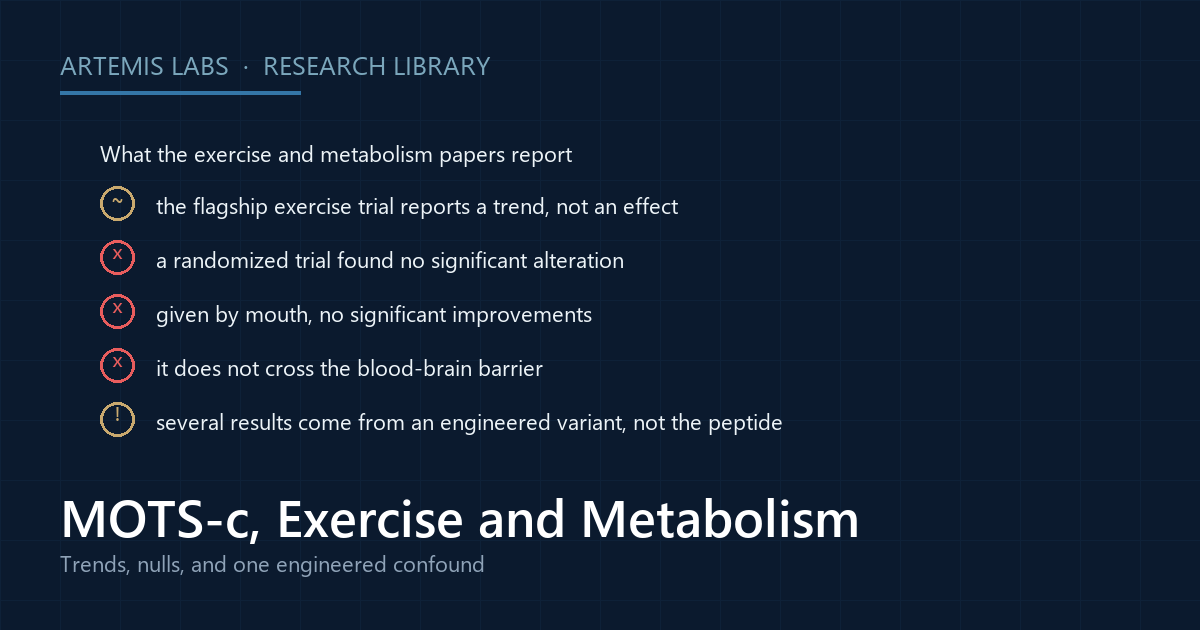
The preclinical MOTS-c record by species, the exercise study that reports only a trend, and the negative findings on brain entry and oral delivery, quoted as written.

The preclinical MOTS-c record by species, the exercise study that reports only a trend, and the negative findings on brain entry and oral delivery, quoted as written.
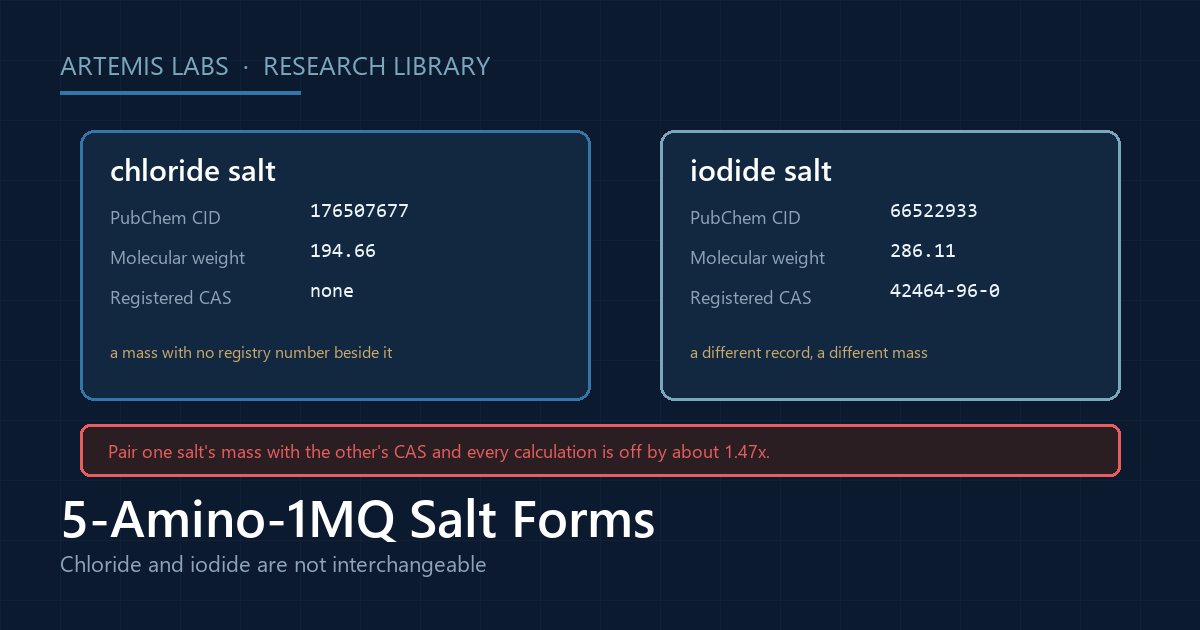
The chloride is CID 176507677 at 194.66 with no registered CAS. The iodide is CAS 42464-96-0 at 286.11. Mixing them creates a 1.47x molarity error.
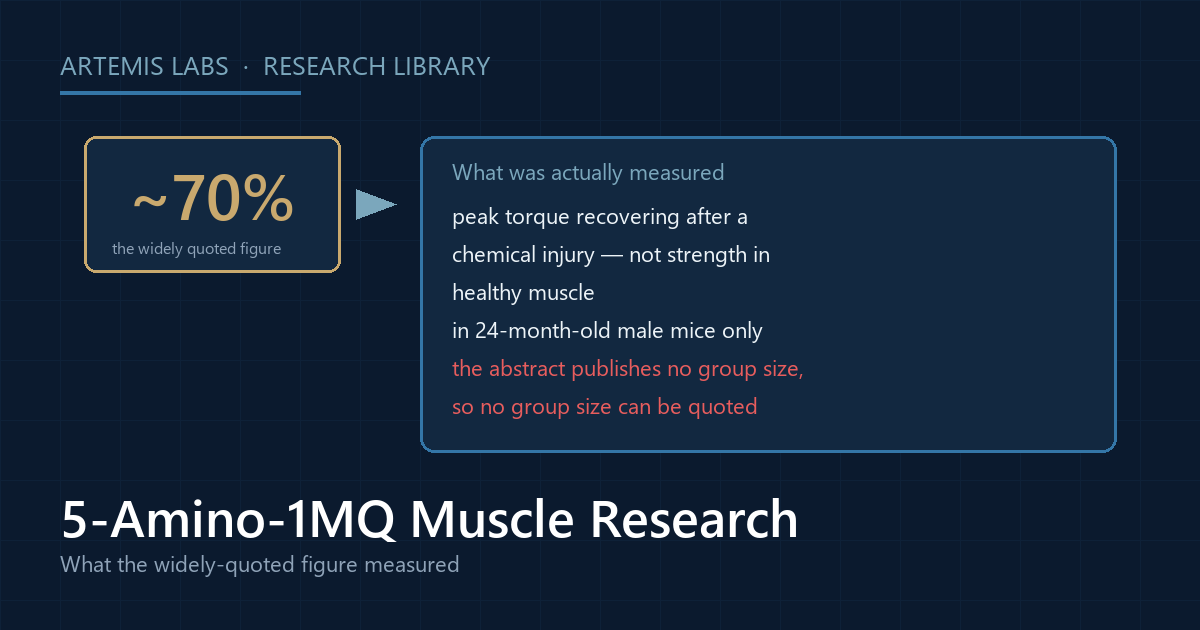
What the aged-mouse muscle studies actually measured, why the ~70% figure is a recovery-after-injury result in aged male mice, and the counter-evidence usually left out.
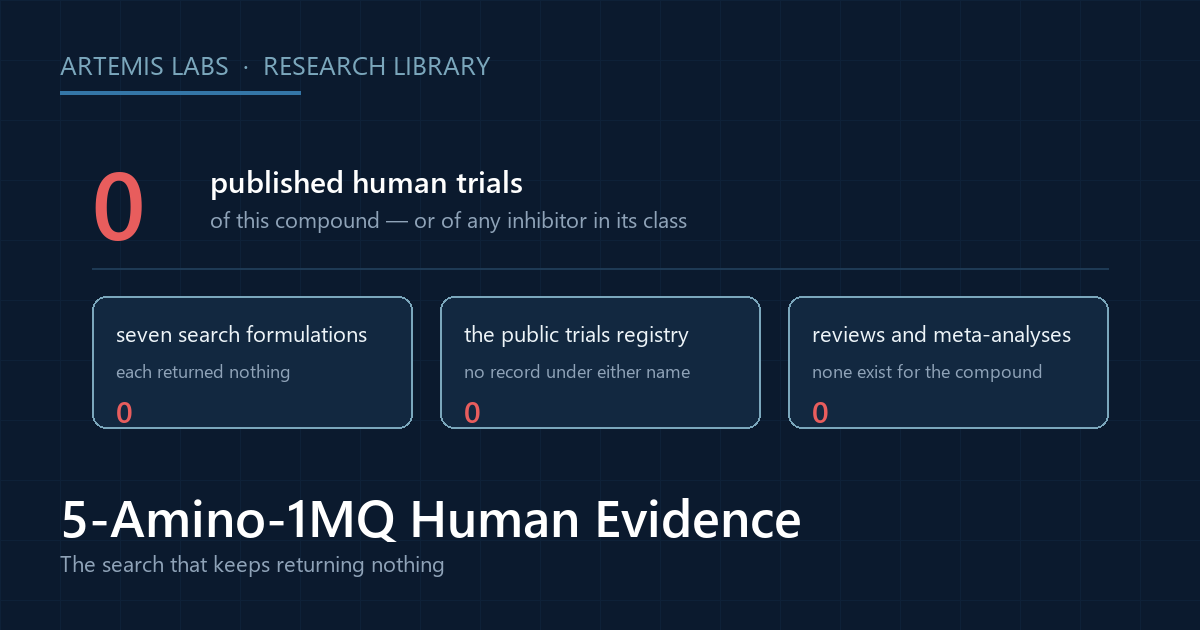
Zero human studies exist for 5-Amino-1MQ or any NNMT inhibitor. How that zero was verified across seven PubMed searches and a registry query, and what it means.
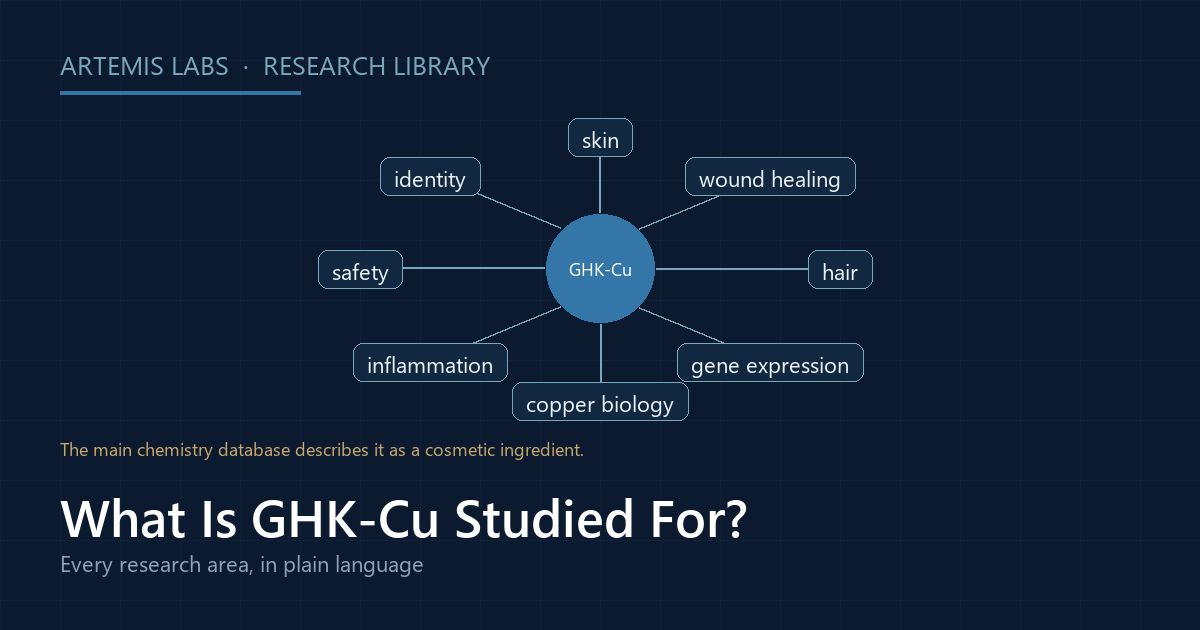
GHK-Cu is a copper-bound tripeptide. The main scientific database describes it as a cosmetic ingredient, and two human trials in 34 years were both negative.
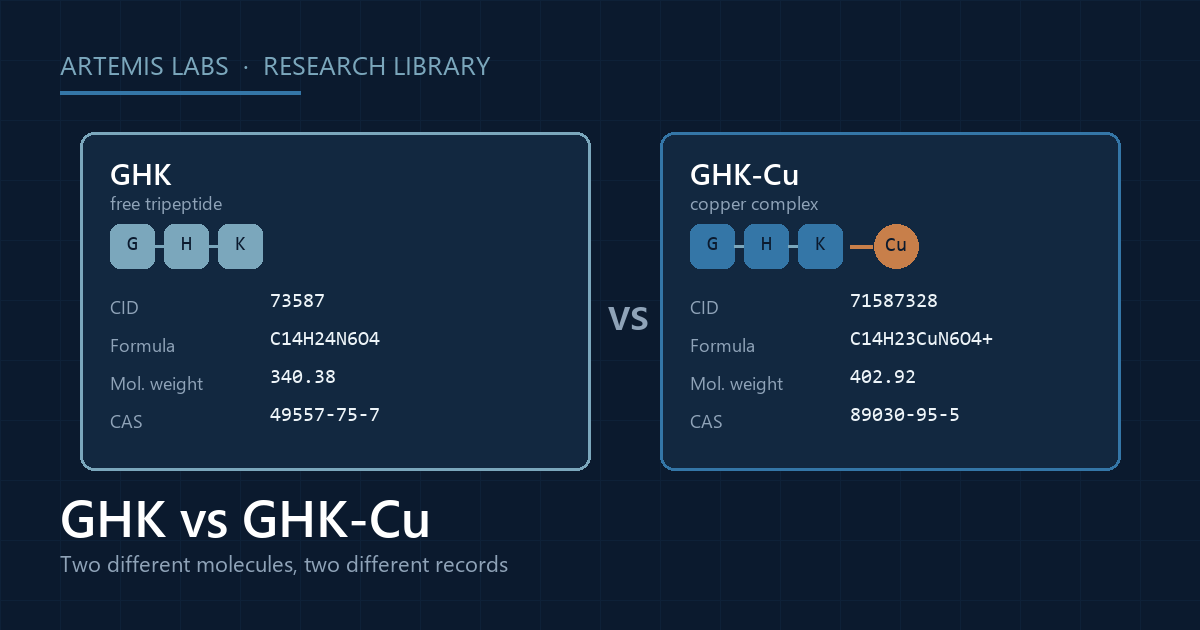
GHK is CID 73587 at molecular weight 340.38. GHK-Cu is CID 71587328 at 402.92. Six PubChem records answer to the name GHK-Cu, and one has no copper.
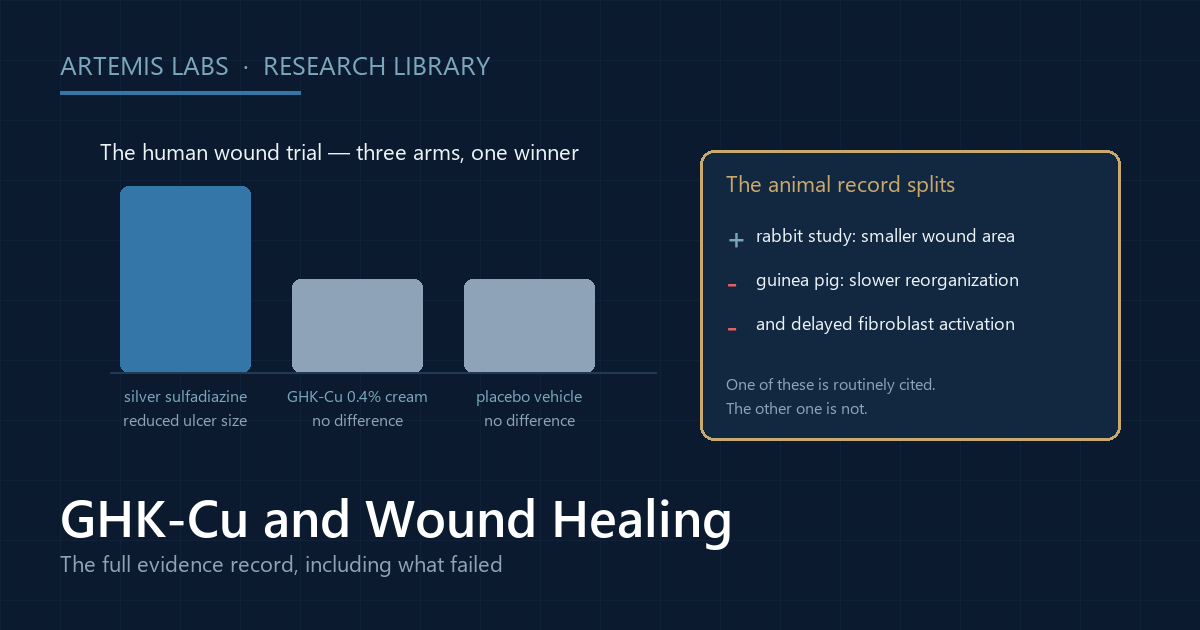
The one human wound trial of GHK-Cu matched placebo. The animal record is split: rabbits and rats healed faster, guinea pigs healed slower. What that means.
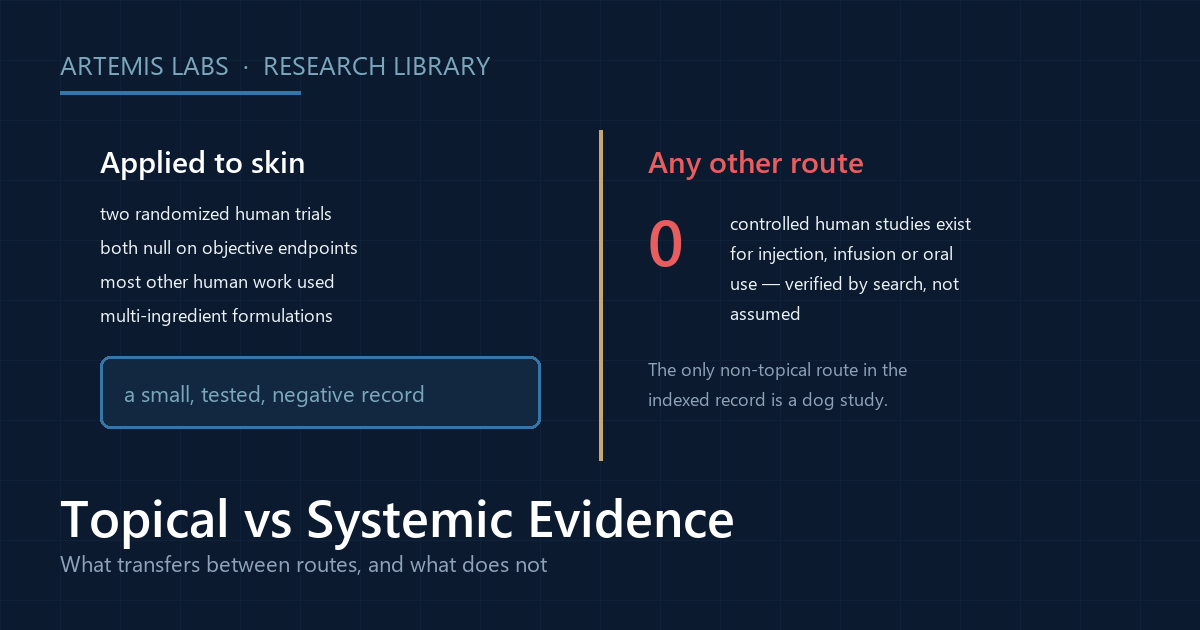
Most human GHK-Cu results come from multi-ingredient cosmetic products applied to skin. Here is why that evidence cannot be read across to research-vial material.
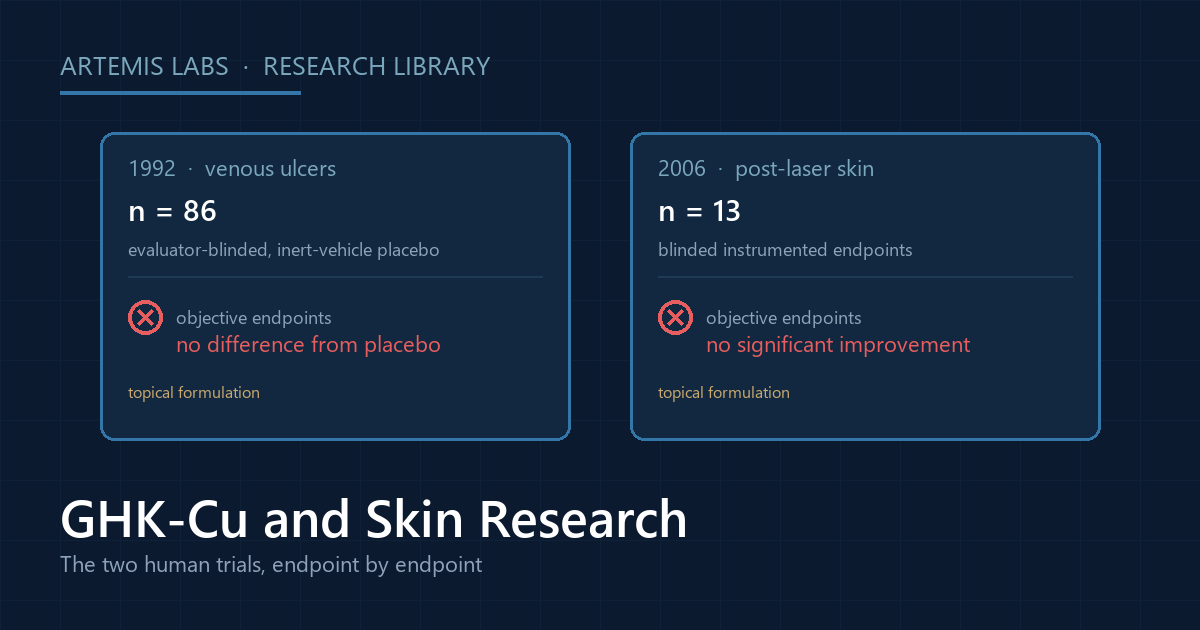
GHK-Cu has two human randomized trials in 34 years. Both tested topical creams, and both were negative on every objective skin measurement. The full record.
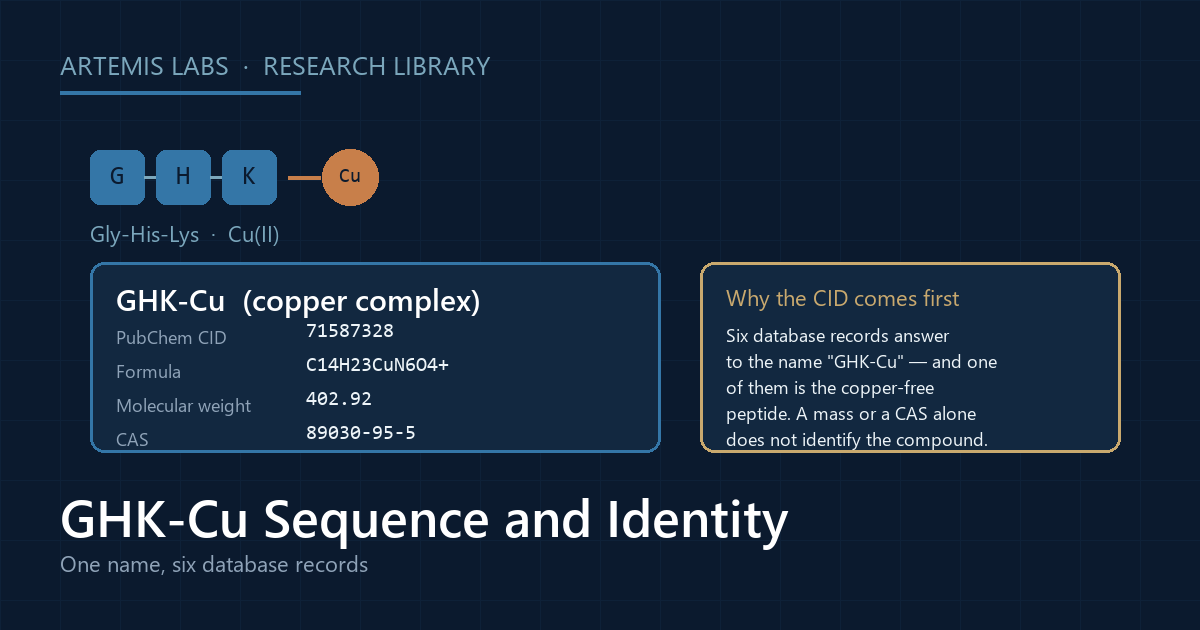
The verified identifiers for both molecules: GHK at CID 73587, 340.38, CAS 49557-75-7, and GHK-Cu at CID 71587328, 402.92, CAS 89030-95-5.