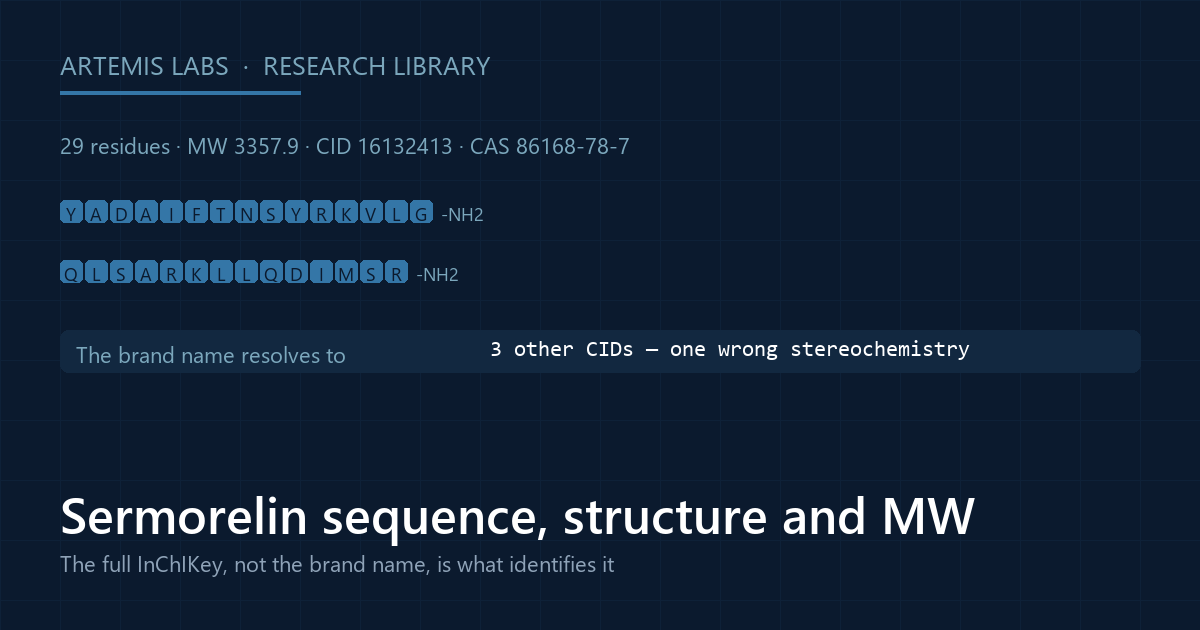
Sermorelin is GHRH(1-29) amide: 29 residues, molecular weight 3357.9, CAS 86168-78-7, PubChem CID 16132413. Why the brand name resolves to three other records, and how sermorelin differs from tesamorelin and native GHRH.
Selank is TKPRPGP, C33H57N11O9, MW 751.9, CAS 129954-34-3, PubChem CID 11765600. Two identifiers published for it across the industry — including by us — resolve to entirely different molecules.
Ipamorelin is a five-residue peptide, Aib-His-D-2-Nal-D-Phe-Lys-NH2, C38H49N9O5, molecular weight 711.9, CAS 170851-70-4. Why it is not a hexapeptide, and why two molecular weights circulate.
Two independent forensic laboratories identified glycine-modified ipamorelin in black-market and customs-seized material. What that finding means for anyone reading a specification sheet.
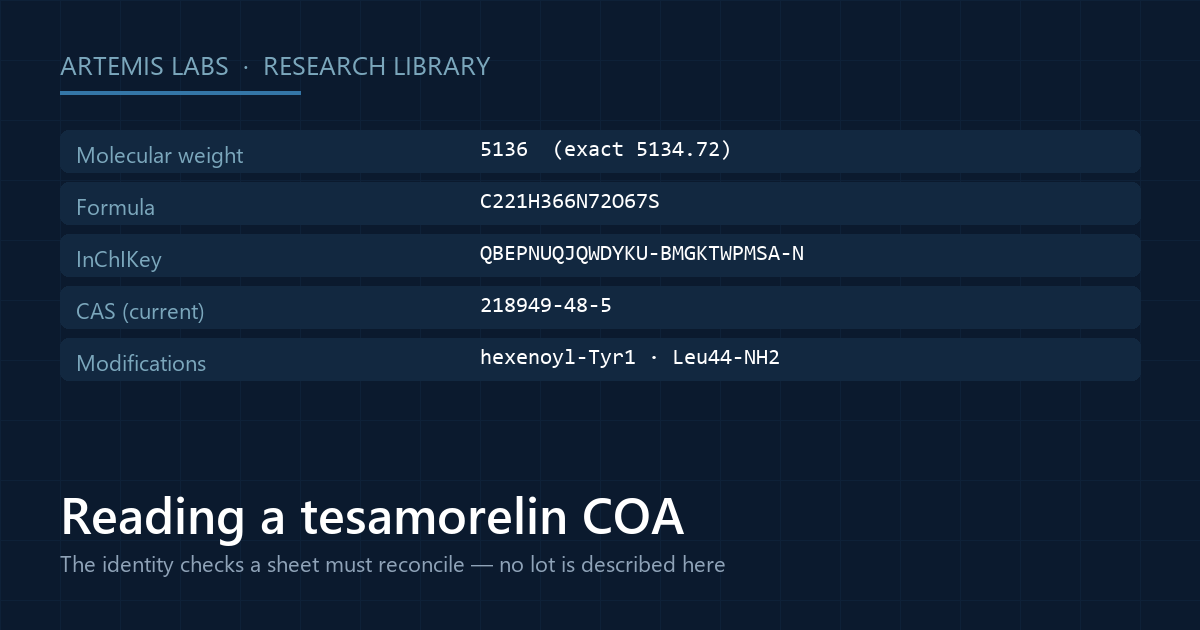
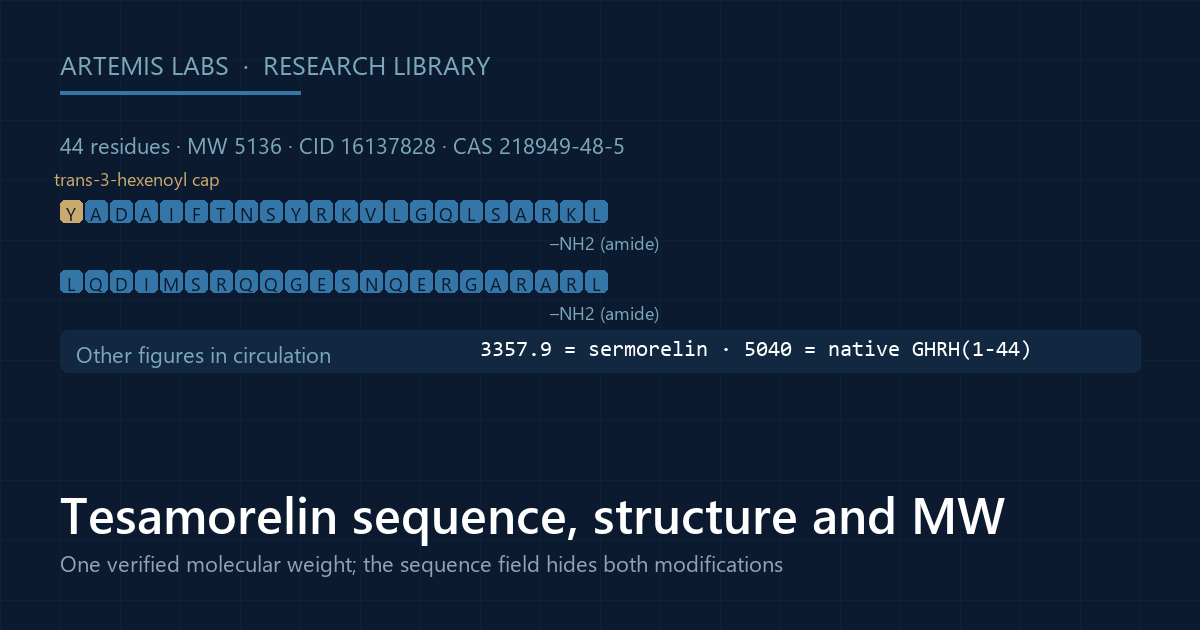
Tesamorelin is a 44-residue GHRH analog with a trans-3-hexenoyl group on Tyr1 and a C-terminal amide. One molecular weight (5136) is verified; the others in circulation are not.
How to read a certificate of analysis for tesamorelin, a 5.1 kDa modified 44-residue peptide: which mass and identifiers a correct sheet shows, and the substitutions a wrong one reveals.
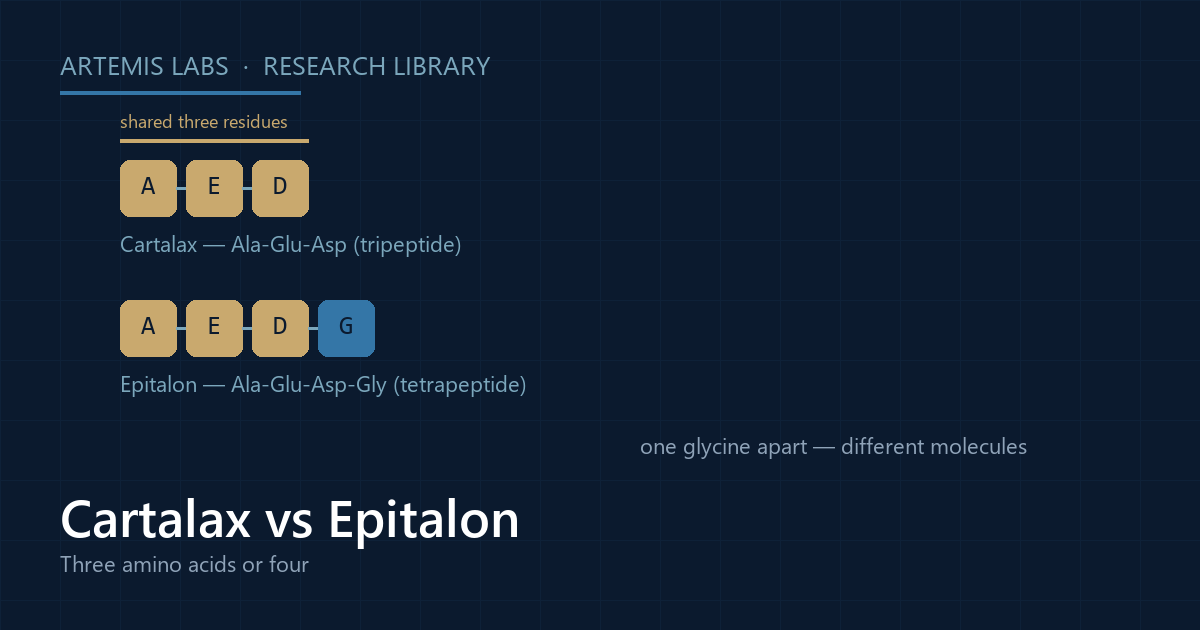
Cartalax (Ala-Glu-Asp) and Epitalon (Ala-Glu-Asp-Gly) are different molecules that get confused constantly. The sequences, weights and why the mix-up inflates Cartalax’s literature.
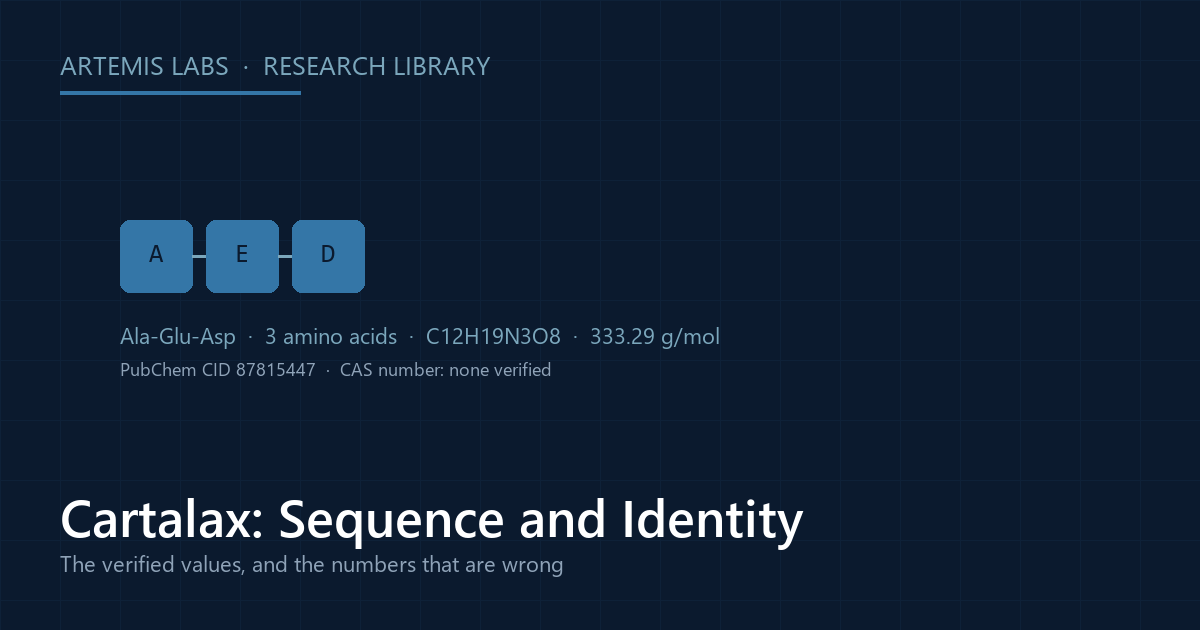
Cartalax (AED) is Ala-Glu-Asp: C12H19N3O8, 333.29 g/mol, PubChem CID 87815447. Why no CAS number is published, and which circulating numbers are wrong.
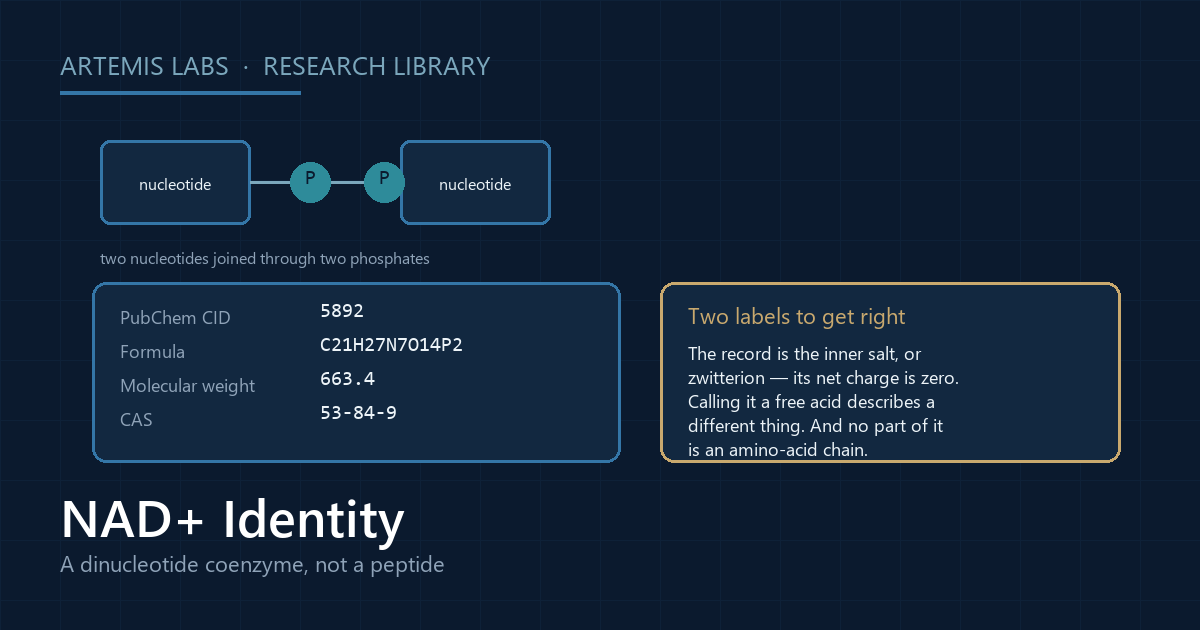
NAD+ is the inner-salt, zwitterionic form of a dinucleotide coenzyme: CID 5892, CAS 53-84-9, MW 663.4. What each identifier means and which lookalikes to rule out.
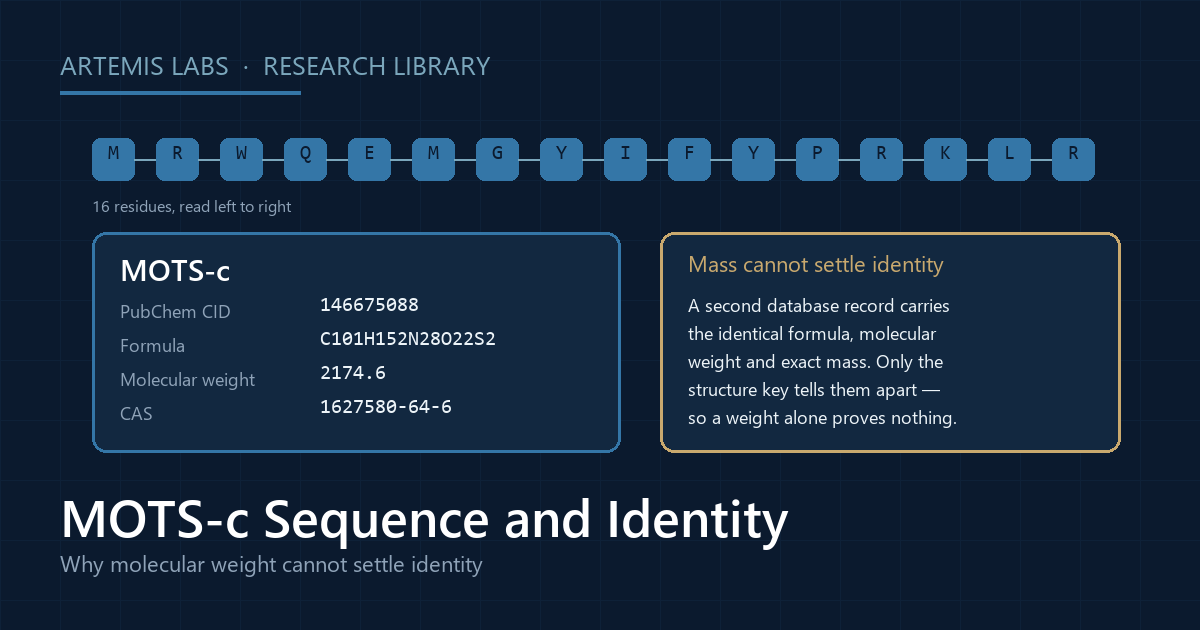
The verified MOTS-c identifiers: CID 146675088, C101H152N28O22S2, CAS 1627580-64-6 — and the mis-drawn isomer that shares the same formula, weight and exact mass.