28
Aug
Aug
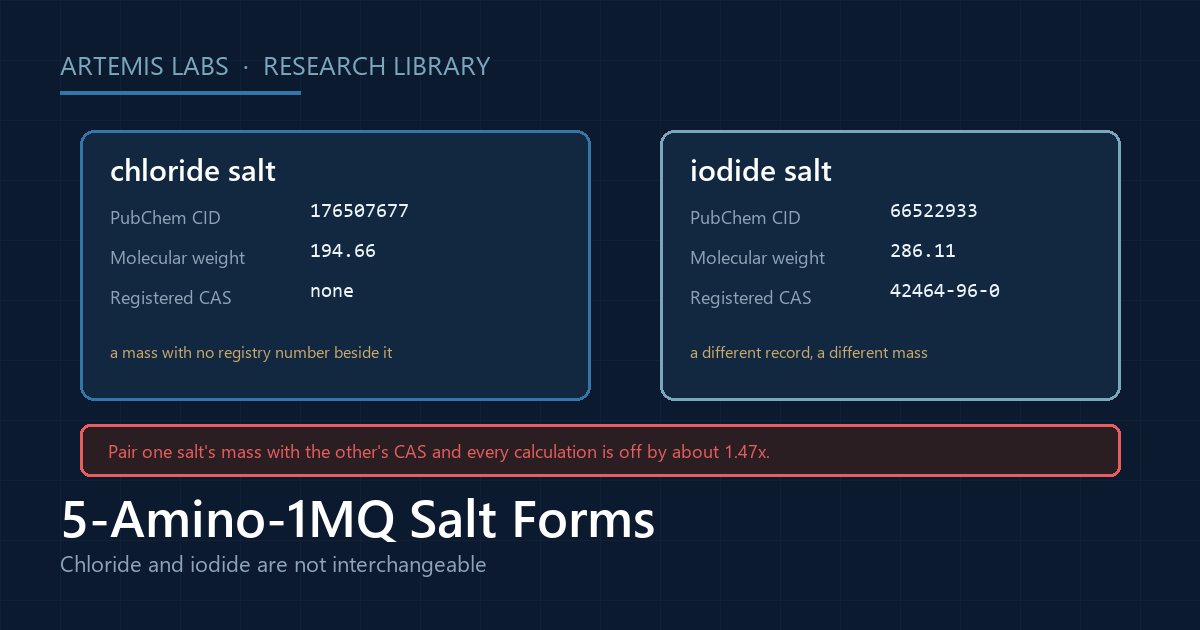
The chloride is CID 176507677 at 194.66 with no registered CAS. The iodide is CAS 42464-96-0 at 286.11. Mixing them creates a 1.47x molarity error.

The chloride is CID 176507677 at 194.66 with no registered CAS. The iodide is CAS 42464-96-0 at 286.11. Mixing them creates a 1.47x molarity error.
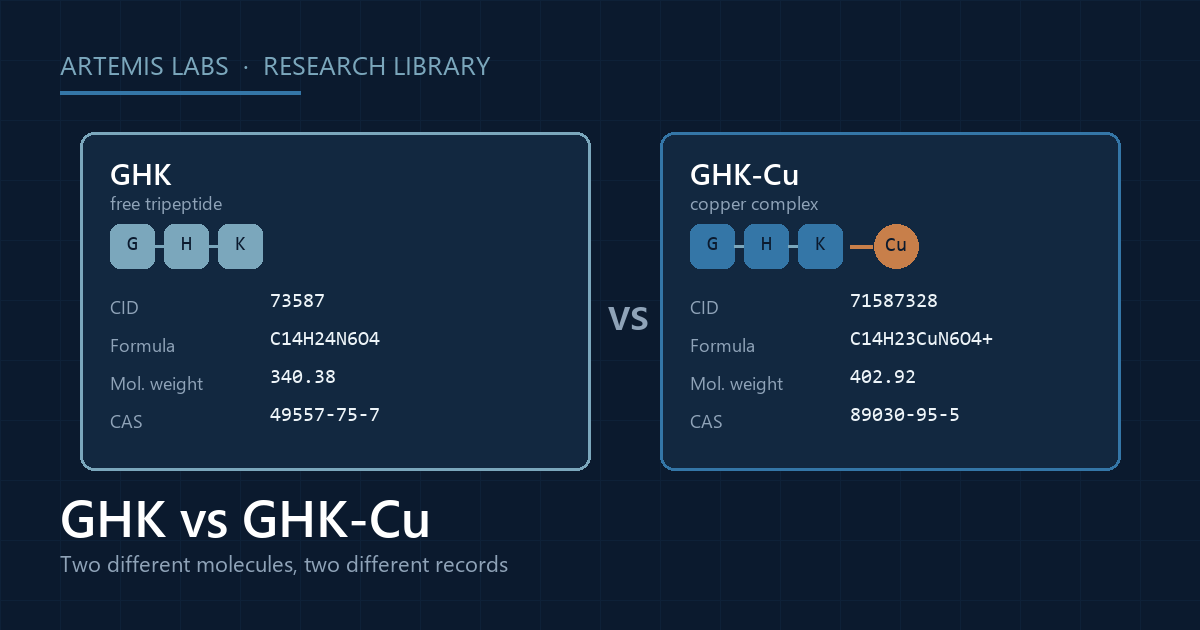
GHK is CID 73587 at molecular weight 340.38. GHK-Cu is CID 71587328 at 402.92. Six PubChem records answer to the name GHK-Cu, and one has no copper.
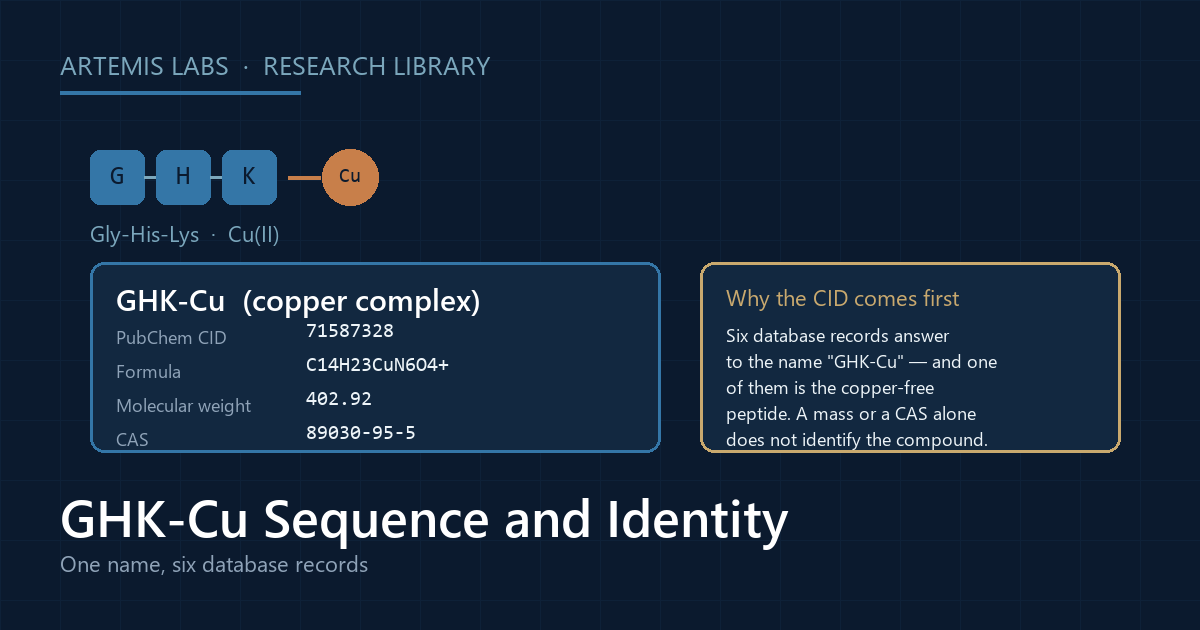
The verified identifiers for both molecules: GHK at CID 73587, 340.38, CAS 49557-75-7, and GHK-Cu at CID 71587328, 402.92, CAS 89030-95-5.
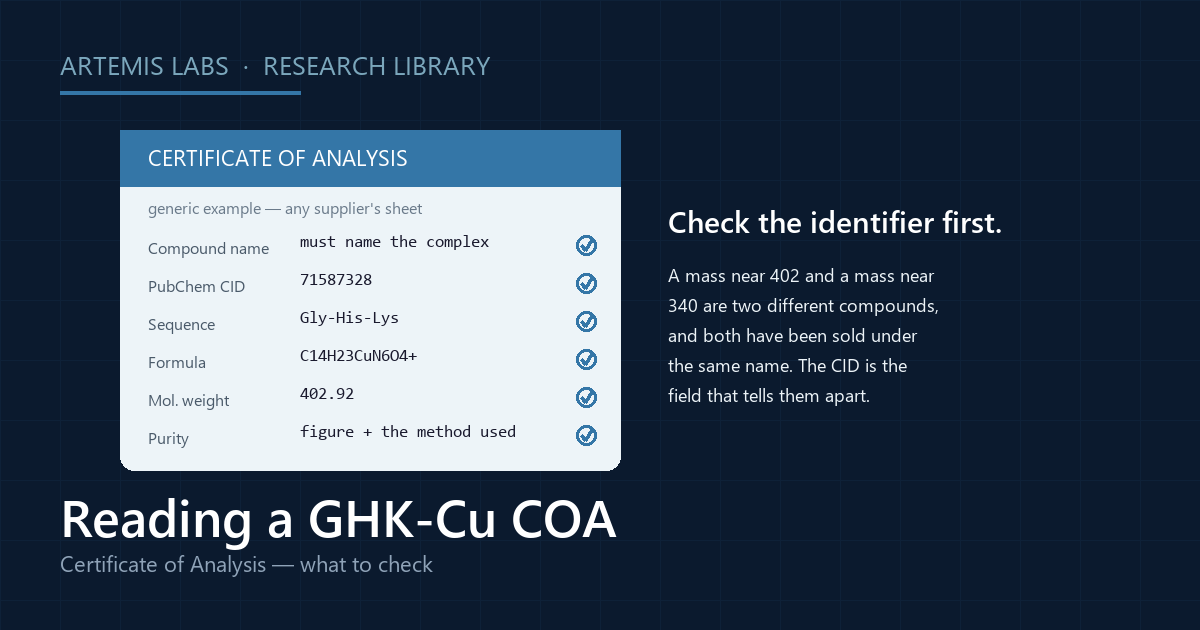
What a GHK-Cu COA should show: sequence Gly-His-Lys, CID 71587328, 402.92 for the complex and 340.38 for the copper-free peptide.
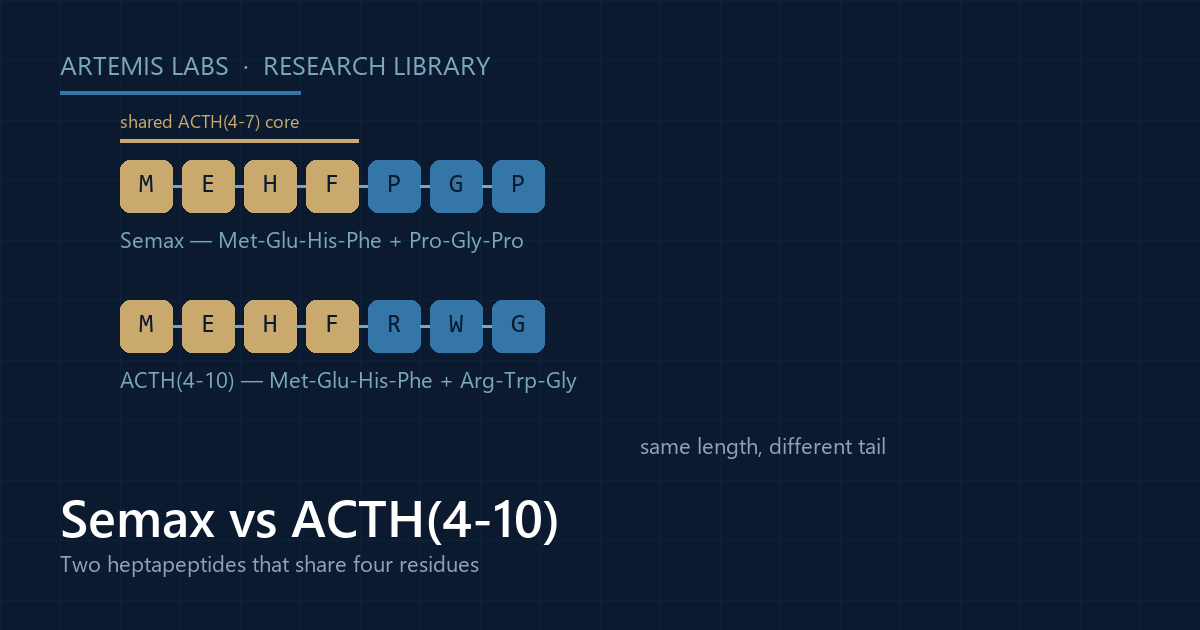
Semax is called both an ACTH(4-10) analog and ACTH(4-7)PGP. Both are right. Here are the two sequences, molecular weights, CAS numbers and PubChem CIDs, side by side.
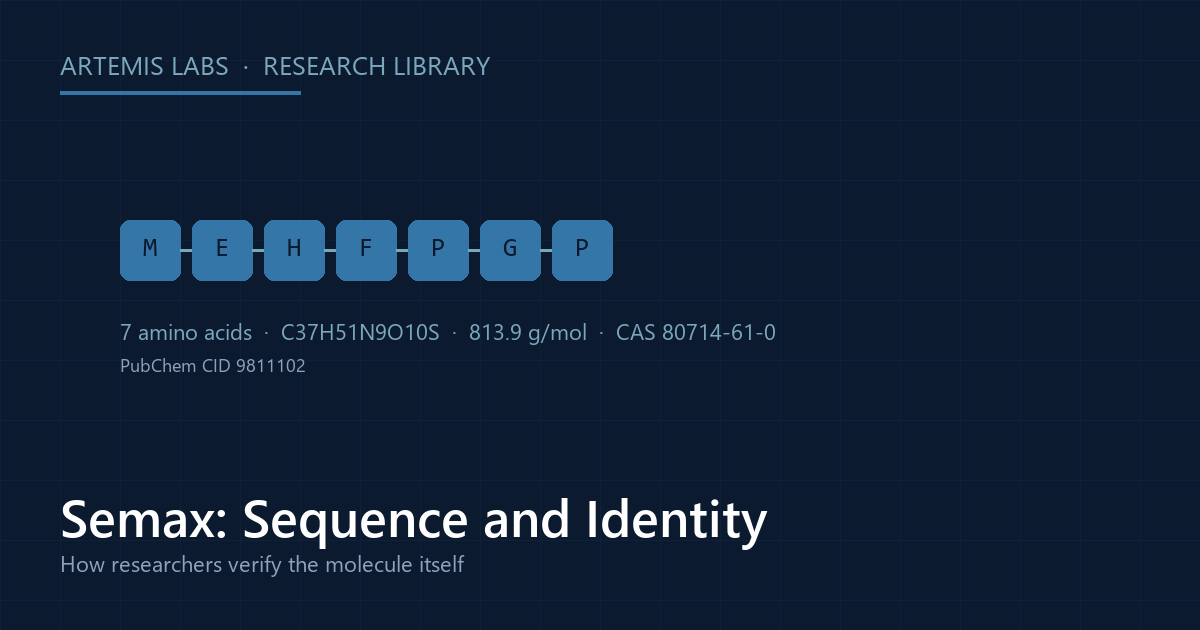
Semax verified identity data read from PubChem CID 9811102 on August 26, 2026: sequence MEHFPGP, formula C37H51N9O10S, weight 813.9, CAS 80714-61-0.
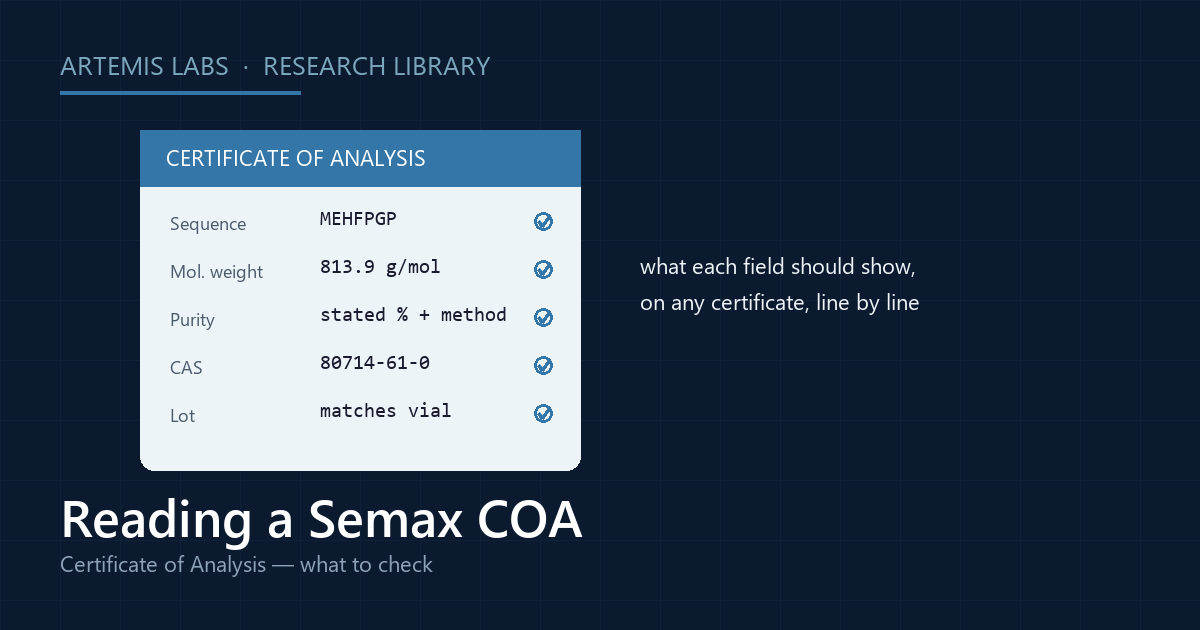
What a Semax COA should show: sequence MEHFPGP, seven residues, CAS 80714-61-0, CID 9811102, and the two mass numbers that are both correct.
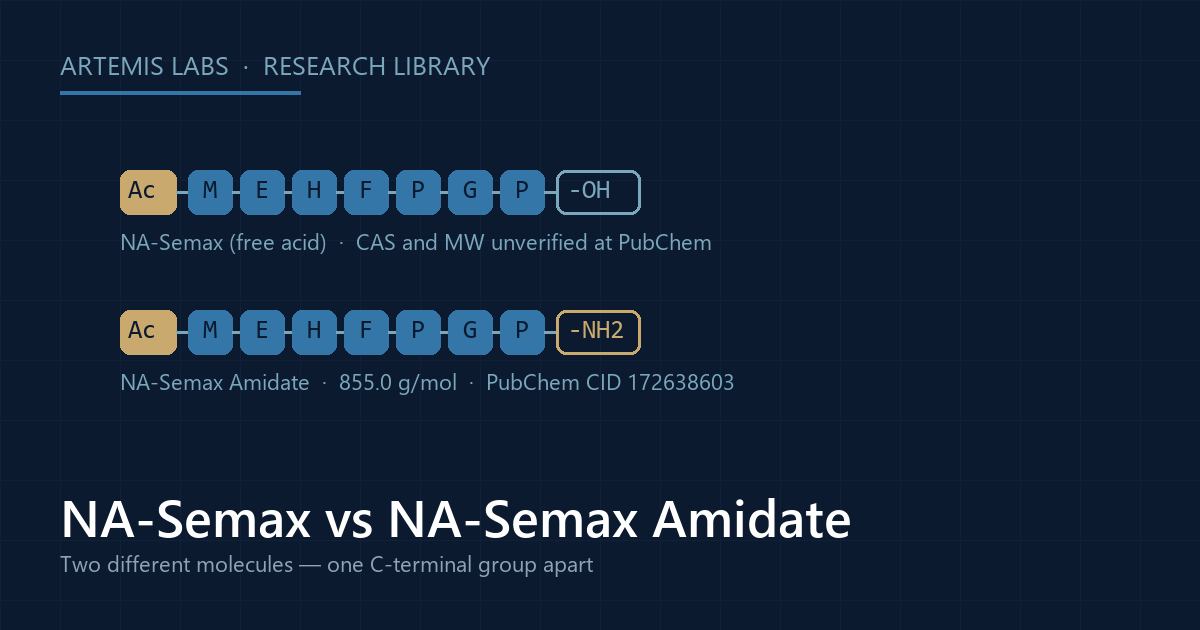
The name NA-Semax returns no PubChem record. Two different molecules sit behind it, one dalton apart, and one published test of the acetylated form.
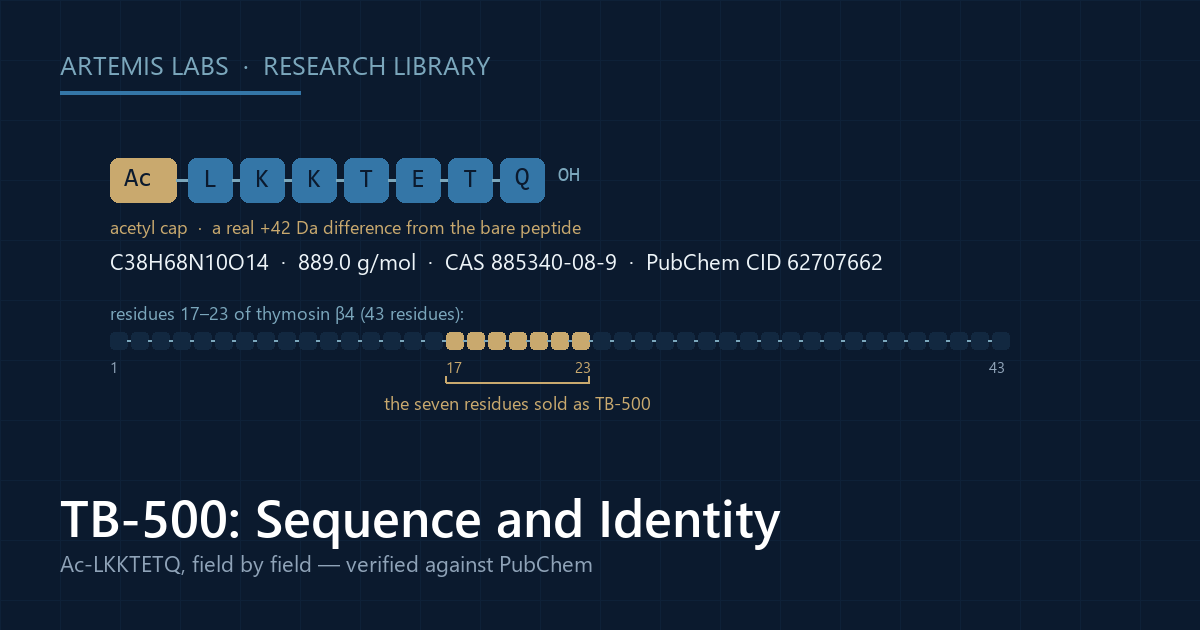
TB-500 is Ac-LKKTETQ-OH: seven amino acids, MW 889.0, CAS 885340-08-9. The verified identity numbers, plus the 847.0 free-acid mix-up worth avoiding.
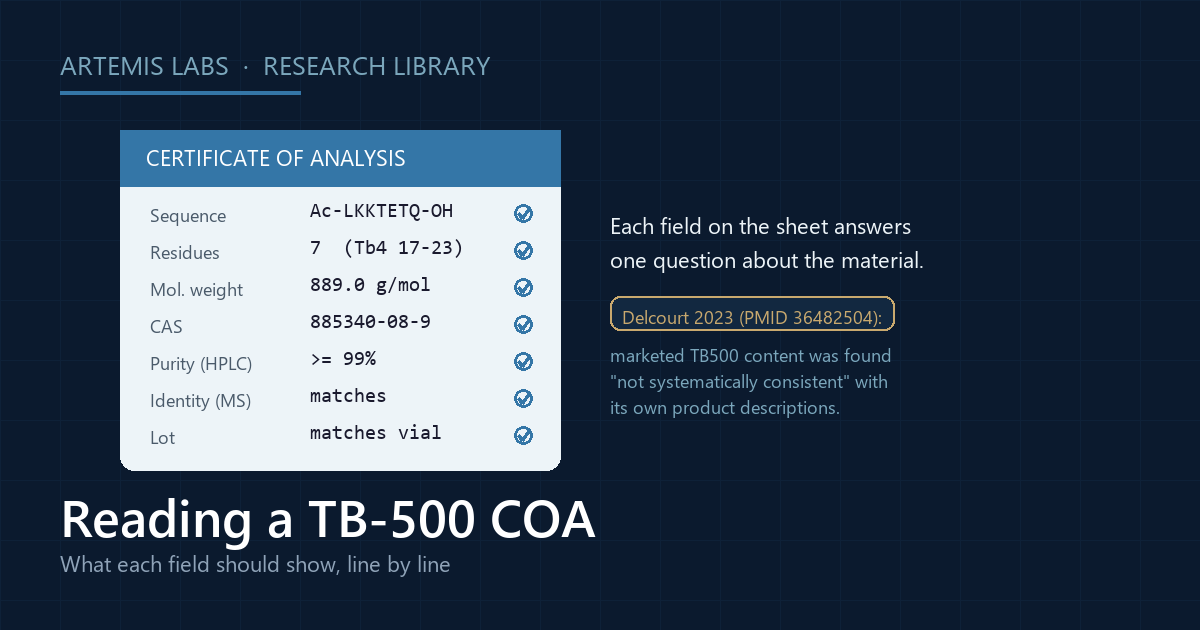
What a TB-500 certificate of analysis should show, which identity numbers it must match, and why a 2023 peer-reviewed paper says batch testing matters.