
Neuropeptide research studies short signaling peptides of the nervous system: which receptor each binds, what genes change, and what behavior follows in a defined model. Six Artemis compounds appear in that work. This page maps the field and lists the articles.
Research Articles
What Is Selank Studied For? The Research Record
Selank is a seven-amino-acid peptide built from tuftsin, studied in Russia since the 1990s. What the published research covers, what the human trials compared…
Read article →ArticleSelank in Stress and Withdrawal Models: The Rodent Record
Selank was tested against alcohol and morphine withdrawal in rodents, with diazepam as the comparator. The published comparison says Selank was slightly inferior —…
Read article →ArticleSelank Safety Research: What Has and Has Not Been Measured
A blood-clotting study found Selank had the strongest anticoagulant effect of three related peptides. A stem cell study reassuring on toxicity also reported a…
Read article →ArticleSelank, Cytokines and Inflammation Gene Research
Selank changes the expression of inflammation-related genes in mouse spleen. One study found a three-residue fragment produced largely the same profile — which raises…
Read article →ArticleSelank Identity: Sequence, CAS, and Two Wrong Database IDs
Selank is TKPRPGP, C33H57N11O9, MW 751.9, CAS 129954-34-3, PubChem CID 11765600. Two identifiers published for it across the industry — including by us —…
Read article →ArticleSelank Human Trials: What Was Actually Compared
Four Russian human studies of Selank exist, plus one imaging study. Every one used a benzodiazepine comparator rather than placebo, and none was run…
Read article →ArticleSelank and the GABA System: The Evidence and the Null Result
Selank behaves like a benzodiazepine in rodents, and binding studies call it a positive allosteric modulator of GABA binding. The same group's human-cell experiment…
Read article →ArticleWhat Is Semax? What It Has Actually Been Studied For | Artemis Labs
Semax is a seven-amino-acid peptide, CID 9811102. A plain-language look at what it is, where it came from, and which research areas it has…
Read article →ArticleSemax vs Selank: What the Research Actually Shows | Artemis Labs
Semax and Selank are both Russian-developed heptapeptides. This page compares what has actually been published on each, and how strong that evidence is.
Read article →ArticleSemax vs ACTH(4-10): Why Both Names Are Correct | Artemis Labs
Semax is called both an ACTH(4-10) analog and ACTH(4-7)PGP. Both are right. Here are the two sequences, molecular weights, CAS numbers and PubChem CIDs,…
Read article →ArticleSemax Stroke Research: What the Studies Actually Say | Artemis Labs
Every published human study of Semax in stroke and cerebral ischemia was run in Russia. Here is what each one reported, and the design…
Read article →ArticleSemax Sequence, Molecular Weight and CAS Number | Artemis Labs
Semax verified identity data read from PubChem CID 9811102 on August 26, 2026: sequence MEHFPGP, formula C37H51N9O10S, weight 813.9, CAS 80714-61-0.
Read article →ArticleSemax Safety Research: What the Published Studies Report | Artemis Labs
A plain-language review of what published Semax studies report about safety, including the negative findings, the missing long-term data, and the gaps.
Read article →ArticleSemax Optic Nerve and Eye Research: What Studies Show | Artemis Labs
What Russian optic-nerve, glaucoma and retina studies of Semax actually reported, why none of them isolate the peptide, and where the published record runs…
Read article →ArticleSemax Neuroprotection Research: What Studies Report | Artemis Labs
A plain-language review of the published Semax neuroprotection literature: which studies used cells, which used animals, which used people, and what each one found.
Read article →ArticleSemax Human Trials: What the Evidence Actually Shows | Artemis Labs
Semax has four PubMed records carrying a clinical-trial tag. None were run outside Russia, and the only randomized one reported a negative primary endpoint.
Read article →ArticleSemax, Cognition and Attention: What Research Shows | Artemis Labs
What published studies measured when they looked at Semax, cognition and attention, who was studied, where the work was done, and what was never…
Read article →ArticleHow to Read a Certificate of Analysis for Semax | Artemis Labs
What a Semax COA should show: sequence MEHFPGP, seven residues, CAS 80714-61-0, CID 9811102, and the two mass numbers that are both correct.
Read article →ArticleSemax and BDNF: What Published Research Reports | Artemis Labs
Semax is widely described as raising BDNF. The most-cited study measured it in three rat brain regions and found it fell in two of…
Read article →ArticleSemax Anxiety and Stress Research: What Studies Show | Artemis Labs
What published studies report about Semax in anxiety and stress research: rat stress models, a forced swim test null result, and the limits of…
Read article →ArticleNA-Semax vs N-Acetyl Semax Amidate: What PubChem Says | Artemis Labs
The name NA-Semax returns no PubChem record. Two different molecules sit behind it, one dalton apart, and one published test of the acetylated form.
Read article →Related Products
What question does this field ask?
Three questions, in order. Which receptor does the peptide bind, and how selectively? What happens to expression of markers such as BDNF or immediate-early genes? And what changes in a standard behavioral test? A paper that answers the first two in cells says nothing about the third, and the articles here are labeled by which question they answer.
Which compounds appear, and why?
Semax and Selank from the Russian literature, DSIP, oxytocin, PT-141 and VIP. Oxytocin and bremelanotide (PT-141) have clinical literatures; the others are almost entirely preclinical. Melanotan 2 is listed under the product class but not this field, because its studies are mostly analytical and dermatological.
What do the studies measure?
Receptor binding, gene-expression profiles after an insult such as ischemia, and behavior in rodent tests such as the open field or forced swim. The 2024 rat study of ACTH-like peptides, for example, read the whole brain transcriptome one day after an experimental stroke. A 2020 analysis of seized products is also part of this record: it found the research peptides sold under these names varied in content, which is why identity testing sits ahead of any research question.
How do the compounds compare?
| Compound | What it is | Sequence / formula | Molecular weight | Sources cited on its page |
|---|---|---|---|---|
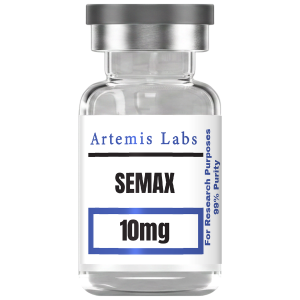
| Semax | ACTH(4–10) analog, 7 amino acids | MEHFPGP | 813.9 Da | 14 |
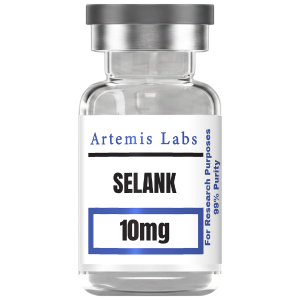
| Selank | tuftsin analog, 7 amino acids | TKPRPGP | 751.9 Da | 7 |
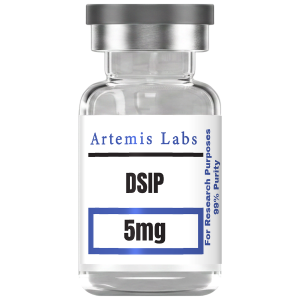
| DSIP | delta-sleep-inducing peptide, 9 amino acids | WAGGDASGE | 848.8 Da | 6 |
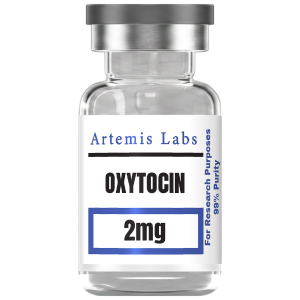
| Oxytocin | 9-amino-acid cyclic neuropeptide | CYIQNCPLG-NH₂ | 1,007.2 Da | 11 |
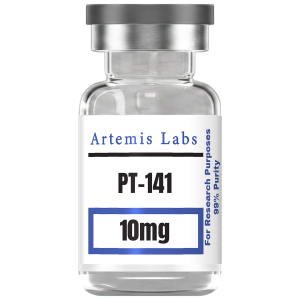
| PT-141 | cyclic α-MSH(4–10) analog (bremelanotide) | Ac-Nle-cyclo[Asp-His-D-Phe-Arg-Trp-Lys]-OH | 1,025.2 Da | 14 |
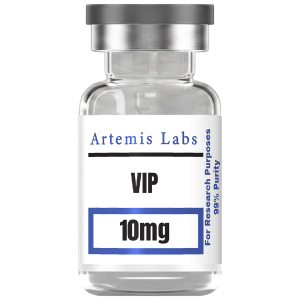
| VIP | vasoactive intestinal peptide, 28 amino acids | HSDAVFTDNYTRLRKQMAVKKYLNSILN-NH₂ | 3,326.8 g/mol | 16 |
Sequences and molecular weights are the values verified on each product page. "Sources cited" is the count shown on that page on 28 August 2026.
Where do I read more?
Every compound on this page is supplied for laboratory research only. Each product page carries its full reference list.
References
- Filippenkov IB et al. (2024). ACTH-like peptides compensate rat brain gene expression profile disrupted by ischemia. Biomedicines. PMID 39767736
- Vanhee C et al. (2020). The occurrence of putative cognitive enhancing research peptides in seized pharmaceutical preparations. Drug Test Anal. PMID 31667971
- Tukhovskaya EA et al. (2021). DSIP-like KND peptide reduces brain infarction in C57Bl/6 mice and myocardial infarction in SD rats. Biomedicines. PMID 33918965
- Fu Y et al. (2026). Divergent effects of peripheral vs. central oxytocin administration on observational fear behavior in mice. Pharmaceuticals (Basel). PMID 41901198