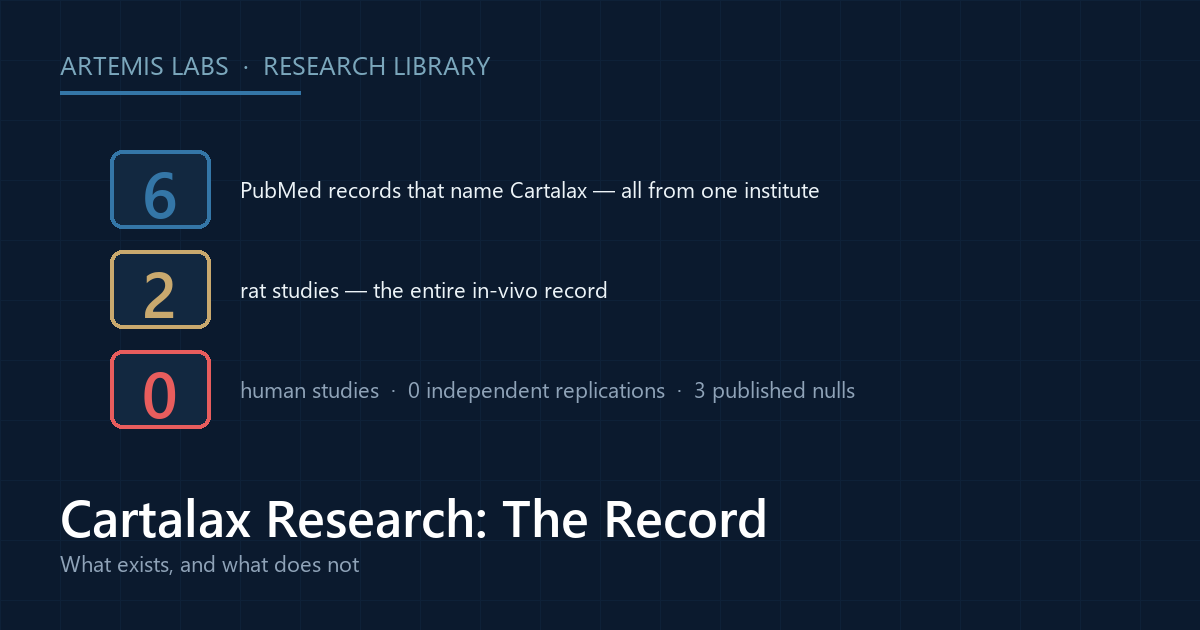
A plain review of every indexed Cartalax (AED) paper: what was measured, in which cells, by whom, and the three studies where AED was the null result.
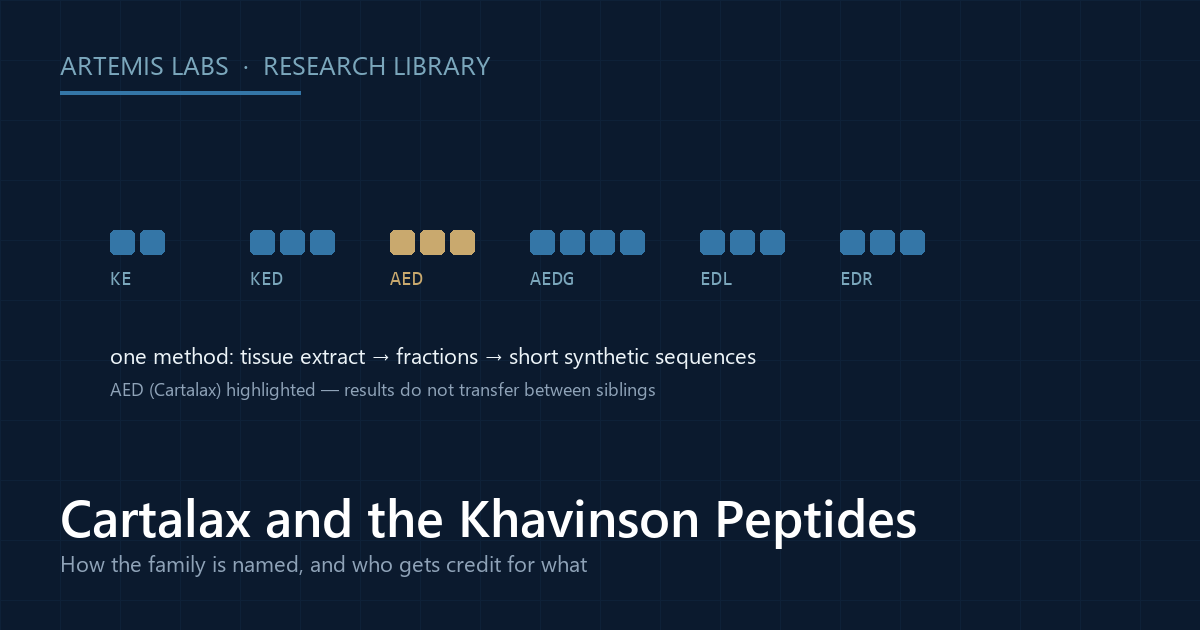
Cartalax (AED) is one of the Khavinson short peptide bioregulators. How the family was derived, how the names work, and which sibling peptide each AED paper actually credits.
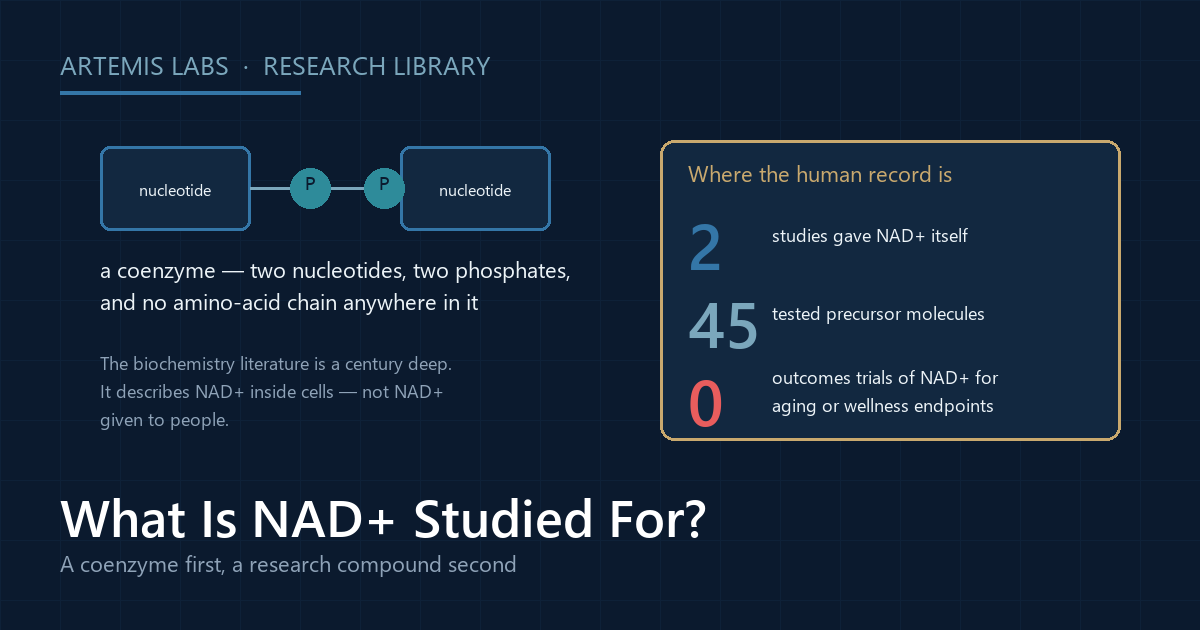
NAD+ is a dinucleotide coenzyme, not a peptide. What the research record actually covers, and why almost all human trial evidence involves precursors instead.
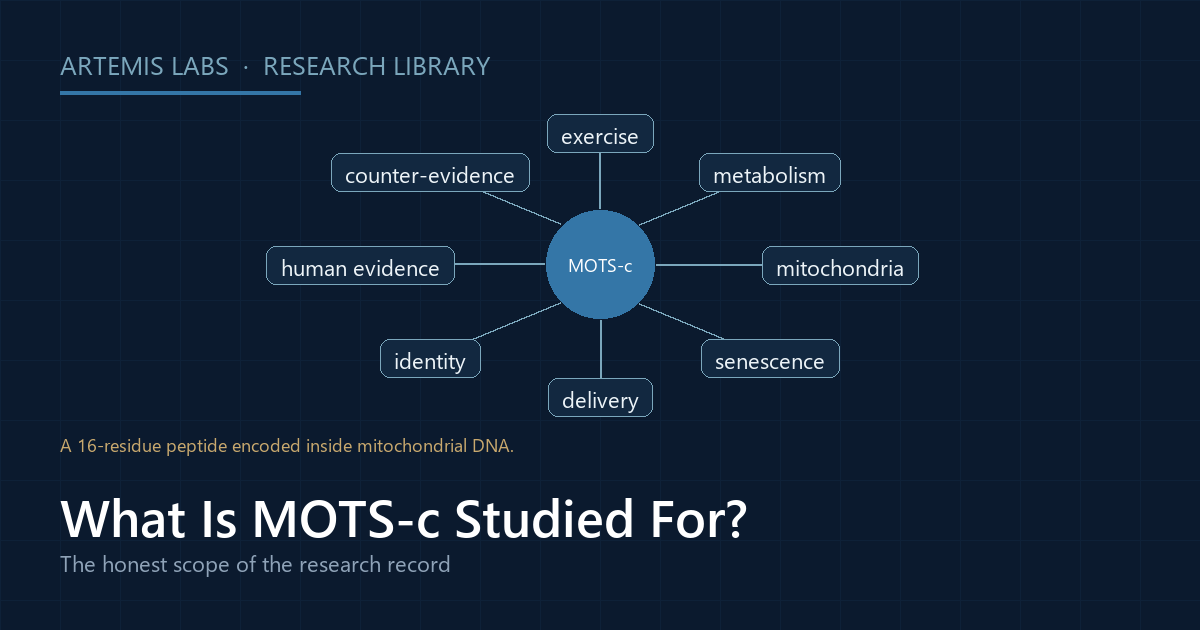
MOTS-c is a 16-amino-acid peptide encoded in mitochondrial DNA. What researchers have actually studied it for, in plain words, and what has never been tested in people.
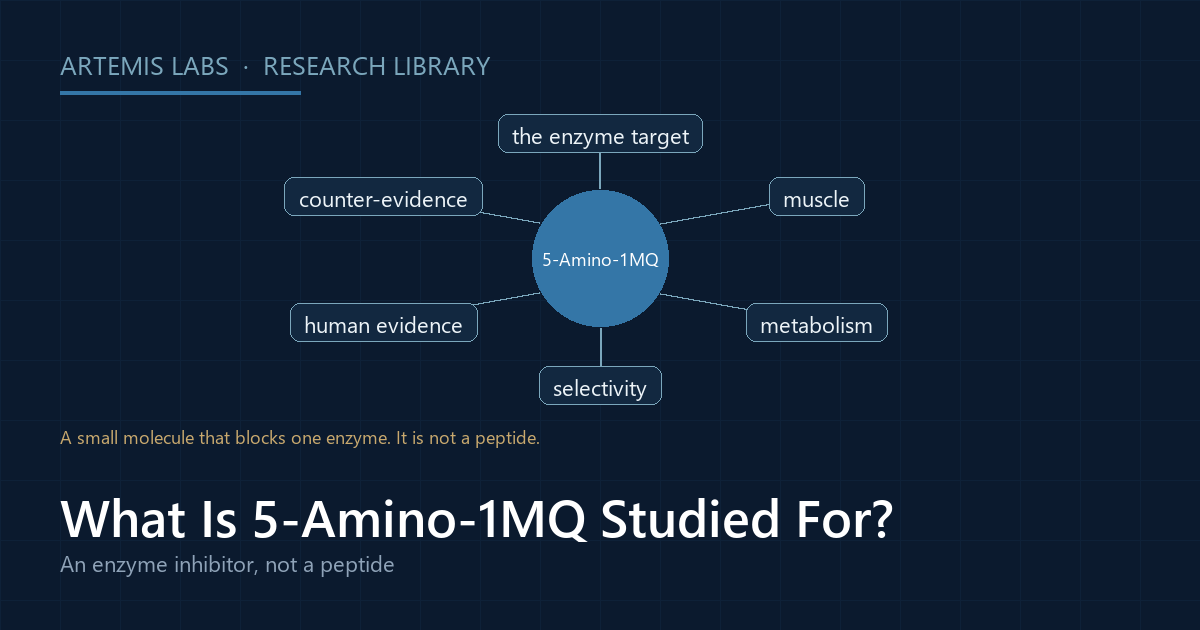
5-Amino-1MQ is a small molecule, not a peptide. What NNMT does, what blocking it means, and why the published record is entirely rodent and cell work.
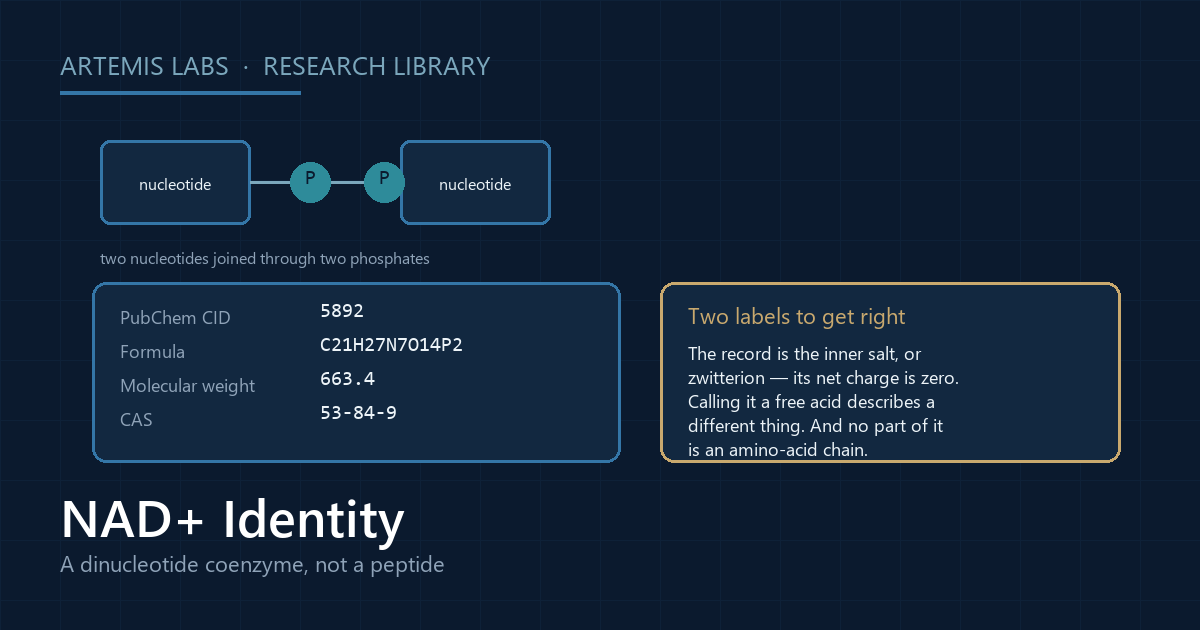
NAD+ is the inner-salt, zwitterionic form of a dinucleotide coenzyme: CID 5892, CAS 53-84-9, MW 663.4. What each identifier means and which lookalikes to rule out.
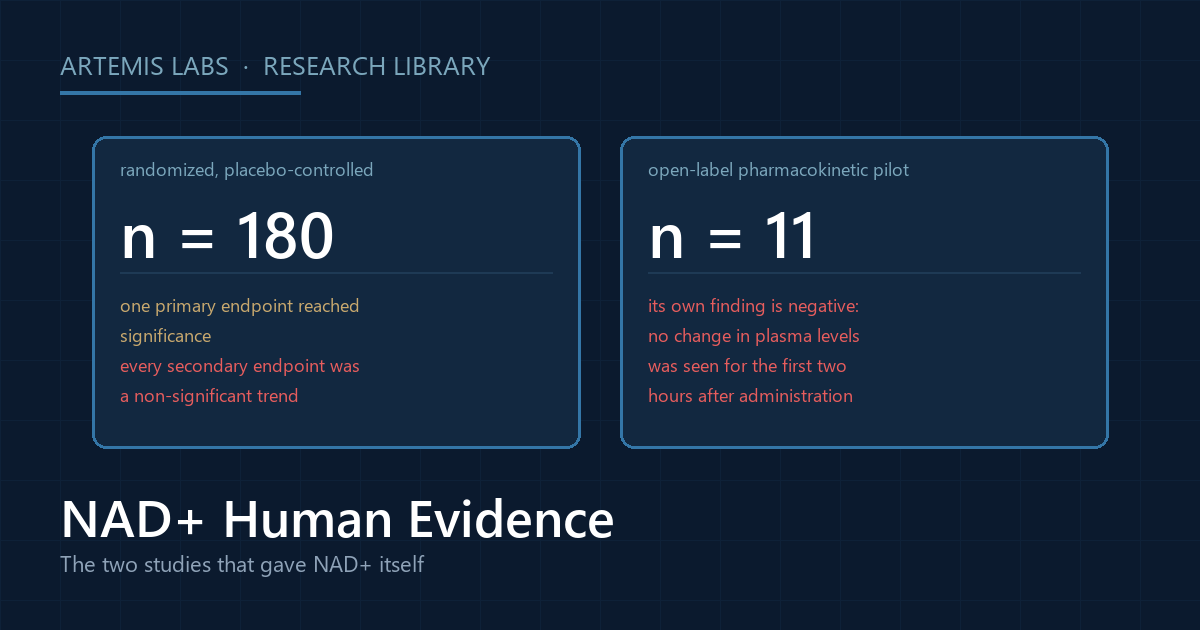
Every published human study of NAD+ itself, reported precisely: a 180-patient heart-failure trial and an 11-person infusion pilot with a negative finding.
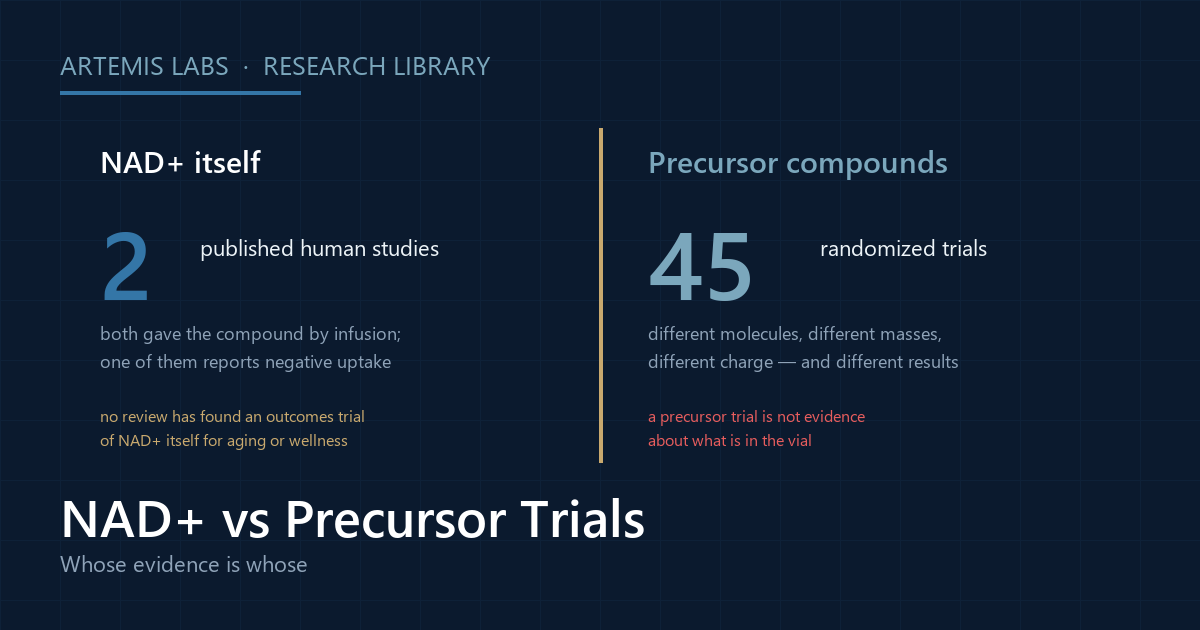
Two published human studies tested NAD+ itself. About 45 randomized trials tested NR or NMN precursors. Why the two evidence bases must never be merged.
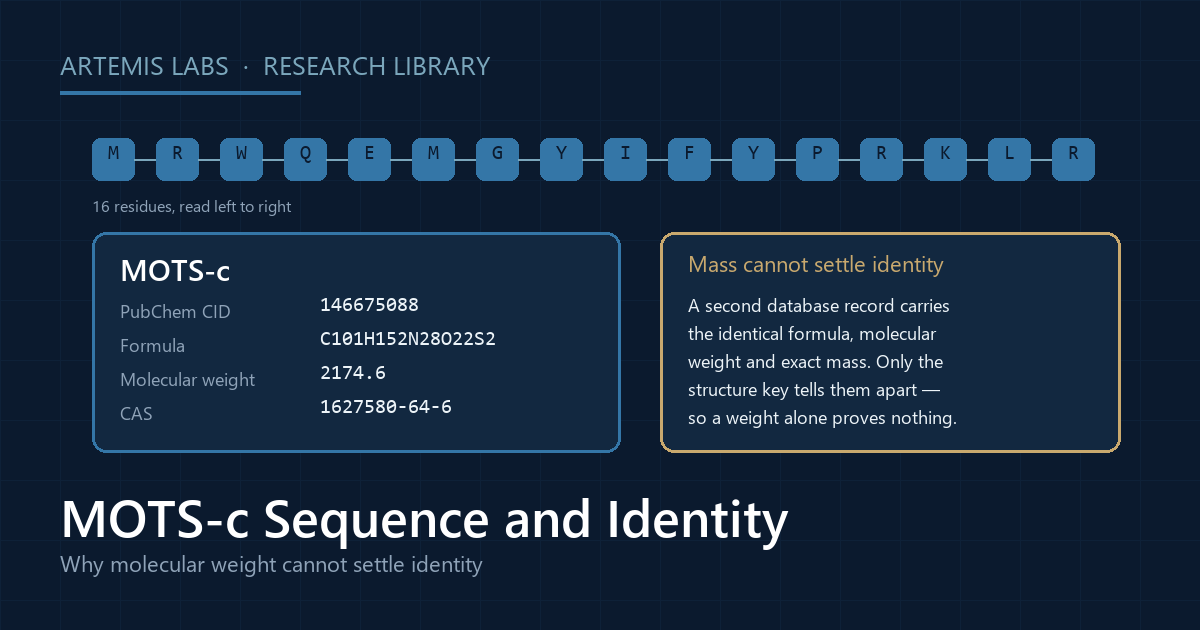
The verified MOTS-c identifiers: CID 146675088, C101H152N28O22S2, CAS 1627580-64-6 — and the mis-drawn isomer that shares the same formula, weight and exact mass.
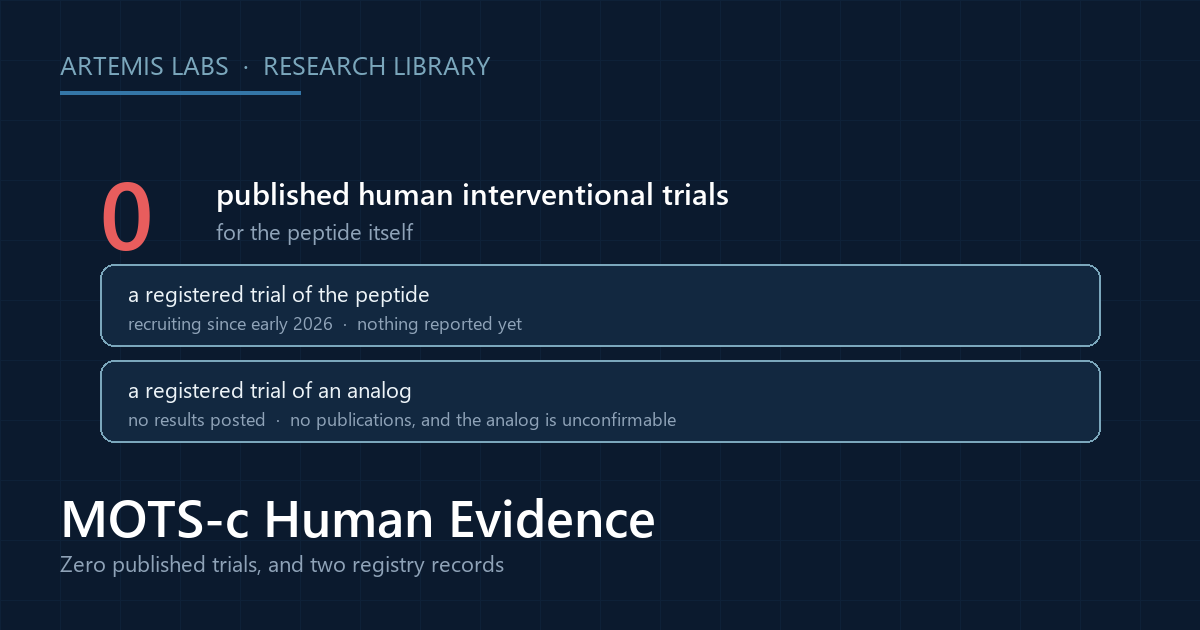
No published human interventional trial of MOTS-c exists. The registry record stated precisely, the biomarker-versus-intervention distinction, and the counter-evidence set.