A plain-language look at what published BPC-157 tendon studies actually report, which of them used cells or animals, and what the research still does not show.
Why BPC-157 resists enzyme breakdown, what the gastric-juice stability report actually says, and how the lyophilized powder is stored in a research lab.
What BPC-157 actually is chemically: its 15-amino-acid sequence, molecular formula, weight, CAS number, aliases, and how lab testing confirms identity.
What the published record actually reports about BPC-157 safety: no Phase II or III human efficacy trial, small pilot infusion references, and open questions.
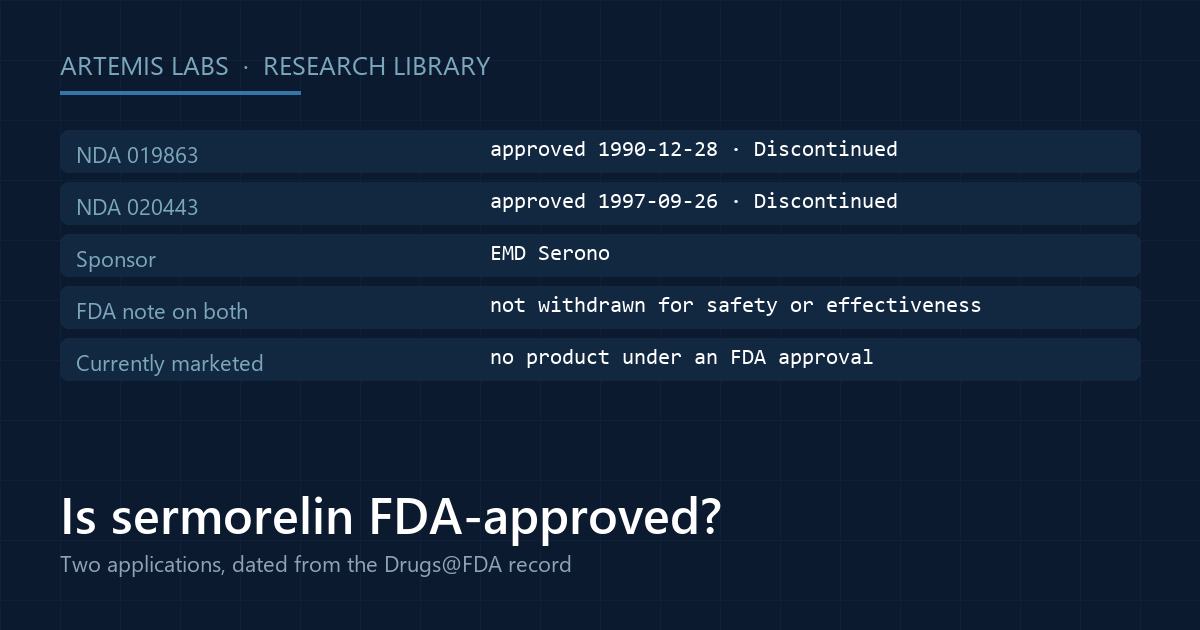
BPC-157 is not an FDA-approved drug. What that means, the 2023-2026 compounding timeline, and how “approved,” “scheduled,” and “compounding list” differ.
BPC-157 purity is measured by reverse-phase HPLC. Learn what a ≥99% result means, what the other 1% is, and why lot-specific independent COAs matter.
What published research says about BPC-157 and pain: a 2026 review of pain-signal mechanisms, the animal-model context, and the limits of the evidence.
What published research says about BPC-157 and muscle: a 2022 review across three muscle types, 2025 rat reattachment models, and what the animal evidence cannot answer.
What published research says about BPC-157 and ligaments: the 2010 rat MCL study, a 2026 mechanism review, and what the animal evidence does and does not show.
A plain answer to a question most sellers avoid: no Phase II or III human trial of BPC-157 has ever been published. Here is what the human record actually holds.