
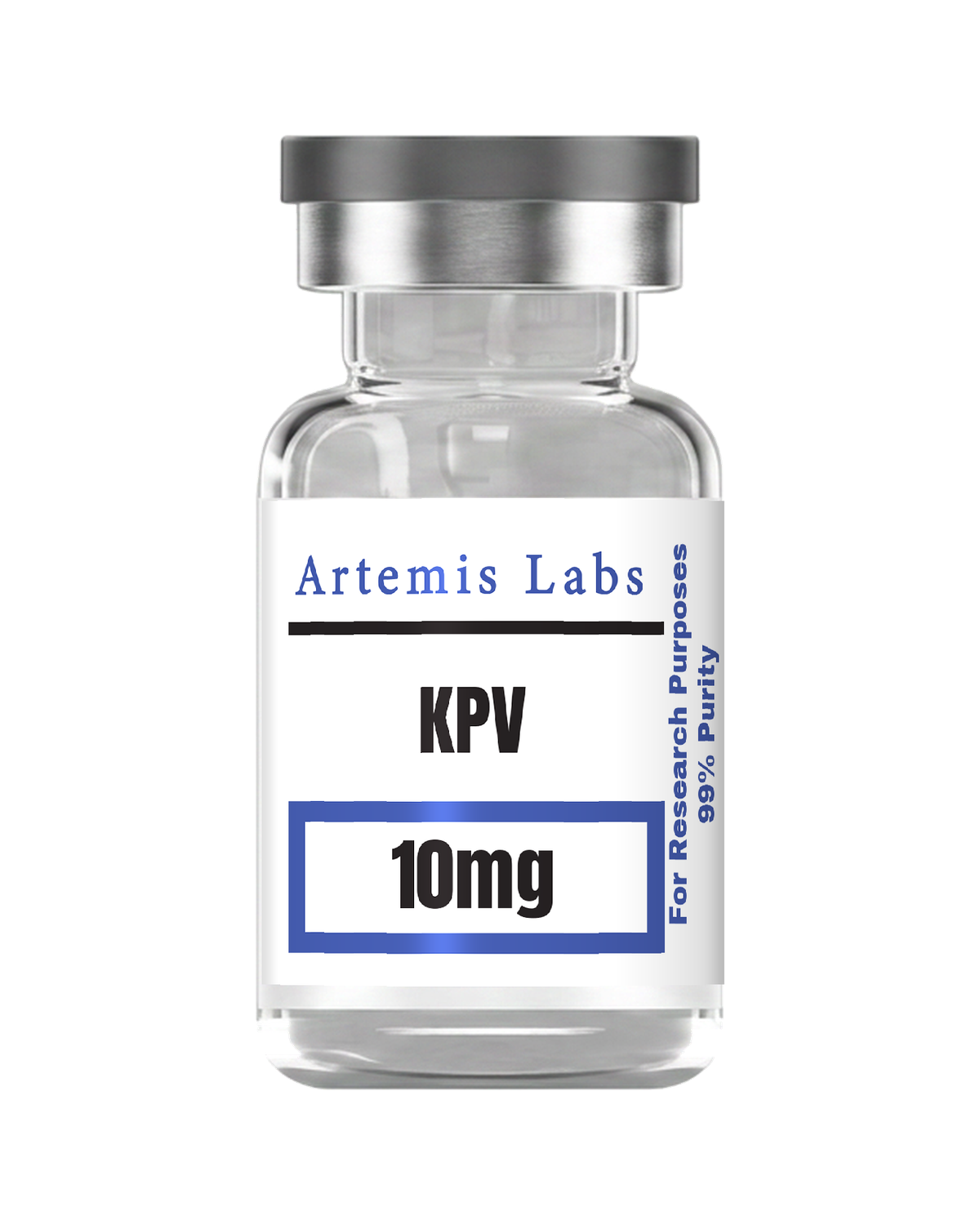
KPV
$50.00
KPV is the last three amino acids of α-MSH, an anti-inflammatory hormone. The surprise is that the fragment does not work the way the parent does — it skips the receptors entirely, slips inside the cell, and interferes with NF-κB, the master switch most inflammation runs through. Three amino acids, one target, no receptor.
Continue readingShow less
What the published work describes. KPV is small enough to enter cells by passive diffusion or peptide-transporter uptake, where it directly inhibits NF-κB nuclear translocation — the basis of effects seen in colitis, dermatitis and arthritis research models (Renke 2026, PMID 42123471). 2026 work extended it beyond inflammation into hepatic lipid metabolism via PPARγ (Lee 2026, PMID 42064835).
Two honest limits. The evidence base is entirely preclinical — cell culture and rodent colitis models — with no human efficacy, pharmacokinetic or long-term safety data published. And KPV does not reproduce everything the parent hormone does: in crystal-induced peritonitis, α-MSH inhibited macrophage activation and KPV did not (PMID 12750433).
10 in stock
Free shipping on orders over $300
Pay by Venmo or Cash App — instructions are emailed with your order.
7 published sources cited on this page see them
For research use only. Not for human consumption.
Description
KPV is a very small peptide made of just three building blocks: lysine, proline, and valine. KPV is the tail end of a natural hormone called alpha-MSH. Researchers study KPV to learn how it quiets NF-κB, a switch inside cells that turns on inflammation signals. Artemis Labs supplies it for laboratory research only.
KPV corresponds to residues 11–13 of α-melanocyte-stimulating hormone. The most recent primary finding in the record is Lee et al. 2026 (PMID 42064835), with delivery work by Jeong et al. 2025 (PMID 40030207) and Li et al. 2024 (PMID 38289234).
Reviewed August 21, 2026 · Artemis Labs
What is KPV?
KPV (Lys-Pro-Val) is the C-terminal tripeptide of α-melanocyte-stimulating hormone (α-MSH, residues 11–13). At three residues, it is one of the smallest peptides documented to retain the parent hormone’s anti-inflammatory activity, making it a frequent reference compound in structure-activity studies of small anti-inflammatory peptides.
How does KPV work in published research?
Published mechanism studies establish that KPV’s effects operate largely independently of melanocortin receptors. The dominant pathway is direct intracellular NF-κB inhibition: the tripeptide enters cells via passive diffusion or peptide-transporter-mediated uptake (PepT1 / SLC15A1), where it prevents p65-IκBα dissociation and blocks the transcription of pro-inflammatory cytokines (TNF-α, IL-1β, IL-6, IL-8) at the source.
What did the 2024–2026 KPV literature report?
Recent 2026 work (Lee et al., Cytotechnology, PMID 42064835) extended KPV’s mechanism profile from classical anti-inflammation into hepatic lipid metabolism, demonstrating ROS-dependent regulation of the PPARγ pathway in HepG2 cells. Active translational delivery research is developing targeted KPV systems for inflammatory bowel disease — hydrogel microsphere (Jeong et al., 2025, PMID 40030207) and temperature-sensitive hydrogel (Li et al., 2024, PMID 38289234) approaches.
What are KPV’s analytical specifications?
| Chemical name | KPV (Lys-Pro-Val) |
| Sequence | Lys-Pro-Val (α-MSH residues 11–13) |
| Molecular formula | C16H30N4O4 |
| Molecular weight | ~342.4 g/mol |
| Parent peptide | α-melanocyte-stimulating hormone (13 residues) |
| Form | Lyophilized white powder, 10 mg per vial |
| Storage (lyophilized) | –20 °C, desiccated, protected from light |
How is this compound supplied?
Supplied as lyophilized white powder, 10 mg/vial, for in-vitro receptor, cell-culture, and pre-clinical research applications.
What is the regulatory status of KPV?
KPV was not placed on FDA Category 2 during the 2023–2024 503A peptide review process — distinguishing it from CJC-1295, ipamorelin, and BPC-157, all of which were placed on (and subsequently removed) the interim Category 2 list. In May 2026 the FDA evaluated KPV for pharmacy compounding and concluded the evidence weighs against listing it; on July 23, 2026 the Pharmacy Compounding Advisory Committee voted 8-6 to recommend listing it anyway. That vote is advisory; the FDA has not acted on it, and no rule has been proposed. KPV is not federally scheduled as a controlled substance in the United States. KPV is not on the WADA Prohibited List. Standard research-peptide state-level shipping restrictions apply.
References
6 linked references. Every citation opens the PubMed record.
- Lee et al. (2026) — Lys-Pro-Val and hepatic lipid accumulation in HepG2 cells via ROS-dependent regulation of the PPARγ pathway. Cytotechnology. PMID 42064835
- Jeong et al. (2025) — multicompartmental hydrogel microspheres engineered to deliver KPV to colonic epithelium. PMID 40030207
- Li et al. (2024) — temperature-sensitive hydrogel as a biomimetic mucus layer in murine ulcerative colitis models. PMID 38289234
- Renke (2026) — review context for KPV as an anti-inflammatory peptide. PMID 42123471
- Mendias CL, Awan TM (2026) — approved and unapproved peptide therapies. Sports Med. PMID 41966639
- Mavrych V et al. (2026) — therapeutic peptides in gerontology. Front Aging. PMID 42021992
For research use only. Not for human or veterinary use.
Additional information
| Vial Size | 10mg |
|---|
Science & Research
Science & Research
MECHANISM OF ACTION
KPV (Lys-Pro-Val) corresponds to residues 11–13 of alpha-melanocyte-stimulating hormone (α-MSH) — the C-terminal tripeptide of the parent hormone. The published mechanism is a melanocortin-receptor-independent anti-inflammatory pathway:
1. Cellular Uptake — KPV is small enough (three residues) to enter cells via passive diffusion or peptide-transporter-mediated uptake. Peptide Transporter 1 (PepT1 / SLC15A1) — the same gateway that absorbs dietary di- and tripeptides — has been characterized as one recognized uptake mechanism.
2. NF-κB Pathway Inhibition — Once intracellular, KPV directly suppresses nuclear factor-kappa B (NF-κB) activation. NF-κB is the master transcriptional switch for pro-inflammatory cytokines: TNF-α, IL-1β, IL-6, IL-8. KPV blocks p65-IκBα complex dissociation and prevents p65 nuclear translocation, suppressing inflammation at the transcriptional level rather than the receptor level.
3. Selective Localization — Because NF-κB is preferentially activated in inflamed tissue, KPV’s effects concentrate at sites of dysregulation while leaving non-inflamed tissue largely unaffected in published research models. This selectivity distinguishes KPV from broadly immunosuppressive interventions.
2024–2026 MECHANISM RESEARCH
- Hepatic lipid metabolism / PPARγ pathway (Lee et al., 2026, PMID 42064835): Lys-Pro-Val attenuated hepatic lipid accumulation in HepG2 cells via ROS-dependent regulation of the PPARγ pathway. This is the single most directly KPV-relevant new finding in the 2024–2026 window, extending the mechanism profile from anti-inflammation into hepatic lipid metabolism research.
- Hydrogel microsphere delivery for IBD research (Jeong et al., 2025, PMID 40030207): Multicompartmental hydrogel microspheres with a concentric thin oil layer were engineered to protect KPV during transit and deliver it to colonic epithelium while preserving anti-inflammatory activity.
- Temperature-sensitive hydrogel (Li et al., 2024, PMID 38289234): Growth-factor-loaded temperature-sensitive hydrogel acting as a biomimetic mucus layer attenuated ulcerative colitis in murine models by repairing mucosal barriers; KPV positioned within the IBD therapeutic-agent context.
- 2026 reviews (Renke 2026, PMID 42123471; Mendias 2026, PMID 41966639; Mavrych 2026, PMID 42021992): KPV continues to be reviewed as a viable anti-inflammatory peptide within broader peptide-therapy literature.
STRUCTURE-ACTIVITY CONTEXT
KPV’s mechanism is intentionally minimalist — three residues, no melanocortin-receptor binding required, no copper coordination chemistry — which is why it is widely used as a reference compound in structure-activity studies of small anti-inflammatory peptides.
ANALYTICAL SPECIFICATIONS
- Sequence: Lys-Pro-Val (α-MSH residues 11–13)
- Molecular Formula: C₁₆H₃₀N₄O₄
- Molecular Weight: ~342.4 g/mol
- Parent peptide: α-melanocyte-stimulating hormone (13 residues)
- Purity Standard:
- Storage (lyophilized): –20 °C, desiccated, protected from light
- Form: Lyophilized white powder, 10 mg/vial
REGULATORY STATUS
KPV was not placed on FDA Category 2 during the 2023–2024 503A peptide review process — distinguishing it from CJC-1295, ipamorelin, and BPC-157, all of which were placed on (and subsequently removed) the interim Category 2 list. In May 2026 the FDA evaluated KPV for pharmacy compounding and concluded the evidence weighs against listing it; on July 23, 2026 the Pharmacy Compounding Advisory Committee voted 8-6 to recommend listing it anyway. That vote is advisory; the FDA has not acted on it, and no rule has been proposed. KPV is not federally scheduled as a controlled substance in the United States. KPV is not on the WADA Prohibited List. Standard research-peptide state-level shipping restrictions apply.
EVIDENCE-DENSITY NOTE (honest disclosure)
KPV’s 2024–2026 primary-literature surface is small relative to BPC-157 or GHK-Cu. The compound has a robust pre-2020 mechanism literature base (NF-κB inhibition, anti-inflammatory activity in colitis, dermatitis, and arthritis research models) that remains foundational. Artemis Labs frames KPV honestly as an established-mechanism, ongoing-translational-research compound rather than a high-volume novel-research target.
For research use only. Not for human or veterinary use.
Related Research Compounds
Related Research Compounds
In published research models, KPV is mechanistically complementary to other small repair-pathway peptides because it operates upstream of inflammatory cytokine production via NF-κB suppression, while BPC-157 acts on downstream repair signalling (VEGFR2-Akt-eNOS, FAK) and GHK-Cu operates through copper-mediated remodelling chemistry (Mavrych 2026, PMID 42021992).
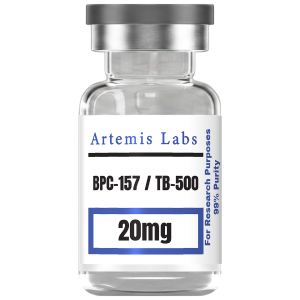
BPC-157 / TB-500 — Direct angiogenic and tissue-repair signalling; mechanistically complementary to KPV’s upstream NF-κB inhibition. Frequently studied alongside KPV in tissue-repair research models.
GHK-Cu — Copper-tripeptide acting through copper-mediated repair signalling. The four-peptide research combination pattern (BPC-157 + TB-500 + KPV + GHK-Cu) is documented in tissue-repair research reviews.
MOTS-c — Mitochondrial-derived peptide acting through bioenergetic pathways. Downstream metabolic complement to KPV’s upstream inflammation-pathway suppression.
No dosing, frequency, route, or human-use guidance is provided. Combination commentary is restricted to in-vitro and pre-clinical research-design rationale and mechanism-pathway non-redundancy.
For research use only.
FAQ
FAQ
Common questions about KPV. All answers are for laboratory research context only — no human-use guidance is provided.
- What is KPV?
- KPV (Lys-Pro-Val) is the C-terminal tripeptide of α-melanocyte-stimulating hormone (α-MSH, residues 11–13). At three residues, it is one of the smallest peptides documented to retain the parent hormone’s anti-inflammatory activity.
- How does KPV enter cells in published research models?
- KPV is small enough (three residues) to enter cells via passive diffusion or peptide-transporter-mediated uptake. Peptide Transporter 1 (PepT1 / SLC15A1) — the same gateway that absorbs dietary di- and tripeptides — has been characterized as one recognized uptake mechanism.
- Does KPV act through melanocortin receptors?
- Published mechanism studies establish that KPV’s effects operate largely independently of melanocortin receptors. The dominant reported pathway is direct intracellular NF-κB inhibition.
- What is the newest primary KPV finding in this record?
- Lee et al. 2026 (Cytotechnology, PMID 42064835) reported that Lys-Pro-Val attenuated hepatic lipid accumulation in HepG2 cells via ROS-dependent regulation of the PPARγ pathway.
- What is KPV’s regulatory status?
- KPV was not placed on FDA Category 2 during the 2023–2024 503A peptide review process — distinguishing it from CJC-1295, ipamorelin, and BPC-157, all of which were placed on (and subsequently removed) the interim Category 2 list. In May 2026 the FDA evaluated KPV for pharmacy compounding and concluded the evidence weighs against listing it; on July 23, 2026 the Pharmacy Compounding Advisory Committee voted 8-6 to recommend listing it anyway. That vote is advisory; the FDA has not acted on it, and no rule has been proposed. KPV is not federally scheduled as a controlled substance in the United States. KPV is not on the WADA Prohibited List. Standard research-peptide state-level shipping restrictions apply.
- How thick is the KPV evidence base?
- KPV’s 2024–2026 primary-literature surface is small relative to BPC-157 or GHK-Cu. The compound has a robust pre-2020 mechanism literature base (NF-κB inhibition, anti-inflammatory activity in colitis, dermatitis, and arthritis research models) that remains foundational. Artemis Labs frames KPV honestly as an established-mechanism, ongoing-translational-research compound rather than a high-volume novel-research target.
For research use only. Not for human or veterinary use.
Related products
Tissue-Repair Research