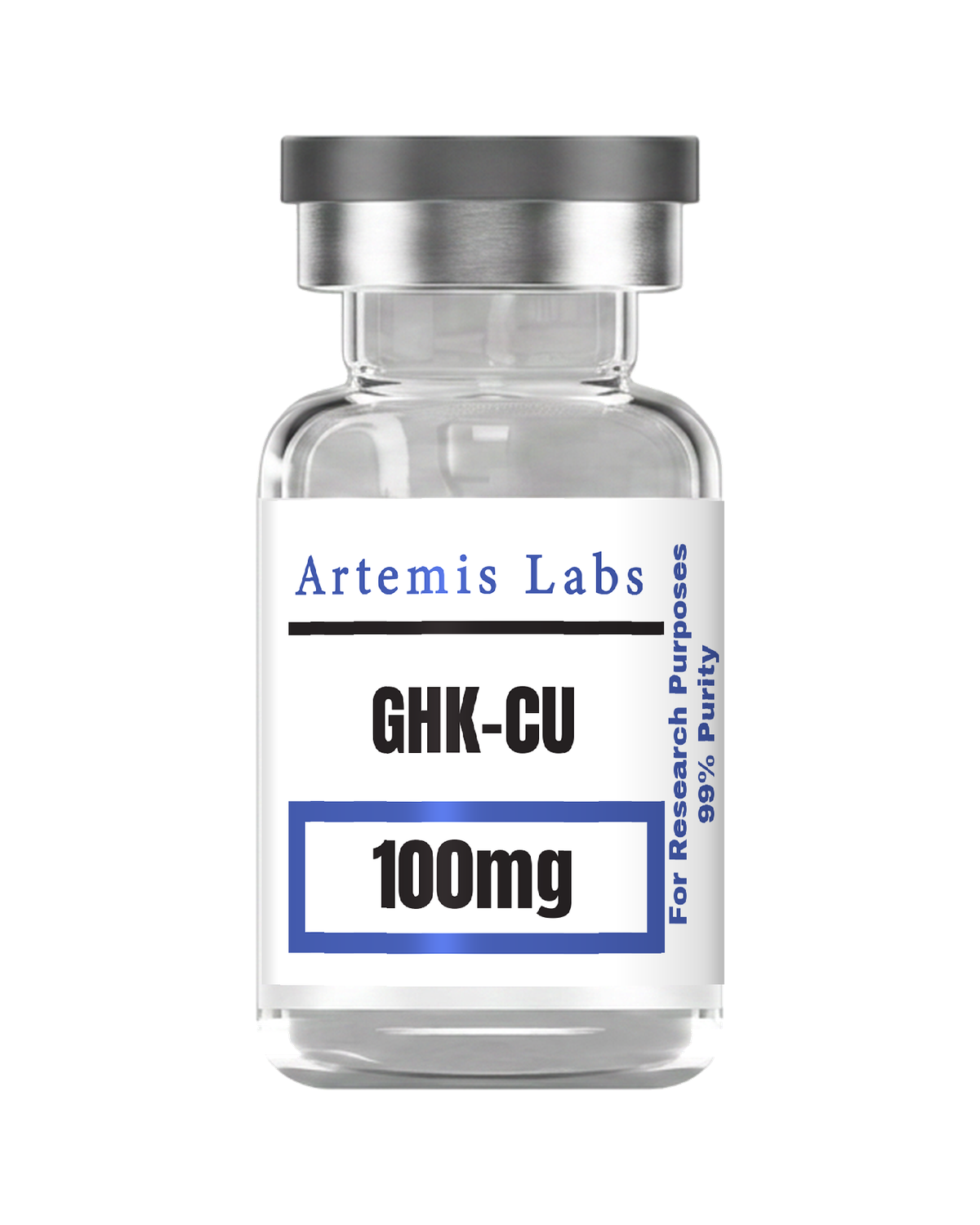
GHK-Cu
$100.00
GHK-Cu is three amino acids holding a copper atom. It occurs naturally in human plasma and falls sharply with age. What makes it unusual among research peptides is that it does not target a receptor at all — published work describes it altering the expression of roughly 4,000 human genes, which is less like a switch and more like a change of settings.
Continue readingShow less
How it works. The copper is coordinated through the histidine imidazole nitrogen and the N-terminal glycine, giving a square-planar geometry the activity depends on — remove the copper and it is a different molecule. The transcriptional programmes involved span wound healing, collagen synthesis, antioxidant defence and mitochondrial function (Renke 2026, PMID 42123471; Mavrych 2026, PMID 42021992).
Recent model work. 2026 studies reported anti-inflammatory effects in zebrafish (Hu 2026, PMID 41997403) and lifespan extension in C. elegans via DAF-16/SKN-1 signalling (Wen 2026, PMID 42084774). Both are model organisms; a worm lifespan result is a mechanistic lead, not a human one.
Lyophilized copper tripeptide.
18 in stock
Free shipping on orders over $300
Pay by Venmo or Cash App — instructions are emailed with your order.
12 published sources cited on this page see them
For research use only. Not for human consumption.
Description
GHK-Cu is a small peptide of three amino acids that holds one copper atom. It is found in human blood, and levels drop with age. GHK-Cu does not switch on a single receptor. Published work describes it changing how roughly 4,000 human genes are turned on and off. Artemis Labs supplies it as a blue powder for lab research.
Reviewed August 21, 2026 · Artemis Labs
What is GHK-Cu?
GHK-Cu is the copper(II) complex of the endogenous tripeptide glycyl-L-histidyl-L-lysine (Gly-His-Lys). Copper coordination occurs through the imidazole nitrogen of the central histidine and the N-terminal glycine amino group, generating the square-planar Cu²⁺ geometry essential to biological activity. The complex modulates an unusually broad transcriptional program — published research describes regulation of approximately 4,000 human genes covering wound healing, collagen synthesis, antioxidant defence, mitochondrial function, and tissue remodelling (Renke et al. 2026, PMID 42123471; Mavrych et al. 2026, PMID 42021992).
How does GHK-Cu work if it does not bind a receptor?
Unlike receptor-targeted research peptides, GHK-Cu does not bind a single canonical receptor. Intracellular copper trafficking and direct interaction with chromatin- and transcription-factor-associated proteins are the leading proposed mechanisms (Arciola et al. 2026, PMID 41594073). GHK is also a naturally occurring component of human plasma at roughly 200 ng/mL in young adults, declining with age — a factual basis for the endogenous-tripeptide framing.
What did the 2026 lifespan and inflammation studies report?
A landmark 2026 Biogerontology study (Wen et al., PMID 42084774) reported that GHK-Cu extends lifespan in Caenorhabditis elegans through coordinated mitochondrial-function preservation (membrane potential, dynamics) and activation of the DAF-16 (FOXO orthologue) and SKN-1 (Nrf2 orthologue) stress-response pathways. Independent zebrafish-larvae work (Hu et al. 2026, PMID 41997403) demonstrates that GHK-Cu reduces neutrophil and macrophage migration, suppresses pro-inflammatory markers, decreases reactive oxygen species, and enhances antioxidant enzyme activity in both CuSO₄ and LPS inflammation models. These are preclinical findings; no human longevity or therapeutic claim is made.
What ships with each vial, and what is the regulatory status?
GHK-Cu is not on the FDA 503A Category 2 list and not on the WADA Prohibited List. For laboratory research use only — no human dosing, administration, therapeutic, diagnostic, preventative, or longevity claim is made.
What does the GHK-Cu evidence not show?
GHK-Cu research is dominated by in-vitro and topical cosmetic-formulation models rather than systemic use, and four limits are worth stating plainly.
- No controlled human trials of systemic GHK-Cu. Systemic efficacy and safety remain uncharacterised.
- Skin penetration is formulation-limited. An in-vitro human-skin study found most copper was retained as a depot rather than transmitted (PMID 20721598).
- The most-cited randomised trial tested a multi-ingredient cosmetic formulation, not isolated GHK-Cu, so the effects cannot be cleanly attributed to the peptide (PMID 19438432).
- Copper overload is a real ceiling. GHK-Cu is a copper-delivery vehicle; copper is redox-active with established systemic toxicity when overloaded, and the safe systemic window in humans is undefined.
Analytical Specifications
| Tripeptide sequence | Gly-His-Lys (GHK) |
| Coordination | Cu²⁺ chelated via histidine imidazole + N-terminal glycine amino group |
| Molecular formula (free tripeptide) | C₁₄H₂₄N₆O₄ |
| Molecular weight (free base) | 340.4 g/mol (the copper(II) complex adds ~63.5 g/mol from Cu) |
| CAS number — GHK-Cu | 89030-95-5 |
| CAS number — GHK (free tripeptide) | 49557-75-7 |
| Endogenous plasma level | ~200 ng/mL in young adults; declines with age |
| Form | Lyophilised blue powder, 100 mg per vial |
| Storage | −20 °C, desiccated, protected from light |
References
- Wen H et al. (2026). GHK-Cu delays aging in C. elegans via mitochondrial function and DAF-16/SKN-1 pathways. Biogerontology 27(3):100. PMID 42084774
- Hu J et al. (2026). GHK-Cu attenuates CuSO₄- or LPS-induced inflammation in a zebrafish larvae model. Eur J Pharmacol 1023:178880. PMID 41997403
- Renke G, Chinellato L. (2026). Therapeutic-peptide review; copper-peptide class positioning. Int J Mol Sci. PMID 42123471
- Mavrych V et al. (2026). Therapeutic peptides in gerontology. Front Aging. PMID 42021992
- Arciola CR et al. (2026). Multifunctional wound-repair strategies in regenerative medicine. Antibiotics (Basel). PMID 41594073
- Yu X et al. (2026). Microenvironment-responsive injectable dynamic hydrogel for radiation-induced skin injury. Bioact Mater. PMID 42058630
- Aguilar L et al. (2026). Copper(II)-tripeptide complexes: synthesis, characterisation and wound-repair ability. ChemMedChem. PMID 42047624
- Chen JS et al. (2026). The laccase-like property of GHK-Cu and colorimetric sensing of phenolic compounds. Biosensors (Basel). PMID 42041438
- Mendias CL, Awan TM. (2026). Approved and unapproved peptide therapies for musculoskeletal injuries. Sports Med. PMID 41966639
- Rahman OF et al. (2026). Therapeutic peptides in orthopaedics. J Am Acad Orthop Surg Glob Res Rev. PMID 41490200
- Counter-evidence: in-vitro human-skin penetration study; copper retained as a depot rather than transmitted. PMID 20721598
- Counter-evidence: most-cited RCT tested a multi-ingredient cosmetic formulation, not isolated GHK-Cu. PMID 19438432
Additional information
| Vial Size | 100mg |
|---|
Science & Research
Science & Research
Mechanism of Action
GHK-Cu is the copper(II)-complexed form of the tripeptide Gly-His-Lys (an endogenous human peptide). Copper coordination occurs through the imidazole nitrogen of the central histidine and the N-terminal glycine amino group, generating a square-planar Cu²⁺ geometry essential to biological activity. The complex modulates a broad transcriptional program — published research describes regulation of approximately 4,000 human genes spanning wound healing, collagen synthesis, antioxidant defence, mitochondrial function, and tissue remodelling (Renke 2026, PMID 42123471; Mavrych 2026, PMID 42021992).
The mechanism is fundamentally different from receptor-targeted research peptides: GHK-Cu does not bind a single canonical receptor. Intracellular copper trafficking and direct interaction with chromatin- and transcription-factor-associated proteins are the leading proposed mechanisms (Arciola 2026, PMID 41594073).
2024–2026 Mechanism Updates
- Lifespan extension via mitochondrial / DAF-16 / SKN-1 pathway (Wen et al. 2026, PMID 42084774). *Biogerontology* report that GHK-Cu extends lifespan in *Caenorhabditis elegans* through coordinated mitochondrial-function preservation (membrane potential, dynamics) and activation of DAF-16 (FOXO orthologue) plus SKN-1 (Nrf2 orthologue) stress-response transcription factors. Most rigorous new mechanism data on GHK-Cu. Preclinical only — no human longevity claim.
- In-vivo anti-inflammatory mechanism (Hu et al. 2026, PMID 41997403). Zebrafish larvae model: GHK-Cu reduces neutrophil and macrophage migration in both CuSO₄ and LPS inflammation models, suppresses pro-inflammatory markers, upregulates antioxidant enzymes, lowers ROS.
- Microenvironment-responsive injectable hydrogel for radiation-induced skin injury (Yu et al. 2026, PMID 42058630). Translational research into GHK-Cu delivery systems.
- Copper-tripeptide analog synthesis + wound-repair characterisation (Aguilar et al. 2026, PMID 42047624).
- Laccase-like enzymatic activity (Chen et al. 2026, PMID 42041438). Colorimetric phenolic-compound sensing context.
- Multifunctional wound-repair framing (Arciola et al. 2026, PMID 41594073; Rahman et al. 2026, PMID 41490200). GHK-Cu reviewed within smart-healing / regenerative-medicine research landscape.
Regulatory Status
- Not on FDA 503A Category 2 — unlike CJC-1295, ipamorelin, and BPC-157, GHK-Cu was not placed on the FDA’s interim 503A bulks Category 2 during the 2023–2024 peptide review process.
- Cosmetic ingredient status — GHK-Cu is a regulated cosmetic active ingredient. The cosmetic-grade ingredient and the research-grade reagent supplied by Artemis Labs are different supply chains; only the research-grade reagent applies to this product.
- Endogenous human plasma component — GHK is naturally present in human plasma at ~200 ng/mL in young adults, declining with age.
- Not on WADA Prohibited List — GHK-Cu is not classified as a performance-enhancing compound under WADA.
Specifications
| Property | Value |
|---|---|
| Tripeptide sequence | Gly-His-Lys (GHK) |
| Coordination | Cu²⁺ chelated via histidine imidazole + N-terminal glycine amino group |
| Tripeptide molecular formula | C₁₄H₂₄N₆O₄ (free tripeptide) |
| Tripeptide MW (free base) | 340.4 g/mol |
| CAS Number — GHK (free) | 49557-75-7 |
| CAS Number — GHK-Cu | 89030-95-5 |
| Endogenous plasma level | ~200 ng/mL in young adults; declines with age |
| Storage (lyophilised) | Store at −20 °C, desiccated, protected from light |
| Form | Lyophilised blue powder, 100 mg/vial |
Key Citations (selection — full list on research page)
1. Wen H et al. 2026. *Biogerontology* 27(3):100. GHK-Cu delays aging in C. elegans via mitochondrial function + DAF-16/SKN-1. PMID 42084774. 2. Hu J et al. 2026. *Eur J Pharmacol* 1023:178880. GHK-Cu attenuates CuSO₄/LPS inflammation (zebrafish). PMID 41997403. 3. Renke G, Chinellato L. 2026. *Int J Mol Sci.* Therapeutic-peptide review; copper-peptide class positioning. PMID 42123471. 4. Mavrych V et al. 2026. *Front Aging.* Therapeutic peptides in gerontology. PMID 42021992. 5. Arciola CR et al. 2026. *Antibiotics (Basel).* Smart healing for wound repair (regenerative medicine review). PMID 41594073. 6. Mendias CL, Awan TM. 2026. *Sports Med.* Approved + unapproved peptide therapies (musculoskeletal). PMID 41966639. 7. Rahman OF et al. 2026. *J Am Acad Orthop Surg Glob Res Rev.* Therapeutic peptides in orthopaedics. PMID 41490200. 8. Aguilar L et al. 2026. *ChemMedChem.* Copper-tripeptide complexes for wound repair. PMID 42047624.
No dosing, frequency, route, or human-use guidance is supplied. For laboratory research use only.
Research Pairings
Research Pairings
What Compounds Is GHK-Cu Studied Alongside?
In published research, GHK-Cu is studied alongside other small repair-pathway peptides because its broad gene-expression-modulation profile is mechanistically complementary to the receptor-targeted and cytoskeletal mechanisms of related compounds (Mavrych et al. 2026, PMID 42021992). Pairings below are *research-design rationale*, not human-use recommendations.
Why is GHK-Cu studied with BPC-157 and TB-500?
- GHK-Cu — Cu²⁺-binding tripeptide; broad gene-expression modulation of collagen, antioxidant, and tissue-remodelling pathways
- BPC-157 — Pentadecapeptide; VEGFR2-Akt-eNOS angiogenesis + GI/tendon repair literature
- TB-500 — Tβ4 fragment 17–23; G-actin sequestration; cytoskeletal-repair literature
- Why studied together — the four-peptide regeneration-research composition combines complementary upstream and downstream repair-pathway mechanisms
Why is GHK-Cu studied with KPV?
- GHK-Cu — antioxidant-defence + ROS-suppression evidence (Hu 2026)
- KPV — α-MSH C-terminal tripeptide; NF-κB pathway inhibition
- Why studied together — mechanistically complementary anti-inflammatory pathways at the transcriptional level
Why is GHK-Cu studied with MOTS-c?
- GHK-Cu — preserves mitochondrial membrane potential and dynamics (Wen 2026 C. elegans data)
- MOTS-c — mitochondrial-derived peptide; AMPK signalling
- Why studied together — both target mitochondrial function through different proximal mechanisms; informative comparator pair in longevity research designs
What is the Longevity Quartet research context?
In gerontology research, GHK-Cu is studied together with MOTS-c and Semax in multi-compound “longevity research” compositions. The shared theme is mitochondrial / oxidative-stress / cognitive-protection mechanisms.
No dosing, frequency, route, or human-use guidance is supplied. All commentary above is research-design rationale per CLAUDE.md content rule #1.
For full mechanism context, see the GHK-Cu research page (Science & Research tab + full citation list).
Related products