
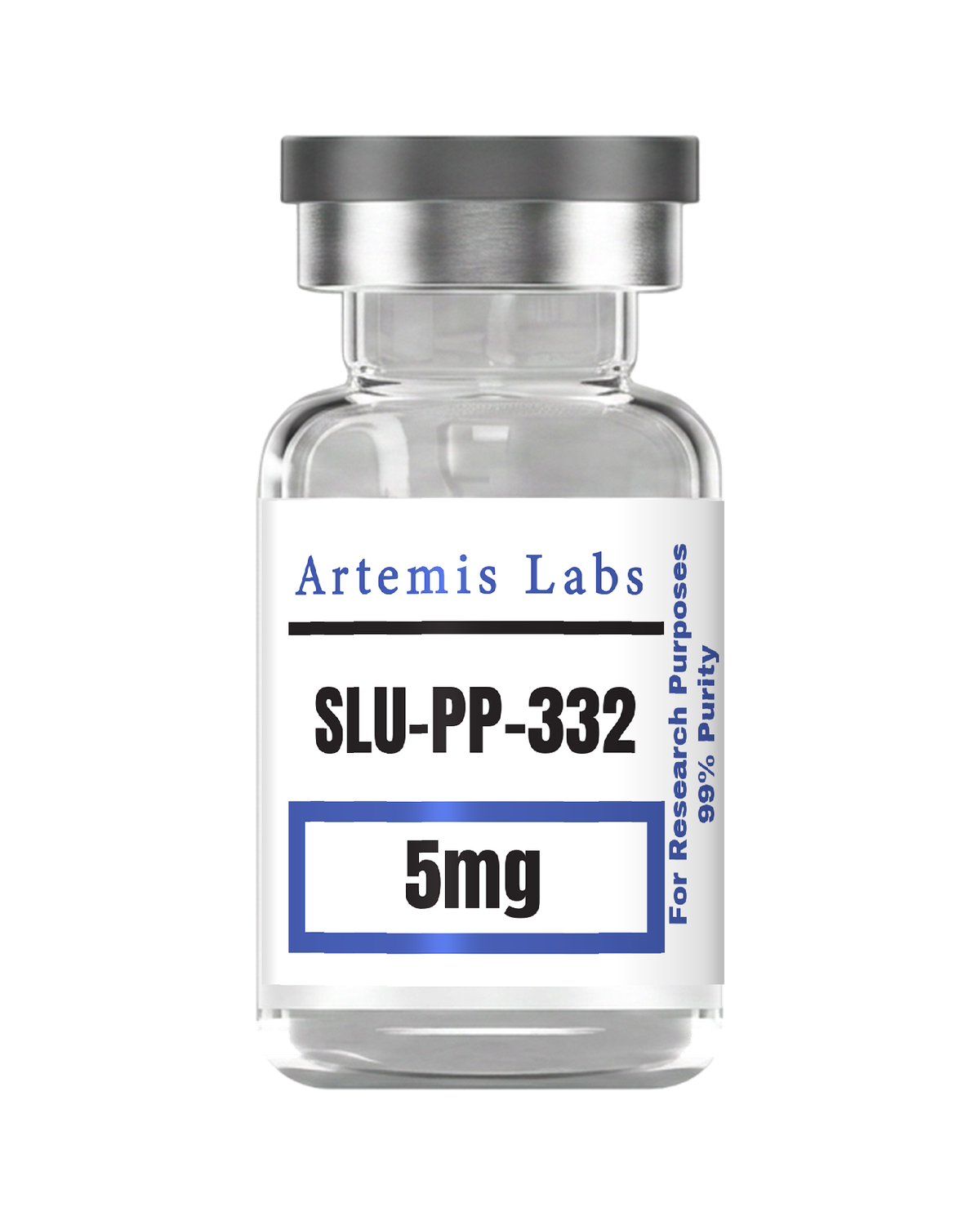
SLU-PP-332
$60.00
Exercise switches on a set of genes that build more mitochondria and shift muscle toward endurance. SLU-PP-332 is a small molecule that switches on the same genes directly, through a family of nuclear receptors called ERRs. The field’s shorthand for this class is "exercise mimetic," and the honest version of that phrase is: it activates part of the same programme, in mice.
Continue readingShow less
What the published work found. The foundational paper (Billon 2023, PMID 36988910) reported enhanced exercise endurance and increased oxidative muscle fibres in mice. The 2024 follow-up (Billon 2024, PMID 37739806) reported that synthetic ERR agonism alleviated metabolic syndrome in preclinical models, and 2025–2026 work extends the pharmacology into muscle atrophy (Bonanni 2025, PMID 40692696).
Note what it is not. SLU-PP-332 is a small molecule, not a peptide, and it is preclinical only — there are no human trials of any kind. It is mechanistically distinct from the discontinued PPAR-class compound GW501516 and from peptide candidates like MOTS-c.
Lyophilized pan-ERR agonist small molecule at ≥99% HPLC-verified purity, batch-specific Certificate of Analysis.
Description
SLU-PP-332 is a lab-made small molecule, not a peptide. It switches on the three ERR nuclear receptors. Those receptors control how cells build and run mitochondria. Mouse work places it in exercise-mimetic metabolic research. No human trials have been run. Artemis Labs ships it as a dry powder for lab use.
Reviewed August 22, 2026 · Artemis Labs
What is SLU-PP-332, and is it a peptide?
SLU-PP-332 is a synthetic small-molecule pan-agonist of the three estrogen-related receptor isoforms (ERRα, ERRβ, ERRγ; molecular formula C₁₈H₁₄N₂O₂; MW 290.32 g/mol; CAS 303760-60-3; PubChem CID 5404083; ChemSpider 673181; IUPAC 4-Hydroxy-N-[(Z)-naphthalen-2-ylmethylideneamino]benzamide; US Patent 8680150 to Ligand Pharmaceuticals, issued 2014). It was developed by the Thomas Burris laboratory at Saint Louis University (subsequently University of Florida) as a research tool to interrogate ERR transcriptional pharmacology. SLU-PP-332 is a small molecule, NOT a peptide — it is catalogued alongside research peptides for its mechanistic adjacency to mitochondrial / exercise-mimetic research, not its molecular class.
Has SLU-PP-332 been tested in humans?
SLU-PP-332 has NOT been tested in human clinical trials. It is a preclinical research compound only. There is no FDA-approved bremelanotide-style equivalent product to disambiguate against — SLU-PP-332 is not a drug, not a supplement, not a compounded pharmaceutical. Artemis Labs supplies SLU-PP-332 strictly as a research-grade lyophilised reference compound for in vitro and IACUC-approved animal research workflows. No human pharmacokinetic, safety, or efficacy data exist as of 2026-05.
What has SLU-PP-332 research reported since 2023?
The published peer-reviewed literature has refined preclinical understanding of SLU-PP-332 across five distinct research vectors:
- Foundational ERRα-dependent exercise mimicry — Billon et al. 2023 (PMID 36988910, ACS Chemical Biology): pan-ERR agonist (EC₅₀ ~98 nM at ERRα) induces ERRα-dependent acute aerobic exercise gene-expression program; mouse treadmill endurance increased and type IIa oxidative skeletal-muscle fibers increased in an ERRα-dependent manner.
- Metabolic syndrome relief in preclinical models — Billon et al. 2024 (PMID 37739806, JPET): synthetic ERR agonism with SLU-PP-332 alleviates features of metabolic syndrome in mouse models — increased energy expenditure and insulin sensitivity reported in research-record context.
- Cardiac protection in pressure-overload heart failure — Xu et al. 2024 (PMID 37961903, Circulation): SLU-PP-332 and successor compound SLU-PP-915 examined in the mouse transverse aortic constriction (TAC) model. Researchers reported preserved cardiac function, reduced fibrosis, and increased survival in TAC-induced HF mice — effects attributed to enhanced cardiac fatty acid metabolism and mitochondrial function via ERRγ predominance.
- Muscle atrophy / inactivity pilot — Bonanni et al. 2025 (PMID 40692696, Frontiers in Physiology): pilot study examined ERR targeting to counteract age-related muscle atrophy associated with physical inactivity, with enhanced myotube differentiation as the principal mechanistic finding.
- Anti-doping metabolite identification — Avliyakulov et al. 2026 (PMID 41688415, Drug Testing & Analysis): human-liver-microsome in vitro Phase I/II metabolite profiling identified 22 distinct metabolites including five monohydroxylated, three dihydroxylated, and four reduced-dihydroxylated species; eight high-abundance metabolites proposed as anti-doping detection markers. Confirms WADA monitoring relevance for the ‘metabolic modulators / exercise mimetics’ class.
- Chemical optimization SAR — SLU-PP-332 superseded by analogues — Okda et al. 2026 (PMID 41850449, Int J Biol Macromol): systematic ring-B SAR study (Burris/Elgendy labs) identified BE5112 and BE5049 as more-potent ERRα agonist leads with superior metabolic stability vs the parent SLU-PP-332. Researchers transitioning to next-generation compounds for further preclinical work.
- Therapeutic-applications review — de Souza-Lima et al. 2026 (PMID 42024694, Rev Méd Chile): narrative review of pharmacological ERRα/β/γ activation as an exercise mimetic, summarizing potential therapeutic applications and outstanding questions.
How does Artemis Labs verify SLU-PP-332 purity and identity?
Each lot is supplied as a sterile lyophilised small-molecule powder (white to off-white solid), analytically verified by reverse-phase HPLC to ≥99% purity, with identity confirmed by mass spectrometry. The compound shipped is the parent SLU-PP-332 structure (C₁₈H₁₄N₂O₂; MW 290.32 g/mol) per the original Burris lab patent (US 8680150). A third-party Certificate of Analysis with HPLC chromatogram, mass-spectrometry identity, residual-solvent assay, and chain-of-custody documentation is available on request.
What does the SLU-PP-332 evidence not show?
(1) No human clinical trials. All published evidence is from in vitro assays, mouse models, or computational SAR. No human PK, safety, or efficacy data exist. (2) Superseded by next-generation analogues. Okda et al. 2026 (PMID 41850449) identified BE5112 and BE5049 as more-potent and more-metabolically-stable leads — the Burris/Elgendy labs are transitioning to next-generation compounds. Research using SLU-PP-332 may be benchmarked against these analogues. (3) Pan-ERR class concerns. Pan-agonism across three nuclear-receptor isoforms with shared cofactor recruitment (PGC-1α) raises theoretical concerns about cardiac hypertrophy and hepatotoxicity off-target effects in human translation; available preclinical data (Billon 2023/2024, Xu 2024) do NOT show these signals at doses tested in mice. (4) Short mouse half-life. Pharmacokinetics in mice show short half-life (~3-5 h) and oral bioavailability is documented but not yet optimized for broader research designs (one motivation for the Okda 2026 SAR work). (5) WADA monitoring relevance. Avliyakulov et al. 2026 (PMID 41688415) developed anti-doping detection markers, confirming that SLU-PP-332 is on the radar for the ‘metabolic modulators / exercise mimetics’ monitoring class. Researchers working in athletic-performance domains should be aware.
How does SLU-PP-332 differ from MOTS-c, 5-Amino-1MQ and SS-31?
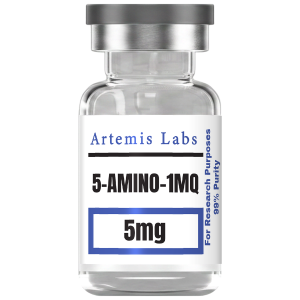
Unlike MOTS-c (mitochondrial-derived peptide acting via mitochondrial signalling) and unlike PPAR-class compounds (e.g., the discontinued GW501516/Cardarine), SLU-PP-332 acts via direct nuclear-receptor agonism at the ERR family — a distinct molecular target. Related research-axis compounds include 5-Amino-1MQ (NNMT-inhibitor research compound, small molecule) and SS-31 (mitochondrial-targeted peptide, contrasting mechanism of mitochondrial-membrane stabilization vs SLU-PP-332’s transcriptional mitochondrial-biogenesis activation).
What is the regulatory status of SLU-PP-332?
No FDA approval; no human clinical trials documented. Not DEA-scheduled. No EMA or MHRA approval. WADA monitoring relevance per the anti-doping metabolite work of Avliyakulov 2026 — ‘metabolic modulators / exercise mimetics’ are a monitoring class. Artemis Labs explicitly does NOT make exercise-replacement, endurance-enhancement, weight-loss, fat-loss, performance-improvement, athletic-performance, or any therapeutic claim for the product. Research-use-only framing applies to all commercial supply. These statements have not been evaluated by the FDA. Not for human consumption, therapeutic use, athletic-performance use, or veterinary use.
Analytical Specifications
SLU-PP-332 has no amino-acid sequence to report: it is a small molecule, so the identity row below is an IUPAC name rather than a sequence.
| Property | Value |
|---|---|
| Compound class | Synthetic small molecule (not a peptide); pan-ERR nuclear-receptor agonist |
| IUPAC name | 4-Hydroxy-N-[(Z)-naphthalen-2-ylmethylideneamino]benzamide |
| Molecular formula | C₁₈H₁₄N₂O₂ |
| Molecular weight | 290.32 g/mol |
| CAS number | 303760-60-3 |
| PubChem CID | 5404083 |
| ChemSpider | 673181 |
| Originating patent | US 8680150 (Ligand Pharmaceuticals, 2014) |
| Originating laboratory | Thomas Burris (Saint Louis University, then University of Florida) |
| ERRα EC₅₀ | ~98 nM (Billon 2023 cell-based assay) |
| Purity | ≥99% by reverse-phase HPLC; identity confirmed by mass spectrometry |
| Form | Lyophilised white-to-off-white solid powder, 5 mg per vial |
| Storage | ≤ −20 °C, desiccated, protected from light |
| Certificate of Analysis | Batch-specific, with HPLC chromatogram, MS identity, residual-solvent assay and chain-of-custody documentation; available on request with every order |
Methodology: every lot is verified by third-party reverse-phase HPLC for purity and by mass spectrometry for identity; the batch-specific Certificate of Analysis is available on request with every order.
References
- Billon C et al. (2023). ACS Chem Biol. Foundational ERRα-dependent exercise gene program. PMID 36988910
- Billon C et al. (2024). J Pharmacol Exp Ther. Metabolic-syndrome alleviation. PMID 37739806
- Xu W et al. (2024). Circulation. Cardiac protection in pressure-overload HF. PMID 37961903
- Bonanni R et al. (2025). Frontiers in Physiology. Muscle-atrophy / inactivity pilot. PMID 40692696
- Avliyakulov NK et al. (2026). Drug Test Anal. Anti-doping metabolite identification. PMID 41688415
- Okda HE et al. (2026). Int J Biol Macromol. Chemical optimization SAR. PMID 41850449
- de Souza-Lima J et al. (2026). Rev Méd Chile. Exercise-mimetic narrative review. PMID 42024694
Additional information
| Vial Size | 5mg |
|---|
Science & Research
Science & Research
How does SLU-PP-332 act on the ERR receptors and the PGC-1α axis?
The estrogen-related receptors (ERRα, ERRβ, ERRγ) are orphan nuclear receptors that, despite the name, do not bind estrogen. They are master transcriptional regulators of mitochondrial biogenesis, OXPHOS gene programs, fatty-acid oxidation, and oxidative-fiber skeletal-muscle phenotypes. Native ERR activity is co-activated by PGC-1α, the same coactivator upregulated by endurance exercise — the mechanistic basis for the ‘exercise mimetic’ framing. SLU-PP-332 directly activates all three ERR isoforms, with strongest agonism at ERRα (EC₅₀ ~98 nM in cell-based reporter assays).
What did 2023-2026 research refine?
- ERRα-dependent acute exercise gene program — Billon et al. 2023 (PMID 36988910, ACS Chemical Biology): foundational paper. Pan-ERR agonist with strongest activity at ERRα. Induces acute aerobic exercise gene-expression program in skeletal muscle; treadmill endurance ↑ and type IIa oxidative-fiber composition ↑ in mice in an ERRα-dependent manner.
- Metabolic-syndrome model — Billon et al. 2024 (PMID 37739806, JPET): synthetic ERR agonism alleviates features of metabolic syndrome in mouse models; increased energy expenditure and insulin sensitivity reported.
- Cardiac protection in TAC heart failure model — Xu et al. 2024 (PMID 37961903, Circulation): SLU-PP-332 and SLU-PP-915 in mouse transverse-aortic-constriction pressure-overload HF model. Researchers reported preserved cardiac function, reduced fibrosis, and increased survival; effects attributed to enhanced cardiac fatty-acid metabolism and mitochondrial function mediated by ERRγ predominance in cardiomyocytes.
- Muscle-atrophy / inactivity pilot — Bonanni et al. 2025 (PMID 40692696, Frontiers in Physiology): pilot study of ERR-targeting to counteract age-related muscle atrophy associated with physical inactivity; enhanced myotube differentiation observed.
- Anti-doping metabolite identification — Avliyakulov et al. 2026 (PMID 41688415, Drug Test Anal): human-liver-microsome Phase I/II in vitro profiling identified 22 distinct metabolites (5 monohydroxylated + 3 dihydroxylated + 4 reduced-dihydroxylated + others); 8 high-abundance metabolites proposed as anti-doping detection markers. Confirms WADA monitoring relevance.
- Chemical-optimization SAR — Okda et al. 2026 (PMID 41850449, Int J Biol Macromol): ring-B SAR study from Burris/Elgendy labs. Ring B drives agonist activity; isoquinoline-4-yl and naphth-1-yl groups give optimal profiles. Lead analogues BE5112 (more-potent ERRα) and BE5049 (superior metabolic stability) supersede SLU-PP-332 as research tools. The carbonyl group is essential; sulfonyl substitution eliminates activity.
- Exercise-mimetic narrative review — de Souza-Lima et al. 2026 (PMID 42024694, Rev Méd Chile): pharmacological ERRα/β/γ activation as an exercise mimetic, potential therapeutic applications, outstanding research questions.
Entity Disambiguation
| Identifier | Value |
|---|---|
| Compound class | Synthetic small molecule (NOT a peptide); pan-ERR agonist |
| IUPAC name | 4-Hydroxy-N-[(Z)-naphthalen-2-ylmethylideneamino]benzamide |
| Molecular formula | C₁₈H₁₄N₂O₂ |
| Molecular weight | 290.32 g/mol |
| CAS | 303760-60-3 |
| PubChem CID | 5404083 |
| ChemSpider | 673181 |
| Originating patent | US 8680150 (Ligand Pharmaceuticals, 2014) |
| Originating lab | Thomas Burris (Saint Louis University, then University of Florida) |
| ERRα EC₅₀ | ~98 nM (Billon 2023 cell-based assay) |
Quality and Specifications
- Purity: ≥99% by RP-HPLC; identity confirmed by mass spectrometry
- Form: Lyophilised white-to-off-white solid powder, 5 mg/vial
- Storage: Lyophilised ≤ -20°C, desiccated, protected from light
- Documentation: Batch-specific Certificate of Analysis with HPLC chromatogram, MS identity, residual-solvent assay, and chain-of-custody documentation
What does the SLU-PP-332 evidence not show?
- No human clinical trials — all evidence preclinical. No human PK, safety, or efficacy data.
- Superseded by next-generation analogues — Okda 2026 (PMID 41850449) identifies BE5112 / BE5049 as improved leads; the Burris/Elgendy labs are transitioning research focus.
- Pan-ERR class concerns — pan-agonism raises theoretical cardiac hypertrophy and hepatotoxicity concerns for human translation; preclinical data do NOT show these signals at doses tested in mice.
- Short mouse half-life — ~3-5 h in murine PK; one motivation for the Okda 2026 SAR work seeking improved drug-like properties.
- WADA monitoring relevance — Avliyakulov 2026 (PMID 41688415) developed anti-doping detection markers; SLU-PP-332 is on the radar for the ‘metabolic modulators / exercise mimetics’ monitoring class.
- SLU-PP-332 is a small molecule, NOT a peptide — classification matters for storage, handling, and analytical-method selection in research workflows.
References (7 PubMed-Verified)
- Billon C et al. (2023). ACS Chem Biol. Foundational ERRα-dependent exercise gene program. PMID 36988910
- Billon C et al. (2024). J Pharmacol Exp Ther. Metabolic-syndrome alleviation. PMID 37739806
- Xu W et al. (2024). Circulation. Cardiac protection in pressure-overload HF. PMID 37961903
- Bonanni R et al. (2025). Frontiers in Physiology. Muscle-atrophy / inactivity pilot. PMID 40692696
- Avliyakulov NK et al. (2026). Drug Test Anal. Anti-doping metabolite identification. PMID 41688415
- Okda HE et al. (2026). Int J Biol Macromol. Chemical optimization SAR. PMID 41850449
- de Souza-Lima J et al. (2026). Rev Méd Chile. Exercise-mimetic narrative review. PMID 42024694
Real-ceiling citation count for thin-literature compound per spec acceptable-floor clause (≥6). SLU-PP-332 specific literature is sparse compared to BPC-pattern target (10+) because the compound is preclinical-only and being superseded by next-generation analogues per Okda 2026.
Research Pairings
Research Pairings
Pairing rationale below is mechanistic only. No dosing, frequency, duration, route, or human-use guidance is provided. Researchers design their own studies against their own institutional review, not against vendor copy. References are limited to other research compounds in the Artemis Labs catalogue.
Why is SLU-PP-332 studied alongside MOTS-c?
ERR nuclear-receptor agonist (SLU-PP-332, small molecule) and mitochondrial-derived peptide (MOTS-c). Both modulate mitochondrial-biogenesis and oxidative-metabolism programs through different molecular entry points: direct ERR transcriptional agonism vs mitochondrially-encoded peptide signalling. Useful research-model pairing for dissecting transcriptional vs post-transcriptional contributions to oxidative-fiber phenotypes.
Why is SLU-PP-332 studied alongside 5-Amino-1MQ?
Parallel-pathway small-molecule pairing: ERR-driven oxidative-metabolism transcriptional program (SLU-PP-332) and NNMT inhibition with NAD⁺-pool restoration (5-Amino-1MQ). Both are non-peptide research compounds in the Artemis catalogue. Mechanism-only research pairing examining the metabolic intersection of ERR transcriptional vs methylnicotinamide-axis modulation.
Why is SLU-PP-332 studied alongside SS-31 (elamipretide)?
Research-model contrast between transcriptional mitochondrial-biogenesis activation (SLU-PP-332 via ERR/PGC-1α) and direct mitochondrial-membrane stabilization (SS-31 / Elamipretide). Distinct mechanistic axes of mitochondrial research convergence.
Why is SLU-PP-332 studied alongside BPC-157 / TB-500?
Examined in parallel skeletal-muscle research models where oxidative-fiber phenotype (SLU-PP-332) is studied alongside tissue-repair signalling (BPC-157 + TB-500). Mechanism rationale only — no human use is implied.
What related compounds does Artemis Labs list?
For mitochondrial-research peptides see MOTS-c and SS-31. For non-peptide metabolic research compounds see 5-Amino-1MQ. For tissue-research peptides see BPC-157 / TB-500.
Reviews (0)
Be the first to review “SLU-PP-332”
Related products
longevity-cellular
weight-management
Reviews
There are no reviews yet.