
“KLOW”: the acronym no longer matches what is in the vial
Vocabulary reference · reviewed August 28, 2026 · Artemis Labs
Almost every vendor in this category sells something called KLOW. Almost none of them explains
what the letters stood for — or that the name has drifted away from its own contents.
The naming problem, stated plainly
In the older community usage the acronym spelled out its four parts: KPV,
LL-37, Oxytocin, and Wolverine (itself a nickname
for the BPC-157 and TB-500 pairing).
Commercial KLOW today contains neither LL-37 nor oxytocin. The composition sold
across the market is KPV, GHK-Cu, BPC-157 and TB-500 — conventionally 10/50/10/10 mg,
80 mg total. The letters survived; two of the four compounds they referred to did not, and
GHK-Cu, which is now in nearly every vial, is not in the acronym at all.
The practical consequence: an older write-up or forum post describing “KLOW”
may be describing a materially different mixture from the one a vendor ships today. Anyone
comparing sources across time should check the stated composition, not the name.
What is in it today
- KPV — the C-terminal tripeptide of α-MSH (Lys-Pro-Val).
- GHK-Cu — a copper-binding tripeptide.
- BPC-157 — a synthetic 15-residue peptide, CAS 137525-51-0.
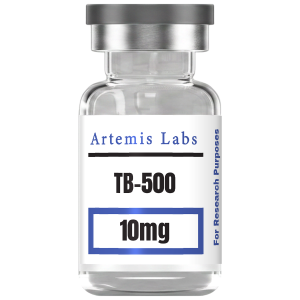
- TB-500 — a synthetic 7-residue peptide, Ac-LKKTETQ,
CAS 885340-08-9, matching residues 17–23 of thymosin β4.
This is a blend — four compounds in one vial — not four separate vials.
What each compound’s literature supports
KPV. The published efficacy data come from in-vitro cell culture and rodent
models, notably DSS and TNBS colitis; foundational mechanistic work was done in PepT1-transfected
cells and mouse models (PMID 18061177;
Viennois 2016, Cell Mol Gastroenterol Hepatol,
PMID 27458604).
Activity is PepT1 (SLC15A1)-dependent, so it is contingent on transporter expression in the tissue
being studied, and the downstream molecular mechanism is not fully determined. No human
efficacy data.
GHK-Cu. Current reviews describe intracellular copper trafficking and interaction
with chromatin- and transcription-factor-associated proteins as the mechanisms most often proposed,
not classical receptor binding (Arciola 2026,
PMID 41594073).
BPC-157. Multi-pathway preclinical signalling; a 2026 study reported
endothelium-dependent, nitric-oxide-mediated vasorelaxation in human internal mammary artery tissue
(PMID 42123221)
— ex vivo, not in people.
TB-500. Described as the central actin-binding region of thymosin β4
(PMID 20179146).
Nearly every study cited for it used the full parent protein, not the fragment.
What has not been tested
No published study has tested these four compounds together. None. The
combination is a market convention, not a research finding, and every account of what it does is an
inference built on four separate literatures.
- None of the four has a published human efficacy trial.
- TB-500 may not be the active species — its own pharmacology paper reports
the activity may trace to a metabolite, Ac-LKKTE (Rahaman 2024,
PMID 38382158). - A published negative finding — thymosin β4 released by mast cells
impaired the intestinal epithelial barrier in an irritable-bowel model (Sun 2025,
PMID 41278163).
Parent protein, no human arm, and a direct caution for gut-barrier work — which matters here,
because KPV’s own literature is largely colitis models. - Marketed TB500 products have been found misbranded and adulterated (Delcourt
2023, PMID 36482504).
Regulatory and sport status
None of the four is FDA-approved for any indication. BPC-157 and TB-500 are prohibited in
sport at all times — WADA Sections S2 and S2.3 respectively.
The compounds discussed on this page
Tissue-Repair Research
References
- Dalmasso G, et al. PepT1-mediated transport of KPV; foundational mechanistic work in transfected cells and mouse colitis models. 2008. PMID 18061177
- Viennois E, et al. PepT1 and KPV in intestinal inflammation models. Cell Mol Gastroenterol Hepatol. 2016. PMID 27458604
- Arciola, et al. GHK-Cu mechanism review. 2026. PMID 41594073
- Yildirim, et al. BPC-157 vasorelaxation in human internal mammary artery. J Clin Med. 2026. PMID 42123221
- Sosne G, et al. Thymosin beta 4 and the eye (LKKTETQ domain). FASEB J. 2010. PMID 20179146
- Rahaman A, et al. Metabolism of TB-500. 2024. PMID 38382158
- Sun YS, et al. Thymosin β4 and the intestinal epithelial barrier in IBS. World J Gastroenterol. 2025. PMID 41278163
- Delcourt V, et al. TB500/TB1000: misbranded and adulterated drugs. Drug Test Anal. 2023. PMID 36482504
All products sold by Artemis Labs are for research purposes only. Not for human consumption.