
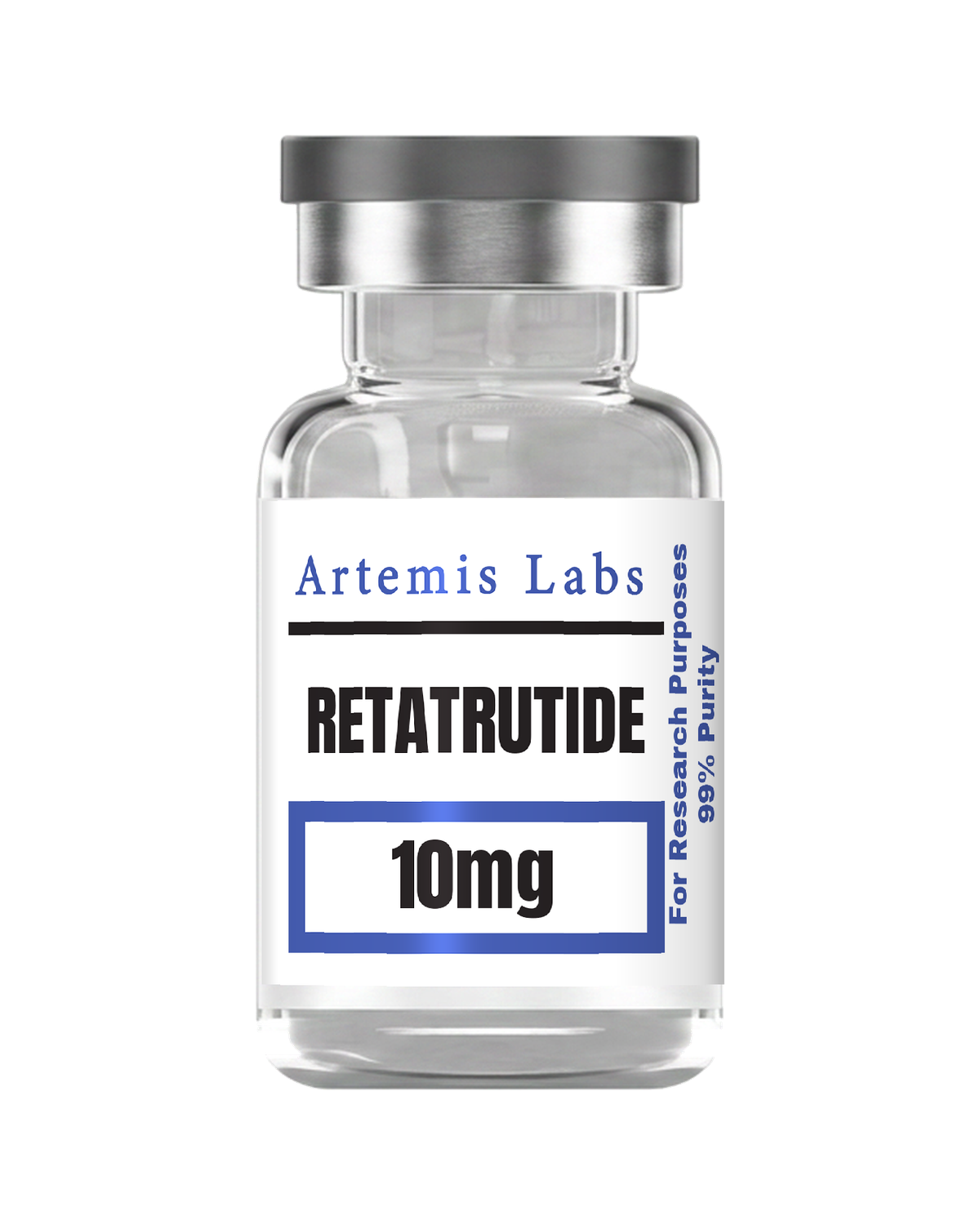
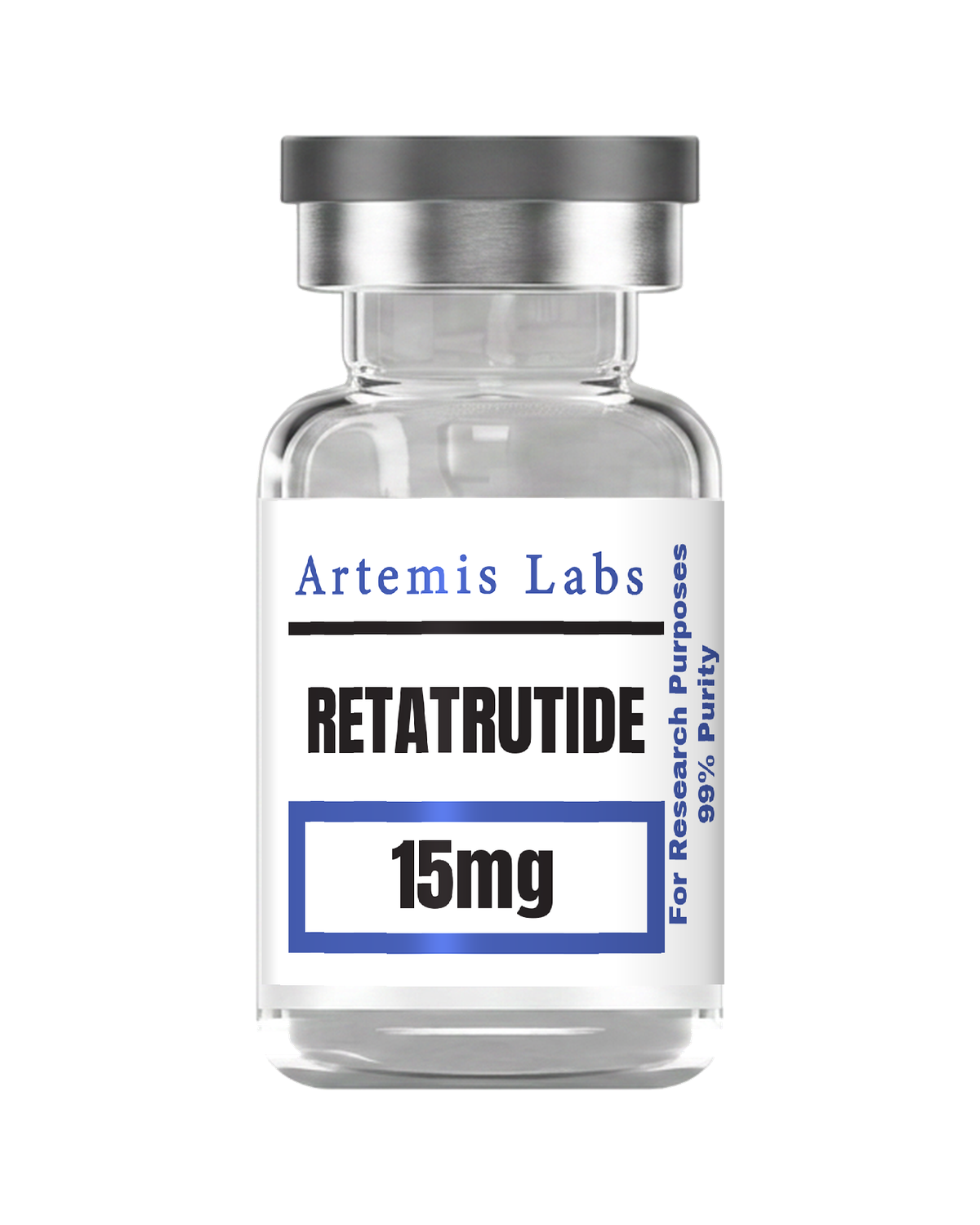
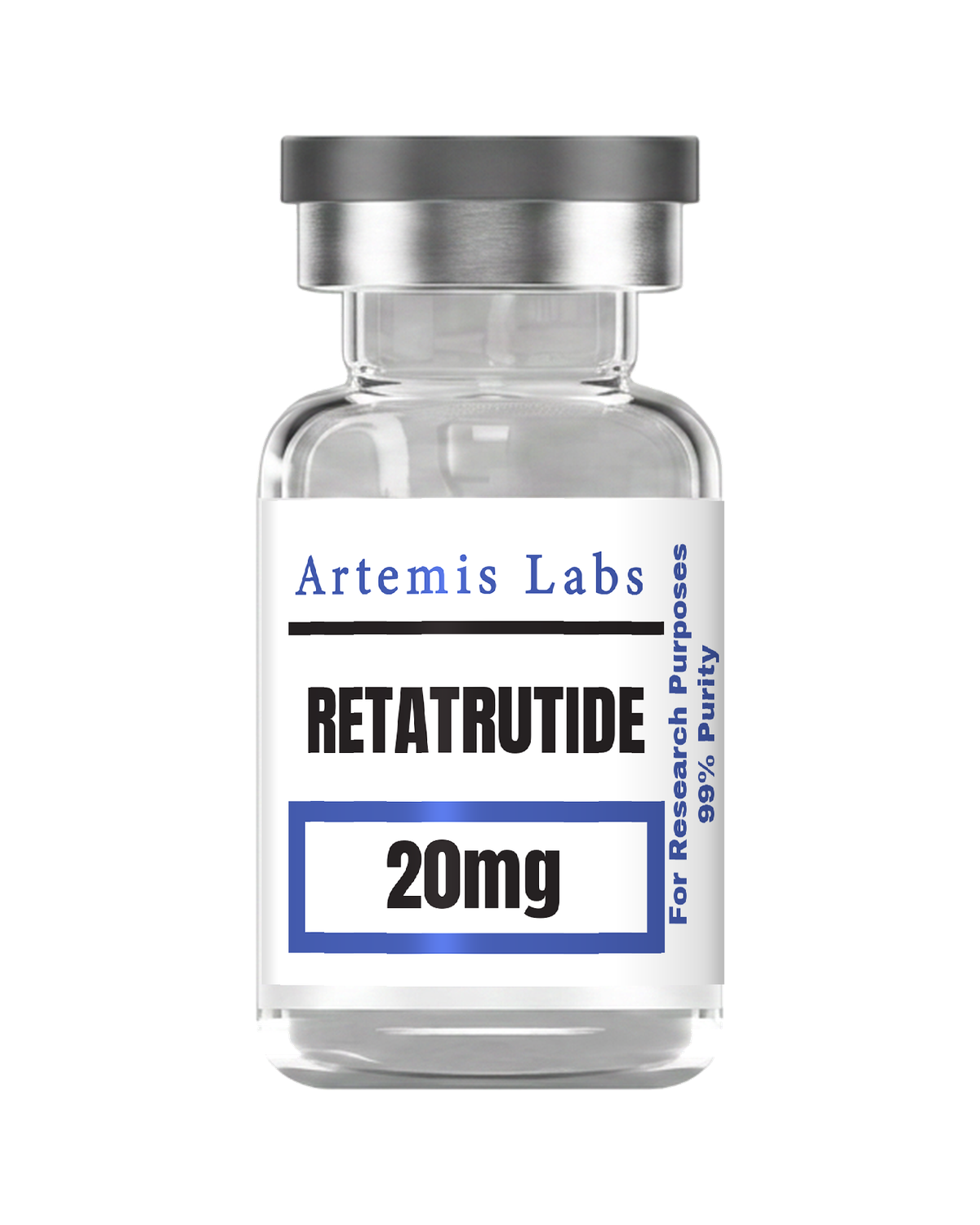
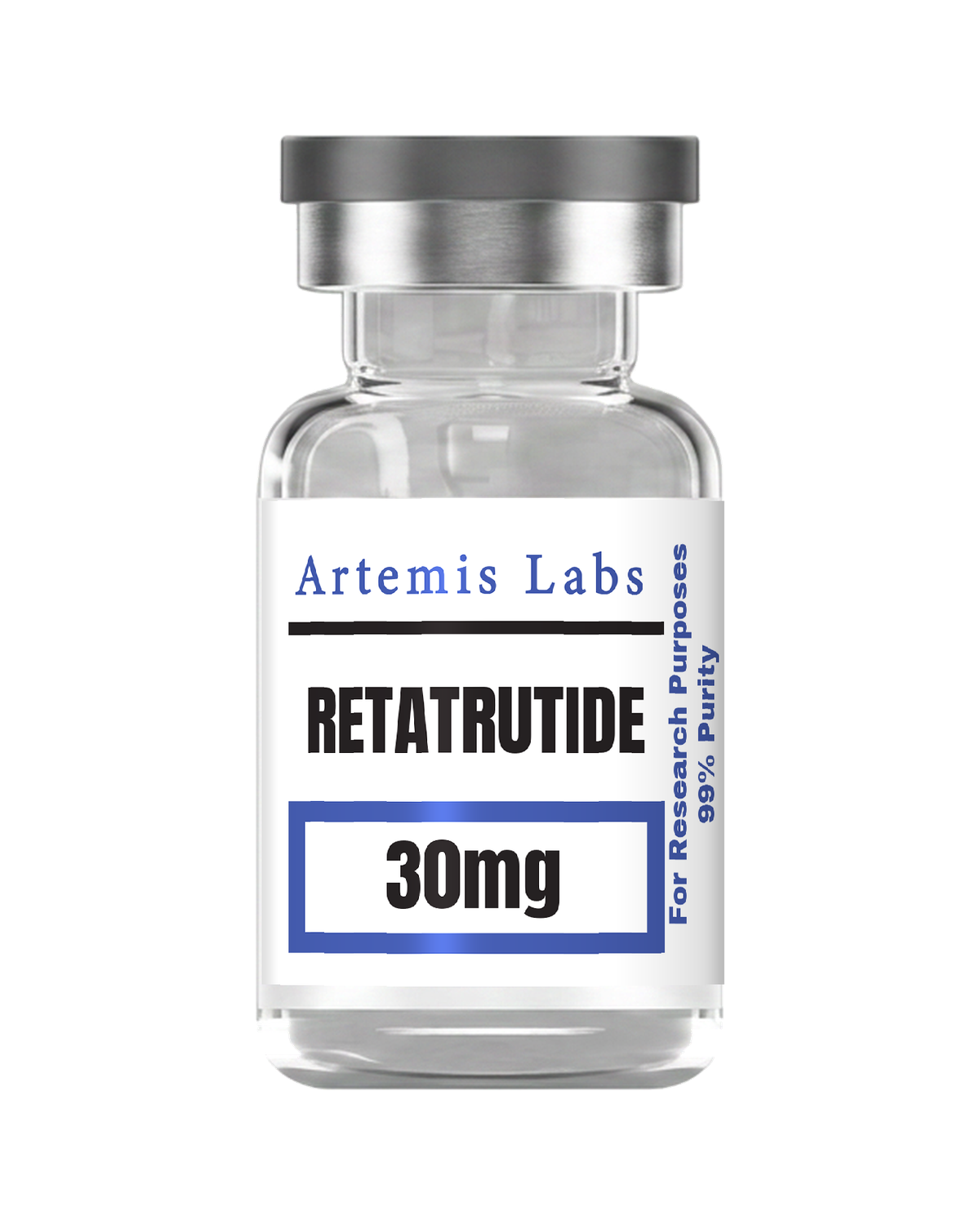
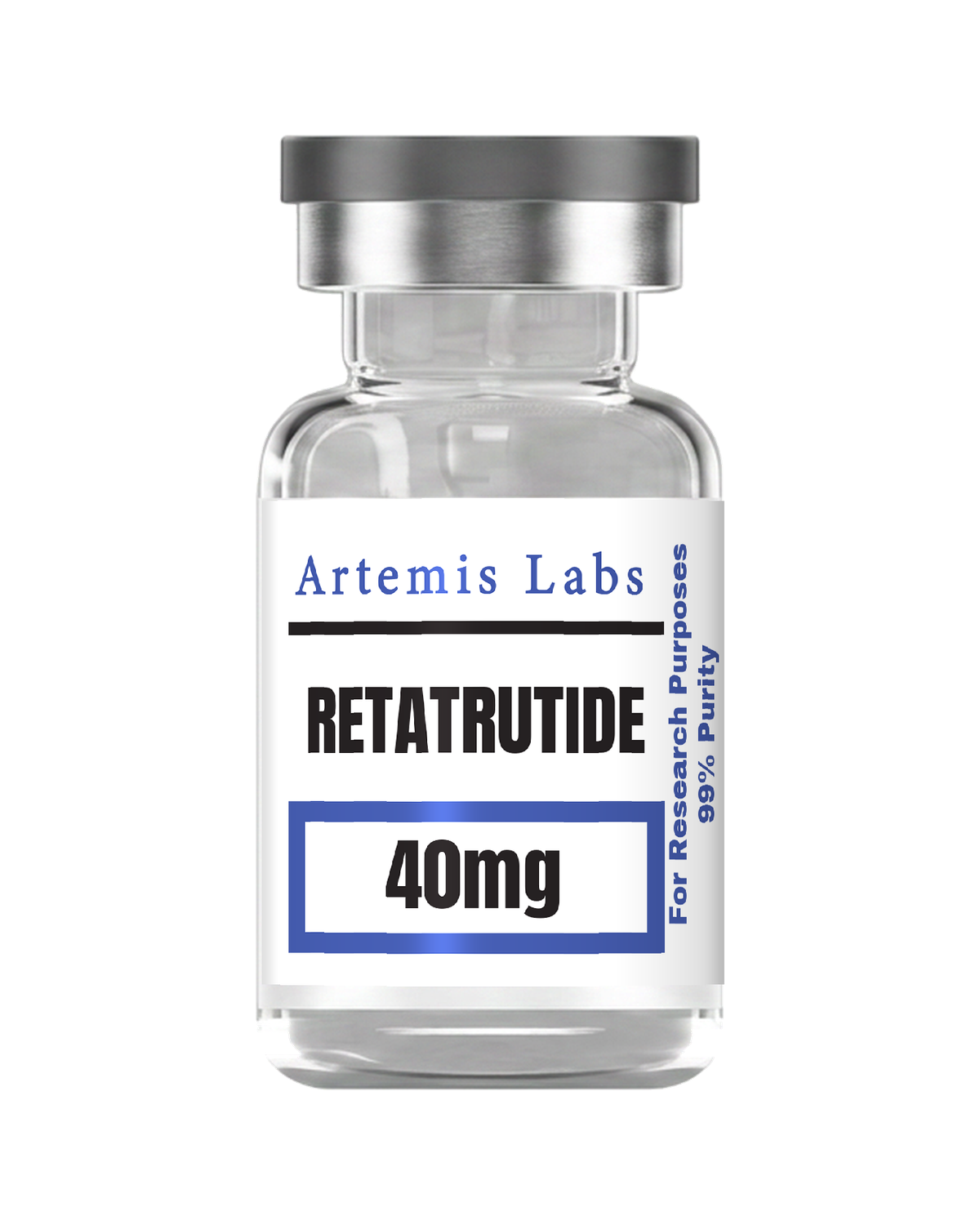
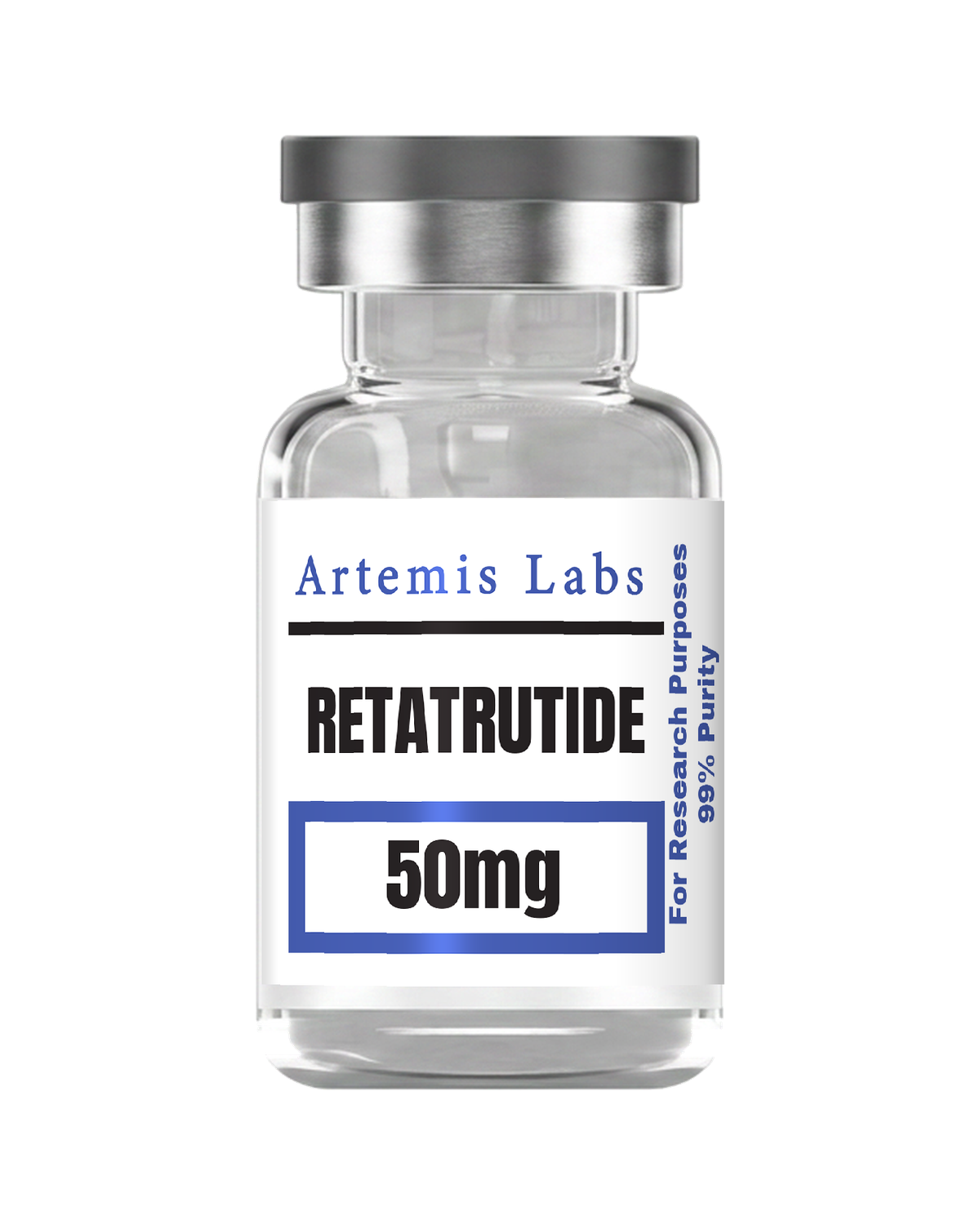
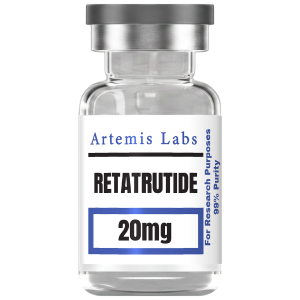
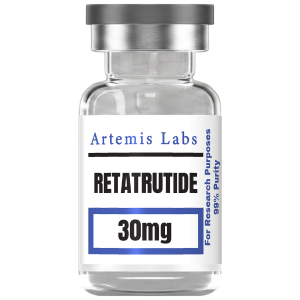
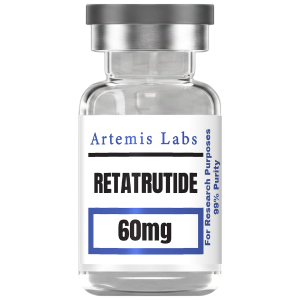
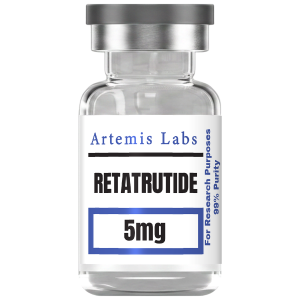
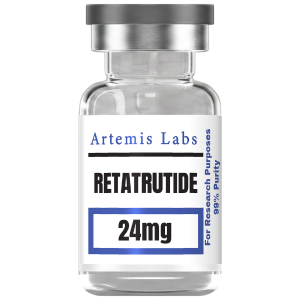
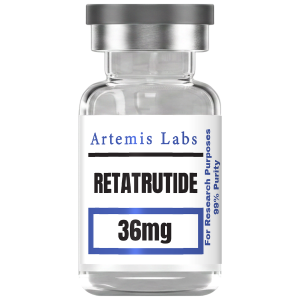
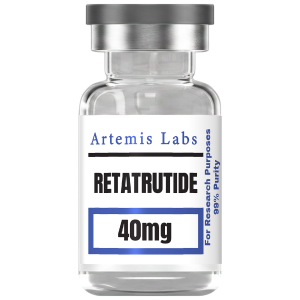
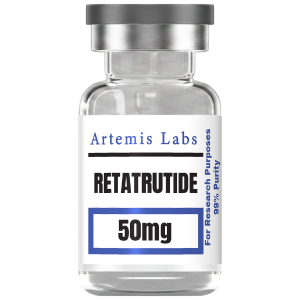
Retatrutide
Price range: $70.00 through $240.00
Tirzepatide engages two gut-hormone receptors. Retatrutide engages three — it adds glucagon, which nudges the body toward spending energy rather than only toward eating less. That is the idea under test: pair the appetite side with a thermogenic side and see whether the two add up.
Continue readingShow less
What the trials found. The Phase 2 obesity trial (Jastreboff 2023, PMID 37366315) reported ~24.2% mean body-weight reduction in the 12 mg arm over 48 weeks, and the parallel Phase 2 diabetes trial (Rosenstock 2023, PMID 37385280) reported ~2.0% absolute HbA1c reduction. Phase 3 TRIUMPH-1 topline reported up to 30.3% at 104 weeks across 2,339 adults.
Where it actually stands. Retatrutide remains investigational. The Phase 3 outcome data has not been published in a peer-reviewed journal, so that headline is a company topline rather than a reviewed result. It sits roughly two percentage points ahead of tirzepatide on comparable Phase 2 endpoints — a gap that has not yet been confirmed in print.
Lyophilized triple-agonist peptide at ≥99% HPLC-verified purity, batch-specific Certificate of Analysis.
Description
Retatrutide is a lab-made peptide. It binds three targets at once: GLP-1, GIP, and glucagon. Tirzepatide, the closest studied peptide, binds just the first two. Artemis Labs supplies retatrutide as a dry powder for lab research, tested at 99% purity or better, with a lab report in each box.
Reviewed August 21, 2026 · Artemis Labs
What is retatrutide?
Retatrutide is studied in laboratory research as a triple-agonist research peptide — it activates the GLP-1, GIP, and glucagon receptors. This extends the dual-agonist (tirzepatide) class by adding glucagon-receptor activity, which is studied in laboratory models of energy expenditure and brown-adipose-tissue thermogenesis.
What did the published Phase 2 trial report?
The Phase 2 obesity trial (Jastreboff et al., New England Journal of Medicine 2023, PMID 37366315) randomized adults with obesity to retatrutide 1, 4, 8, or 12-mg once-weekly or placebo over 48 weeks. The 12 mg dose produced up to 24.2% mean body-weight reduction at 48 weeks, with a clear dose-response across arms. Adverse-event profile aligned with the GI-tolerability findings reported across the incretin-agonist class.
Has peer-reviewed Phase 3 evidence been published?
Peer-reviewed Phase 3 outcome data for retatrutide are not yet published. The TRIUMPH design paper appeared in Diabetes, Obesity and Metabolism in January 2026 (PMID 41090431). The sponsor has released topline announcements: TRIUMPH-1 (obesity without diabetes; 2,339 participants) reported 28.3% mean body-weight reduction at 80 weeks and 30.3% at 104 weeks in the highest dose arm, and TRIUMPH-4 released topline results in December 2025. Topline figures are sponsor announcements, not peer-reviewed outcomes; this page will cite the trial publications when they appear.
What is retatrutide used for in laboratory research?
Researchers investigating the triple-receptor mechanism, comparative incretin-agonist class research, or laboratory models of glucagon-receptor-mediated energy expenditure may evaluate retatrutide alongside tirzepatide (dual-agonist comparator) and semaglutide (GLP-1-only comparator). For research use only. Not for human consumption. These statements have not been evaluated by the FDA.
What are the limits of the current retatrutide evidence?
- No peer-reviewed Phase 3 outcomes yet. The TRIUMPH figures above are sponsor topline announcements, not peer-reviewed results. The only Phase 3 publication to date is the trial-design paper (PMID 41090431).
- The pivotal evidence is a single Phase 2 trial. The 48-week Jastreboff trial (PMID 37366315) is the one peer-reviewed outcome dataset; no head-to-head peer-reviewed comparison against another incretin agonist has been published.
- Tolerability. The Phase 2 adverse-event profile aligned with the gastrointestinal-tolerability findings reported across the incretin-agonist class.
- Identity data are incomplete in the public record. No CAS Registry Number, molecular weight or full published sequence for retatrutide is established in this record; the compound is referred to by its INN, and lot identity is confirmed by mass spectrometry against the Certificate of Analysis.
How does Artemis Labs verify purity and identity?
Artemis Labs verifies every lot by third-party reverse-phase HPLC for peptide purity and by mass spectrometry for identity; the lot-specific Certificate of Analysis ships with every order.
Analytical Specifications
| Common name | Retatrutide |
| Class | Triple GLP-1 / GIP / glucagon receptor agonist (incretin tri-agonist) |
| Structural modification | C18 fatty-diacid moiety; binds serum albumin reversibly |
| Reported circulating half-life | ~6 days; pharmacokinetics dose-proportional across the studied range (Jastreboff et al., NEJM 2023, PMID 37366315) |
| Sequence / molecular weight / CAS number | Not established in this record — refer to the lot-specific Certificate of Analysis for the measured identity data |
| Purity | ≥99% by reverse-phase HPLC; identity confirmed by mass spectrometry |
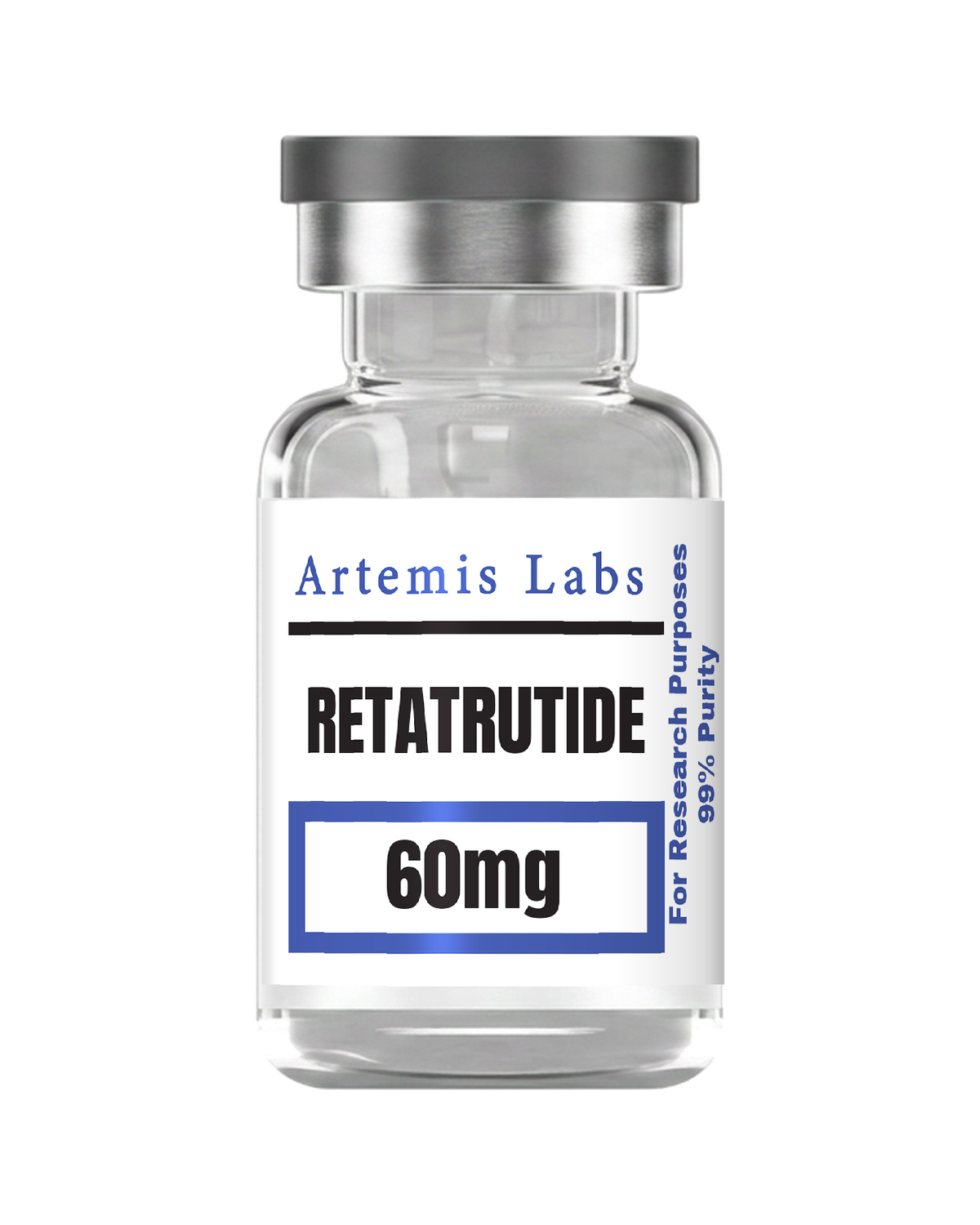
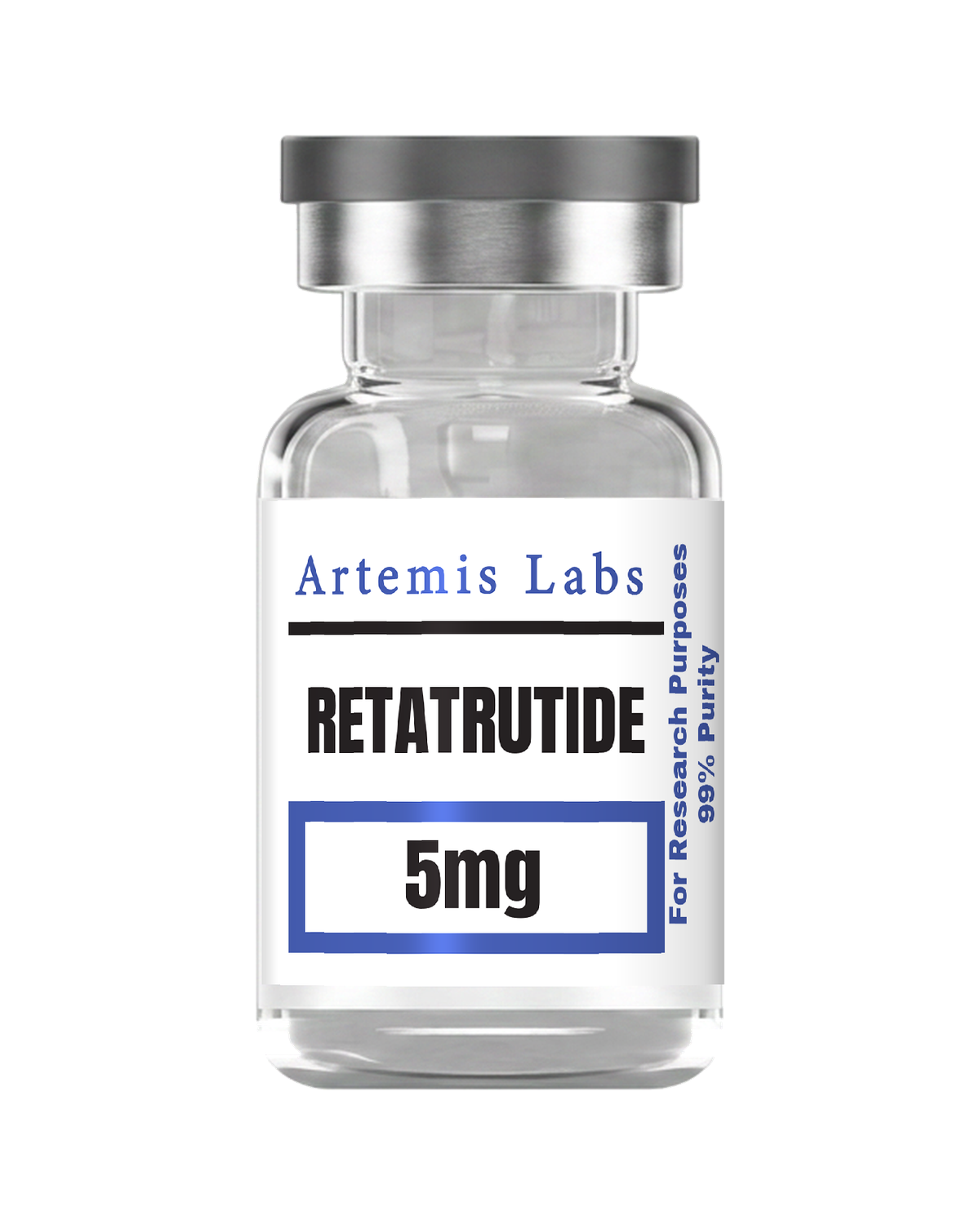
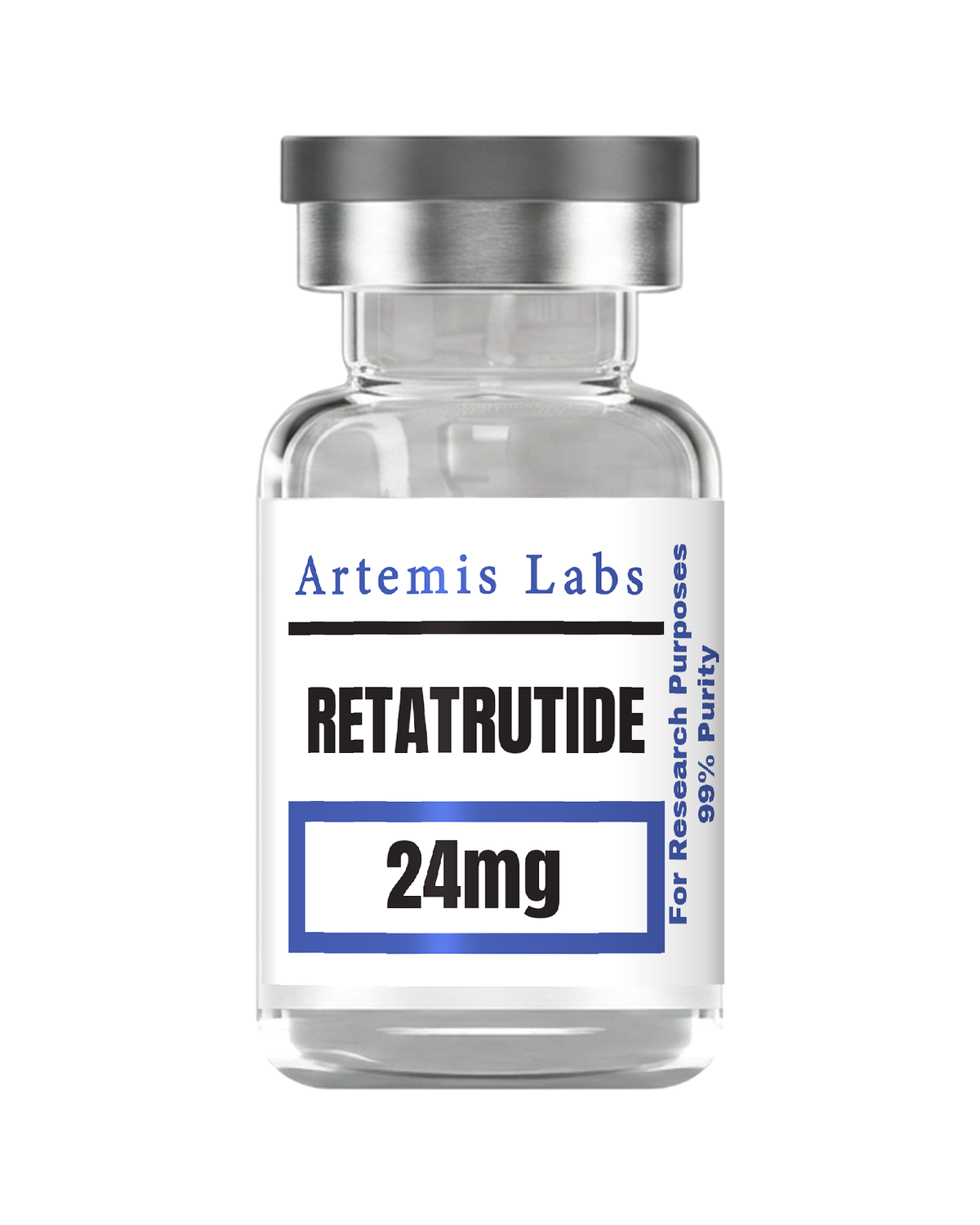
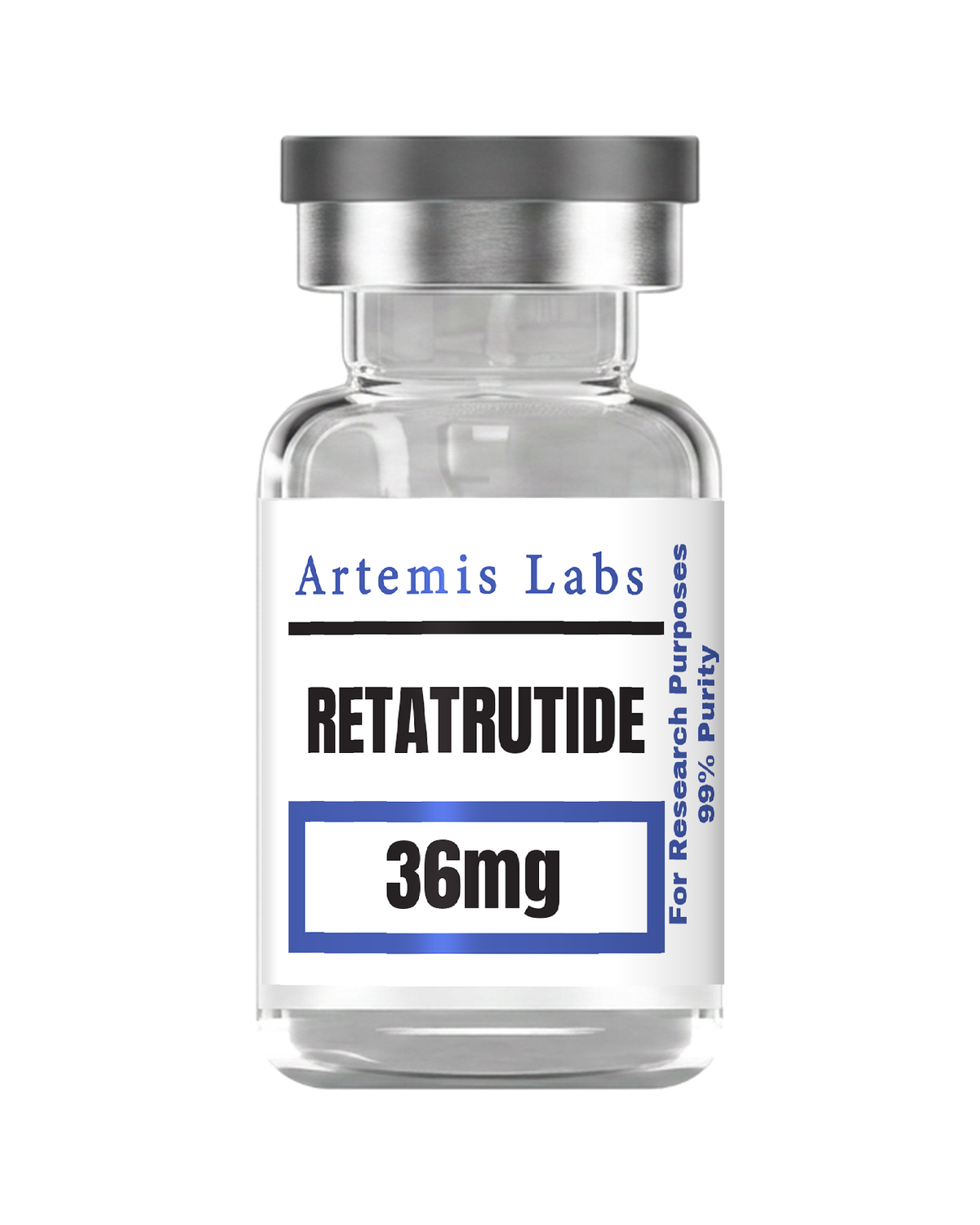
| Vial contents | 10 mg, 15 mg, 20 mg or 30 mg per vial |
| Form and storage | Refer to the lot-specific Certificate of Analysis for all handling specifications |
| Certificate of Analysis | Lot-specific third-party HPLC chromatogram + MS identity report supplied with every order |
References
- Jastreboff AM, et al. (2023). Triple-Hormone-Receptor Agonist Retatrutide for Obesity — A Phase 2 Trial. New England Journal of Medicine 389(6):514–526. PMID 37366315 · DOI 10.1056/NEJMoa2301972
- TRIUMPH-4 trial-design paper (2026). Diabetes, Obesity and Metabolism, January 2026. PMID 41090431
Additional information
| Vial Size | 10mg, 15mg, 20mg, 30mg |
|---|
Science & Research
Science & Research
Which receptors does retatrutide bind?
GLP-1 Receptor: Retatrutide acts as a GLP-1 receptor agonist; in laboratory models, GLP-1R activation is associated with delayed gastric emptying and effects on appetite-regulatory hypothalamic pathways.
GIP Receptor: Retatrutide also activates the GIP receptor; GIP-receptor pharmacology has been studied in laboratory models of insulin secretion and hypothalamic appetite signaling.
Glucagon Receptor: The third receptor target. Glucagon-receptor activation has been studied in laboratory models of brown-adipose-tissue thermogenesis (UCP1 activation) and white-adipose-tissue lipolysis. In the triple-agonist context, the glucagon arm’s hyperglycemic potential is offset by concurrent GLP-1 / GIP activity in research models.
What pharmacokinetics have been published for retatrutide?
Retatrutide carries a C18 fatty-diacid moiety that binds reversibly to serum albumin, extending the circulating half-life to approximately 6 days — consistent with the once-weekly schedule used in the published clinical studies. Pharmacokinetics are dose-proportional across the studied range (Jastreboff et al., NEJM 2023, PMID 37366315).
What did the published Phase 2 trial report?
Jastreboff AM et al. (2023): Triple-Hormone-Receptor Agonist Retatrutide for Obesity — A Phase 2 Trial. New England Journal of Medicine 389(6):514–526. PMID 37366315 · DOI 10.1056/NEJMoa2301972 Randomized adults with obesity to retatrutide 1, 4, 8, or 12-mg once-weekly or placebo over 48 weeks. The 12 mg dose produced up to 24.2% mean body-weight reduction at 48 weeks. Clear dose-response across arms.
Has peer-reviewed Phase 3 evidence been published?
Peer-reviewed Phase 3 outcome data for retatrutide have not yet been published. The TRIUMPH design paper is Diabetes, Obesity and Metabolism, January 2026, PMID 41090431. The sponsor has released topline announcements: TRIUMPH-1 (obesity without diabetes; 2,339 participants) reported 28.3% mean body-weight reduction at 80 weeks and 30.3% at 104 weeks in the highest dose arm, and TRIUMPH-4 released topline results in December 2025. Topline figures are sponsor announcements, not peer-reviewed outcomes; this section will cite the trial publications when they appear.
References
- Jastreboff AM et al. (2023). Triple-Hormone-Receptor Agonist Retatrutide for Obesity (Phase 2) — NEJM 389(6):514–526. PMID 37366315.
- TRIUMPH-4 trial design paper — Diabetes, Obesity and Metabolism, January 2026. PMID 41090431.
Note: Three PMIDs previously listed in this section (34889371, 39046181, 38650651) were determined to be fabricated or misattributed during the 2026-05-20 catalog audit and have been removed.
Reviews (0)
Be the first to review “Retatrutide”
Related products
weight-management
growth-hormone
Reviews
There are no reviews yet.