
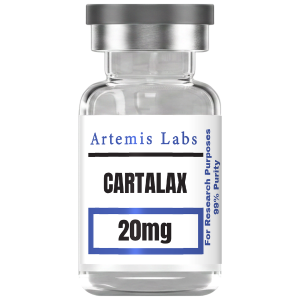
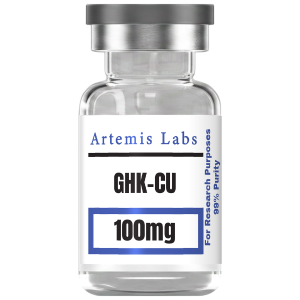
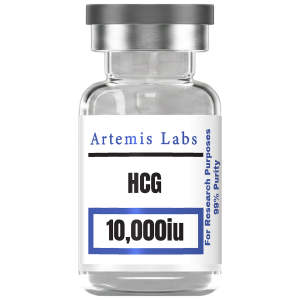
Bioregulator research studies short peptides for effects on gene expression in specific tissues. This class holds GHK-Cu, the copper tripeptide studied in skin-matrix and fibroblast models; Cartalax, a three-residue Khavinson-class peptide studied in cartilage cells; and hCG, a glycoprotein hormone studied in gonadotropin-receptor signaling.
What is in this class?
The word bioregulator comes from a Russian research tradition in which very short peptides, two to four amino acids, are tested for tissue-specific effects on gene expression. Two members here fit that shape. GHK-Cu is glycyl-histidyl-lysine bound to a copper ion; it is studied in dermal-matrix, fibroblast and, since 2026, C. elegans aging models. Cartalax is alanyl-glutamyl-aspartate, studied in chondrocyte and cartilage models where the readouts are markers such as SOX9 and type II collagen. The third member, hCG, is different in kind: a large two-subunit glycoprotein hormone, grouped here because its research reads receptor signaling and gene expression, not a single pathway.
What do the studies actually measure?
Expression-level endpoints in cell culture and small-animal models: which genes switch on, how much collagen a fibroblast makes, whether aging chondrocytes keep their markers. For hCG the literature is clinical and endocrine, including a 2024 systematic review of gonadotropins in a defined patient group. None of that is evidence about what a research compound does in any other setting, and the product pages are written to keep the model and the claim together.
How do the compounds compare?
| Compound | What it is | Sequence / formula | Molecular weight | Sources cited on its page |
|---|---|---|---|---|
| GHK-Cu | copper(II) complex of the tripeptide GHK | Gly-His-Lys · Cu²⁺ | 340.4 g/mol (free tripeptide) | 11 |
| Cartalax | Khavinson-class short peptide (AED) | Ala-Glu-Asp | 333.3 g/mol | 18 |
| hCG | glycoprotein heterodimer (α 92 aa + β 145 aa) | two-subunit glycoprotein | ~36,700 Da | 11 |
Sequences and molecular weights are the values verified on each product page. "Sources cited" is the count shown on that page on 28 August 2026.
Where do I read more?
- What is GHK-Cu studied for?
- GHK vs GHK-Cu
- Dermal & ECM biology as a research field
- The Artemis glossary
Every compound on this page is supplied for laboratory research only. Each product page carries its full reference list.
References
- Wen H et al. (2026). GHK-Cu delays aging in Caenorhabditis elegans via coordinated regulation of mitochondrial function and antioxidant pathways. Biogerontology. PMID 42084774
- Myakisheva SN et al. (2023). The influence of peptides on the chondrogenic differentiation of human mesenchymal stem cells during replicative aging. Adv Gerontol. PMID 37782646
- Fridman NV et al. (2020). Comparison of the effects of KE and AED peptides on functional activity of human skin fibroblasts during their aging. Bull Exp Biol Med. PMID 33231794
- Alexander EC et al. (2024). Gonadotropins for pubertal induction in males with hypogonadotropic hypogonadism: systematic review and meta-analysis. Eur J Endocrinol. PMID 38128110
- Renke G, Chinellato L (2026). Therapeutic peptides in aesthetic, metabolic and endocrine conditions: effects, safety, clinical applications. Int J Mol Sci. PMID 42123471