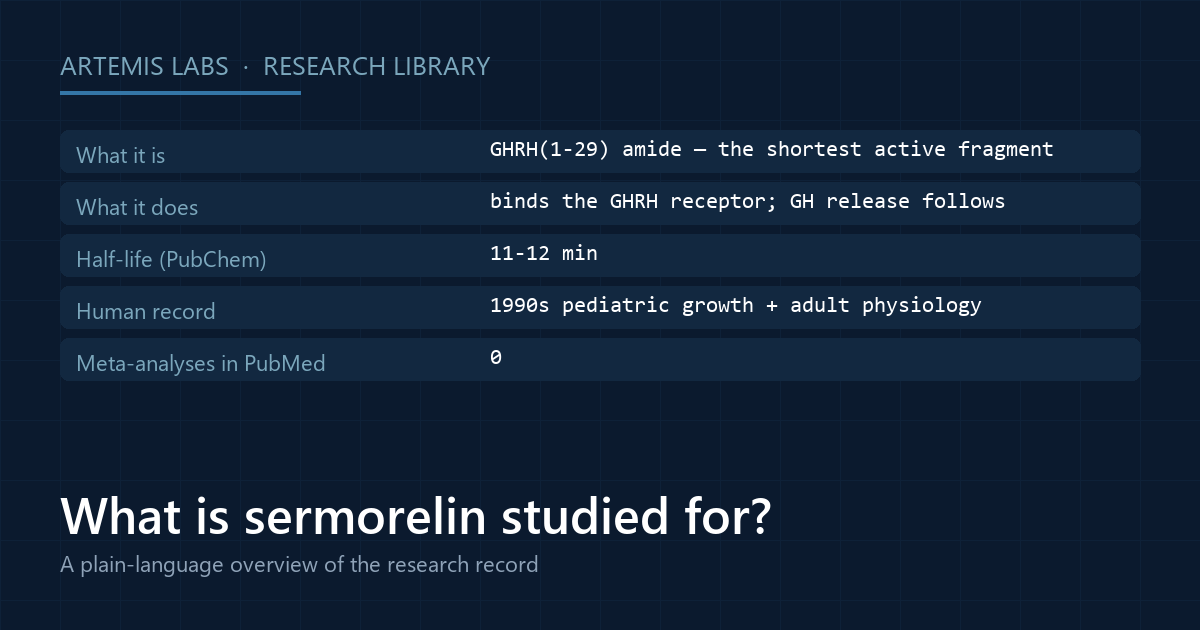
Sermorelin is GHRH(1-29), the shortest fragment of growth hormone-releasing hormone that still works. Its human record is 1990s pediatric growth trials and adult physiology studies, and it has no meta-analysis.
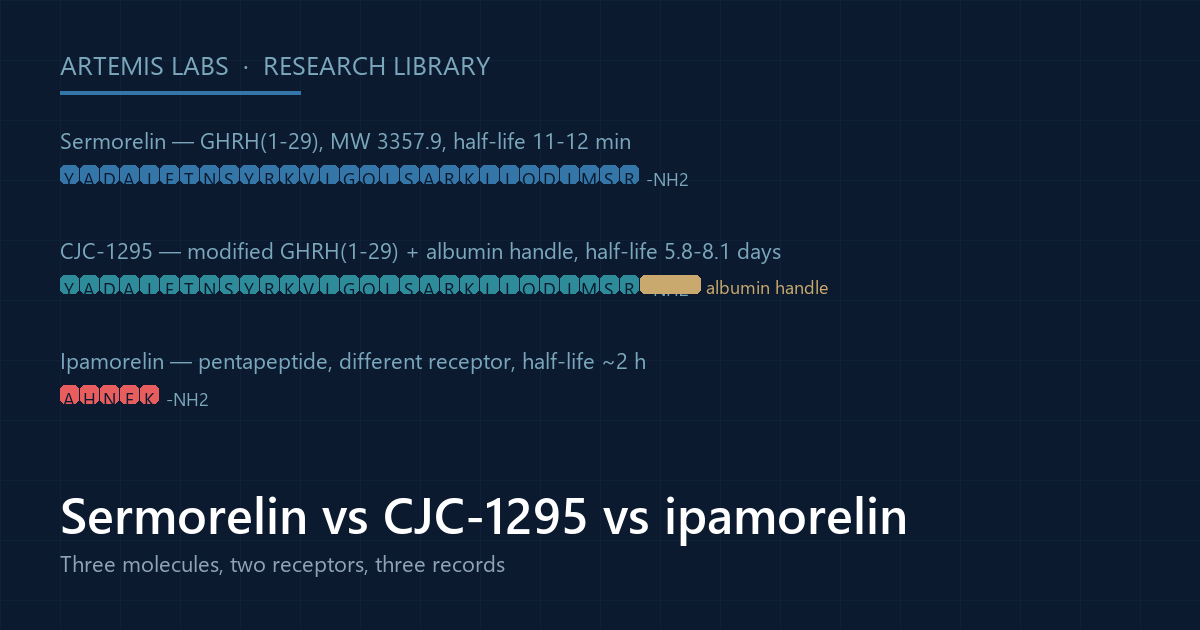
Sermorelin, CJC-1295 and ipamorelin are three different molecules, two receptors and three very different evidence bases. What each one’s published record actually contains.
Selank is a seven-amino-acid peptide built from tuftsin, studied in Russia since the 1990s. What the published research covers, what the human trials compared it against, and what is missing.
Selank was tested against alcohol and morphine withdrawal in rodents, with diazepam as the comparator. The published comparison says Selank was slightly inferior — not comparable.
A blood-clotting study found Selank had the strongest anticoagulant effect of three related peptides. A stem cell study reassuring on toxicity also reported a 61% drop in one cell type.
Selank changes the expression of inflammation-related genes in mouse spleen. One study found a three-residue fragment produced largely the same profile — which raises a question about the molecule itself.
Selank behaves like a benzodiazepine in rodents, and binding studies call it a positive allosteric modulator of GABA binding. The same group’s human-cell experiment found no effect at all.
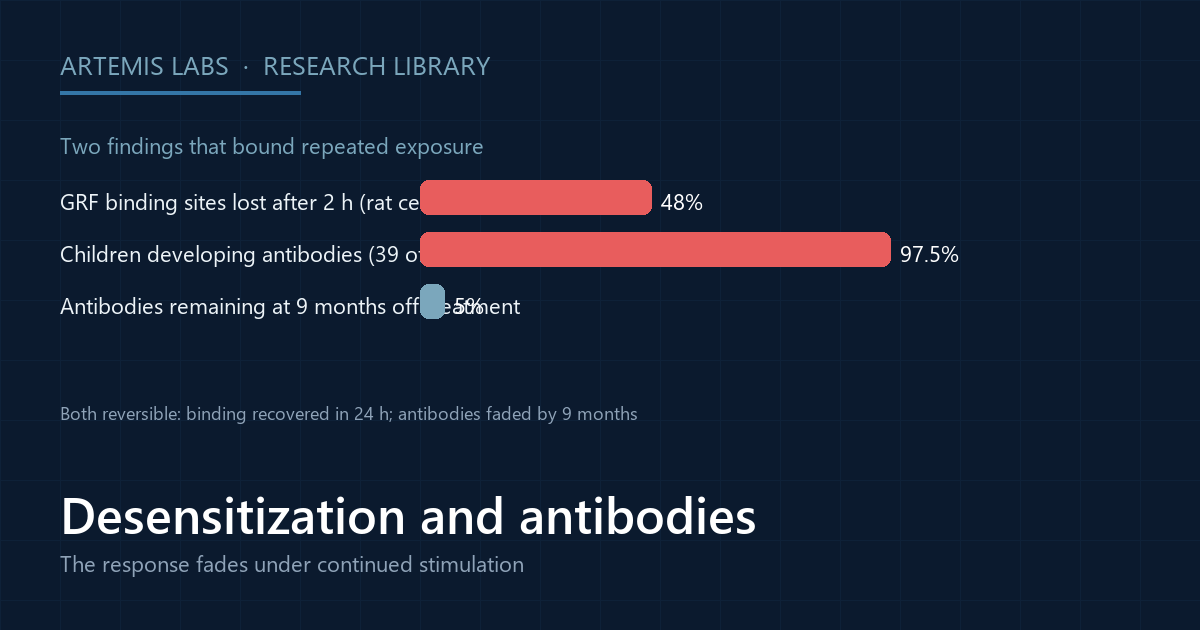
Two findings run through the GHRH(1-29) literature and are rarely reported together: the pituitary becomes less responsive under continued stimulation, and treated children produced antibodies to the peptide.
Ipamorelin is a five-amino-acid peptide studied since 1998 for growth hormone release. Here is what the published research covers, in plain language, and what it does not.
What published research reports when ipamorelin is measured head to head against GHRP-2, GHRP-6 and hexarelin: similar growth hormone release, different effects on other hormones.