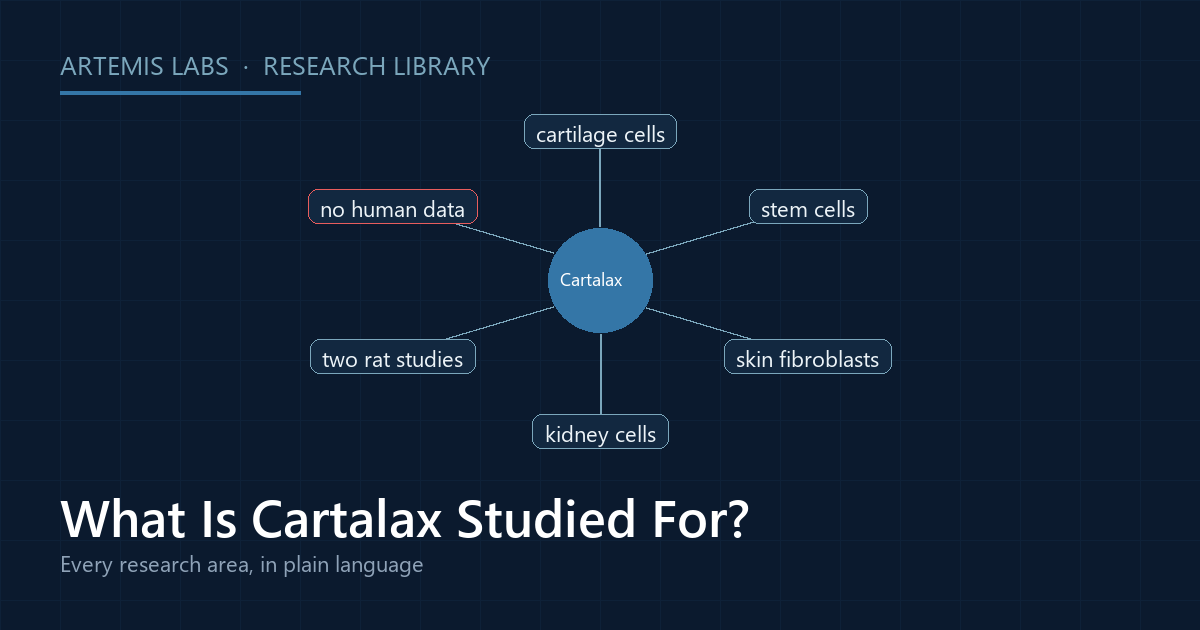
Cartalax (AED, Ala-Glu-Asp) is a three-amino-acid research peptide studied in cell-culture aging models. Every paper comes from one institute; no human data exists.
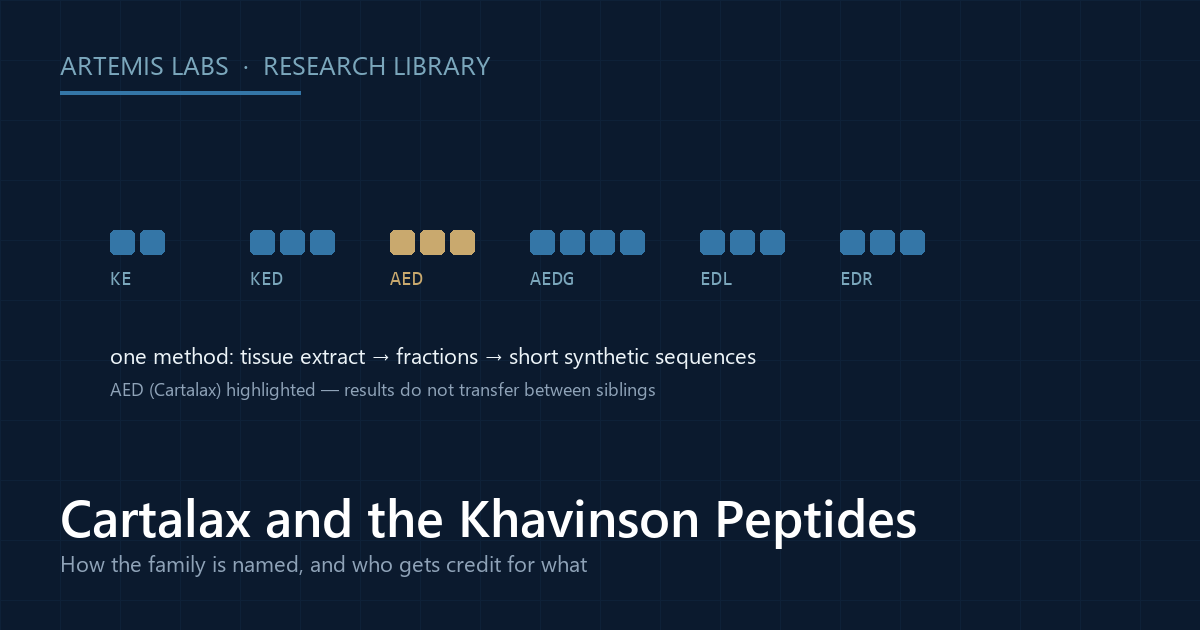
Cartalax (AED) is one of the Khavinson short peptide bioregulators. How the family was derived, how the names work, and which sibling peptide each AED paper actually credits.
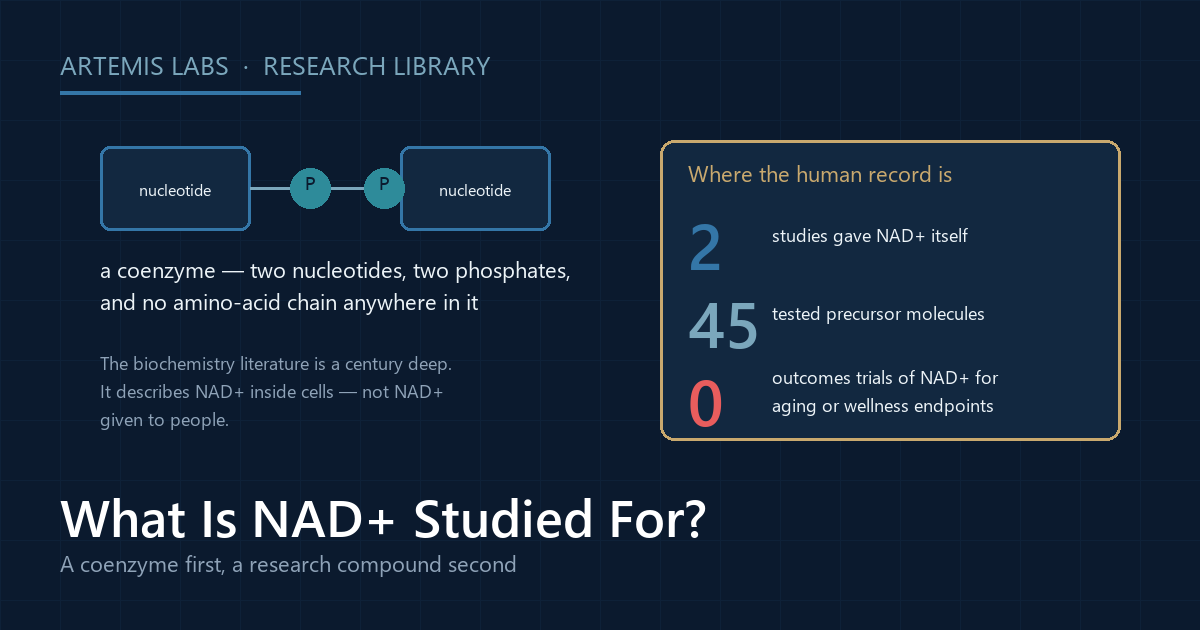
NAD+ is a dinucleotide coenzyme, not a peptide. What the research record actually covers, and why almost all human trial evidence involves precursors instead.
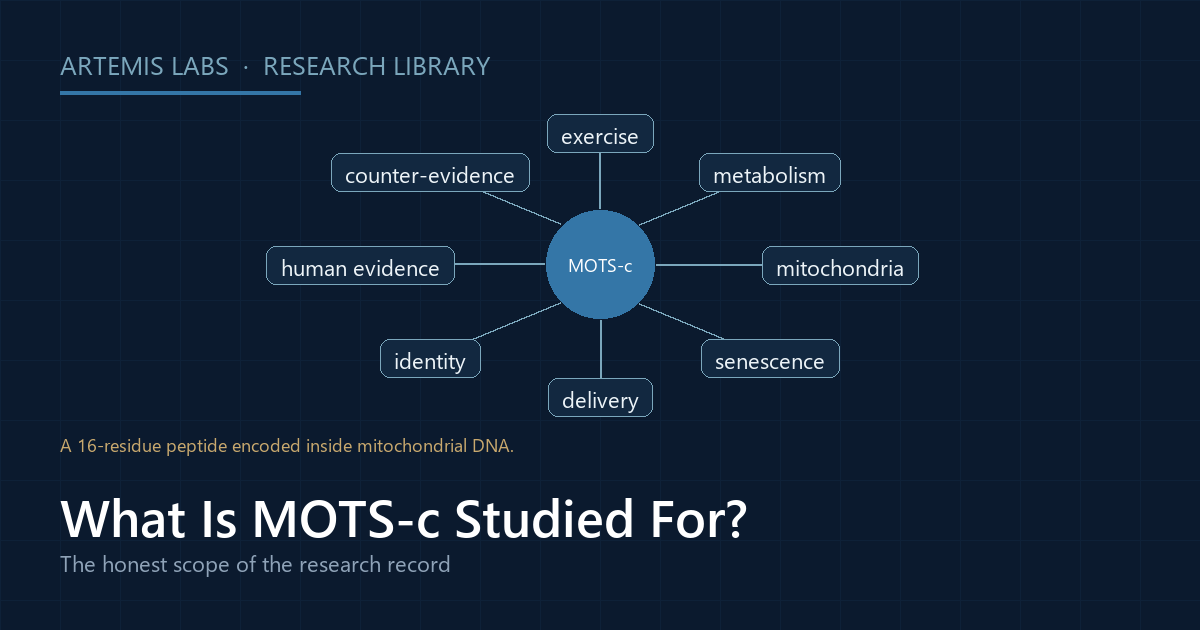
MOTS-c is a 16-amino-acid peptide encoded in mitochondrial DNA. What researchers have actually studied it for, in plain words, and what has never been tested in people.
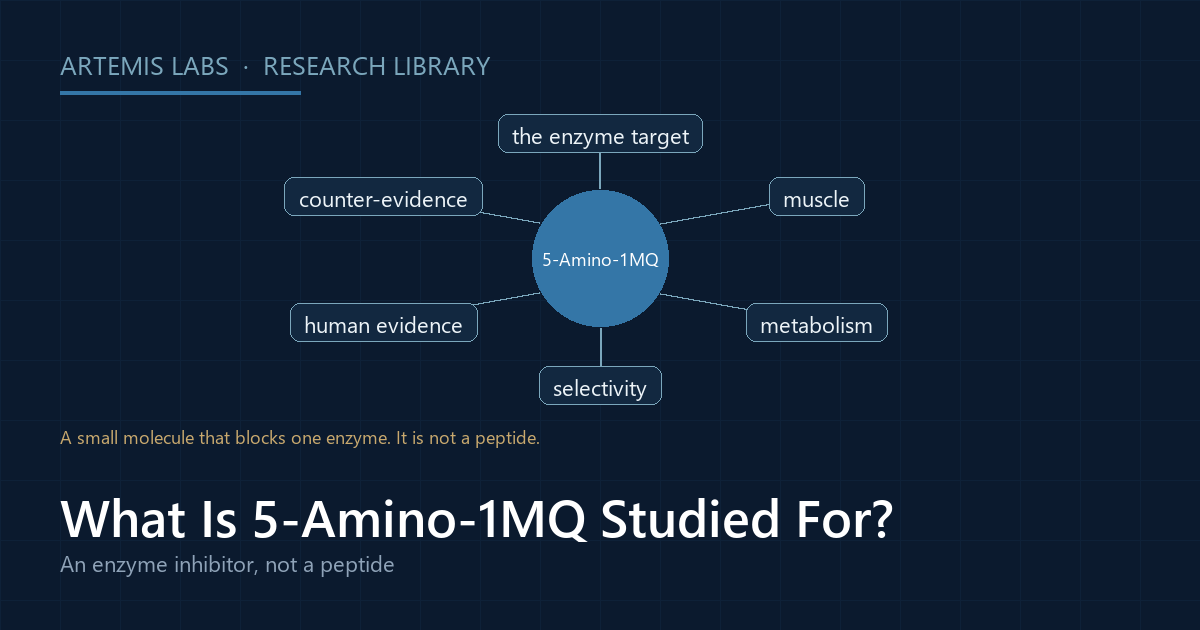
5-Amino-1MQ is a small molecule, not a peptide. What NNMT does, what blocking it means, and why the published record is entirely rodent and cell work.
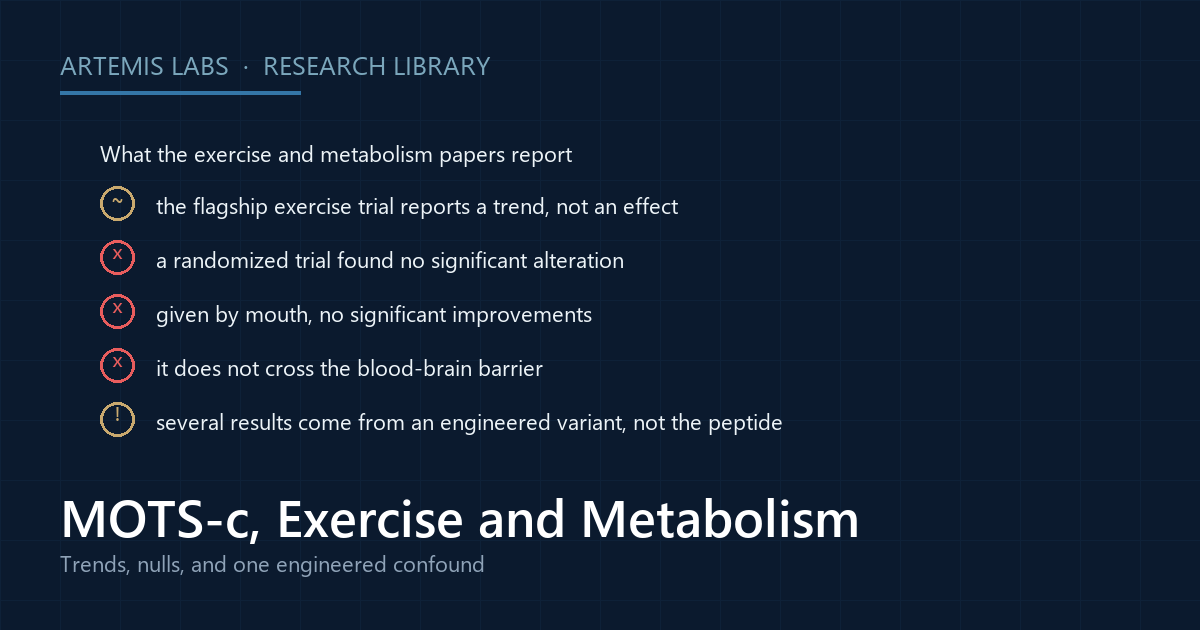
The preclinical MOTS-c record by species, the exercise study that reports only a trend, and the negative findings on brain entry and oral delivery, quoted as written.
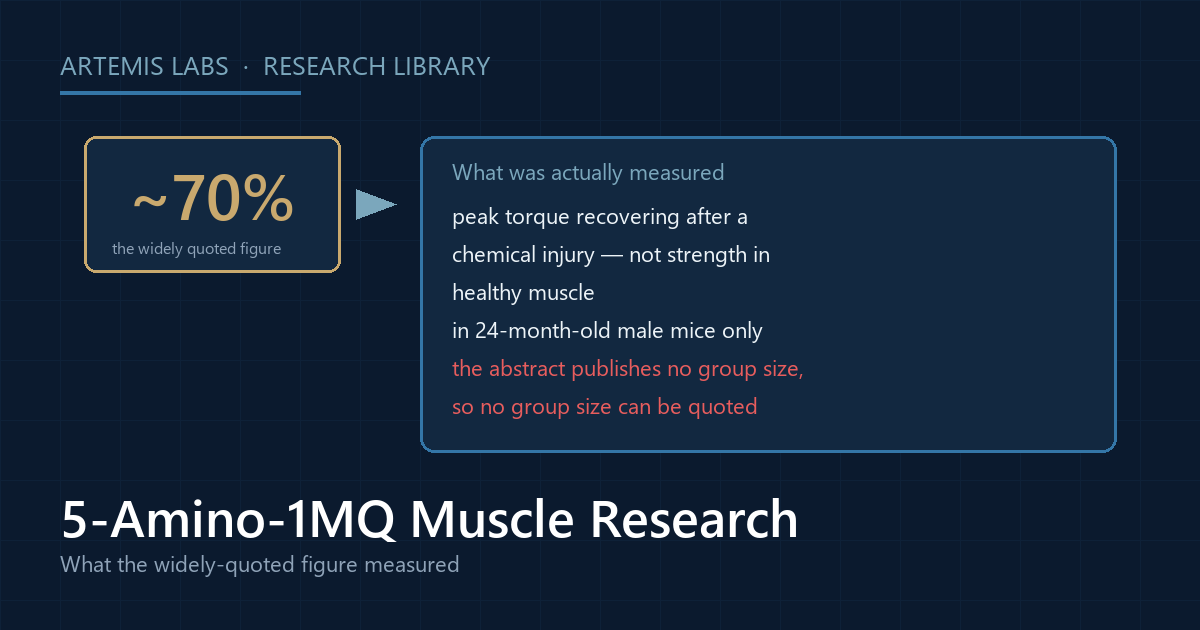
What the aged-mouse muscle studies actually measured, why the ~70% figure is a recovery-after-injury result in aged male mice, and the counter-evidence usually left out.
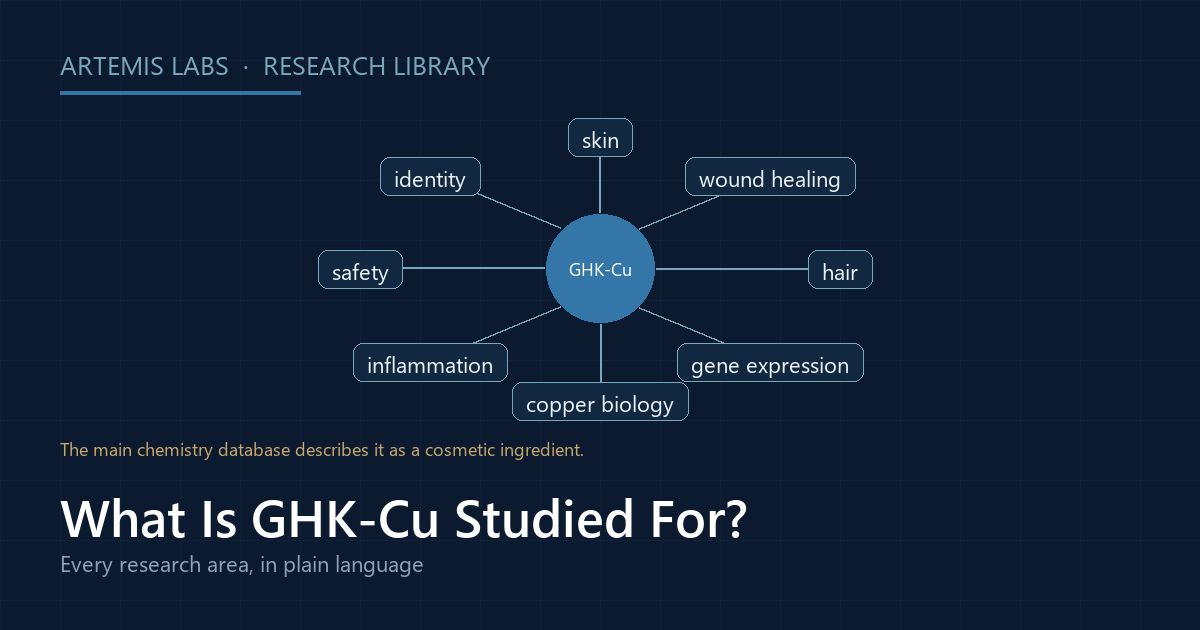
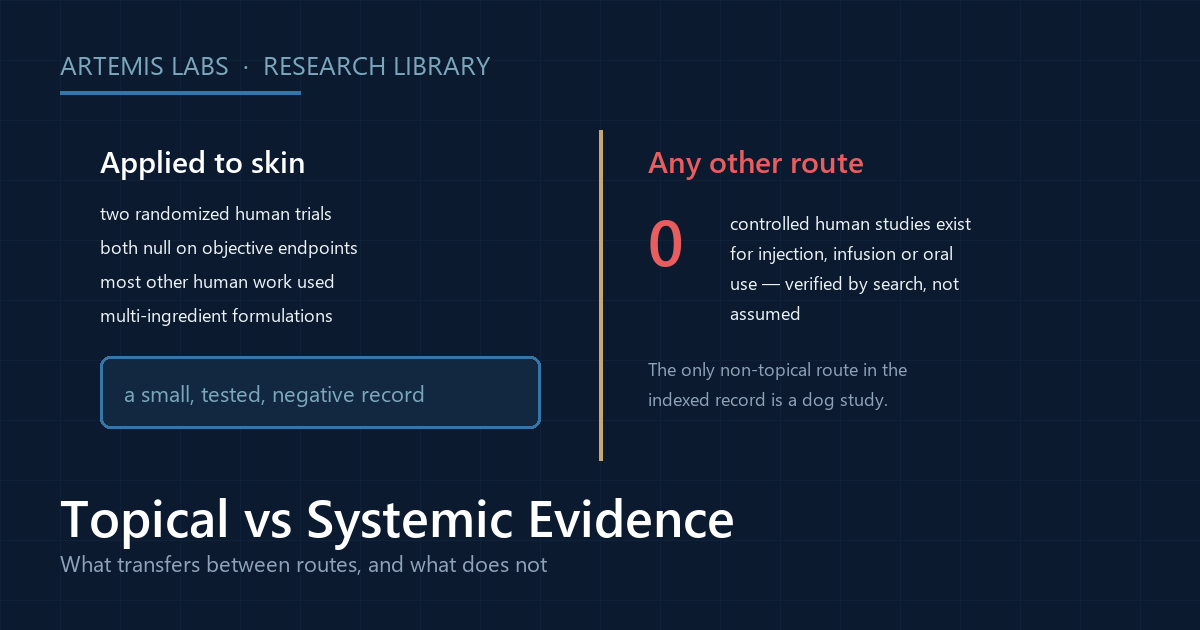
GHK-Cu is a copper-bound tripeptide. The main scientific database describes it as a cosmetic ingredient, and two human trials in 34 years were both negative.
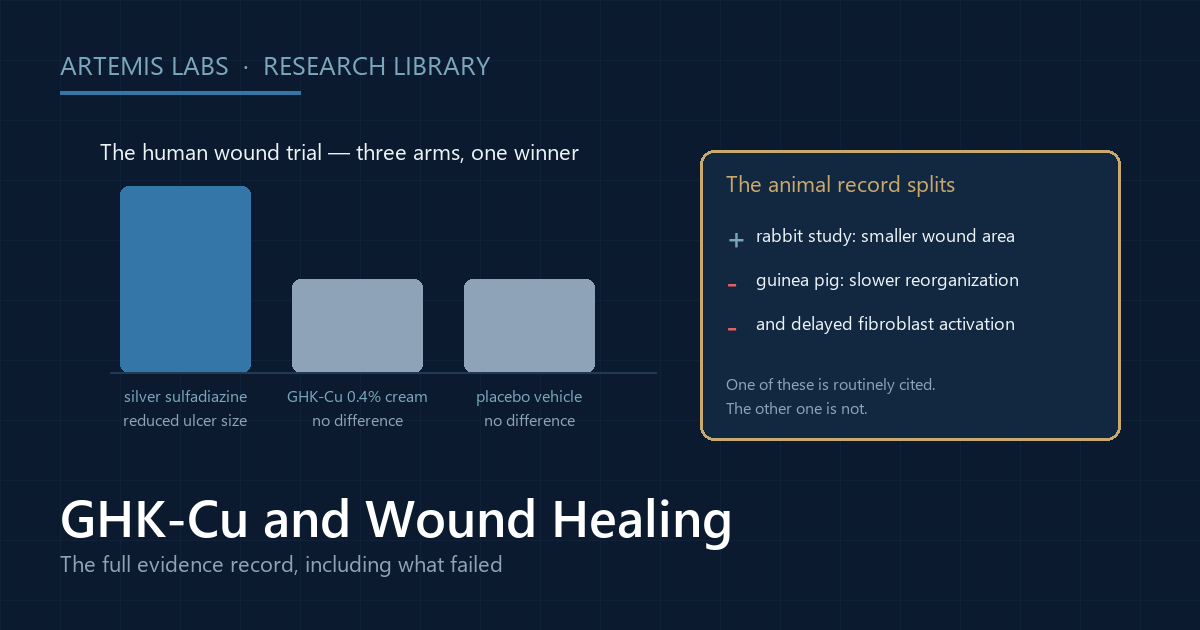
The one human wound trial of GHK-Cu matched placebo. The animal record is split: rabbits and rats healed faster, guinea pigs healed slower. What that means.
Most human GHK-Cu results come from multi-ingredient cosmetic products applied to skin. Here is why that evidence cannot be read across to research-vial material.