24
Aug
Aug
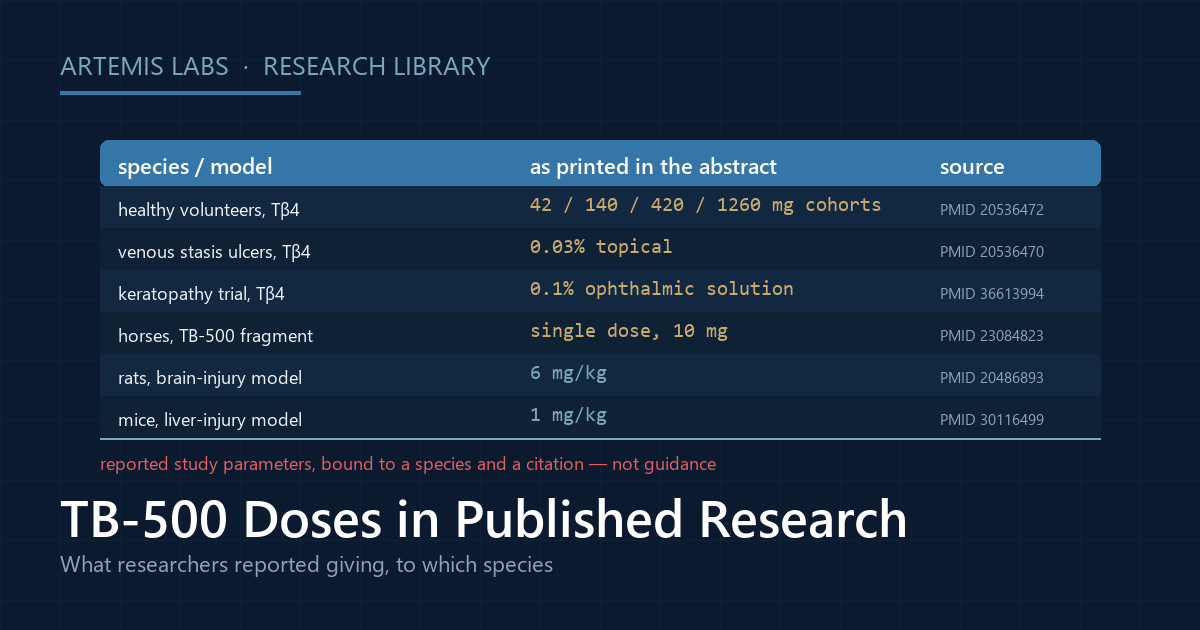
The published thymosin beta-4 study figures, the animal numbers, and the honest answer for TB-500 itself: no human dose has ever been published.

The published thymosin beta-4 study figures, the animal numbers, and the honest answer for TB-500 itself: no human dose has ever been published.
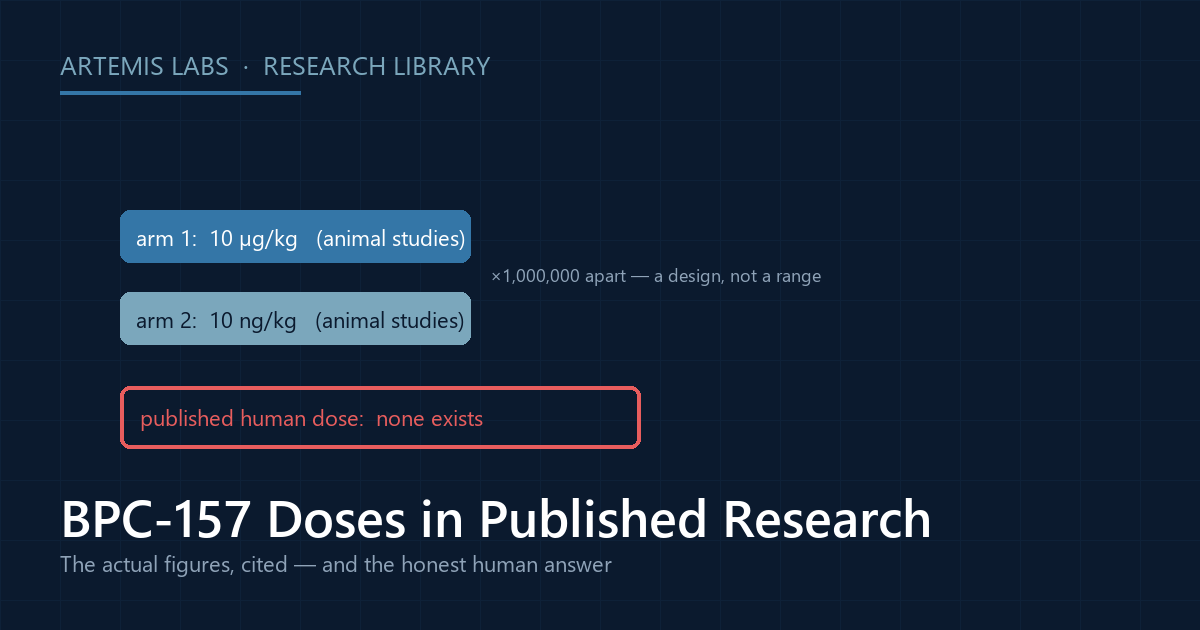
What amounts has BPC-157 research actually used? The published animal figures, the human-tissue concentrations, and the honest answer on human dosing: none is published.
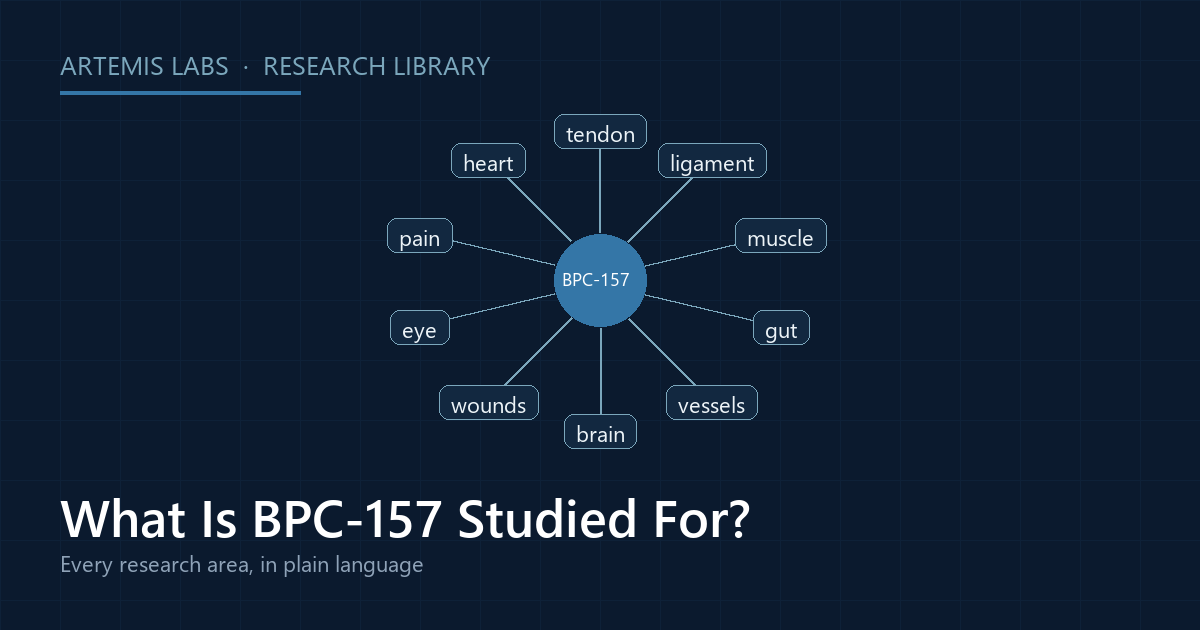
BPC-157 is studied in animal, cell, and tissue models of tendon, gut, blood vessel, nerve, and wound repair. A plain-language map of every research area.
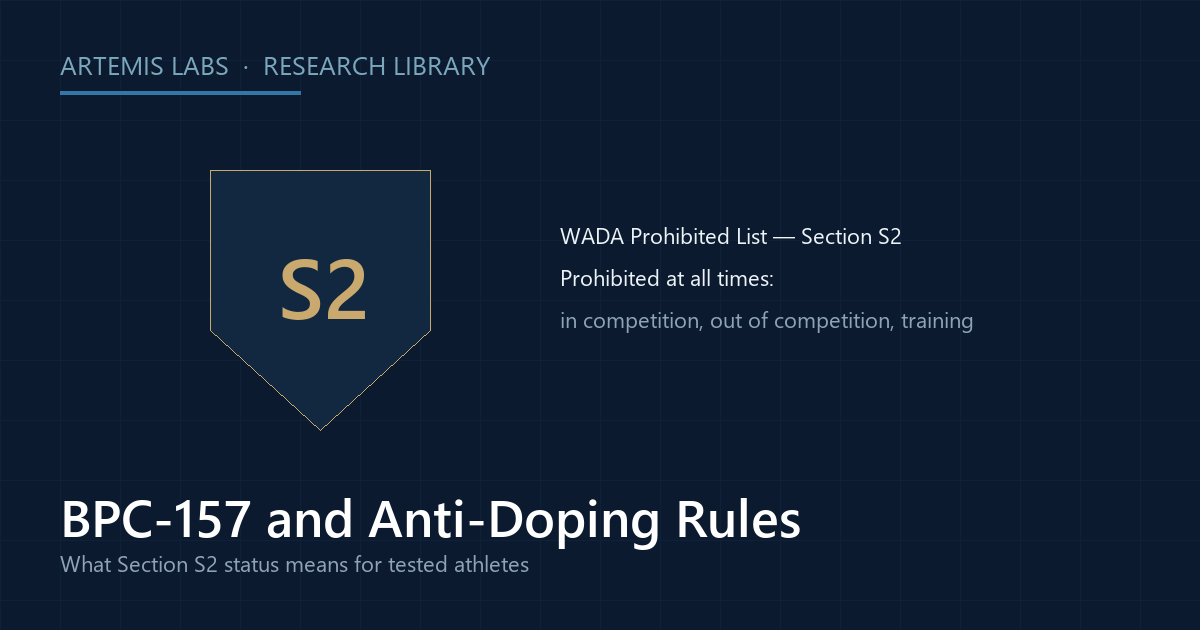
BPC-157 is on the WADA Prohibited List in Section S2, prohibited at all times for tested athletes. What that means, and why the source is no defense.
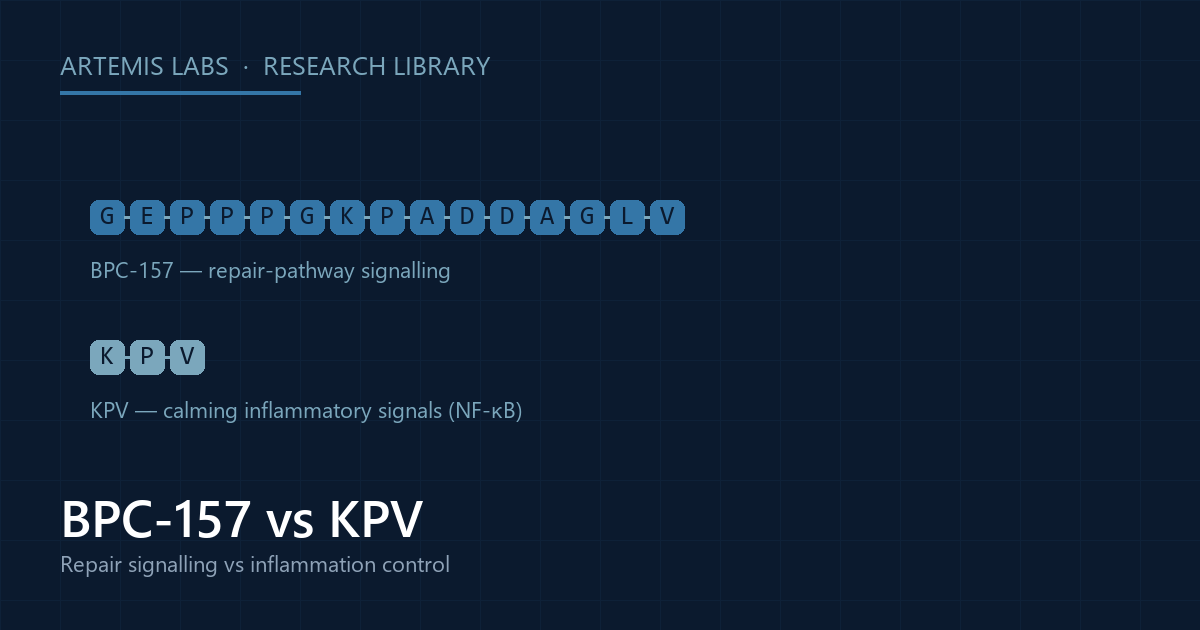
BPC-157 and KPV are studied for different things, and both appear in gut research. A plain-language look at what the published work covers and what it does not.
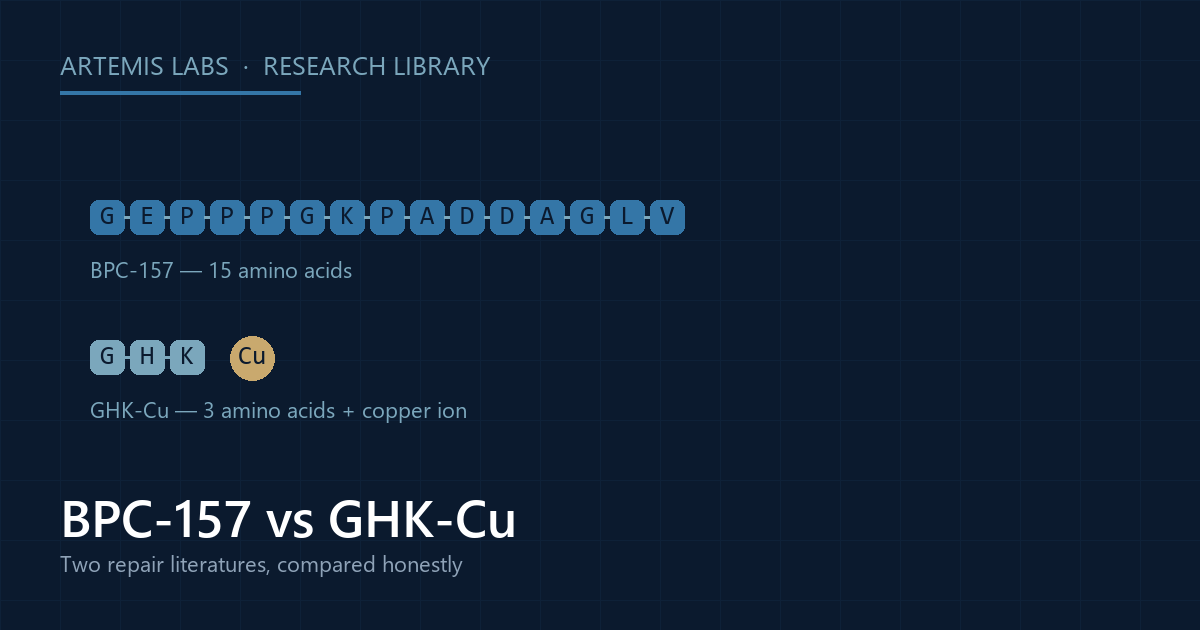
A plain-language comparison of BPC-157 and GHK-Cu: structure, size, the pathways each is studied through, the research areas each belongs to, and what neither has been tested for in people.
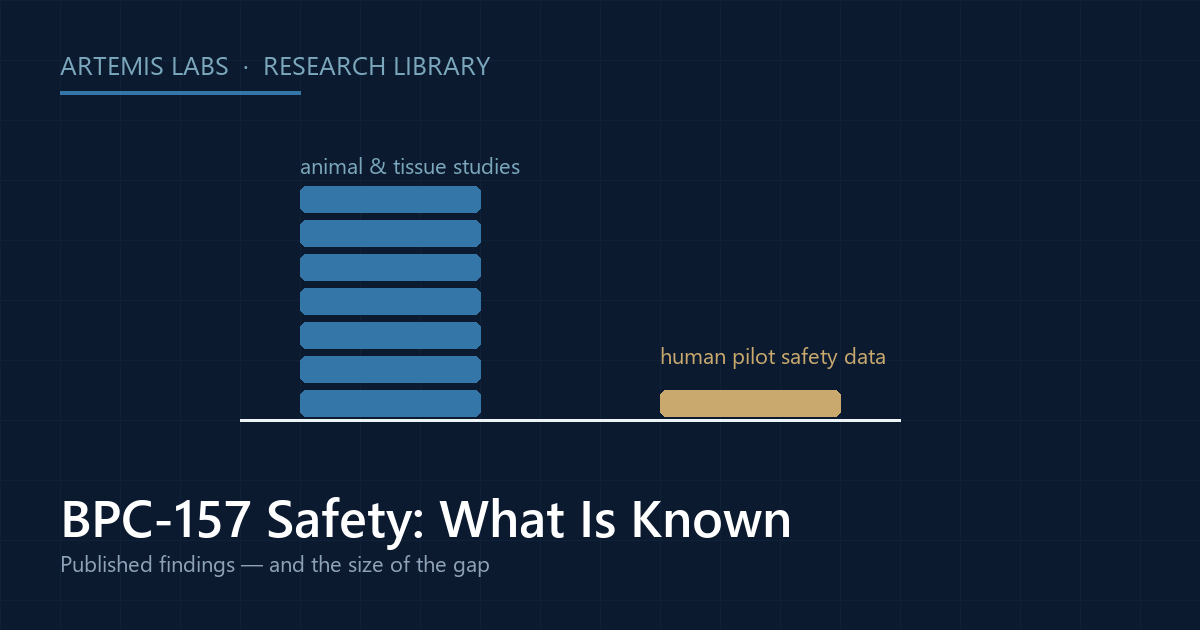
What the published record actually reports about BPC-157 safety: no Phase II or III human efficacy trial, small pilot infusion references, and open questions.
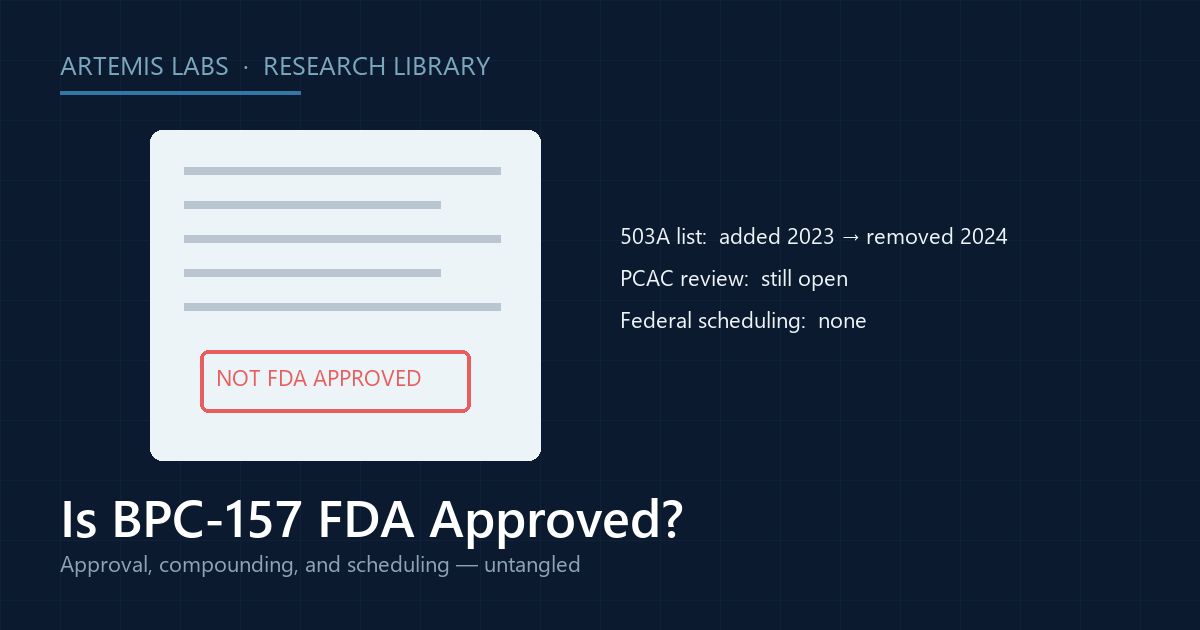
BPC-157 is not an FDA-approved drug. What that means, the 2023-2026 compounding timeline, and how “approved,” “scheduled,” and “compounding list” differ.
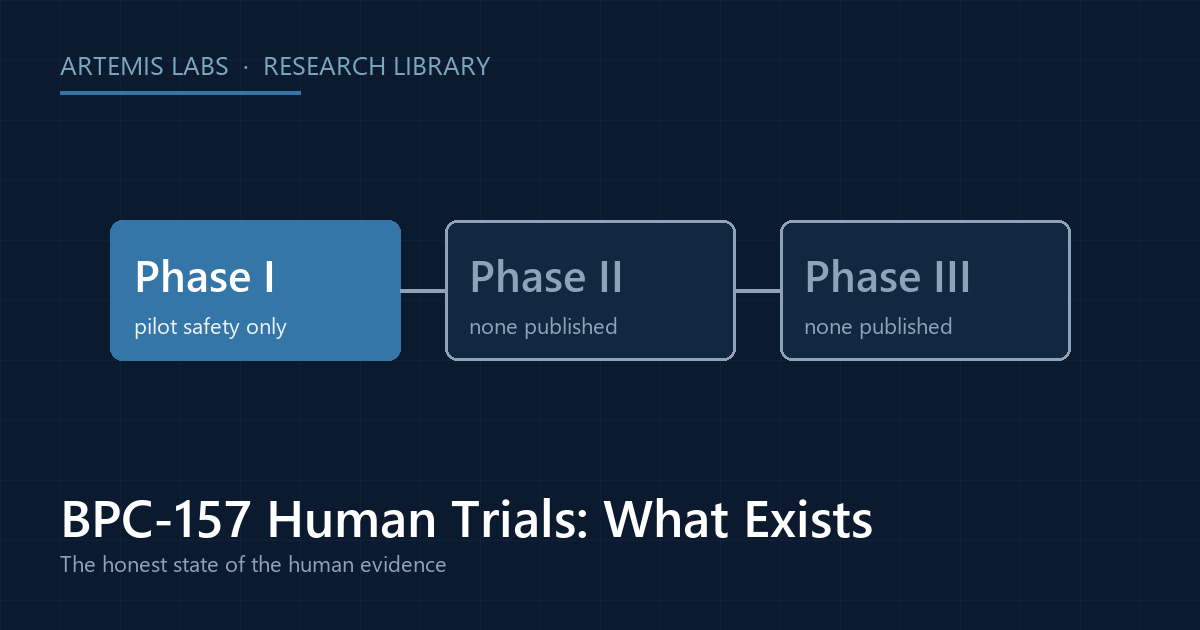
A plain answer to a question most sellers avoid: no Phase II or III human trial of BPC-157 has ever been published. Here is what the human record actually holds.
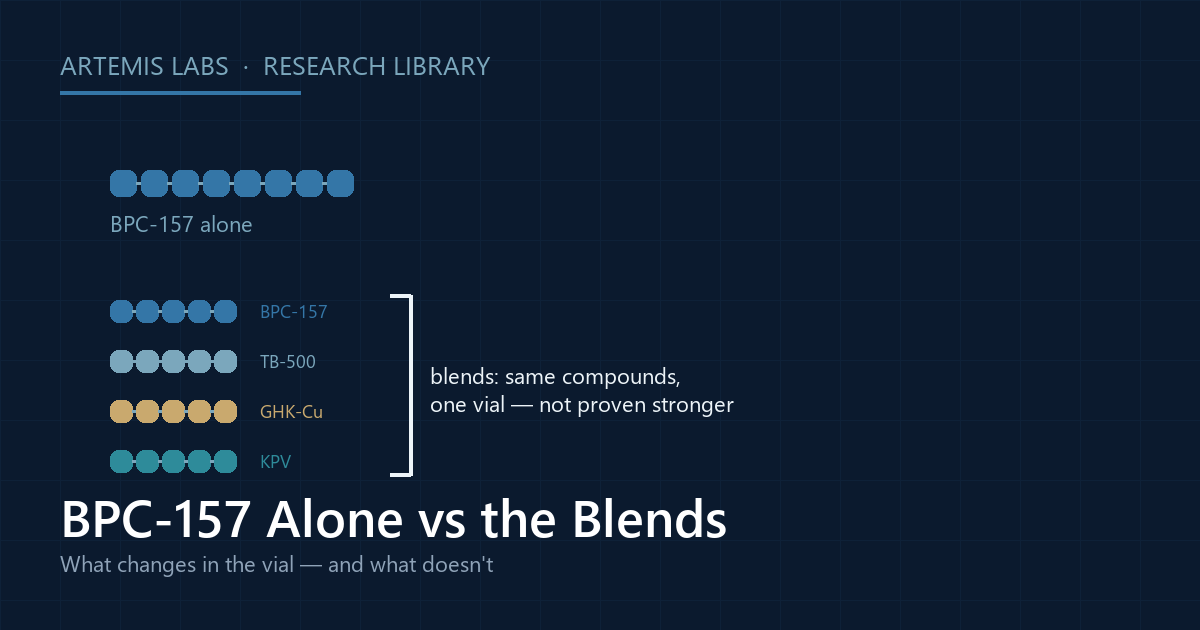
How standalone BPC-157 differs from the pre-mixed blends that contain it, what is in each vial, and why combining peptides is a research idea, not a proven bigger effect.