28
Aug
Aug
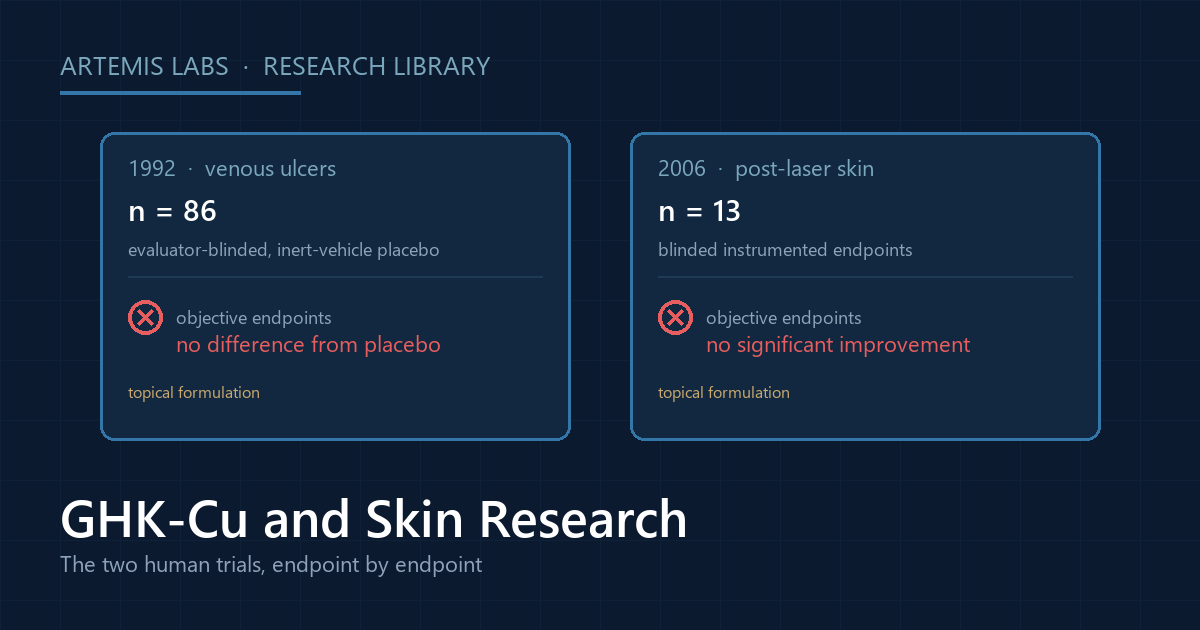
GHK-Cu has two human randomized trials in 34 years. Both tested topical creams, and both were negative on every objective skin measurement. The full record.

GHK-Cu has two human randomized trials in 34 years. Both tested topical creams, and both were negative on every objective skin measurement. The full record.
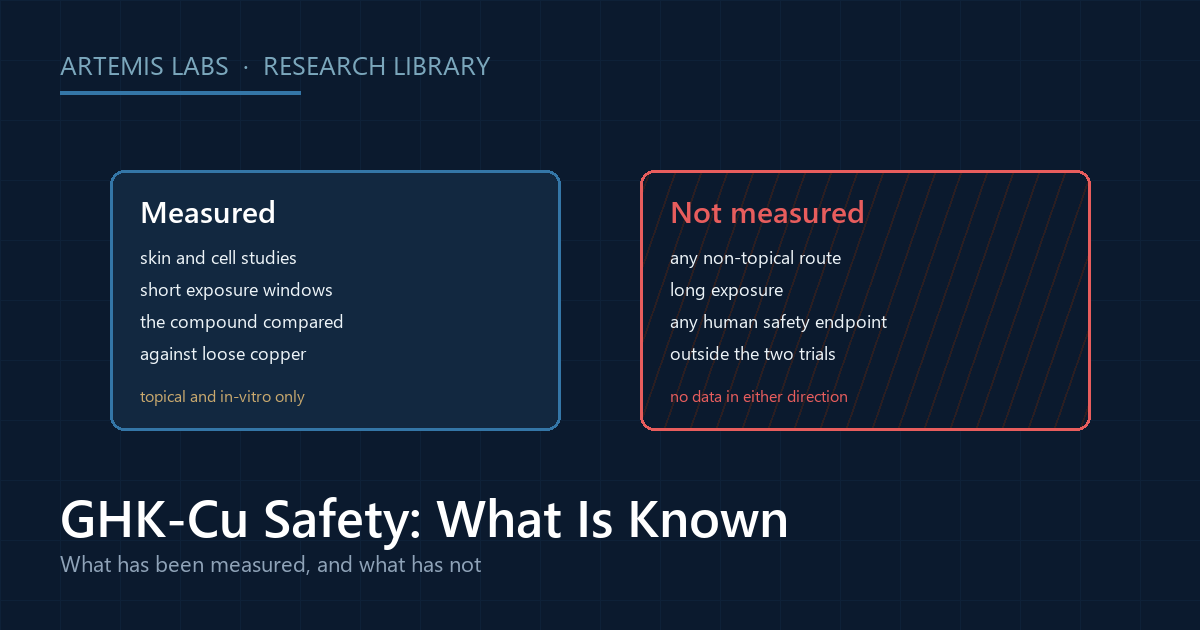
The copper-toxicity record for GHK-Cu is mixed and mostly reassuring in cell studies. It is also almost entirely silent, because no human has been studied outside the skin.
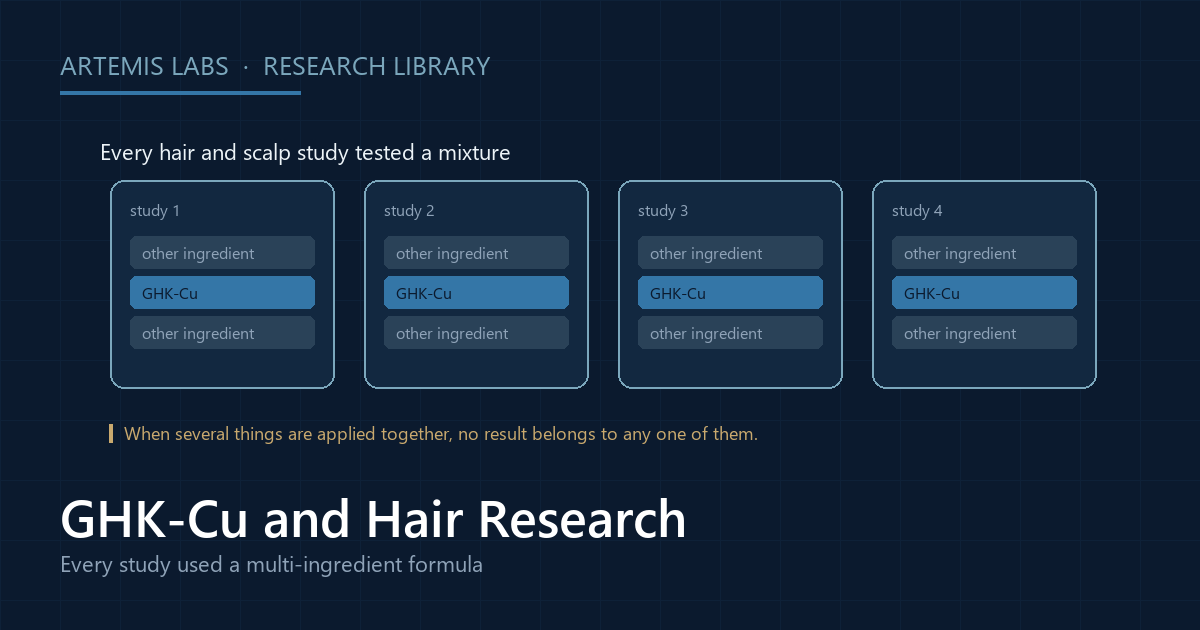
Every human hair study involving GHK or GHK-Cu tested a mixed formulation with other active ingredients. No single-agent human hair study is indexed in PubMed.
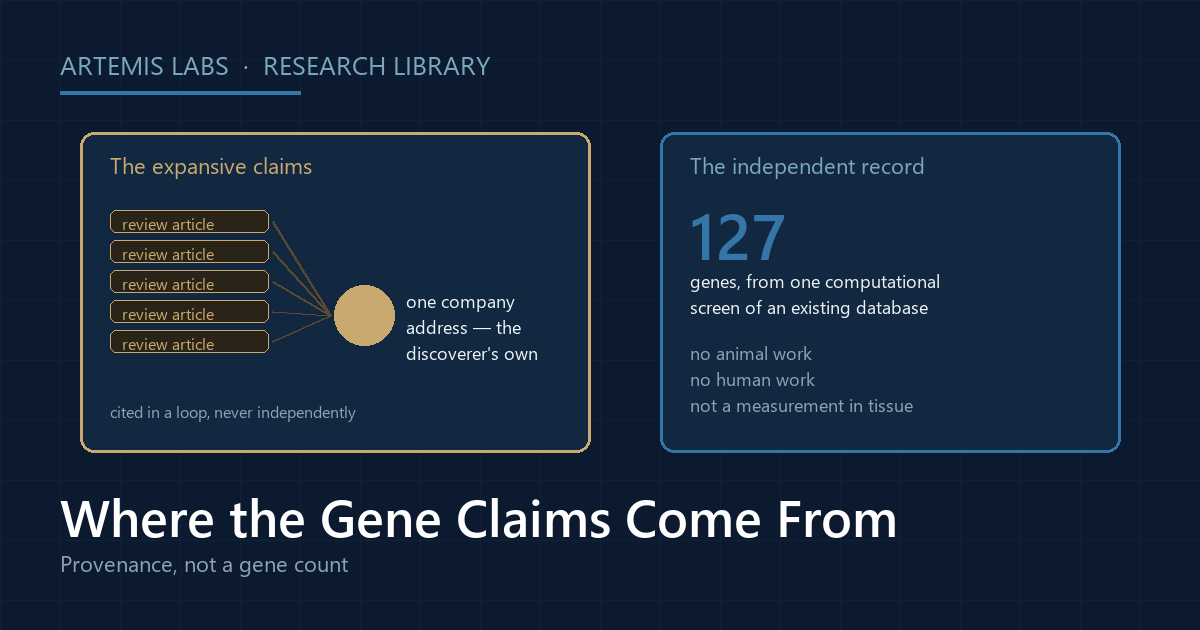
The expansive gene-expression claims about GHK trace to reviews sharing one company address. The only independent primary study is a 2012 computational screen.
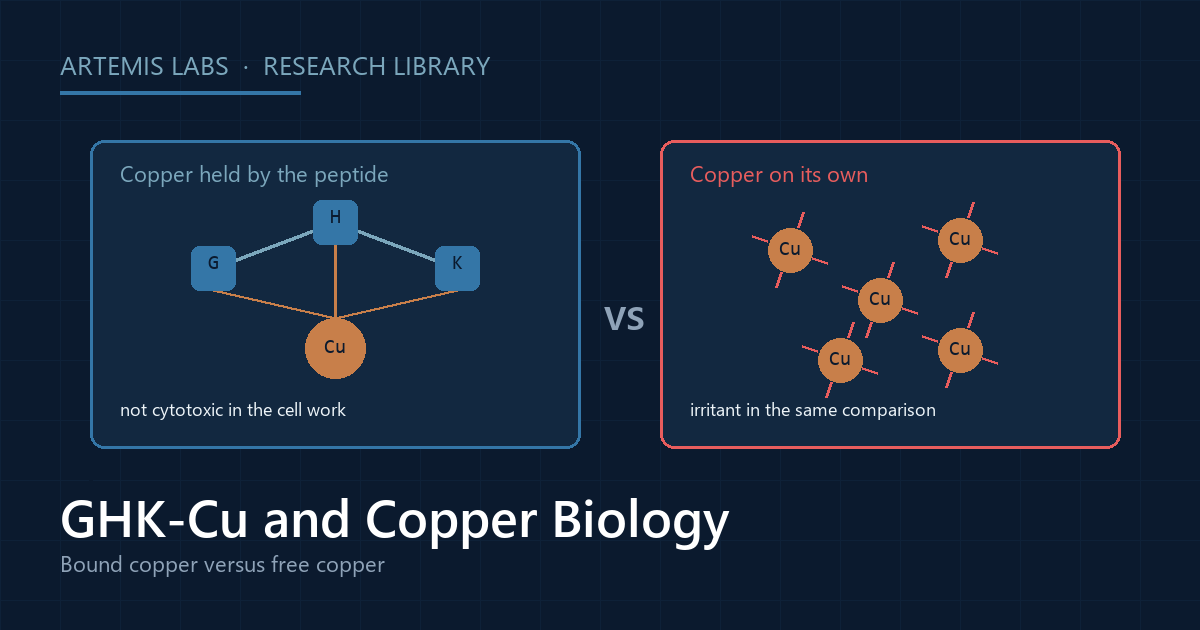
What published work reports about the copper in GHK-Cu: bound copper versus free copper salts, the biphasic curve, and where the peptide may not be the active part.
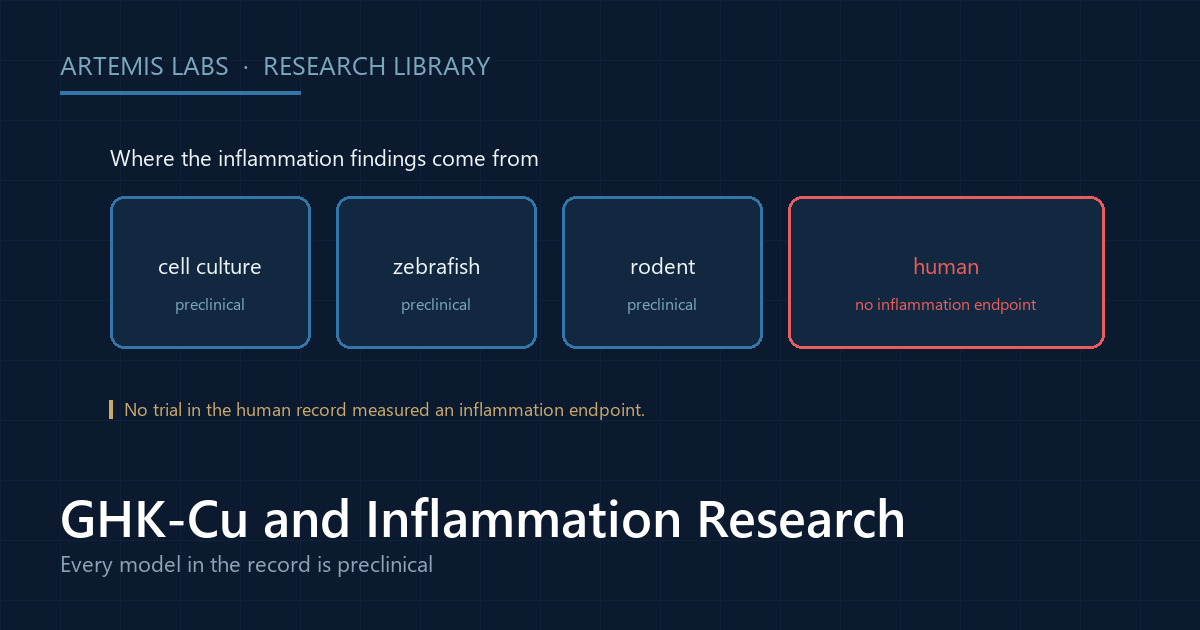
A plain-language review of the published GHK-Cu inflammation literature: which studies used cells, which used mice, which used zebrafish, and what each one found.
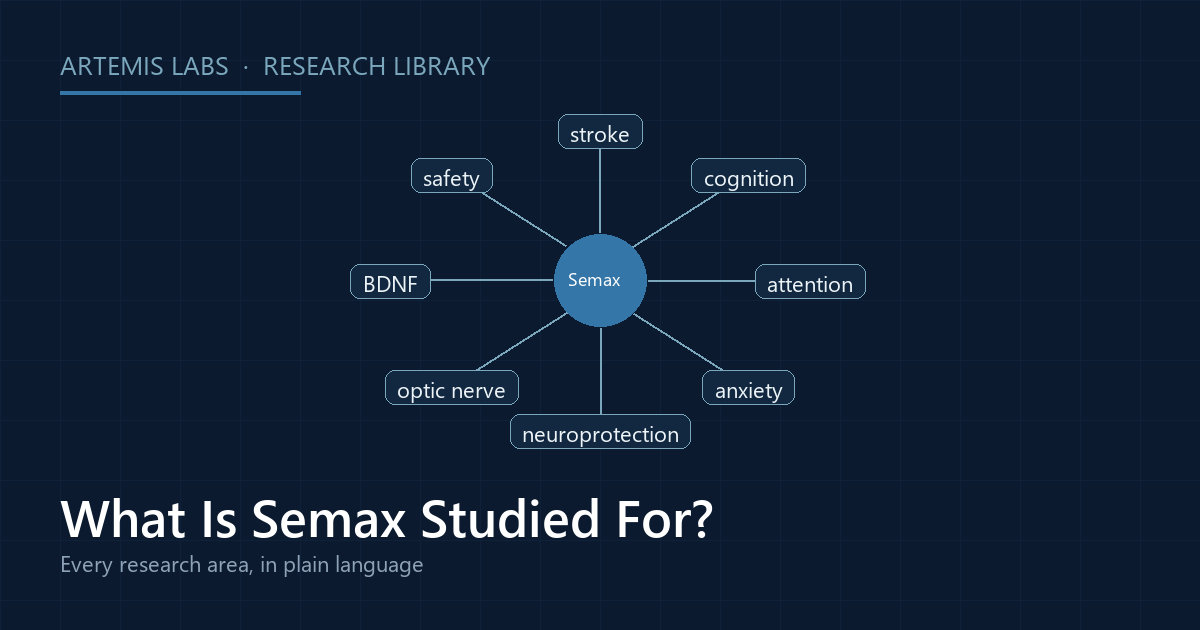
Semax is a seven-amino-acid peptide, CID 9811102. A plain-language look at what it is, where it came from, and which research areas it has actually been studied in.
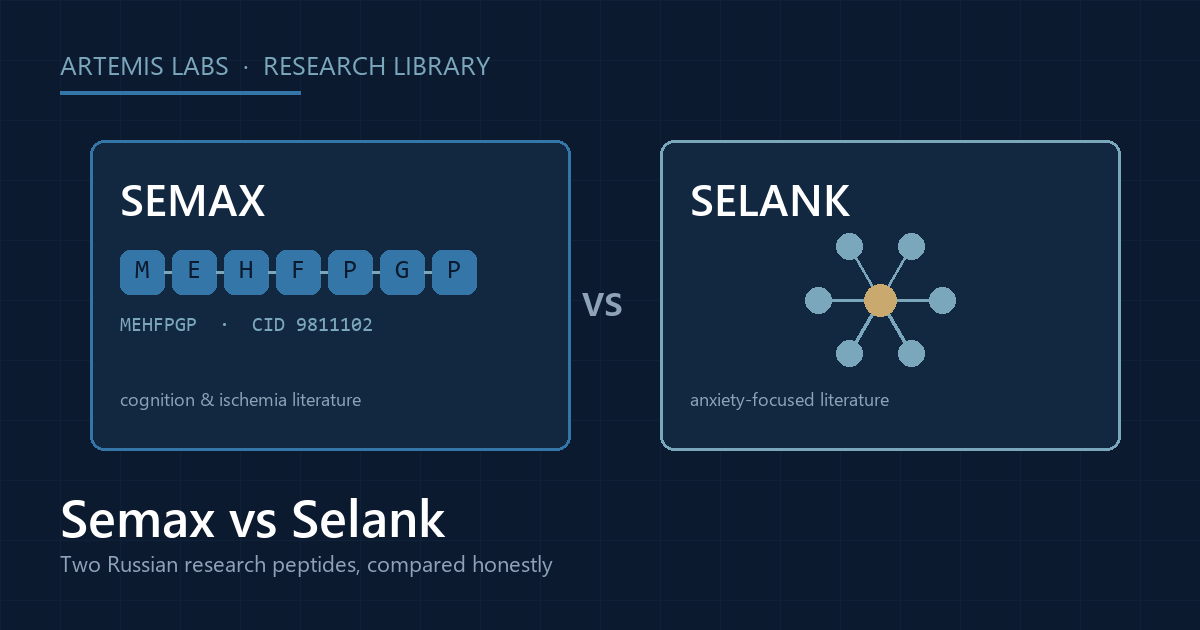
Semax and Selank are both Russian-developed heptapeptides. This page compares what has actually been published on each, and how strong that evidence is.
Every published human study of Semax in stroke and cerebral ischemia was run in Russia. Here is what each one reported, and the design limits behind each result.
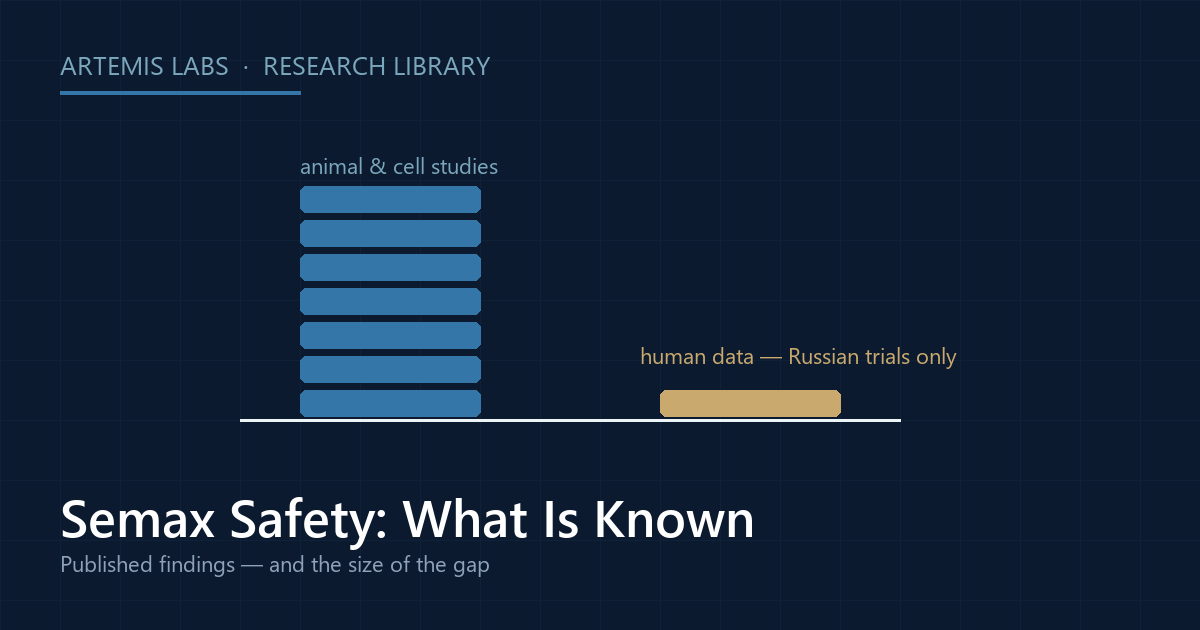
A plain-language review of what published Semax studies report about safety, including the negative findings, the missing long-term data, and the gaps.