
This class collects the compounds that appear in tissue-repair research: BPC-157, TB-500, KPV and the research blends built from them. The studies measure how injured tissue responds at the cell level, in animal and cell-culture models. Each product page explains what was tested and links the papers.
Tissue-Repair Research
What is in this class?
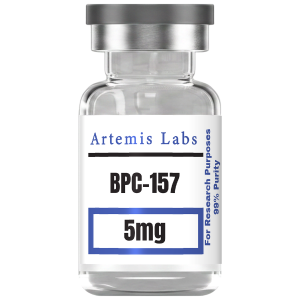
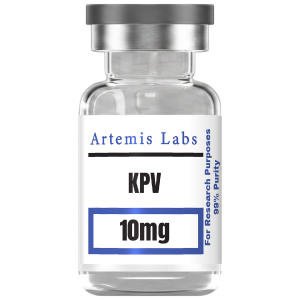
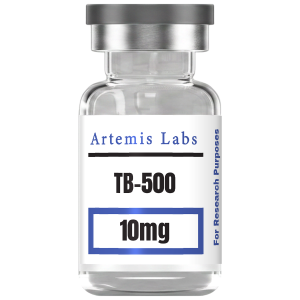
Tissue-repair research looks at how a wound, tendon, ligament or gut lining responds after injury, and it measures that response at the level of cells and signaling pathways. Four things come up again and again in the papers: cytoprotection (cells surviving stress), angiogenesis (new blood vessels), extracellular-matrix remodeling and cell migration. The compounds in this class are the ones that show up in that literature. BPC-157 is a 15-amino-acid synthetic peptide studied in tendon, ligament and GI-tract models. TB-500 is a short, acetylated fragment of thymosin β4 that carries its actin-binding domain. KPV is the three-amino-acid tail of α-MSH, studied in inflammation-pathway models. The blends pair these compounds in one vial for study designs that call for more than one.
What do the studies actually measure?
Almost all of it is preclinical. Rat, mouse and zebrafish injury models dominate, with a smaller set of ex-vivo human tissue experiments, such as the 2026 human internal-mammary-artery study of BPC-157. Endpoints are things like vessel relaxation, collagen organization, migration speed and barrier integrity. There is very little human trial evidence for any compound here, and the product pages say so plainly. They also carry the findings that cut the other way, such as the 2025 report that thymosin β4 released by mast cells impaired the intestinal barrier in a stress model.
How do the compounds compare?
| Compound | What it is | Sequence / formula | Molecular weight | Sources cited on its page |
|---|---|---|---|---|
| BPC-157 | 15-amino-acid synthetic peptide | GEPPPGKPADDAGLV | 1,419.5 g/mol | 27 |
| TB-500 | 7-residue N-acetylated fragment of thymosin β4 (residues 17–23) | Ac-LKKTETQ | 889.0 g/mol | 25 |
| KPV | α-MSH C-terminal tripeptide (residues 11–13) | Lys-Pro-Val | 342.4 g/mol | 7 |
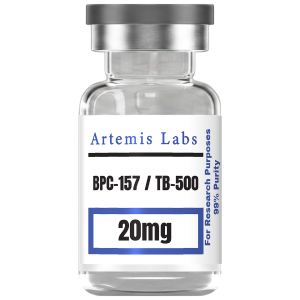
| BPC-157 + TB-500 | two-component research blend | see each component | per component | 16 |
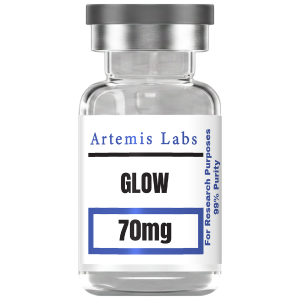
| GLOW | three-component blend: GHK-Cu, BPC-157, TB-500 | see each component | per component | 23 |
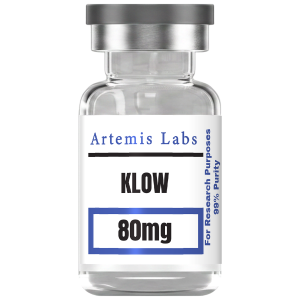
| KLOW | four-component blend: KPV, GHK-Cu, BPC-157, TB-500 | see each component | per component | 9 |
Sequences and molecular weights are the values verified on each product page. "Sources cited" is the count shown on that page on 28 August 2026.
Where do I read more?
- What is BPC-157 studied for?
- What is TB-500 studied for?
- BPC-157 alone vs the blends
- The BPC-157 + TB-500 combination, explained
- Browse by research field
- The Artemis glossary
Every compound on this page is supplied for laboratory research only. Each product page carries its full reference list.
References
- Yildirim AK et al. (2026). Endothelium-dependent nitric oxide-mediated vasorelaxant effects of BPC 157 in human internal mammary artery. J Clin Med. PMID 42123221
- Yuan C et al. (2026). From regeneration to analgesia: the role of BPC-157 in tissue repair and pain management. Int J Mol Sci. PMID 41898733
- Philp D et al. (2003). Thymosin beta 4 and a synthetic peptide containing its actin-binding domain promote dermal wound repair in db/db mice. Wound Repair Regen. PMID 12581423
- Sosne G et al. (2010). Biological activities of thymosin β4 defined by active sites in short peptide sequences. FASEB J. PMID 20179146
- Sun Y et al. (2025). Thymosin β4 released by mast cells under stress conditions impairs intestinal epithelial barrier. World J Gastroenterol. PMID 41278163
- Jeong H et al. (2025). Multicompartmental hydrogel microspheres protecting and targeting KPV to colonic epithelium. ACS Appl Bio Mater. PMID 40030207