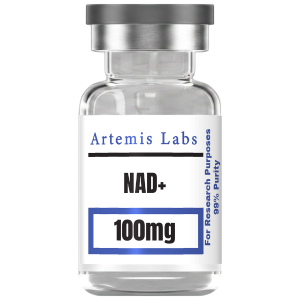
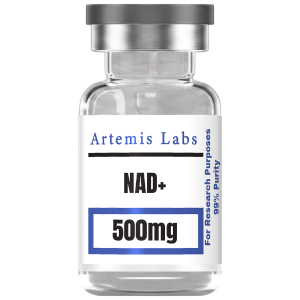
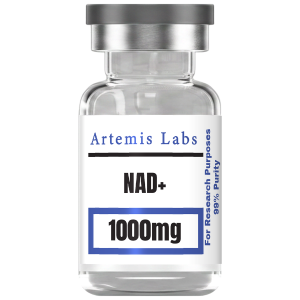
NAD+ (Nicotinamide Adenine Dinucleotide)
$125.00
NAD⁺ is the molecule that carries electrons through every energy-producing reaction in the cell, and it is also the fuel a set of repair and ageing-related enzymes consume to do their jobs. Levels fall with age. The field’s central question is not whether that decline is real — it is whether topping the pool back up changes anything measurable.
Continue readingShow less
Why it declines. An enzyme called CD38 is now a leading explanation for the age-related drop. Song 2024 (PMID 39044033) tied CD38 to haematopoietic stem-cell decline; Verdin 2026 (PMID 41542058) reported CD38 inhibition restoring cognition in a model via a choroid-plexus–CSF–hippocampus route.
The honest state of play. Whether raising NAD⁺ produces robust functional outcomes in people is unsettled, and the meta-analyses say so plainly. Zhang 2026 (PMID 41901064) found NMN’s blood-pressure efficacy "remains unclear"; Chen 2024 (PMID 39531138) found "limited evidence" on glucose and lipid markers; Song 2023 (PMID 37619764) concluded clinical efficacy "requires further evidence." A 2025 RCT raised whole-blood NAD⁺ 2.6–3.1× and still produced no significant cognitive or fatigue change. Different boosters are also not interchangeable.
Lyophilized NAD⁺ at ≥99% HPLC-verified purity, batch-specific Certificate of Analysis.
Description
NAD+ is a small molecule that every cell uses to move electrons around while it makes energy. It is not a peptide. Enzymes called sirtuins, PARPs and CD38 also use it up as fuel for their own work. Cell levels fall with age. Artemis Labs supplies NAD+ as a powder for lab research only.
Reviewed August 21, 2026 · Artemis Labs
What is NAD+?
NAD+ (nicotinamide adenine dinucleotide) is the oxidised member of the NAD+/NADH redox pair and the central redox coenzyme of cellular metabolism. Structurally it is a dinucleotide — an adenine nucleotide joined to a nicotinamide nucleotide through a pyrophosphate bridge — and chemically a small molecule, not a peptide. It is simultaneously the universal electron acceptor of catabolism and the consumed co-substrate of the cell’s principal NAD+-dependent signalling enzymes.
For research use only. Not for human consumption. These statements have not been evaluated by the FDA. NAD+ is supplied as an analytical/biochemical research reagent; no human-use, dosing, or administration guidance is provided or supported.
Why is NAD+ studied in longevity research?
Intracellular NAD+ declines with age — driven by impaired salvage-pathway biosynthesis and heightened consumption, notably CD38 upregulation — a relationship systematically reviewed by Pei et al. 2026 (PMID 41812700) and Song et al. 2024 (PMID 39044033). That decline places NAD+ at the centre of mitochondrial, sirtuin, and healthspan research, alongside our mitochondrial peptides MOTS-c and SS-31 and the NNMT inhibitor 5-Amino-1MQ.
Is NAD+ the same as NMN or NR?
No. NMN (nicotinamide mononucleotide) and NR (nicotinamide riboside) are precursors the cell converts into NAD+ via the salvage pathway; NAD+ is the cofactor itself. Most human longevity/metabolic trial data comes from the precursors, not from directly-administered NAD+ — a distinction we keep explicit rather than citing precursor studies as direct-NAD+ evidence.
What does the NAD+ evidence not show?
The honest position is that raising the NAD+ pool has not reliably produced a functional human outcome. Four findings from this record’s own literature review make the point:
- Clinical efficacy of NAD+ boosting is unresolved. Meta-analyses repeatedly find human functional benefits unclear or weak: NMN blood-pressure efficacy "remains unclear" (Zhang et al. 2026, PMID 41901064); "limited evidence" for NMN on glucose/lipid markers (Chen et al. 2024, PMID 39531138); clinical efficacy "requires further evidence" (Song et al. 2023, PMID 37619764).
- Different boosters are not equivalent. Three different NAD+ boosters produced differential impacts on circulatory NAD+ and microbial metabolism (Christen et al. 2026, Nat Metab, PMID 41540253) — undercutting the assumption that "raising NAD+" is one interchangeable intervention.
- Raising NAD+ did not translate to benefit in a controlled trial. In a 2025 randomised placebo-controlled trial in long-COVID, nicotinamide riboside raised whole-blood NAD+ 2.6–3.1× yet produced no significant improvement in cognition, fatigue, sleep, anxiety, or depression (Wu, Brenner et al. 2025, eClinicalMedicine, PMID 41357333) — the cleanest evidence that elevating the NAD+ pool is not, by itself, sufficient for a functional outcome.
- Clean null human RCT (NR, obese men). Dollerup et al. 2018 (Am J Clin Nutr, PMID 29992272) found NR raised whole-blood NAD+ dose-dependently yet produced no detectable improvement in insulin sensitivity, glucose metabolism, energy expenditure, lipid mobilisation, or body composition (safe, but no efficacy).
How does Artemis Labs verify NAD+ purity and identity?
Artemis Labs verifies every lot by third-party reverse-phase HPLC for purity and by mass spectrometry for identity; the lot-specific Certificate of Analysis ships with every order.
Analytical Specifications
| Class | Pyridine dinucleotide redox coenzyme (small molecule — not a peptide) |
| Molecular formula | C21H27N7O14P2 |
| Molecular weight | 663.43 g/mol (free acid) |
| CAS | 53-84-9 (free acid); 1184-16-3 (disodium salt, reference only) |
| PubChem CID | 5892 · ChEBI: CHEBI:15846 · KEGG: C00003 · InChIKey: BAWFJGJZGIEFAR-NNYOXOHSSA-N |
| Purity | ≥99% by reverse-phase HPLC; identity confirmed by mass spectrometry |
| Form | Lyophilised white to off-white powder |
| Storage | −20°C, desiccated, protected from light (NAD+ is moisture-, heat-, and light-labile) |
| COA | Lot-traceable third-party Certificate of Analysis (HPLC purity + mass-spec identity) available per lot on request |
| Is a peptide? | No — NAD+ has no amino-acid sequence. It is a dinucleotide coenzyme. |
References
- Pei Z et al. (2026). Mech Ageing Dev — declining NAD+ and the hallmarks of aging. PMID 41812700
- Song Z et al. (2024). Nat Aging — CD38 and impaired hematopoietic-stem-cell function. PMID 39044033
- Li J et al. (2023). Free Radic Biol Med — salvage pathway as the dominant route by which precursors raise NAD+. PMID 37271226
- Zhang Y et al. (2026). Nutrients — NMN blood-pressure efficacy “remains unclear” (counter-evidence). PMID 41901064
- Chen X et al. (2024). Curr Diab Rep — “limited evidence” for NMN on glucose/lipid markers (counter-evidence). PMID 39531138
- Song Q et al. (2023). Adv Nutr — clinical efficacy “requires further evidence” (counter-evidence). PMID 37619764
- Christen S et al. (2026). Nat Metab — three NAD+ boosters, differential impacts (counter-evidence). PMID 41540253
- Wu C-Y, Brenner C et al. (2025). eClinicalMedicine — null long-COVID NR RCT. PMID 41357333
- Dollerup OL et al. (2018). Am J Clin Nutr 108:343–353 — null NR RCT in obese men. PMID 29992272
- Grant R et al. (2019). Front Aging Neurosci 11:257 — the one published human pharmacokinetic pilot of direct NAD+. PMID 31572171
- Covarrubias AJ, Perrone R, Grozio A, Verdin E. (2021). Nat Rev Mol Cell Biol 22(2):119–141. PMID 33353981
- NMN glucose-lipid meta-analysis (2024). Crit Rev Food Sci Nutr (null). doi:10.1080/10408398.2024.2387324
The complete 57-source reference list for NAD+ appears in the Science & Research tab.
Additional information
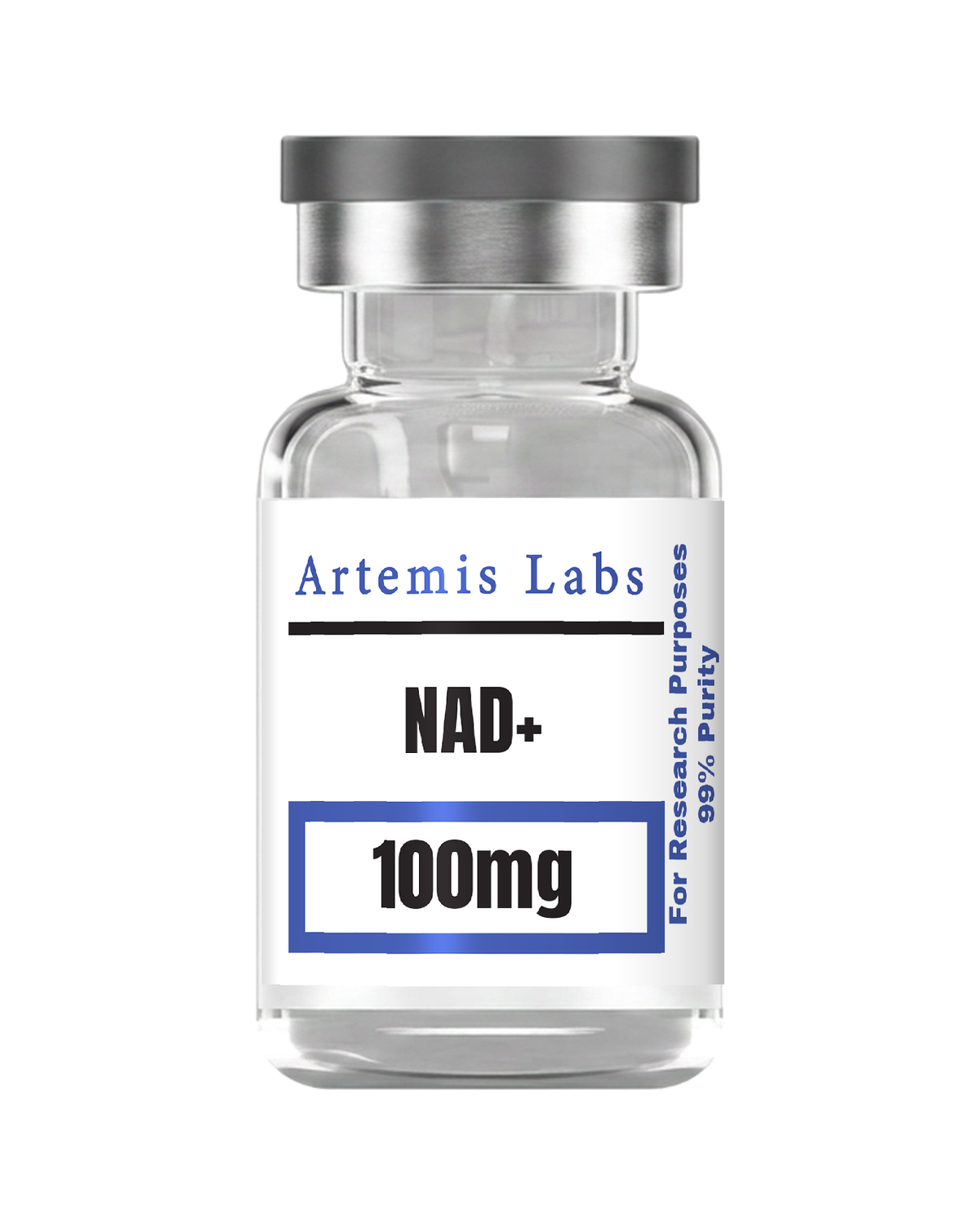
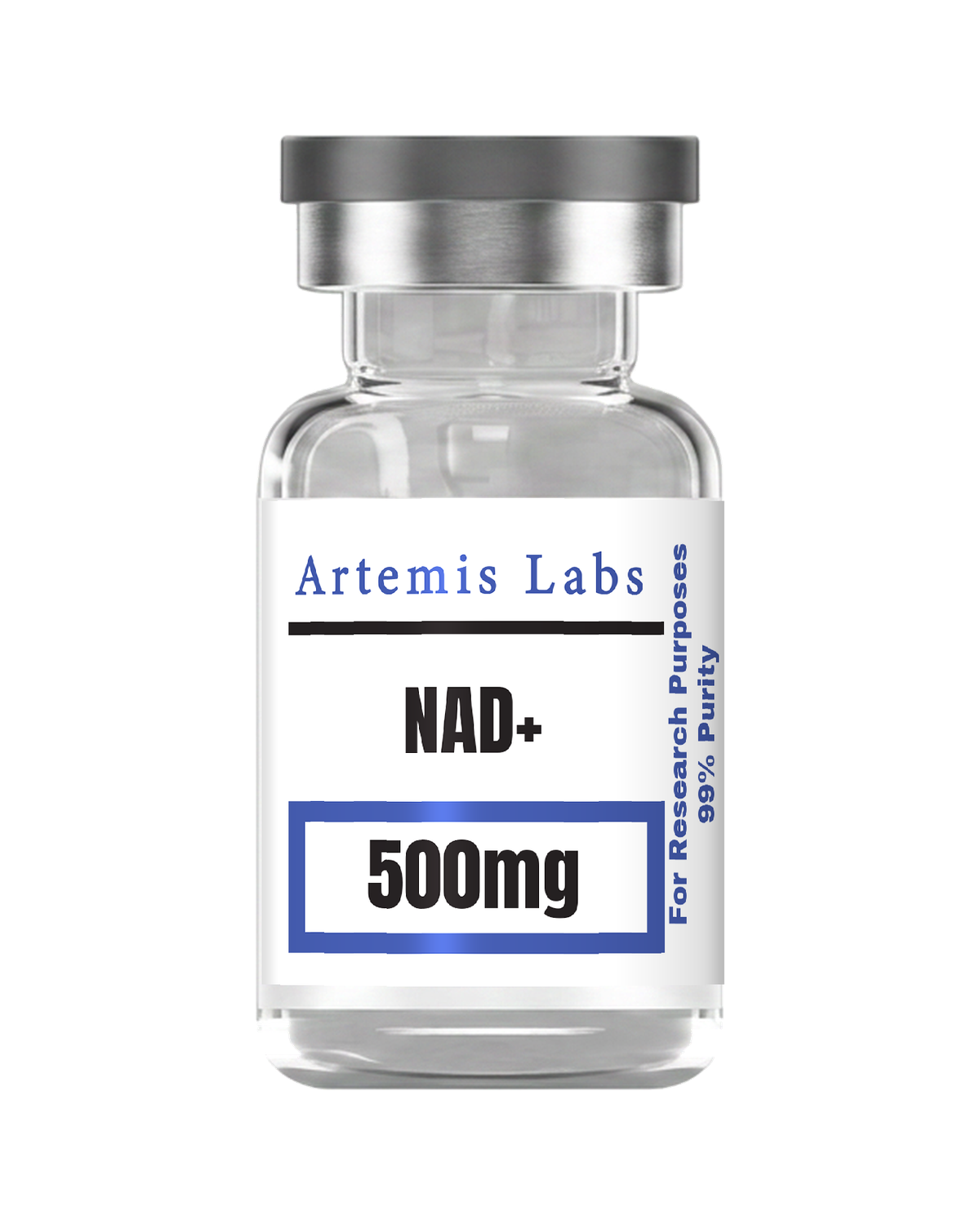
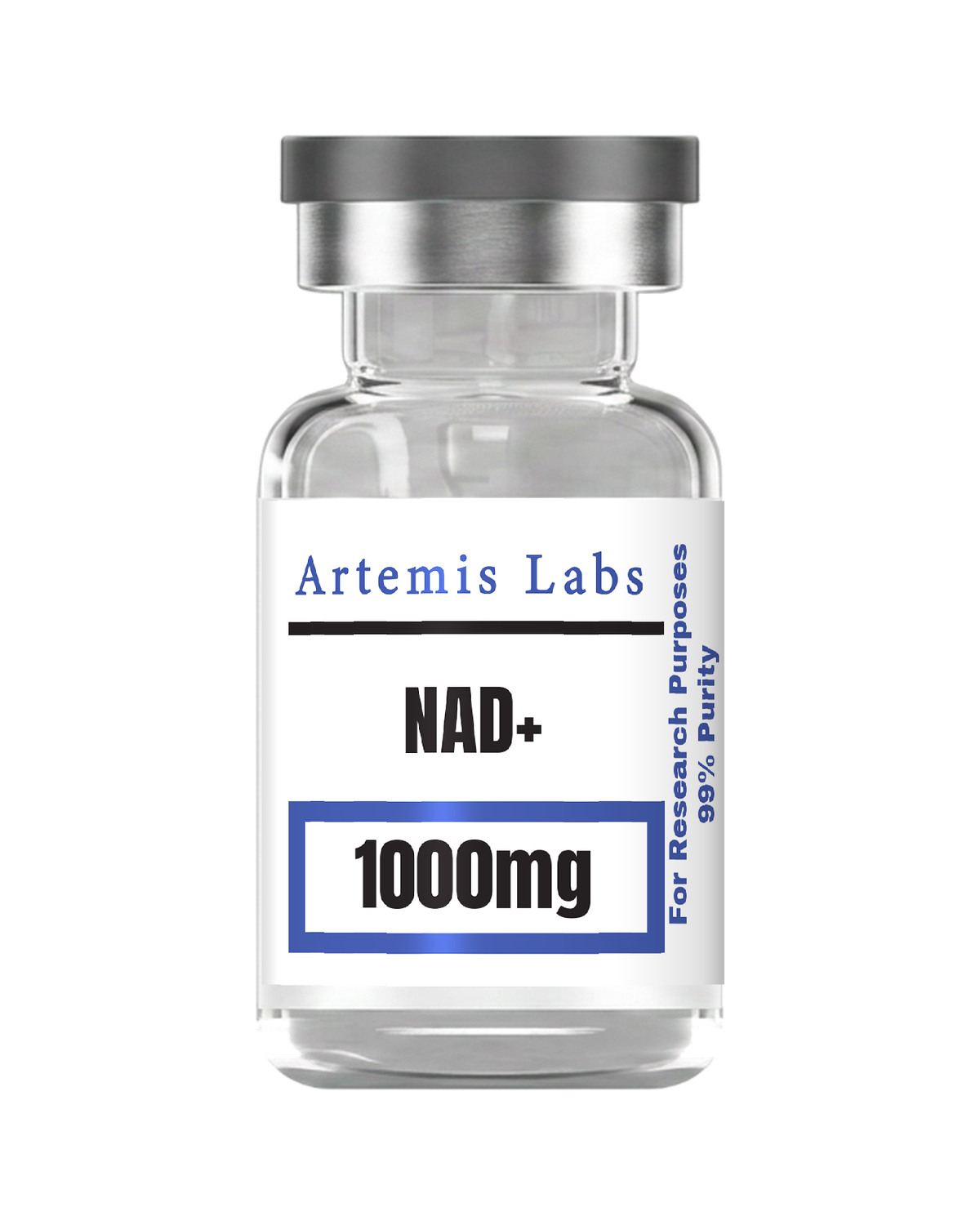
| Vial Size | 100mg, 500mg, 1000mg |
|---|
Science & Research
Science & Research
Mechanism of Action — Redox Carrier and Signalling Co-Substrate
NAD+ acts through two distinct, well-characterised roles.
1. Redox electron transfer (NAD+/NADH). NAD+ is reduced to NADH in glycolysis, the TCA cycle, and fatty-acid oxidation, then re-oxidised at Complex I of the electron-transport chain to drive ATP synthesis. The cytosolic and mitochondrial NAD+/NADH ratios are core determinants of metabolic flux; mitochondrial NAD+ pools and quality control are increasingly framed as central to aging (Marei 2026, PMID 42032617; Tsui et al. 2026, PMID 41956139).
2. Consumed signalling co-substrate. Three enzyme families cleave NAD+ at the glycosidic bond, releasing nicotinamide:
- Sirtuins (SIRT1–7) — NAD+-dependent deacylases coupling energy state to gene regulation, mitochondrial biogenesis, and stress resistance. SIRT1 governs vascular inflammation and mitochondrial biogenesis in atherosclerosis/aging (Chang et al. 2026, PMID 41977220); SIRT1 activators mitigate brain inflammaging via NAD+-dependent mechanisms (Alameen et al. 2026, PMID 41934491); SIRT1 protects dermal fibroblasts from senescence (Zhou et al. 2026, PMID 41815959). The NAD+/sirtuin system is also studied in the context of cardiovascular metabolism (Prasanna et al. 2026, PMID 42047243).
- PARPs — consume NAD+ heavily during DNA-damage repair; chronic activation depletes the NAD+ pool, a node in the genomic-instability hallmark of aging (Pei et al. 2026, PMID 41812700).
- CD38 — a NADase whose age-associated upregulation is a principal driver of NAD+ decline. Song et al. 2024 (Nat Aging, PMID 39044033) tied CD38 to impaired hematopoietic-stem-cell function; Hua et al. 2026 (PMID 41457457) showed myeloid CD38 drives endometrial aging via NAD+ depletion; Basak et al. 2026 (PMID 41400119) defined CD38’s role in astrocyte NAD+ homeostasis; Chini et al. 2025 (PMID 40519092) reported chronic NAD depletion triggering interferon responses via mitochondrial-DNA leakage; Verdin et al. 2026 (PMID 41542058, preprint) reported CD38 inhibition restoring cognition via a choroid-plexus–CSF–hippocampus axis.
The Salvage Pathway and Age-Related Decline
Most cellular NAD+ is regenerated through the salvage pathway, with NAMPT rate-limiting; the salvage route — not de novo synthesis — is the dominant mechanism by which precursors raise NAD+ (Li et al. 2023, PMID 37271226). Pei et al. 2026 (PMID 41812700) systematically link declining NAD+ to aging hallmarks across genomic and mitochondrial domains; NAD+ circadian-rhythm disruption has been associated with dementia pathology (Zhang SQ et al. 2026, PMID 42063312).
Recent Research Contexts (2024–2026)
- Neuroprotection / ischemia: NAD+/sirtuin pathways (NAMPT, SIRT1, SIRT5) in ischemic tolerance (Perez-Pinzon 2026, PMID 42044228); acarbose reverses NAD+ catabolism in microglia after retinal ischemia-reperfusion (Wen et al. 2026, PMID 42069589); nicotinamide prevented the synaptic-plasticity and cognitive impairment caused by bone fracture in older mice (Guncay et al. 2025, PMID 39823270).
- Senescence / regeneration: NMN combined with apigenin (an NAD+-consuming-enzyme inhibitor) delayed senescence and promoted regeneration (Yu J et al. 2026, PMID 41944220).
- Skin / mitochondrial aging: mitochondria regulate skin aging through ATP production, redox signalling, and NAD+-dependent interventions (Antonevich et al. 2026, PMID 41824483); topical NAD+ supported mitochondrial biogenesis in a melasma context (Yi et al. 2026, PMID 41870519).
- Niacin / NAD+ metabolism: nutrition review of niacin’s role in NAD+ metabolism (Meyer-Ficca et al. 2026, PMID 42107767).
Human Precursor Studies (Reference Context Only — NMN/NR, not exogenous NAD+)
Human data come almost exclusively from oral NAD+ precursors (NMN, NR), not from NAD+ administered directly: increased blood NAD+ with maintained walking speed and sleep quality in older adults (Morifuji et al. 2024, PMID 38789831); long-term NMN safety with metabolic/sleep effects (Yamaguchi et al. 2024, PMID 38191197); improved retinal thickness in older diabetic subjects (Shiraki et al. 2026, PMID 42082179). These are precursor studies cited as reference context and are not Artemis Labs efficacy claims for the NAD+ research compound.
Foundational Mechanism Literature (2011–2021)
Canonical modern syntheses of NAD+ in ageing: Covarrubias, Perrone, Grozio & Verdin 2021 (PMID 33353981) and Katsyuba, Romani, Hofer & Auwerx 2020 (Nat Metab).
The 2024–2026 work above rests on a well-established foundation. Imai & Guarente 2014 (PMID 24786309) framed the NAD+–sirtuin aging axis; Garten et al. 2015 (PMID 26215259) established salvage-pathway capacity (NAMPT) as the rate-limiting, age-declining node. Gomes et al. 2013 (PMC4076149) showed declining NAD+ drives a pseudohypoxic state disrupting nuclear–mitochondrial communication, and Camacho-Pereira et al. 2016 (PMC4911708) established that CD38 dictates age-related NAD+ decline via a SIRT3-dependent mechanism. Direct-NAD+ preclinical neuroprotection has been reported in Alzheimer’s (Hou et al. 2018, PNAS) and Parkinson’s (Shan et al. 2019, PMID 31220519) mouse models.
Direct NAD+ Pharmacokinetics & Bioavailability (Human Pilot)
The strongest human longevity/metabolic data is on NAD+ precursors (NMN, NR), not on directly-administered NAD+. The one published human pharmacokinetic pilot of direct NAD+ — Grant et al. 2019 (PMID 31572171) — found that intravenous NAD+ left plasma NAD+ unchanged for roughly the first two hours before it rose, with extensive extracellular hydrolysis to nicotinamide and ADP-ribose. The practical implication for researchers: directly-administered NAD+ is heavily metabolised extracellularly rather than entering cells intact, which is why most translational work pivoted to salvage-pathway precursors. Intact-NAD+ cellular uptake should be treated as an open question.
The precursor human-RCT base is genuinely mixed. Positive signals include improved muscle insulin sensitivity in prediabetic women on NMN (Yoshino M et al. 2021, Science) and improved 6-minute walk distance in peripheral artery disease on NR (McDermott et al., NICE trial 2024, Nat Commun); chronic NR was well-tolerated and elevated NAD+ in healthy middle-aged and older adults (Martens et al. 2018, PMID 29599478). These are precursor studies cited as reference context — not direct-NAD+ data and not Artemis Labs efficacy claims.
Counter-Evidence (Honest Disclosure)
- Clinical efficacy of NAD+ boosting is unresolved. Meta-analyses repeatedly find human functional benefits unclear or weak: NMN blood-pressure efficacy "remains unclear" (Zhang et al. 2026, PMID 41901064); "limited evidence" for NMN on glucose/lipid markers (Chen et al. 2024, PMID 39531138); clinical efficacy "requires further evidence" (Song et al. 2023, PMID 37619764).
- Different boosters are not equivalent. Three different NAD+ boosters produced differential impacts on circulatory NAD+ and microbial metabolism (Christen et al. 2026, Nat Metab, PMID 41540253) — undercutting the assumption that "raising NAD+" is one interchangeable intervention.
- Exogenous NAD+ bioavailability / route question. Direct NAD+ is a large, charged dinucleotide with limited membrane permeability; whether extracellular NAD+ raises intracellular NAD+ (vs. being degraded to precursors and re-salvaged) is an open mechanistic question — precisely why salvage-pathway precursors dominate the human literature (Li et al. 2023, PMID 37271226). The IV-vs-oral NAD+ debate sits on top of this unresolved question.
- Raising NAD+ did not translate to benefit in a controlled trial. In a 2025 randomised placebo-controlled trial in long-COVID, nicotinamide riboside raised whole-blood NAD+ 2.6–3.1× yet produced no significant improvement in cognition, fatigue, sleep, anxiety, or depression (Wu, Brenner et al. 2025, eClinicalMedicine, PMID 41357333) — the cleanest evidence that elevating the NAD+ pool is not, by itself, sufficient for a functional outcome.
- Null metabolic meta-analysis. A meta-analysis of 8 NMN RCTs (n ≈ 342) found no significant improvement in fasting glucose, insulin, HbA1c, HOMA-IR, or lipids (Crit Rev Food Sci Nutr 2024, doi:10.1080/10408398.2024.2387324).
- Direct IV NAD+ underperformed an NR-based IV (preprint). A randomised pilot reported an NR-based IV raised NAD+ faster, more, and with fewer adverse experiences than an NAD+ IV (medRxiv 2024.06.06.24308565). Preprint — not peer-reviewed; directional only.
- Long-term safety unproven; a methylation trade-off is documented. A safety review (Nadeeshani et al. 2022, J Adv Res, doi:10.1016/j.jare.2021.08.003) notes long-term human safety is not established; excess nicotinamide clearance via NNMT consumes methyl donors and can raise homocysteine.
- Cancer biology is double-edged and unresolved. NAD+ metabolism is co-opted by some tumours, and NMN promoted growth in cancer-predisposed mouse models in some studies; conversely, oral nicotinamide cut new non-melanoma skin cancers by 23% in the Phase 3 ONTRAC trial (Chen et al. 2015, NEJM, PMID 26488693). We disclose the uncertainty rather than claim safety.
- Clean null human RCT (NR, obese men). Dollerup et al. 2018 (Am J Clin Nutr, PMID 29992272) found NR raised whole-blood NAD+ dose-dependently yet produced no detectable improvement in insulin sensitivity, glucose metabolism, energy expenditure, lipid mobilisation, or body composition (safe, but no efficacy).
Clinical / Regulatory Status (Reference Only — Not a Claim)
- NAD+ is an endogenous coenzyme and is not FDA-approved as a drug; no DEA scheduling.
- Not on the WADA Prohibited List 2026.
- Oral NMN’s FDA new-dietary-ingredient classification dispute (from 2022) concerns the precursor supplement, not this research reagent — cited as fact of record only.
- All mechanistic references describe in vitro, cell-culture, or animal research unless explicitly identified as human precursor-trial data.
Frequently Asked Questions
Is NAD+ the same as NMN or NR? No. NMN (nicotinamide mononucleotide) and NR (nicotinamide riboside) are precursors the cell converts into NAD+ via the salvage pathway; NAD+ is the cofactor itself. Most human longevity/metabolic trial data comes from the precursors, not from directly-administered NAD+ — a distinction we keep explicit rather than citing precursor studies as direct-NAD+ evidence.
Is NAD+ a peptide? No. NAD+ is a dinucleotide coenzyme (C21H27N7O14P2, 663.43 g/mol, CAS 53-84-9, PubChem CID 5892) with no amino-acid sequence.
Does raising NAD+ work in humans? Unresolved. Precursor (NMN/NR) trials are mixed — some positive (e.g., NMN and muscle insulin sensitivity), several null (e.g., a 2025 long-COVID NR RCT raised NAD+ 2.6–3.1× yet showed no functional benefit, PMID 41357333). Artemis supplies NAD+ strictly as a research reagent.
What quality verification ships with Artemis NAD+? ≥99% by reverse-phase HPLC with identity confirmed by mass spectrometry; a lot-traceable third-party Certificate of Analysis (HPLC purity + MS identity) is available per lot on request.
References (57 PubMed/DOI-Verified, 2026-05-23)
- Pei Z et al. (2026) Mech Ageing Dev. PMID 41812700
- Zhang SQ et al. (2026) Alzheimers Dement. PMID 42063312
- Verdin E et al. (2026) Res Sq. PMID 41542058
- Hua L et al. (2026) Aging Cell. PMID 41457457
- Basak S et al. (2026) Glia. PMID 41400119
- Chini CCS et al. (2025) Aging Cell. PMID 40519092
- Song Z et al. (2024) Nat Aging. PMID 39044033
- Prasanna J et al. (2026) Curr Opin Cardiol. PMID 42047243
- Chang Y et al. (2026) Int J Mol Sci. PMID 41977220
- Alameen AAM et al. (2026) Neuromolecular Med. PMID 41934491
- Zhou D et al. (2026) Front Public Health. PMID 41815959
- Perez-Pinzon MA (2026) Stroke. PMID 42044228
- Wen Y et al. (2026) J Neuroinflammation. PMID 42069589
- Marei HE (2026) J Transl Med. PMID 42032617
- Tsui KH et al. (2026) Pharmacol Res. PMID 41956139
- Antonevich SM et al. (2026) Aging Dis. PMID 41824483
- Yi KH et al. (2026) Aesthetic Plast Surg. PMID 41870519
- Yu J et al. (2026) Aging Cell. PMID 41944220
- Guncay T et al. (2024) J Gerontol A. PMID 39823270
- Li J et al. (2023) Free Radic Biol Med. PMID 37271226
- Meyer-Ficca ML et al. (2026) Adv Nutr. PMID 42107767
- Morifuji M et al. (2024) GeroScience. PMID 38789831
- Zhang Y et al. (2026) Nutrients (counter-evidence). PMID 41901064
- Chen X et al. (2024) Curr Diab Rep (counter-evidence). PMID 39531138
- Song Q et al. (2023) Adv Nutr (counter-evidence). PMID 37619764
- Christen S et al. (2026) Nat Metab (counter-evidence). PMID 41540253
- Yamaguchi S et al. (2024) Endocr J. PMID 38191197
- Shiraki M et al. (2026) Geriatr Gerontol Int. PMID 42082179
- Imai S, Guarente L. (2014) Trends Cell Biol 24(8):464–471. PMID 24786309
- Gomes AP et al. (2013) Cell 155(7):1624–1638. PMC4076149
- Camacho-Pereira J et al. (2016) Cell Metab 23(6):1127–1139. PMC4911708
- Garten A et al. (2015) Nat Rev Endocrinol 11(9):535–546. PMID 26215259
- Mendelsohn AR, Larrick JW. (2014) Rejuvenation Res 17(1):62–69. PMID 24410488
- Clement J et al. (2019) Rejuvenation Res. PMC6482912
- Hou Y et al. (2018) PNAS 115(8):E1876–E1885. doi:10.1073/pnas.1718819115
- Shan C et al. (2019) Prog Neuropsychopharmacol Biol Psychiatry 94:109670. PMID 31220519
- Grant R et al. (2019) Front Aging Neurosci 11:257. PMID 31572171 [direct-NAD+ human PK]
- Yoshino M et al. (2021) Science 372(6547):1224–1229. doi:10.1126/science.abe9985
- McDermott MM et al. (NICE, 2024) Nat Commun 15. doi:10.1038/s41467-024-49092-5
- Kim M et al. (2022) Nutrients 14(4):755. doi:10.3390/nu14040755
- Wu C-Y, Brenner C et al. (2025) eClinicalMedicine (null RCT). PMID 41357333
- NMN glucose-lipid meta-analysis (2024) Crit Rev Food Sci Nutr (null). doi:10.1080/10408398.2024.2387324
- Nadeeshani H et al. (2022) J Adv Res 37:267–278 (safety). doi:10.1016/j.jare.2021.08.003
- Chen AC et al. (2015, ONTRAC) NEJM 373(17):1618–1626. PMID 26488693
- Zeidler JD, Hogan KA et al. (2022) Am J Physiol Cell Physiol 322(3):C521–C545. PMID 35138178 · doi:10.1152/ajpcell.00451.2021
- Niagen+ IV vs NAD+ IV pilot (2024, preprint). medRxiv 2024.06.06.24308565
- Covarrubias AJ, Perrone R, Grozio A, Verdin E. (2021) Nat Rev Mol Cell Biol 22(2):119–141. PMID 33353981
- Katsyuba E, Romani M, Hofer D, Auwerx J. (2020) Nat Metab 2(1):9–31. doi:10.1038/s42255-019-0161-5
- Yamaguchi S, Yoshino J. (2017) BioEssays 39(5). PMC5469033
- Grabowska W et al. (2017) Biogerontology 18(4):447–476. doi:10.1007/s10522-017-9685-9
- Lloret A, Beal MF. (2019) Neurochem Res. PMID 31065944
- Martens CR et al. (2018) Nat Commun 9:1286. PMID 29599478
- Yoshino J et al. (2011) Cell Metab 14(4):528–536. doi:10.1016/j.cmet.2011.08.014
- Mills KF et al. (2016) Cell Metab 24(6):795–806. doi:10.1016/j.cmet.2016.09.013
- Grozio A et al. (2019) Nat Metab 1(1):47–57. doi:10.1038/s42255-018-0009-4
- Alegre GFS, Pastore GM. (2023) Curr Nutr Rep 12(3):445–464. doi:10.1007/s13668-023-00475-y
- Dollerup OL et al. (2018) Am J Clin Nutr 108:343–353 (null NR RCT). PMID 29992272
Research Pairings
Research Pairings
Pairing rationale below is mechanistic only. No dosing, frequency, duration, or human-use guidance is provided. Researchers design their own studies against their own institutional review, not against vendor copy.
Why is NAD+ studied alongside 5-Amino-1MQ?
5-Amino-1MQ inhibits nicotinamide N-methyltransferase (NNMT), sparing nicotinamide for salvage-pathway NAD+ synthesis. Studied as a mechanistically complementary upstream approach to NAD+ availability versus supplying the cofactor directly. BioLongevity Labs markets exactly this pairing as a fixed NAD+/MOTS-c/5-Amino-1MQ blend — a market signal for the pairing’s research interest.
Why is NAD+ studied alongside MOTS-c?
MOTS-c activates AMPK and PGC-1α-driven mitochondrial biogenesis; both NAD+ and MOTS-c converge on mitochondrial energy and the AMPK–sirtuin (SIRT1) signalling node, studied together in cellular-energy and metabolic-stress models.
Why is NAD+ studied alongside SS-31 (Elamipretide)?
SS-31 stabilises cardiolipin and the electron-transport-chain supercomplexes that re-oxidise NADH back to NAD+; the pairing is studied in mitochondrial-bioenergetics models where NAD+ supply and electron-transport efficiency are co-limiting.
Longevity Quartet Context
NAD+ slots naturally beside the mitochondrial/longevity peptides MOTS-c and SS-31 in longevity-research architecture.
Reviews (0)
Be the first to review “NAD+ (Nicotinamide Adenine Dinucleotide)”
Related products
longevity-cellular
Reviews
There are no reviews yet.