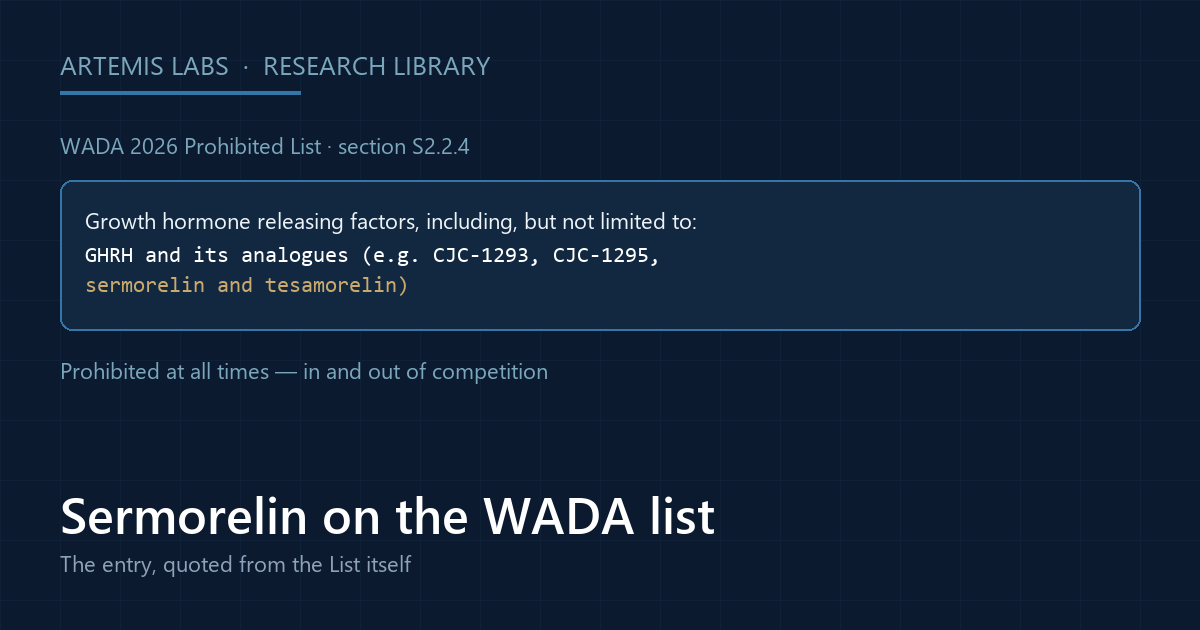
The WADA 2026 Prohibited List names sermorelin, CJC-1295, tesamorelin and ipamorelin by name under section S2.2.4. Here is the entry, quoted from the List itself.
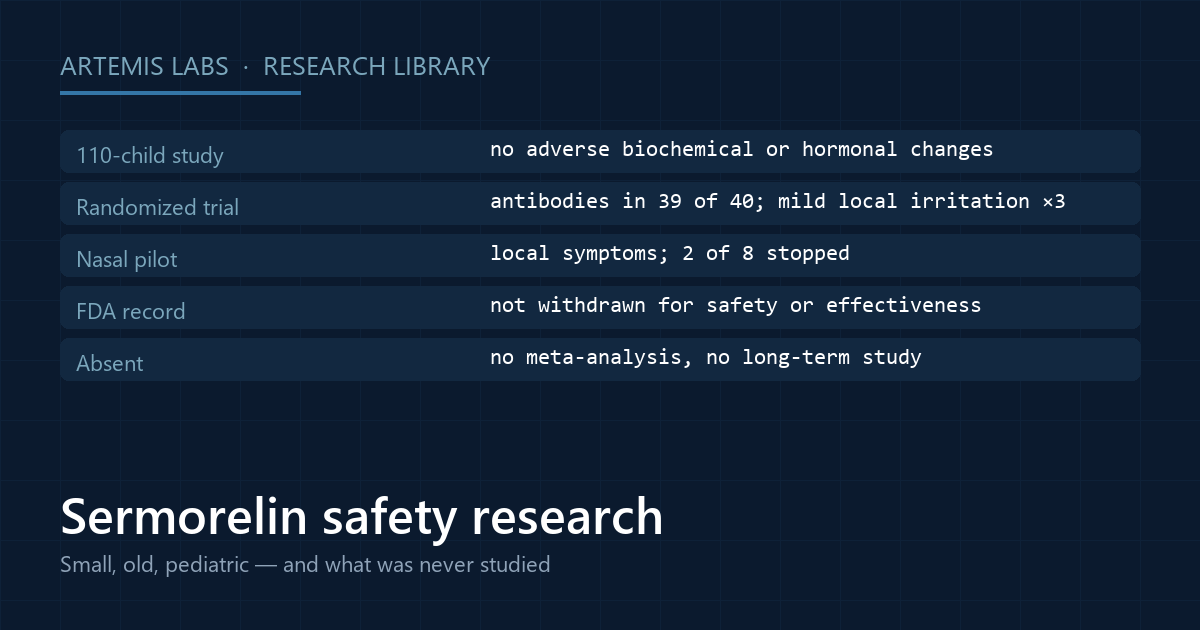
What the sermorelin trials reported on safety: no adverse biochemical changes in the largest pediatric study, near-universal antibody formation in a randomized one, and an FDA determination that discontinuation was not for safety reasons.
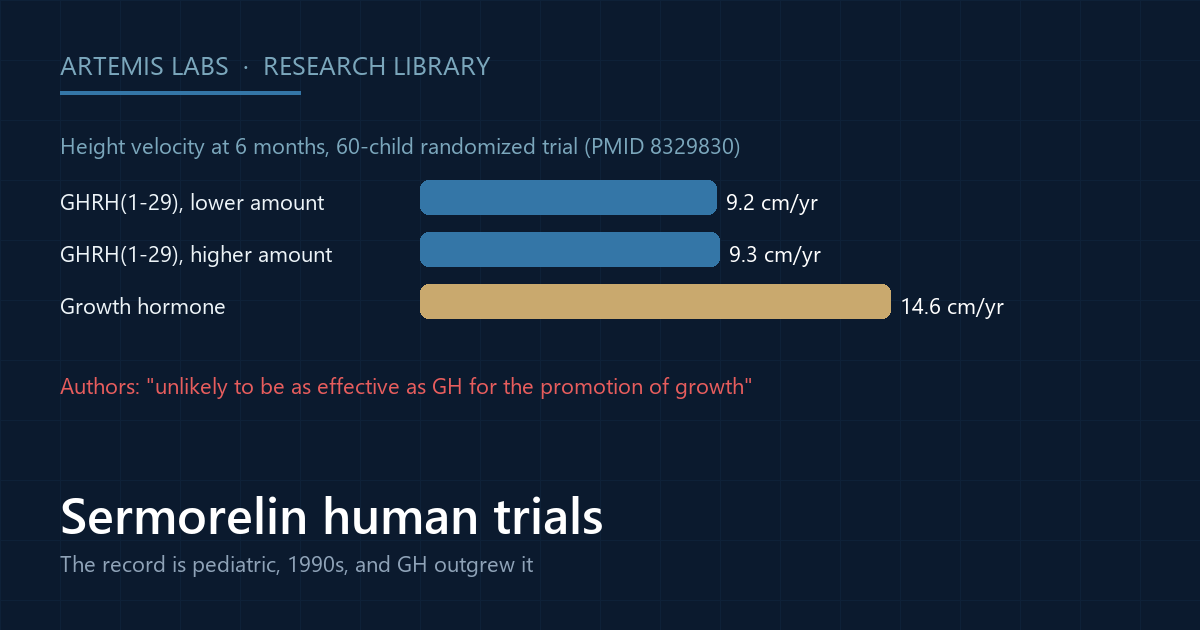
Sermorelin’s human trial record is 1990s pediatric growth studies and adult physiology work. In the one three-arm randomized comparison, growth hormone outgrew it and 39 of 40 treated children developed antibodies.
Four Russian human studies of Selank exist, plus one imaging study. Every one used a benzodiazepine comparator rather than placebo, and none was run outside Russia.
Two human studies of ipamorelin exist. One measured pharmacokinetics in healthy volunteers; the other, a randomized placebo-controlled trial in 114 patients, found no difference from placebo.
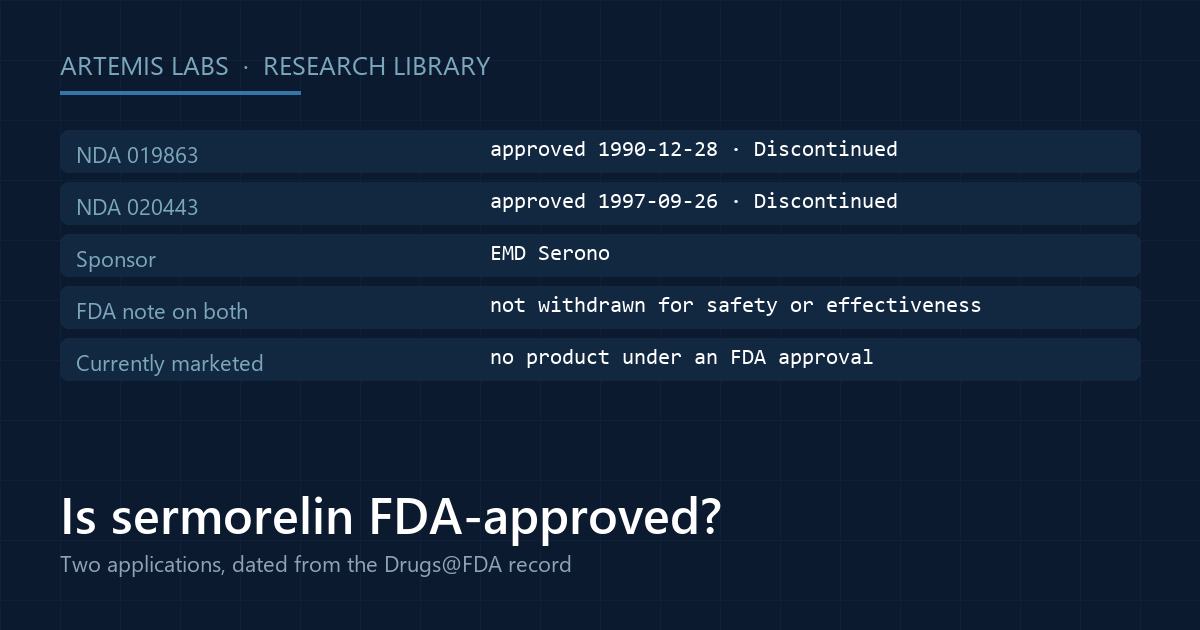
Two FDA applications for sermorelin acetate exist, first approved December 28 1990 and September 26 1997, both discontinued with an FDA determination that it was not for safety or effectiveness reasons.
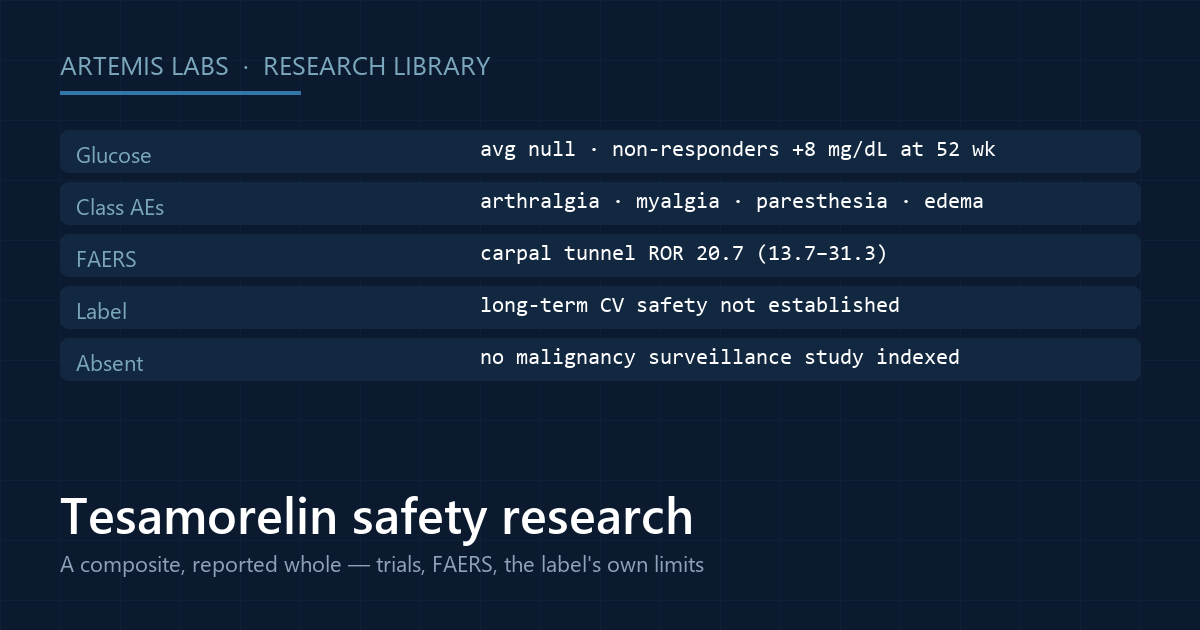
What the tesamorelin safety record contains: the glucose composite, class-typical adverse events, a FAERS carpal-tunnel signal, sponsor animal toxicology, and the evidence that does not exist at all.
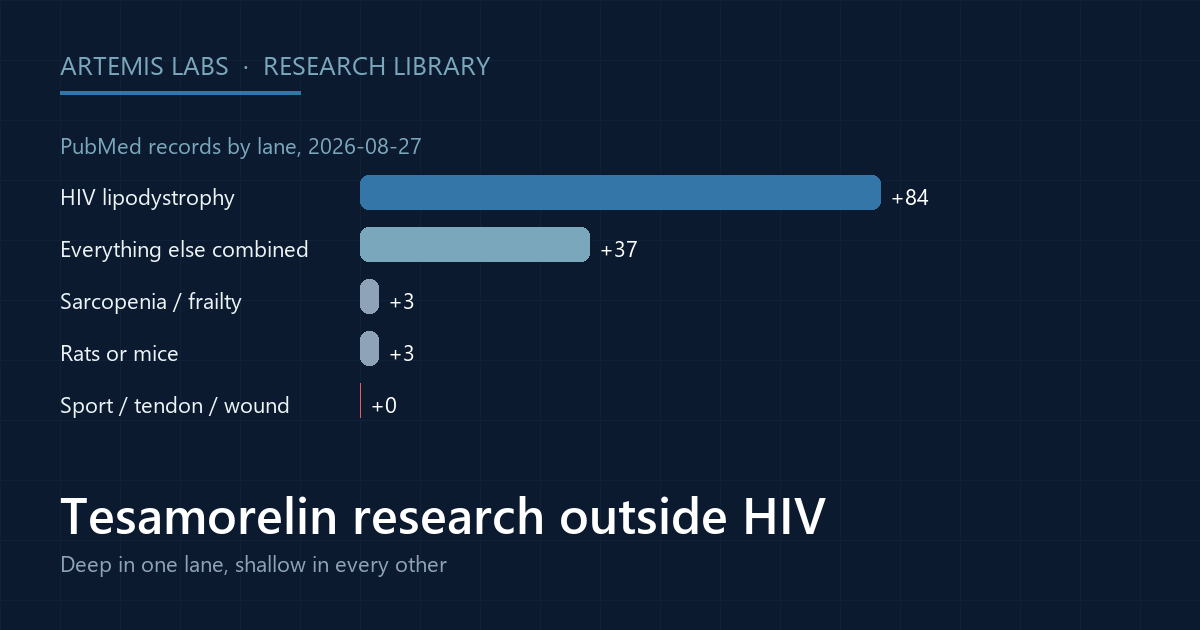
Outside HIV-associated lipodystrophy, tesamorelin research collapses to single small trials, re-analyses and nulls: one obesity cohort published twice, one liver trial, a split cognition record, zero muscle or sport studies.
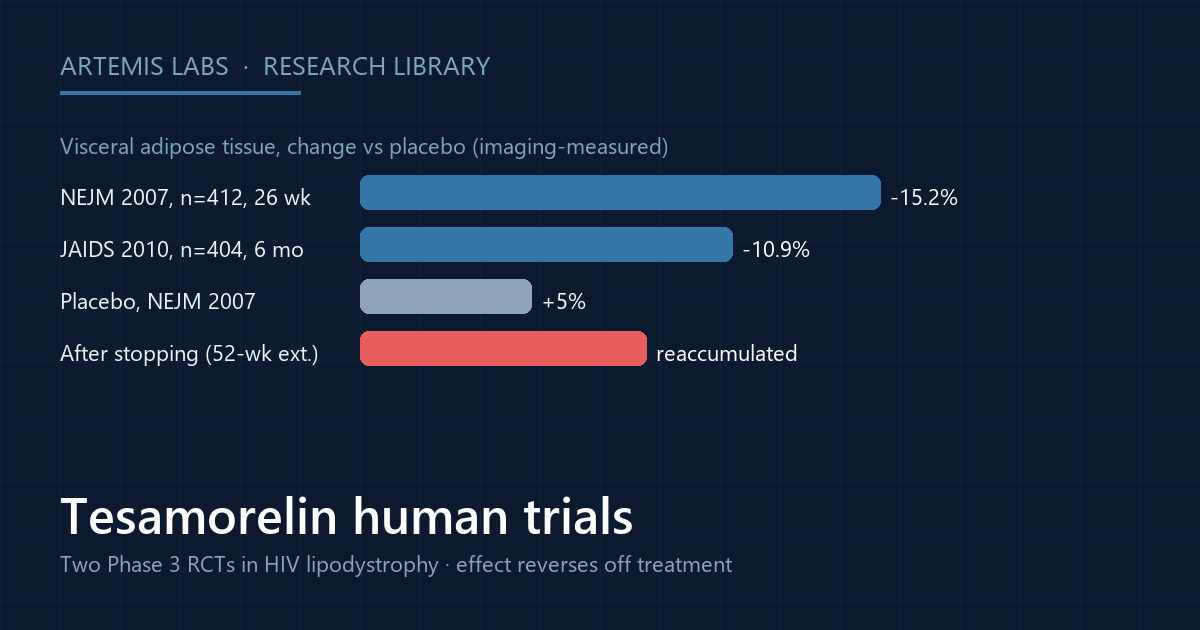
The tesamorelin human trial record: two Phase 3 trials in HIV-associated lipodystrophy, a pooled analysis of 806 patients, two 2026 meta-analyses that disagree, and the reversal the trial authors reported.
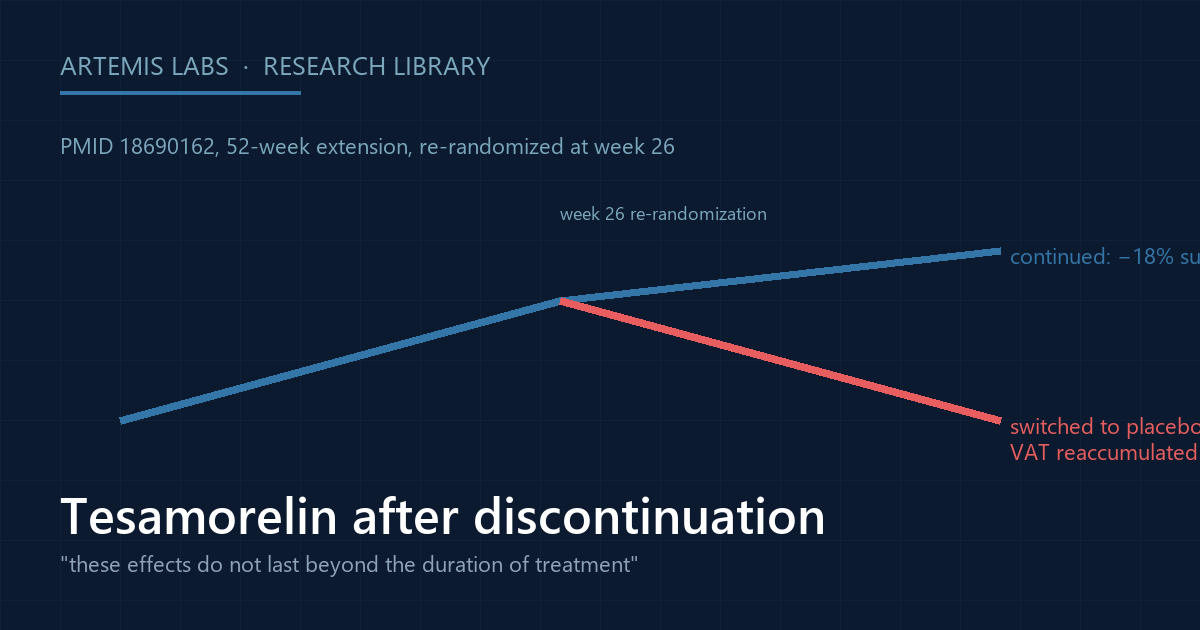
What the tesamorelin trial program reported when treatment stopped: visceral fat reaccumulated, effects did not last beyond treatment, and discontinuation risk was roughly doubled in meta-analysis.
- 1
- 2