24
Aug
Aug
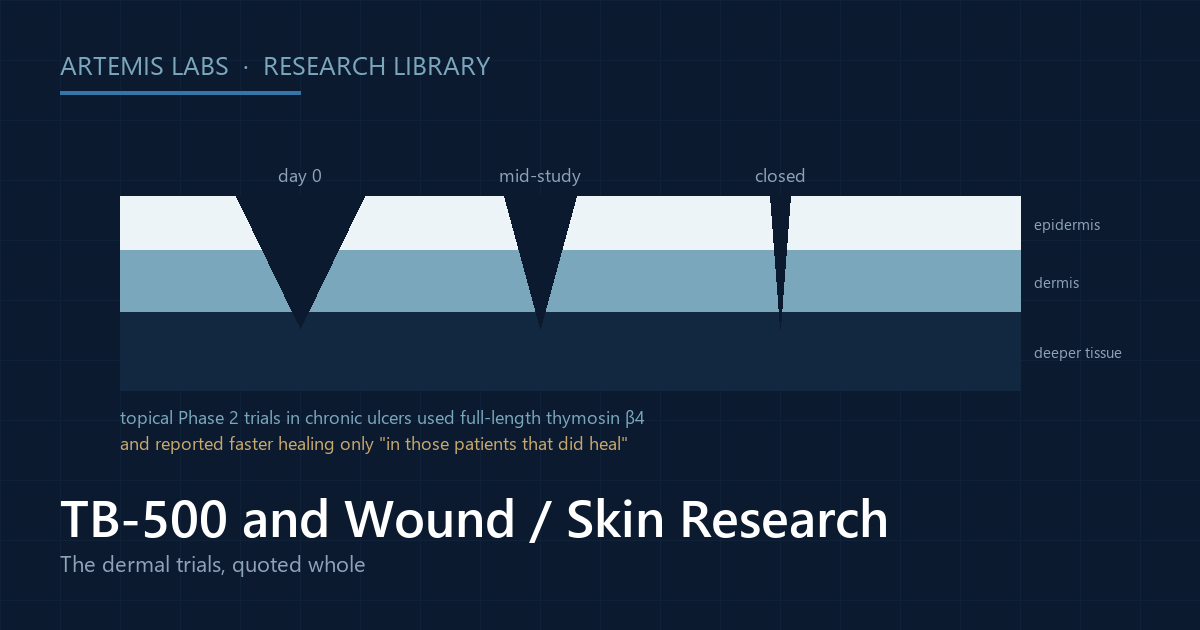
The human skin-wound trials often linked to TB-500 tested thymosin beta-4, the larger parent protein. Here is what those studies reported, and what they did not.

The human skin-wound trials often linked to TB-500 tested thymosin beta-4, the larger parent protein. Here is what those studies reported, and what they did not.
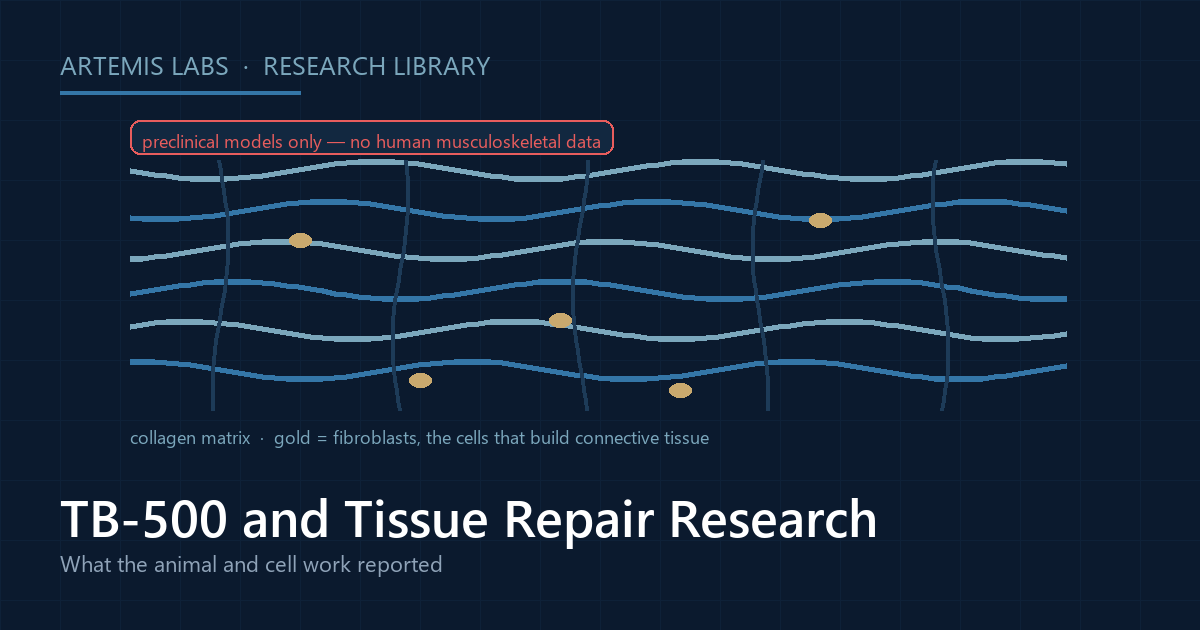
TB-500 is a 7-amino-acid fragment of thymosin beta-4. Here is what repair research actually tested, which form it used, and what has never been studied in people.
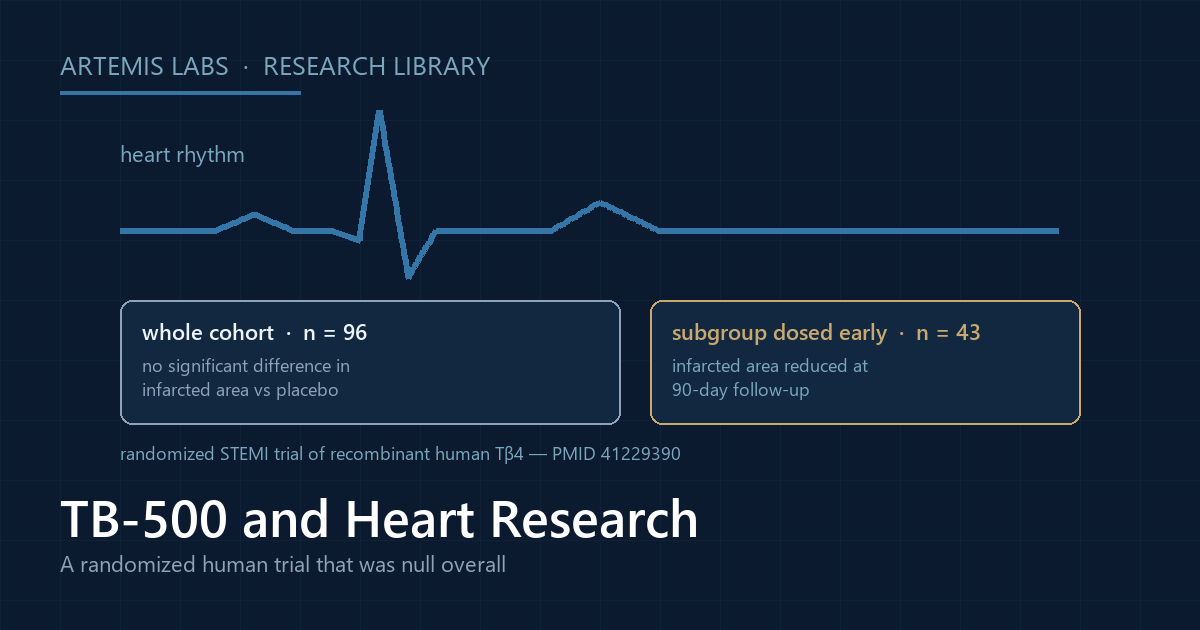
A randomized human trial of thymosin beta-4 after a heart attack was null overall, with a signal only in an early-dosing subgroup. Both halves explained.
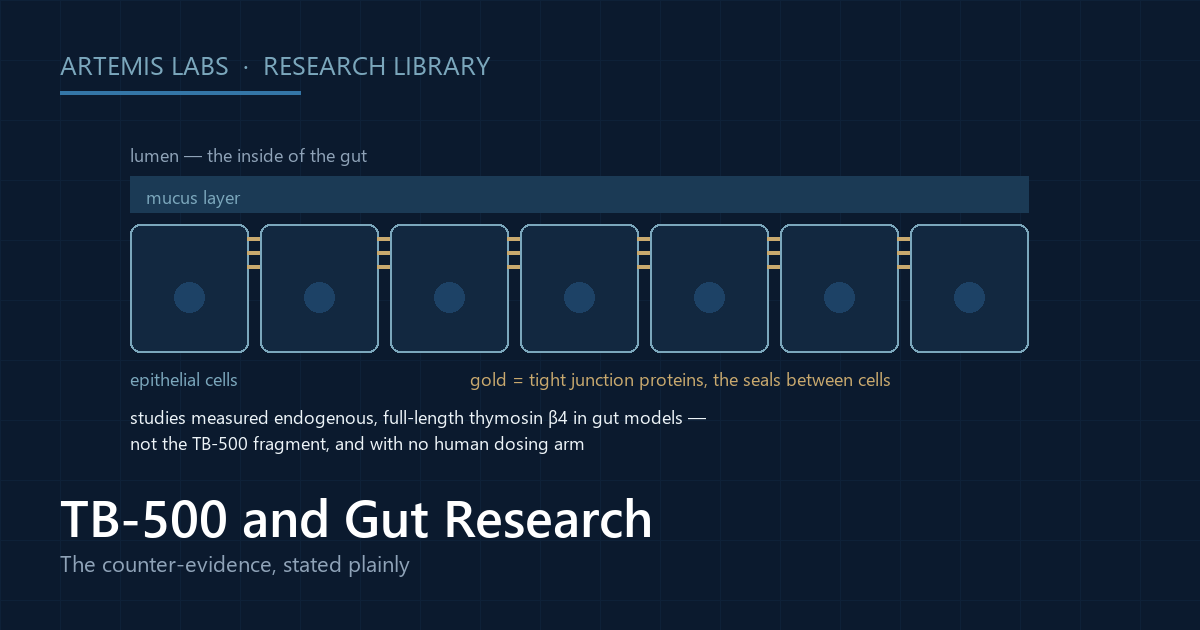
Two published studies found thymosin beta 4 weakened the gut lining in rats and mice. Here is what they measured, what they did not test, and why we publish it.
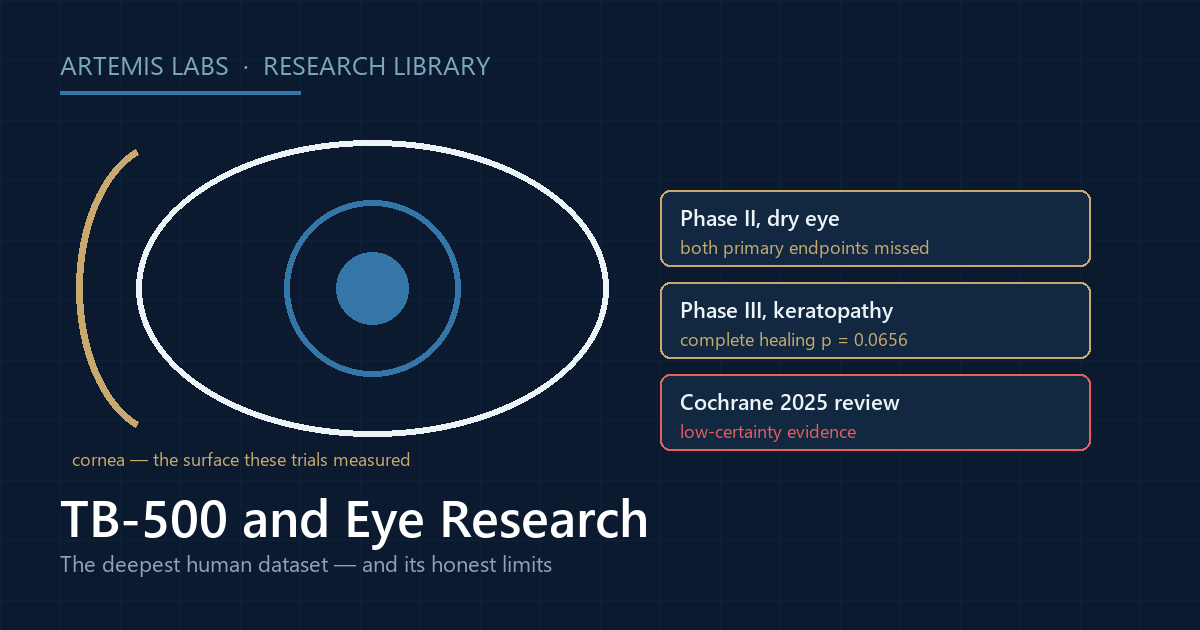
The eye is where thymosin beta-4 has the most human data. A plain-language look at the dry eye trials, the p=0.0656 Phase III, and what is still missing.
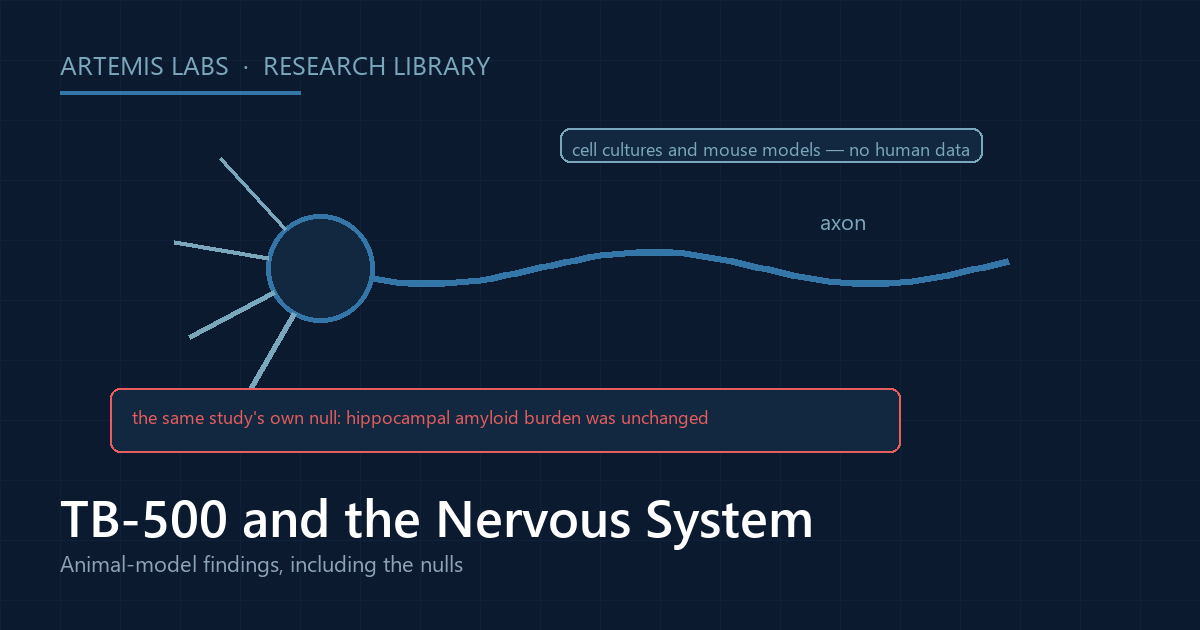
One published animal study gave TB-500 itself and measured brain outcomes. Here is what it reported, the result it did not find, and what is still missing.
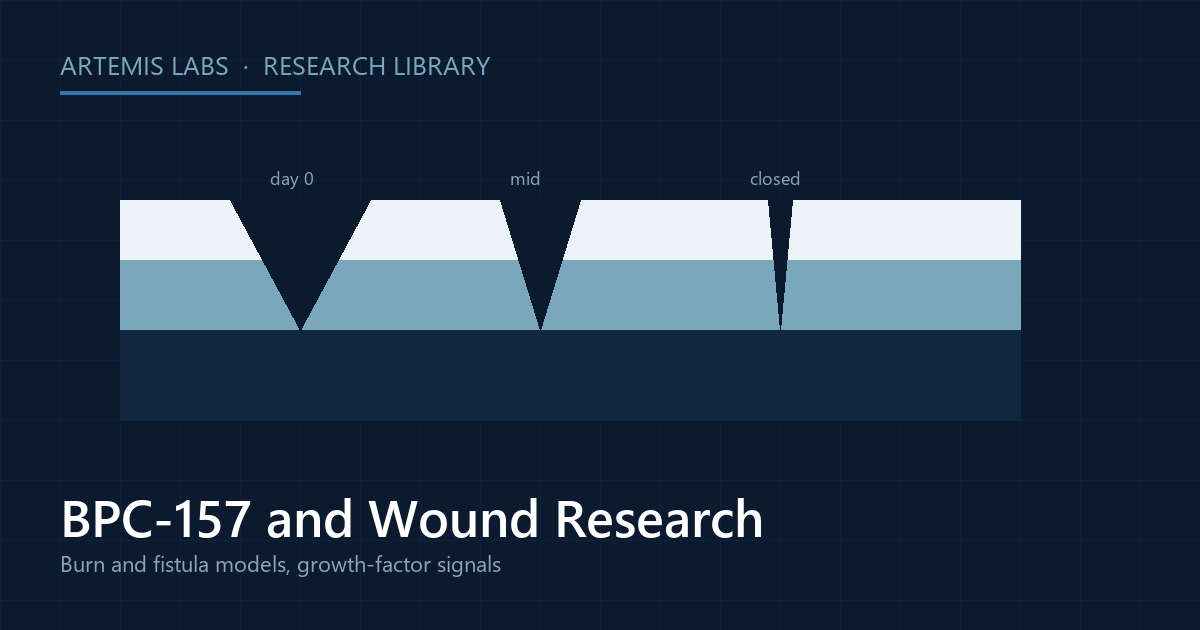
A plain-language review of published BPC-157 wound research: a burn model, fistula repair in rats, and growth-factor comparisons. Animal and lab data only.
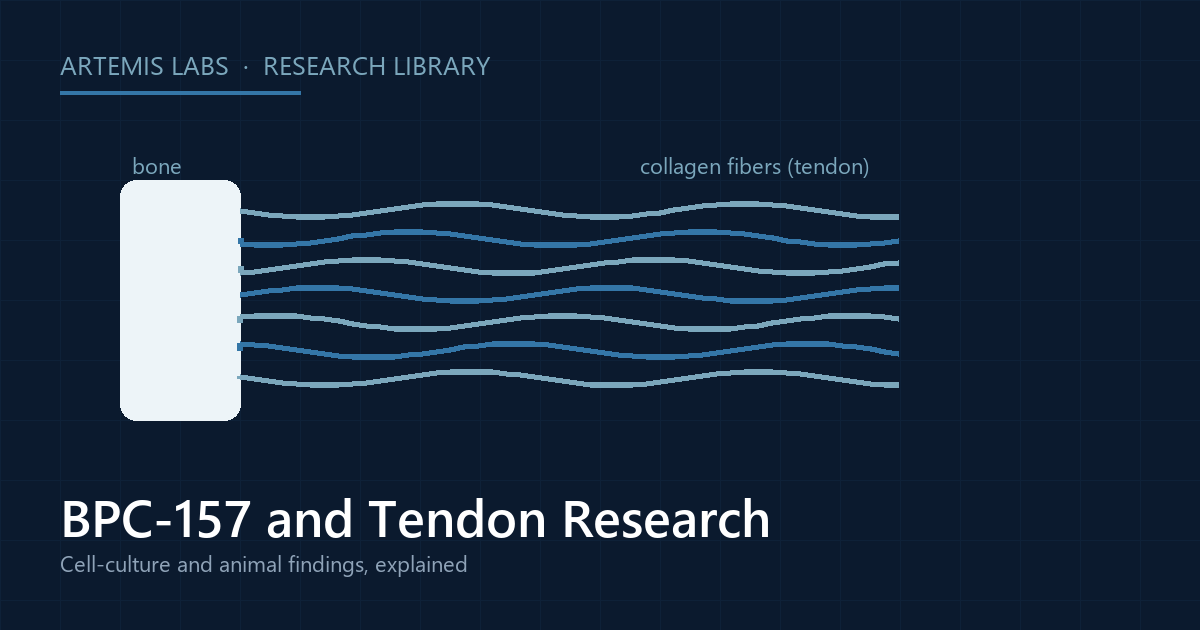
A plain-language look at what published BPC-157 tendon studies actually report, which of them used cells or animals, and what the research still does not show.
What published research says about BPC-157 and pain: a 2026 review of pain-signal mechanisms, the animal-model context, and the limits of the evidence.
What published research says about BPC-157 and muscle: a 2022 review across three muscle types, 2025 rat reattachment models, and what the animal evidence cannot answer.