
BPC-157
$70.00
BPC-157 is a 15-amino-acid fragment of a protein found in human gastric juice. What makes it interesting is that it does not appear to work through a single receptor — published work describes it acting on several repair pathways at once, most consistently by prompting new blood vessels to grow into damaged tissue. Blood supply is the bottleneck in most healing, and that is the thread connecting an otherwise scattered literature.
Continue readingShow less
What the published work describes. The best-characterised route is the VEGFR2 / Akt / eNOS axis — the signalling behind new vessel formation and vasodilation at injury sites in preclinical models. A second route, FAK–paxillin signalling, speeds fibroblast and tenocyte migration into wound beds (Chang 2011, DOI 10.1152/japplphysiol.00945.2010). 2026 work reported the first human-tissue ex-vivo vascular mechanism (Yildirim 2026, PMID 42123221).
What is missing. Essentially all of it is rodent work. There are no completed human efficacy trials and no published long-term exposure data. BPC-157 also sits on the WADA Prohibited List, which matters to anyone working with competitive athletes.
Lyophilized pentadecapeptide at ≥99% HPLC-verified purity, batch-specific Certificate of Analysis.
Description
BPC-157 is a short peptide made in a lab. Its 15-amino-acid chain copies part of a protein found in human stomach fluid. Scientists study BPC-157 to see how it acts on blood-vessel growth and tissue repair, mostly in rats and in cells grown in dishes. Artemis Labs supplies it for laboratory research only.
BPC-157 has the sequence GEPPPGKPADDAGLV (CAS 137525-51-0, MW 1,419.54 g/mol). The mechanism literature runs from Cerovecki 2010 (DOI 10.1002/jor.21107) to the 2026 human-tissue vasorelaxation study of Yildirim et al. (PMID 42123221).
Reviewed August 21, 2026 · Artemis Labs
For laboratory research use only. Not for human or veterinary consumption.
BPC-157 is supplied as sterile lyophilised powder, analytically verified by reverse-phase HPLC to ≥99% peptide purity. Intended for in-vitro receptor, cell-culture, tissue-bath, and pre-clinical research applications.
What is BPC-157?
BPC-157 (Body Protection Compound 157, also reported as PL 14736) is a synthetic 15-residue pentadecapeptide — sequence GEPPPGKPADDAGLV, CAS 137525-51-0, molecular weight 1,419.54 g/mol — derived from a partial sequence of a stable human-gastric protein. Its defining structural feature is a triple-proline motif (Pro-Pro-Pro at positions 3-5) that confers exceptional resistance to proteolytic degradation; BPC-157 remains intact in human gastric juice for >24 hours in published studies, which is highly unusual for an unmodified small peptide.
Why is BPC-157 studied?
Published preclinical literature describes a multi-pathway signalling profile rather than single-receptor binding: VEGFR2–Akt–eNOS axis activation, focal adhesion kinase (FAK) signalling (Chang 2011, DOI 10.1152/japplphysiol.00945.2010), growth-hormone-receptor upregulation (Chang 2014, DOI 10.3390/molecules191119066), nitric oxide system modulation (Amam 2018 L-NAME/L-arginine, DOI 10.3748/wjg.v24.i47.5366), and multi-growth-factor upregulation spanning VEGF, EGF, and HGF (Huang 2015 alkali-burn, DOI 10.2147/DDDT.S82030). A 2026 study in human internal mammary artery tissue (Yildirim et al., J Clin Med 15(9):3488, PMID 42123221) provided the first human-tissue mechanism evidence — concentration-dependent, endothelium-dependent, nitric-oxide-mediated vasorelaxation — moving BPC-157 from preclinical-only into ex-vivo human mechanism-confirmed territory.
The foundational corpus spans ligament healing (Cerovecki 2010, DOI 10.1002/jor.21107), soft-tissue review (Gwyer 2019, DOI 10.1007/s00441-019-03016-8), CNS injury (Vukojevic 2021, DOI 10.4103/1673-5374.320969), striated/smooth/heart muscle (Staresinic 2022, DOI 10.3390/biomedicines10123221), ocular conditions (Sikiric 2023, DOI 10.3390/ph16071052), and stomach-perforation cytoprotection (Kalogjera 2023, DOI 10.3748/wjg.v29.i27.4289). The 2024–2026 surface adds the first human-tissue mechanism evidence (Yildirim 2026), a unified cytoprotection hypothesis (Sikiric 2026), analgesic mechanism characterisation (Yuan 2026), tendon/ligament/muscle review (Matek 2026), and electrolyte-homeostasis evidence (Medvidovic Grubisic 2026).
What does the BPC-157 evidence not show?
Despite the depth of preclinical work, no published Phase II or Phase III human efficacy trial exists for BPC-157 — pilot human IV-infusion safety data is referenced in current reviews (PMID 41966639, PMID 41476424) but published human efficacy outcomes remain absent. The FDA 503A interim Category 2 listing (Sept 2023) was removed Sept 27, 2024 following nominator withdrawal — a material regulatory headwind currently under PCAC review. BPC-157 is WADA Section S2 prohibited at all times. Note: the Sun 2025 Tβ4 intestinal-barrier impairment finding (PMID 41278163) is specific to Tβ4 / TB-500 and applies to BPC-157 only in combination contexts (e.g. BPC-157 / TB-500 Combo, GLOW, KLOW) — standalone BPC-157 research is unaffected.
What are BPC-157’s analytical specifications?
| Chemical name | BPC-157 (Body Protection Compound 157; also reported as PL 14736) |
| Sequence | GEPPPGKPADDAGLV (15 residues) |
| Molecular formula | C62H98N16O22 |
| Molecular weight | 1,419.54 g/mol |
| CAS number | 137525-51-0 |
| Form | Sterile lyophilised white powder |
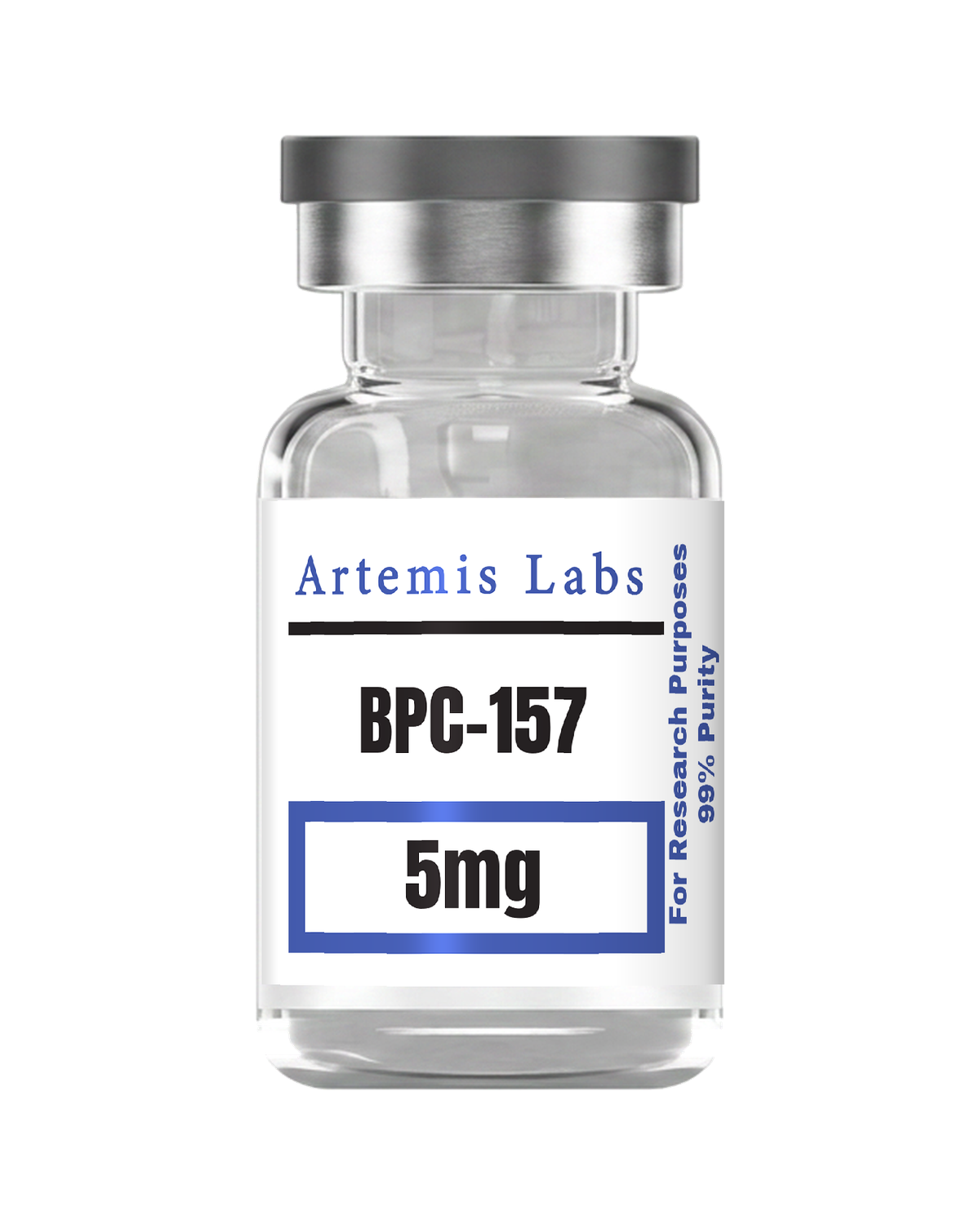
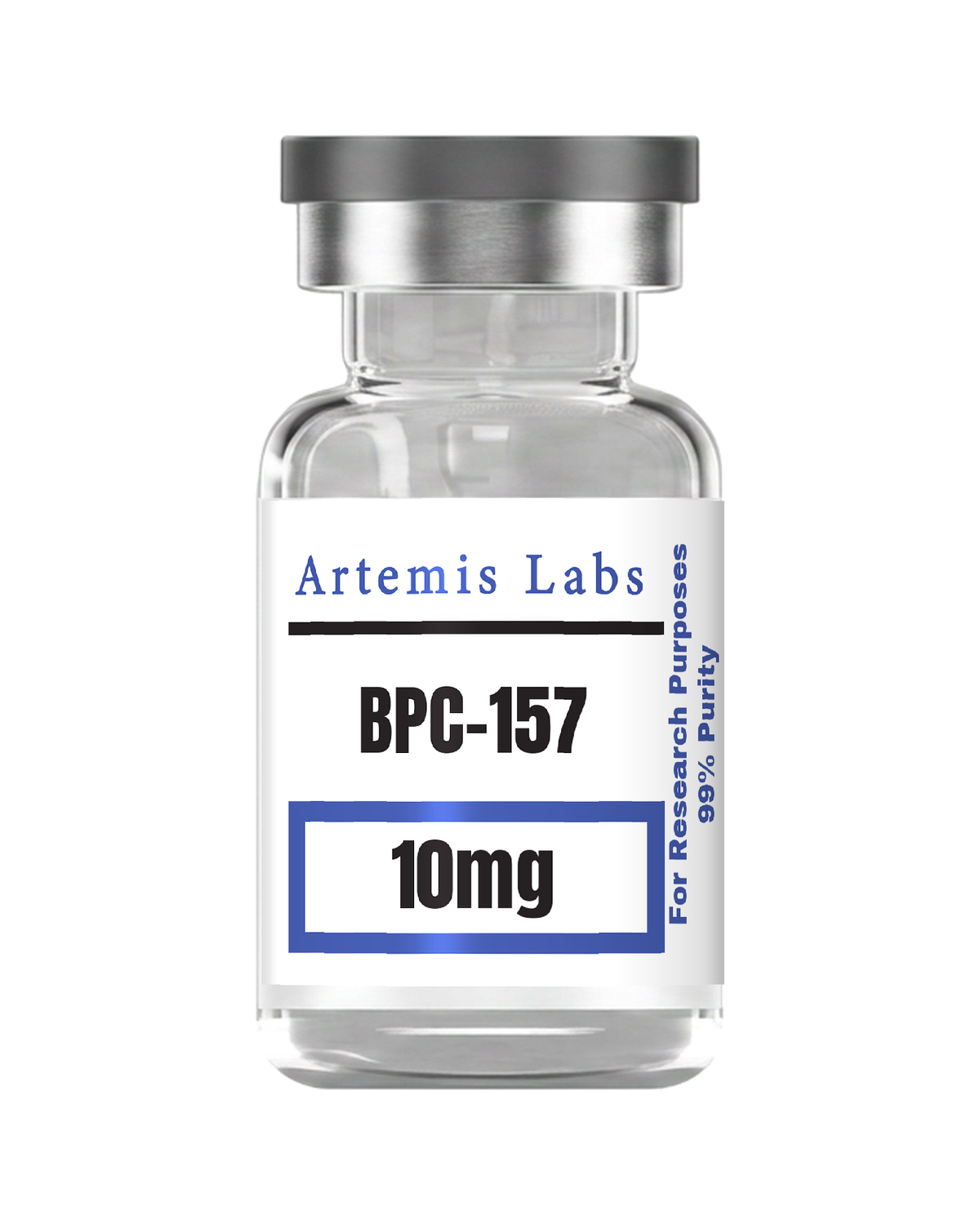
| Vial contents | 5 mg per vial and 10 mg per vial |
| Purity | ≥99% by reverse-phase HPLC |
| Identity | Confirmed by mass spectrometry |
| Endotoxin | ≤0.5 EU/mg (LAL assay, lot-specific) |
| Storage | Refer to the lot-specific Certificate of Analysis |
| Certificate of Analysis | Third-party COA with every order; batch number printed on every vial |
How does Artemis Labs verify BPC-157 identity and purity?
Every Artemis Labs lot ships with a third-party Certificate of Analysis confirming identity (mass spectrometry), purity (HPLC ≥99%), and endotoxin testing (≤0.5 EU/mg by LAL assay). Batch number is printed on every vial with the corresponding CoA publicly accessible.
Methodology. Purity is measured by third-party reverse-phase HPLC and identity is confirmed by mass spectrometry; a Certificate of Analysis ships with every order.
What is the regulatory status of BPC-157?
BPC-157 is not FDA-approved for any human therapeutic indication. It was on the FDA 503A Category 2 interim list from September 2023 to September 27, 2024, then removed following nominator withdrawal; it remains under PCAC review. BPC-157 is on the WADA Prohibited List, Section S2 (Peptide Hormones, Growth Factors, Related Substances and Mimetics) — prohibited at all times.
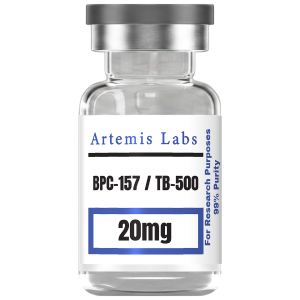
For researchers studying complementary repair pathways, BPC-157 is also offered as a pre-formulated combination with the TB-500 (Tβ4 17–23) fragment — see the BPC-157 / TB-500 Combo. For broader multi-pathway research blends, see GLOW (3-component, 70mg) and KLOW (4-component, 80mg).
→ See the Science & Research tab below for the full reference list (25 peer-reviewed citations linked to PubMed and DOI sources).
References
26 linked references. Every citation opens the PubMed record or the DOI landing page.
- Yildirim AK et al. (2026) — endothelium-dependent, nitric-oxide-mediated vasorelaxation of human internal mammary artery ex vivo. J Clin Med 15(9):3488. PMID 42123221
- Yuan C et al. (2026) — BPC-157 in tissue repair and pain management. Int J Mol Sci 27(6):2876. PMID 41898733
- Sikiric P (2026) — cytoprotection as a unifying strategy for hemorrhage and thrombosis. Pharmaceuticals. PMID 41901308
- Sikiric P (2026) — cytoprotective therapy in arrhythmias. Pharmaceuticals. PMID 41754776
- Smoday IM (2026) — FTIR characterisation of aortic wall remodelling in rats. Pharmaceuticals. PMID 41599787
- Matek D (2026) — tendon, ligament and muscle injury review. Pharmaceuticals. PMID 41754849
- Matek D et al. (2025) — rat muscle-to-bone reattachment models. Pharmaceutics 17(1):119. PMID 39861766
- Medvidovic Grubisic M (2026) — severe electrolyte disturbances in rats. Curr Neuropharmacol. PMID 41832718
- Mavrych V et al. (2026) — therapeutic peptides in gerontology. Front Aging. PMID 42021992
- Mendias CL, Awan TM (2026) — safety and efficacy of approved and unapproved peptide therapies. Sports Med. PMID 41966639
- Rahman OF et al. (2026) — therapeutic peptides in orthopaedics. JAAOS Glob Res Rev. PMID 41490200
- Mayfield CK et al. (2026) — peptide therapy primer for orthopaedic and sports medicine physicians. Am J Sports Med. PMID 41476424
- Cerovecki T et al. (2010) — rat medial collateral ligament transection model. J Orthop Res 28(9). DOI 10.1002/jor.21107
- Chang CH et al. (2011) — FAK-paxillin tendon outgrowth, cell survival and cell migration. J Appl Physiol 110(3). DOI 10.1152/japplphysiol.00945.2010
- Chang CH et al. (2014) — growth-hormone-receptor expression in tendon fibroblasts. Molecules 19(11). DOI 10.3390/molecules191119066
- Huang T et al. (2015) — alkali-burn model in vivo; proliferation, migration and angiogenesis in vitro. Drug Des Devel Ther 9:2485-2499. DOI 10.2147/DDDT.S82030
- Baric M et al. (2016) — rectovaginal fistula model in rats. Life Sci 148:63-70. DOI 10.1016/j.lfs.2016.02.029
- Sikiric P et al. (2018) — cytoprotection synthesis. Curr Pharm Des 24(18):1990-2001. DOI 10.2174/1381612824666180608101119
- Seiwerth S et al. (2018) — BPC 157 versus standard angiogenic growth factors. Curr Pharm Des 24(18):1972-1989. DOI 10.2174/1381612824666180712110447
- Amam F et al. (2018) — L-NAME / L-arginine NO-pathway evidence. World J Gastroenterol 24(47):5366-5378. DOI 10.3748/wjg.v24.i47.5366
- Gwyer D, Wragg NM, Wilson SL (2019) — musculoskeletal soft-tissue review. Cell Tissue Res 377(2). DOI 10.1007/s00441-019-03016-8
- Vukojevic J et al. (2021) — central nervous system review. Neural Regen Res 17(3):482-487. DOI 10.4103/1673-5374.320969
- Staresinic M et al. (2022) — striated, smooth and heart muscle synthesis. Biomedicines 10(12):3221. DOI 10.3390/biomedicines10123221
- Sikiric P et al. (2023) — glaucoma and other ocular conditions. Pharmaceuticals 16(7):1052. DOI 10.3390/ph16071052
- Kalogjera L et al. (2023) — stomach perforation / general-occlusion syndrome. World J Gastroenterol 29(27):4289-4316. DOI 10.3748/wjg.v29.i27.4289
- Sun Y et al. (2025) — counter-evidence. Mast-cell-released Tβ4 impairs intestinal epithelial barrier integrity in IBS models via IL22RA1/JAK1/STAT3. PMID 41278163 (Tβ4-specific; applies to BPC-157 only in combination contexts.)
For laboratory research use only. No human dosing, administration, therapeutic, diagnostic, or preventative claim is made. These statements have not been evaluated by the FDA.
Additional information
| Vial Size | 5mg, 10mg |
|---|
Science & Research
Science & Research
Mechanism of Action
BPC-157 (GEPPPGKPADDAGLV) is studied in published preclinical literature for a multi-pathway signalling profile:
- VEGFR2 / Akt / eNOS axis — upregulates vascular endothelial growth factor receptor 2, driving downstream Akt phosphorylation and endothelial nitric oxide synthase activation; the canonical mechanism associated with angiogenesis and vasodilation at injury sites in preclinical models.
- Focal adhesion kinase (FAK) / paxillin signalling — accelerates fibroblast and tenocyte migration into wound beds in tissue culture and rodent injury studies. Chang et al. 2011 (DOI 10.1152/japplphysiol.00945.2010) demonstrated this FAK-paxillin pathway in tendon-outgrowth, cell-survival, and cell-migration assays — the foundational mechanism work behind subsequent tendon/ligament/muscle research.
- Growth-hormone-receptor upregulation in tendon fibroblasts — amplifies systemic GH-mediated repair signalling (Chang et al. 2014, DOI 10.3390/molecules191119066).
- Nitric oxide system modulation — cytoprotective NO-system modulator across vascular and gastrointestinal models; this is the mechanism most directly supported by the 2026 human-tissue data. Pharmacologically established via L-NAME / L-arginine co-treatment evidence (Amam 2018, DOI 10.3748/wjg.v24.i47.5366).
- Multi-growth-factor upregulation (VEGF, EGF, HGF). Beyond VEGFR2 receptor-level effects, preclinical literature reports BPC-157 also upregulates VEGF (vascular endothelial growth factor — master angiogenic signal), EGF (epidermal growth factor — epithelial proliferation), and HGF (hepatocyte growth factor — broad-spectrum regeneration signal). Foundational evidence: Huang 2015 alkali-burn (DOI 10.2147/DDDT.S82030); Seiwerth 2018 growth-factor framing (DOI 10.2174/1381612824666180712110447).
Foundational Preclinical Mechanism Literature (2010–2023)
The 2024–2026 surface rests on a deep foundational literature spanning two decades. The papers below are the most-cited mechanism studies in subsequent reviews and underlie the canonical BPC-157 multi-pathway model:
- Cerovecki 2010 (DOI 10.1002/jor.21107) — ligament healing in rat MCL transection model; foundational orthopaedic evidence.
- Chang 2011 (DOI 10.1152/japplphysiol.00945.2010) — FAK-paxillin tendon outgrowth, cell survival, migration.
- Chang 2014 (DOI 10.3390/molecules191119066) — GH-receptor expression in tendon fibroblasts.
- Huang 2015 (DOI 10.2147/DDDT.S82030) — alkali-burn wound healing in vivo; proliferation + migration + angiogenesis in vitro.
- Baric 2016 (DOI 10.1016/j.lfs.2016.02.029) — rectovaginal fistula healing in rats.
- Sikiric 2018 (DOI 10.2174/1381612824666180608101119) — cytoprotection synthesis: vascular recruitment + GI tract healing.
- Seiwerth 2018 (DOI 10.2174/1381612824666180712110447) — BPC-157 vs. standard angiogenic growth factors.
- Amam 2018 (DOI 10.3748/wjg.v24.i47.5366) — NO-pathway evidence via L-NAME / L-arginine co-treatment.
- Gwyer 2019 (DOI 10.1007/s00441-019-03016-8) — musculoskeletal soft-tissue healing review.
- Vukojevic 2021 (DOI 10.4103/1673-5374.320969) — central nervous system review.
- Staresinic 2022 (DOI 10.3390/biomedicines10123221) — striated, smooth, and heart muscle synthesis.
- Sikiric 2023 (DOI 10.3390/ph16071052) — glaucoma + ocular conditions.
- Kalogjera 2023 (DOI 10.3748/wjg.v29.i27.4289) — stomach perforation / general-occlusion syndrome.
2024–2026 Mechanism Evidence
- First human-tissue vascular evidence — Yildirim et al. 2026, PMID 42123221. NO-mediated vasorelaxation of human internal mammary artery ex vivo.
- Unified cytoprotection hypothesis — Sikiric 2026, PMID 41901308 + PMID 41754776; Smoday 2026, PMID 41599787.
- Analgesic mechanism via microvascular + dopaminergic pathways — Yuan 2026, PMID 41898733.
- Tendon / ligament / muscle review — Matek 2026, PMID 41754849; muscle-to-bone reattachment Matek 2025, PMID 39861766.
- Electrolyte homeostasis — Medvidovic Grubisic 2026, PMID 41832718.
Honest Counter-Evidence and Limitations
Per Artemis Labs content policy (research-customer transparency), the following published limitations are surfaced alongside the positive mechanism literature:
- No human efficacy trial. Despite two decades of preclinical mechanism work and the 2026 ex-vivo human-tissue mechanism evidence, no published Phase II or Phase III human efficacy trial exists for BPC-157. Pilot human IV-infusion safety data (PMID 41966639, PMID 41476424) is the only published human-context literature.
- FDA 503A removal (Sept 27, 2024) following nominator withdrawal; currently under PCAC review. Material regulatory headwind for any research design assuming continued compounding-channel availability.
- WADA Section S2 prohibition at all times. Material constraint for athlete-adjacent research.
- Tβ4 counter-evidence (combination context only). Sun 2025 (PMID 41278163) demonstrated mast-cell-released Tβ4 impairs intestinal epithelial barrier in IBS via IL22RA1/JAK1/STAT3. This is Tβ4-specific and applies to BPC-157 only when paired with TB-500 in IBS-relevant research; standalone BPC-157 research is unaffected.
- Multi-pathway signalling vs. single-receptor clarity. No canonical receptor binding assay defines a positive vs. null BPC-157 response; the field has not converged on a single biomarker of activity.
- Tissue-context + species variability. Effect magnitudes across Cerovecki 2010, Chang 2011, Huang 2015, Baric 2016, Vukojevic 2021, Staresinic 2022, Kalogjera 2023 vary substantially with model, dose, route, and species.
Regulatory status
- FDA 503A interim Category 2 (Sept 2023) → removed Sept 27, 2024 following nominator withdrawal; under PCAC review.
- WADA Prohibited List, Section S2 — prohibited at all times.
- Not a federally scheduled controlled substance in the United States; state-level shipping restrictions apply.
Reference doses (preclinical literature only)
Published preclinical research uses BPC-157 at 10 ng/kg to 10 μg/kg in rodent and tissue-culture models (intraperitoneal or intragastric administration). No human dosing guidance is provided — all reference doses are from preclinical literature.
References
All citations link directly to PubMed or DOI sources. Click any reference to open in a new tab.
2024–2026 primary mechanism research
- Yildirim AK et al. Endothelium-Dependent Nitric Oxide-Mediated Vasorelaxant Effects of BPC 157 in Human Internal Mammary Artery. J Clin Med. 2026;15(9):3488. PMID 42123221.
- Yuan C et al. From Regeneration to Analgesia: The Role of BPC-157 in Tissue Repair and Pain Management. Int J Mol Sci. 2026;27(6):2876. PMID 41898733.
- Sikiric P. Cytoprotection as a Unifying Strategy for Hemorrhage and Thrombosis. Pharmaceuticals. 2026. PMID 41901308.
- Medvidovic Grubisic M. BPC 157 as a Therapy of Severe Electrolyte Disturbances in Rats. Curr Neuropharmacol. 2026. PMID 41832718.
- Matek D. Tendon, Ligament, and Muscle Injury Therapy Perspectives with BPC 157 — A Review. Pharmaceuticals. 2026. PMID 41754849.
- Matek D et al. Rat models and BPC-157 therapy for muscle-to-bone reattachment recovery. Pharmaceutics. 2025;17(1):119. PMID 39861766.
- Sikiric P. Cytoprotective Therapy in Arrhythmias. Pharmaceuticals. 2026. PMID 41754776.
- Smoday IM. FTIR Characterization of Aortic Wall Remodeling by BPC 157. Pharmaceuticals. 2026. PMID 41599787.
- Mavrych V et al. Therapeutic peptides in gerontology. Front Aging. 2026. PMID 42021992.
- Mendias CL, Awan TM. Safety and Efficacy of Approved and Unapproved Peptide Therapies for Musculoskeletal Injuries. Sports Med. 2026. PMID 41966639.
- Rahman OF et al. Therapeutic Peptides in Orthopaedics. J Am Acad Orthop Surg Glob Res Rev. 2026. PMID 41490200.
- Mayfield CK et al. Injectable Peptide Therapy: A Primer for Orthopaedic and Sports Medicine Physicians. Am J Sports Med. 2026. PMID 41476424.
Foundational preclinical mechanism literature (2010–2023)
- Cerovecki T et al. Pentadecapeptide BPC 157 (PL 14736) improves ligament healing in the rat. J Orthop Res. 2010;28(9). DOI 10.1002/jor.21107.
- Chang CH et al. The promoting effect of pentadecapeptide BPC 157 on tendon healing involves tendon outgrowth, cell survival, and cell migration. J Appl Physiol. 2011;110(3). DOI 10.1152/japplphysiol.00945.2010.
- Chang CH et al. Pentadecapeptide BPC 157 enhances the growth hormone receptor expression in tendon fibroblasts. Molecules. 2014;19(11). DOI 10.3390/molecules191119066.
- Huang T et al. Body protective compound-157 enhances alkali-burn wound healing in vivo and promotes proliferation, migration, and angiogenesis in vitro. Drug Des Devel Ther. 2015;9:2485-2499. DOI 10.2147/DDDT.S82030.
- Baric M et al. Stable gastric pentadecapeptide BPC 157 heals rectovaginal fistula in rats. Life Sci. 2016;148:63-70. DOI 10.1016/j.lfs.2016.02.029.
- Sikiric P et al. Novel Cytoprotective Mediator, Stable Gastric Pentadecapeptide BPC 157. Curr Pharm Des. 2018;24(18):1990-2001. DOI 10.2174/1381612824666180608101119.
- Seiwerth S et al. BPC 157 and Standard Angiogenic Growth Factors. Curr Pharm Des. 2018;24(18):1972-1989. DOI 10.2174/1381612824666180712110447.
- Amam F et al. Bypassing major venous occlusion and duodenal lesions in rats with BPC 157, L-NAME and L-arginine. World J Gastroenterol. 2018;24(47):5366-5378. DOI 10.3748/wjg.v24.i47.5366.
- Gwyer D, Wragg NM, Wilson SL. Gastric pentadecapeptide body protection compound BPC 157 and its role in accelerating musculoskeletal soft tissue healing. Cell Tissue Res. 2019;377(2). DOI 10.1007/s00441-019-03016-8.
- Vukojevic J et al. Pentadecapeptide BPC 157 and the central nervous system. Neural Regen Res. 2021;17(3):482-487. DOI 10.4103/1673-5374.320969.
- Staresinic M et al. Stable Gastric Pentadecapeptide BPC 157 and Striated, Smooth, and Heart Muscle. Biomedicines. 2022;10(12):3221. DOI 10.3390/biomedicines10123221.
- Sikiric P et al. Stable Gastric Pentadecapeptide BPC 157 — Possible Novel Therapy of Glaucoma and Other Ocular Conditions. Pharmaceuticals. 2023;16(7):1052. DOI 10.3390/ph16071052.
- Kalogjera L et al. Stomach perforation-induced general occlusion/occlusion-like syndrome and BPC 157 therapy effect. World J Gastroenterol. 2023;29(27):4289-4316. DOI 10.3748/wjg.v29.i27.4289.
Counter-evidence (combination context)
- Sun Y et al. Mast cell-released Thymosin β4 impairs intestinal epithelial barrier integrity in IBS via IL22RA1/JAK1/STAT3 signalling. 2025. PMID 41278163. (Tβ4-specific finding; applies when BPC-157 is paired with TB-500 in IBS / intestinal-barrier research; standalone BPC-157 research unaffected.)
Related Research Compounds
Related Research Compounds
For laboratory research designs that benefit from broader repair-pathway coverage, BPC-157 is mechanistically complementary with five other Artemis Labs products:
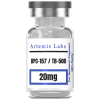
- BPC-157 / TB-500 Combo — pre-formulated combination pairing this BPC-157 with the TB-500 (Thymosin β4 17–23) fragment. The two activate non-overlapping pathways: BPC-157 downstream (VEGFR2-Akt-eNOS, FAK, GHR) and TB-500 upstream (G-actin sequestration, stem-cell mobilisation). The published research rationale is mechanistic complementarity, not additive efficacy.
- KPV — α-MSH C-terminal tripeptide; melanocortin-pathway anti-inflammatory adjunct, studied for intestinal NF-κB suppression and tight-junction restoration. Frequent pairing in gastrointestinal repair research.
- GHK-Cu — copper-tripeptide; complementary copper-mediated remodelling pathway. The four-peptide “Wolverine” combination pattern in research literature combines BPC-157, TB-500, KPV, and GHK-Cu.
- GLOW (3-component blend, 70mg) — pre-formulated GHK-Cu 50mg + BPC-157 10mg + TB-500 10mg blend for researchers wanting all three repair-pathway components in a single research reagent. Non-overlapping pathways, not additive efficacy claim.
- KLOW (4-component blend, 80mg) — pre-formulated GLOW base + KPV 10mg blend; the closest commercial analog to the literature “Wolverine” combination.
Combo-context caveat (honest disclosure). The Sun 2025 finding (PMID 41278163) of mast-cell-released Tβ4 intestinal-barrier impairment in IBS applies to BPC-157 when paired with TB-500 (or any TB-500-containing blend: combo, GLOW, KLOW) in IBS-relevant or intestinal-barrier-sensitive research. Standalone BPC-157 research is unaffected. Surfaced here for design transparency.
No dosing, frequency, or human-use guidance is provided. Combination commentary is restricted to in-vitro and pre-clinical research-design rationale.
FAQ
FAQ
Common questions about standalone BPC-157. All answers are for laboratory research context only — no human-use guidance is provided.
- What is BPC-157?
- BPC-157 (Body Protection Compound 157) is a synthetic 15-amino-acid pentadecapeptide (sequence GEPPPGKPADDAGLV) derived from a stable fragment of a human-gastric protein. It is studied in preclinical literature for multi-pathway cytoprotective and tissue-repair signalling.
- What new 2026 human-tissue evidence exists for BPC-157?
- Yildirim et al. 2026 (Journal of Clinical Medicine 15(9):3488, PMID 42123221) demonstrated concentration-dependent, endothelium-dependent, nitric-oxide-mediated vasorelaxation of human internal mammary artery tissue ex vivo — the first human-tissue mechanism evidence for BPC-157.
- Is BPC-157 FDA-approved?
- No. BPC-157 was on the FDA 503A Category 2 interim list from September 2023 to September 27, 2024, then removed following nominator withdrawal. It remains under PCAC review. No human therapeutic indication is approved.
- Is BPC-157 prohibited in sport?
- Yes. BPC-157 is on the WADA Prohibited List, Section S2 (Peptide Hormones, Growth Factors, Related Substances and Mimetics), prohibited at all times.
- What is BPC-157’s molecular basis for unusual stability?
- The pentadecapeptide contains a triple-proline (Pro-Pro-Pro) motif at positions 3-5 of the sequence that creates a rigid backbone conformation resistant to peptidase cleavage. Published studies report BPC-157 remains intact in human gastric juice for >24 hours.
- What growth factors does BPC-157 upregulate?
- Preclinical literature reports BPC-157 upregulates *VEGF (vascular endothelial growth factor — master angiogenic signal), EGF (epidermal growth factor — epithelial proliferation), and HGF (hepatocyte growth factor — broad-spectrum regeneration signal), and engages the VEGFR2-Akt-eNOS* axis at the receptor level. Foundational evidence: Huang et al. 2015 (DOI: 10.2147/DDDT.S82030) for alkali-burn wound healing; Seiwerth et al. 2018 (DOI: 10.2174/1381612824666180712110447) for the broader cross-tissue growth-factor framing.
- Why is BPC-157 frequently paired with TB-500 in research?
- The two peptides target *non-overlapping pathways* in published preclinical models: BPC-157 acts downstream (VEGFR2-Akt-eNOS, FAK-paxillin, GHR upregulation, NO modulation), while TB-500 acts upstream through G-actin sequestration and stem-cell mobilisation. Researchers studying the full tissue-repair cascade often pair the two. See the BPC-157 vs TB-500 mechanism comparison for a deeper breakdown.
- Is there counter-evidence I should know about?
- Yes. Per the honest-counter-evidence section above: (1) *no published Phase II/III human efficacy trial exists for BPC-157 — all therapeutic claims remain extrapolated from animal models; (2) the FDA 503A removal (Sept 27, 2024) is a material regulatory headwind; (3) the Sun 2025 finding (PMID 41278163) of Tβ4 intestinal-barrier impairment in IBS applies to BPC-157/TB-500 combination* contexts (not BPC-157 standalone) — researchers combining the two in IBS-relevant models should account for it.
- What’s the difference between this standalone BPC-157 and the BPC-157 / TB-500 combo?
- This page sells BPC-157 as a single peptide for researchers studying BPC-157 in isolation or pairing it with their own choice of compound. The BPC-157 / TB-500 Combo is a pre-formulated combination with the TB-500 fragment — chosen for mechanistic complementarity in repair-pathway research designs. Both products use the same ≥99% HPLC-verified BPC-157 material; the combo simply includes a separately-vialed TB-500 alongside. For researchers wanting BPC-157 in a broader multi-pathway blend, see GLOW (3-component) and KLOW (4-component).
- Is BPC-157 a controlled substance?
- BPC-157 is not currently a federally scheduled controlled substance in the United States, but state-level shipping restrictions apply. Review state shipping restrictions before ordering.
For laboratory research use only. No human dosing, administration, therapeutic, diagnostic, or preventative claim is made. These statements have not been evaluated by the FDA.
Reviews (0)
Be the first to review “BPC-157”
Related products
Reviews
There are no reviews yet.