Sermorelin
Price range: $50.00 through $70.00
Sermorelin is the first 29 amino acids of human GHRH — the exact sequence the body uses to tell the pituitary to release growth hormone, and the shortest piece that still works. Because it is identical rather than modified, the release it produces stays pulsatile and stays subject to the body’s own brake, somatostatin. That is the point of it as a research tool.
Continue readingShow less
Why the sequence identity matters. Modified GHRH analogs last longer but produce a signal the body does not normally generate. Sermorelin, being identical to endogenous GHRH(1-29), produces a GH-release pattern that stays under the body’s own negative feedback (Mendias 2026, PMID 41966639).
The trade-off. Faithfulness costs duration — native GHRH is cleared within minutes, and sermorelin inherits that. Comparing it to an acylated analog is comparing two design philosophies, not two strengths of the same thing.
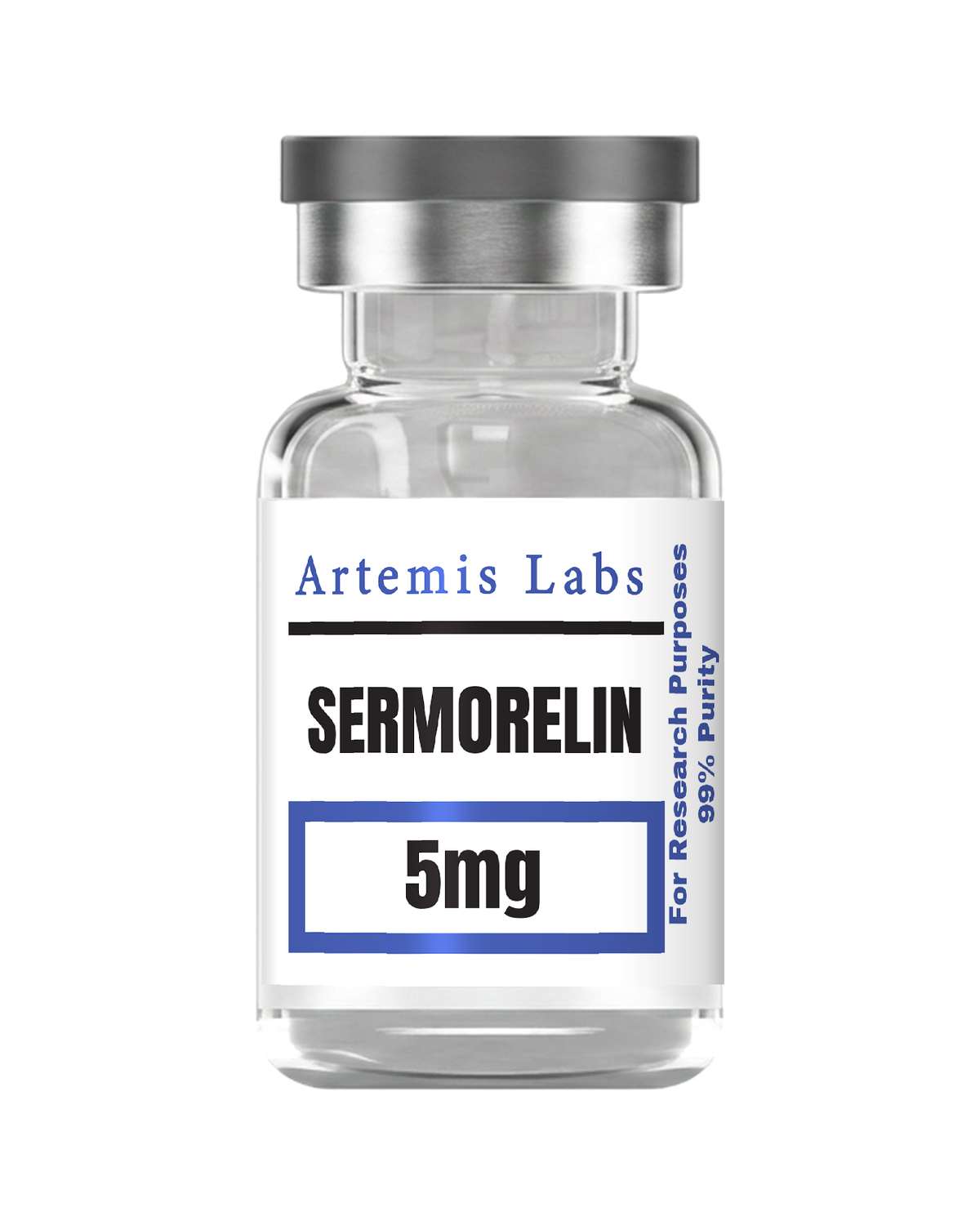
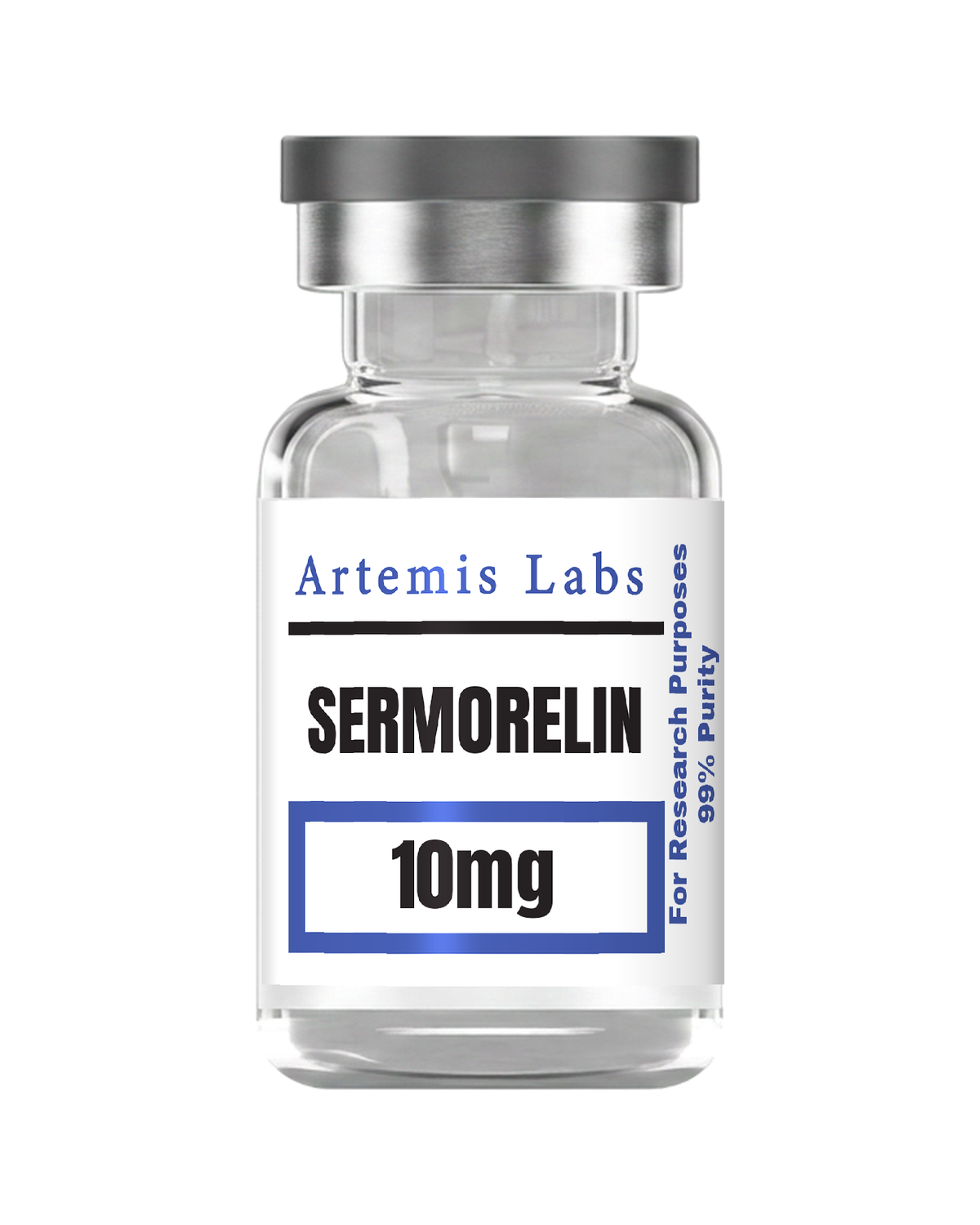
Supplied as lyophilized GHRH(1-29), for laboratory research use only.
Free shipping on orders over $300
Pay by Venmo or Cash App — instructions are emailed with your order.
11 published sources cited on this page see them
For research use only. Not for human consumption.
Description
Sermorelin is a lab-made copy of part of a natural human hormone called GHRH. It copies the first 29 of the hormone’s building blocks — the part the pituitary gland needs to read the signal. Among GHRH research peptides, it is the closest match to the real thing. Artemis Labs ships it as a dry powder.
Reviewed August 21, 2026 · Artemis Labs
What is sermorelin?
Sermorelin is a synthetic 29-amino-acid peptide identical in sequence to residues 1–29 of native human growth-hormone-releasing hormone (GHRH) — the minimum N-terminal fragment retaining full pituitary GH-secretagogue activity. Sermorelin is identical in sequence to residues 1–29 of native GHRH: no enzymatic stabilisation, no albumin tether, and the resulting GH-release pattern remains subject to normal somatostatin-mediated negative feedback (Mendias et al. 2026, PMID 41966639).
Has sermorelin ever been FDA-approved?
The FDA approval belonged to a licensed product, GEREF (sermorelin acetate, EMD Serono), and never to research-grade material. Drugs@FDA lists two applications: NDA 019863, approved 28 December 1990 as a new molecular entity, and NDA 020443, a new dosage form approved 26 September 1997. The approved use was diagnosis and management of pediatric idiopathic growth-hormone deficiency. The sponsor told FDA it was discontinuing the products in letters dated 11 July 2008 and 2 December 2008, and FDA later determined that they “were not withdrawn from sale for reasons of safety or effectiveness” (Federal Register document 2013-04827). No sermorelin product is marketed under an FDA approval today.
What did the 2026 Alzheimer’s-model study report?
A new 2026 mechanism finding (Pedrolli et al., Cell Death & Disease, PMID 41946684) reports that GHRH-receptor agonism reduces amyloid-β deposition, suppresses glial activation, and lowers pro-inflammatory cytokine expression in the 5xFAD transgenic Alzheimer’s-disease mouse model — opening an emerging neuroprotective research direction for the GHRH-analog class. This is preclinical work and does not constitute a therapeutic claim.
What does the sermorelin evidence not show?
Four limits on the sermorelin literature are worth stating plainly, all of them drawn from the same record as the findings above.
- The compounds tested in the 2026 neuroprotection work were not sermorelin. Pedrolli et al. 2026 tested GHRH(1-44) and the GHRH agonist MR-409 in the 5xFAD mouse model (PMID 41946684). The result is class-level evidence for GHRH-receptor agonism, not a sermorelin finding.
- The GHRH-R antagonist literature is opposite pharmacology. The MIA-602 / MIA-690 anti-tumour findings (PMID 41075421; PMID 40244089) demonstrate the receptor’s biological breadth. They are receptor-pathway context and say nothing about sermorelin.
- There is no current human indication. The GEREF approval covered pediatric idiopathic GH deficiency only, and marketing ended in 2008. FDA determined the products were not withdrawn for reasons of safety or effectiveness. No sermorelin product holds a current FDA approval.
- Prohibited in sport at all times. WADA Section S2 covers sermorelin without exception (PMID 41880199).
What is the regulatory status of sermorelin?
Sermorelin is prohibited at all times under WADA Section S2 (Peptide Hormones, Growth Factors, Related Substances and Mimetics; Coutinho et al. 2026, PMID 41880199). For laboratory research use only — no human dosing, administration, therapeutic, diagnostic, or preventative claim is made.
Analytical Specifications
| Sequence | YADAIFTNSYRKVLGQLSARKLLQDIMSR-NH₂ (GHRH residues 1–29) |
| Molecular formula | C₁₄₉H₂₄₆N₄₄O₄₂S |
| Molecular weight | 3,357.9 g/mol (free base) |
| CAS number | 86168-78-7 |
| Form | Lyophilised white acetate-salt powder; 5 mg or 10 mg vial |
| Storage (lyophilised) | Store at −20 °C, desiccated, protected from light |
| Plasma half-life (published research) | ~10–20 minutes; no enzymatic stabilisation, no albumin tether |
| Regulatory status (2026) | Not currently FDA-approved; not on the FDA positive 503A bulks list. WADA Section S2, prohibited at all times |
Where can I read the sermorelin research in more depth?
Artemis Labs publishes a ten-page sermorelin research cluster built from primary sources. Start with what sermorelin is studied for, then the human trial record, the two FDA applications and their dates, the sequence and molecular-weight record, the safety record, and the desensitization and antibody findings. The cluster also covers the adult literature and which studies used a different analog, the WADA listing in its own words, a three-way comparison with CJC-1295 and ipamorelin, and what the record contains on the CJC-1295 and ipamorelin pairing.
References
- Pedrolli F. (2026). GHRH attenuates amyloid deposition and neuroinflammation in 5xFAD Alzheimer’s-disease models. Cell Death Dis. PMID 41946684
- Mendias CL, Awan TM. (2026). Approved and unapproved peptide therapies for musculoskeletal injuries and athletic performance. Sports Med. PMID 41966639
- Coutinho LFD et al. (2026). Peptide and peptide-analog drugs in recreational and professional sport (anti-doping context). J Sports Med Phys Fitness. PMID 41880199
- Rahman OF et al. (2026). Therapeutic peptides in orthopaedics. J Am Acad Orthop Surg Glob Res Rev. PMID 41490200
- Uçaktürk E, Nemutlu E. (2026). Nano-LC and Q/Orbitrap MS analysis of GHRH and analogs in urine. J Pharm Biomed Anal. PMID 41138283
- Mavrych V et al. (2026). Therapeutic peptides in gerontology. Front Aging. PMID 42021992
- Federal Register (2013-03-04). Determination that GEREF (sermorelin acetate) injection was not withdrawn from sale for reasons of safety or effectiveness, document 2013-04827. federalregister.gov/d/2013-04827
- Receptor-pathway context (antagonist class): Sigdel 2025. PMID 41075421
- Receptor-pathway context (antagonist class): Gesmundo 2025. PMID 40244089
- Receptor-pathway context (antagonist class): Muñoz-Moreno 2024. PMID 39456984
- Receptor-pathway context (antagonist class): Costoya 2025. PMID 39417961
- Receptor-pathway context (antagonist class): Gaumond 2024. PMID 38588464
Additional information
| Vial Size | 5mg, 10mg |
|---|
Science & Research
Science & Research
Mechanism of Action
Sermorelin binds the GHRH receptor (GHRH-R), a Class-B GPCR expressed on anterior-pituitary somatotrophs. Receptor activation drives Gαs / cAMP / PKA signalling, increasing GH gene transcription and pulsatile vesicular exocytosis. Because the sermorelin sequence is identical to endogenous human GHRH(1-29), the resulting GH-release pattern remains subject to normal somatostatin-mediated negative feedback (Mendias 2026, PMID 41966639).
Pharmacokinetic Profile (Published Research)
- Plasma half-life: ~10–20 minutes; no enzymatic stabilisation, no albumin tether
- Time-to-peak plasma: ~5–20 minutes in the published pharmacokinetic literature
- GH-pulse duration: GH elevation persists ~3 hours despite rapid peptide clearance, reflecting downstream somatotroph kinetics
- Bioavailability: intranasal bioavailability is ~3–5% in published research; oral bioavailability is negligible
New 2026 Mechanism Finding — Neuroprotective Research Direction
Pedrolli et al. 2026 (Cell Death & Disease, PMID 41946684) reported that GHRH(1-44) and the GHRH agonist MR-409 reduce amyloid-β deposition, suppress gliosis, and lower pro-inflammatory cytokine expression in the 5xFAD transgenic Alzheimer’s-disease mouse model. The work establishes a preclinical case that GHRH-receptor agonism has consequential signalling beyond pituitary GH release — an emerging neuroprotective research direction for the GHRH-analog class. This is preclinical research and does not constitute a therapeutic claim.
Receptor-Pathway Context (GHRH-R Antagonist Class)
Independent 2024–2025 work characterised GHRH-receptor antagonists (MIA-602, MIA-690) as showing anti-tumour activity through autophagy induction and chemo-/radio-sensitisation across multiple cancer cell models (Sigdel 2025, PMID 41075421; Gesmundo 2025, PMID 40244089; Muñoz-Moreno 2024, PMID 39456984; Costoya 2025, PMID 39417961; Gaumond 2024, PMID 38588464). These are antagonist (opposite-pharmacology) findings — they are included as receptor-pathway context demonstrating the GHRH-R’s biological breadth, not as sermorelin findings.
Regulatory History (1990–2026)
- 28 December 1990 — FDA approval, NDA 019863 (GEREF, sermorelin acetate, EMD Serono), a Type 1 new molecular entity, for diagnosis and management of pediatric idiopathic GH deficiency.
- 26 September 1997 — NDA 020443, a Type 3 new dosage form of the same product.
- 2008 — Discontinued. The sponsor notified FDA in letters dated 11 July 2008 and 2 December 2008; both applications sit on the Discontinued Drug Product List.
- 4 March 2013 — FDA determined the products “were not withdrawn from sale for reasons of safety or effectiveness” (Federal Register document 2013-04827).
- Current (2026) — No sermorelin product holds an FDA approval; sermorelin is not on the FDA positive 503A bulks list.
- WADA Prohibited List — Section S2 (Peptide Hormones, Growth Factors, Related Substances and Mimetics), prohibited at all times (Coutinho 2026, PMID 41880199).
Specifications
| Property | Value |
|---|---|
| Sequence | YADAIFTNSYRKVLGQLSARKLLQDIMSR-NH₂ (GHRH residues 1–29) |
| Molecular Formula | C₁₄₉H₂₄₆N₄₄O₄₂S |
| Molecular Weight | 3,357.9 g/mol (free base) |
| CAS Number | 86168-78-7 |
| Storage (lyophilised) | Store at −20 °C, desiccated, protected from light |
| Form | Lyophilised white acetate-salt powder; 5 mg or 10 mg vial |
Key Citations (selection)
1. Pedrolli F. 2026. *Cell Death Dis.* — GHRH attenuates amyloid deposition + neuroinflammation in 5xFAD AD models. PMID 41946684. 2. Mendias CL, Awan TM. 2026. *Sports Med.* — Approved + unapproved peptide therapies for musculoskeletal injuries + athletic performance. PMID 41966639. 3. Coutinho LFD et al. 2026. *J Sports Med Phys Fitness.* — Peptide & peptide-analog drugs in recreational + professional sport (anti-doping context). PMID 41880199. 4. Rahman OF et al. 2026. *J Am Acad Orthop Surg Glob Res Rev.* — Therapeutic peptides in orthopaedics review. PMID 41490200. 5. Uçaktürk E, Nemutlu E. 2026. *J Pharm Biomed Anal.* — Nano-LC + Q/Orbitrap MS analysis of GHRH and analogs in urine. PMID 41138283. 6. Federal Register. 2013-03-04. Determination that GEREF (sermorelin acetate) injection was not withdrawn from sale for reasons of safety or effectiveness (Document 2013-04827).
Full citations + GHRH-R antagonist-class context: see Artemis Labs sermorelin research page.
No dosing, frequency, route, or human-use guidance is supplied. For laboratory research use only.
Research-Design Pairings
Research-Design Pairings
What Compounds Is Sermorelin Studied Alongside?
In published research, GHRH agonists such as sermorelin are studied alongside GHS-R1a agonists (ipamorelin) because the two receptor pathways converge on somatotroph GH release through different intracellular cascades (Mavrych et al. 2026, PMID 42021992). Pairings below are *research-design rationale*, not human-use recommendations.
Why is sermorelin studied with ipamorelin?
- Sermorelin — GHRH-R agonist, native GHRH(1-29) sequence; Gαs / cAMP / PKA signal that stays under normal somatostatin feedback
- Ipamorelin — GHS-R1a agonist (ghrelin-receptor class); different receptor, complementary intracellular cascade
- Why studied together — receptor-class orthogonality enables dissection of pathway-specific contributions to somatotroph GH release; convergent endpoint (GH pulse) with divergent upstream pharmacology
How does sermorelin compare with CJC-1295?
- Sermorelin — native sequence, no enzymatic stabilisation, ~10–20 min plasma half-life
- CJC-1295 with DAC — modified GHRH analog with MPA-Lys albumin handle; half-life 6–8 days
- Why studied together — comparator pair for kinetic-modulation studies; isolates the effect of half-life extension while holding receptor target constant
How does sermorelin compare with tesamorelin?
- Sermorelin — native GHRH(1-29); not currently FDA-approved
- Tesamorelin — trans-3-hexenoyl GHRH(1-44); the only currently FDA-approved GHRH analog (Egrifta SV / Egrifta WR, HIV-associated lipodystrophy indication)
- Why studied together — benchmark for safety/efficacy data when designing research studies against the approved-comparator standard
Why is MOTS-c studied in the same designs?
- MOTS-c — mitochondrial-derived peptide; co-studied for downstream metabolic effects in GH-axis research designs
No dosing, frequency, route, or human-use guidance is supplied. Pairing commentary above is restricted to in-vitro and pre-clinical research-design rationale per CLAUDE.md content rule #1.
For mechanism-level deep-dive, see the sermorelin research page (Science & Research tab + full citation list).
Related products
Metabolic Research