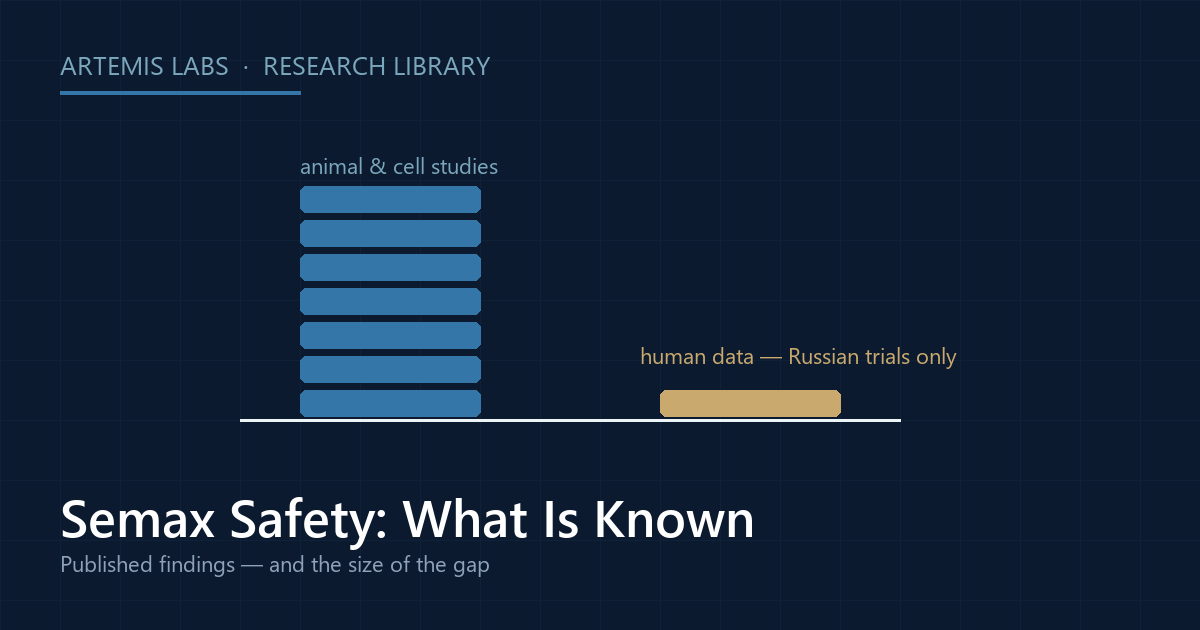
A plain-language review of what published Semax studies report about safety, including the negative findings, the missing long-term data, and the gaps.
What Russian optic-nerve, glaucoma and retina studies of Semax actually reported, why none of them isolate the peptide, and where the published record runs thin.
A plain-language review of the published Semax neuroprotection literature: which studies used cells, which used animals, which used people, and what each one found.
What published studies measured when they looked at Semax, cognition and attention, who was studied, where the work was done, and what was never tested.
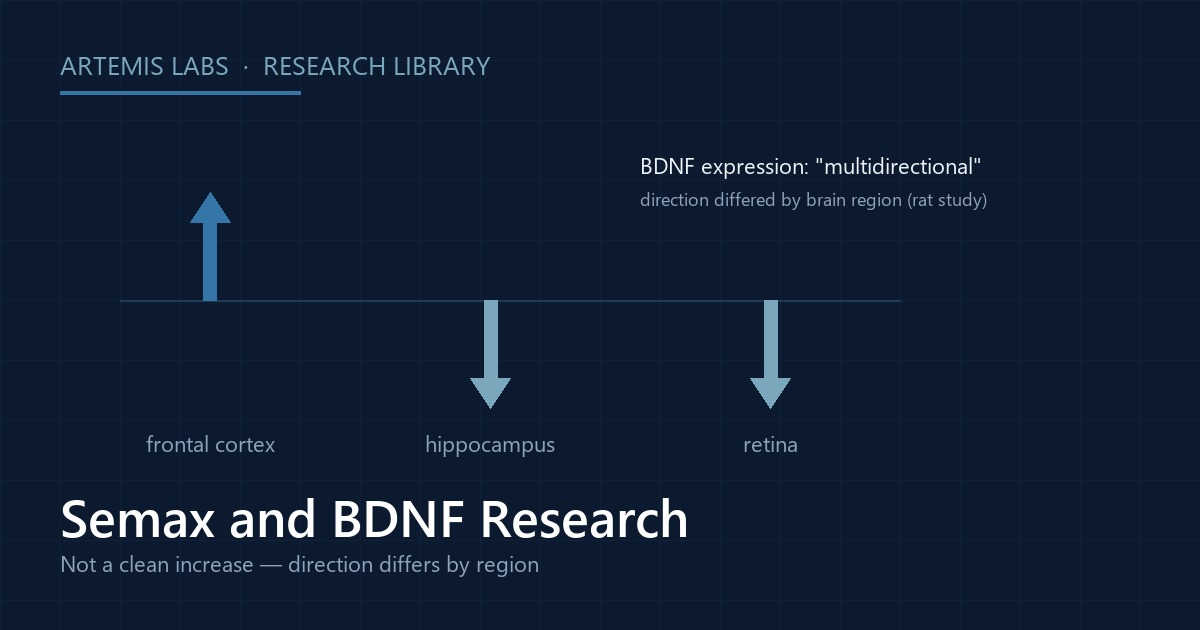
Semax is widely described as raising BDNF. The most-cited study measured it in three rat brain regions and found it fell in two of them. Here is what was reported.
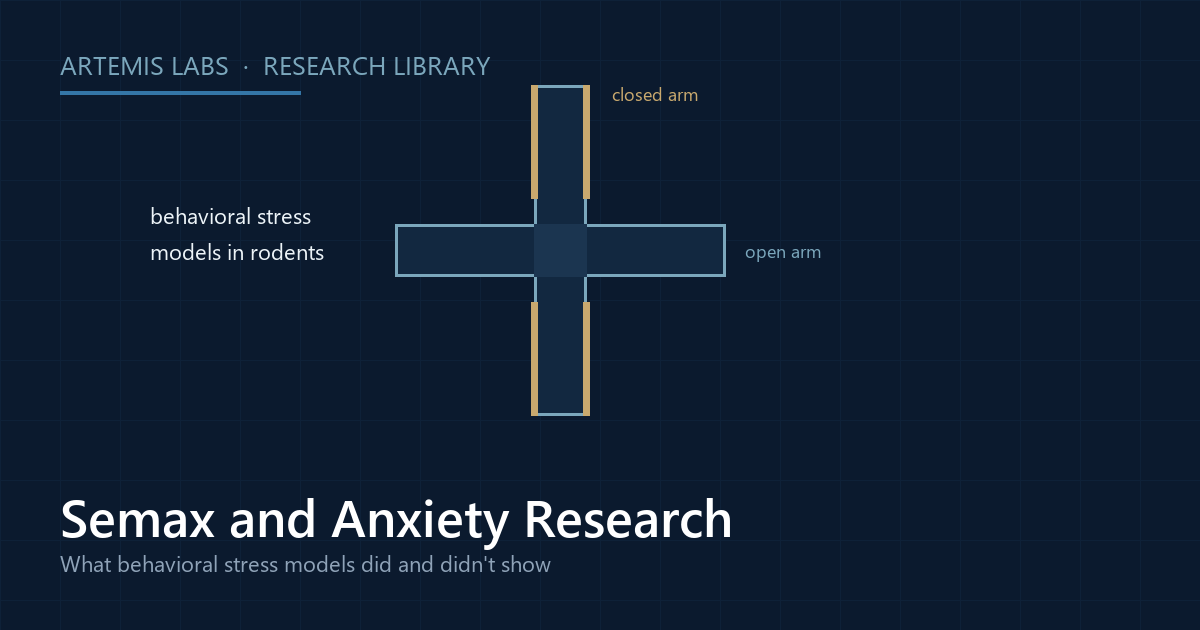
What published studies report about Semax in anxiety and stress research: rat stress models, a forced swim test null result, and the limits of the record.
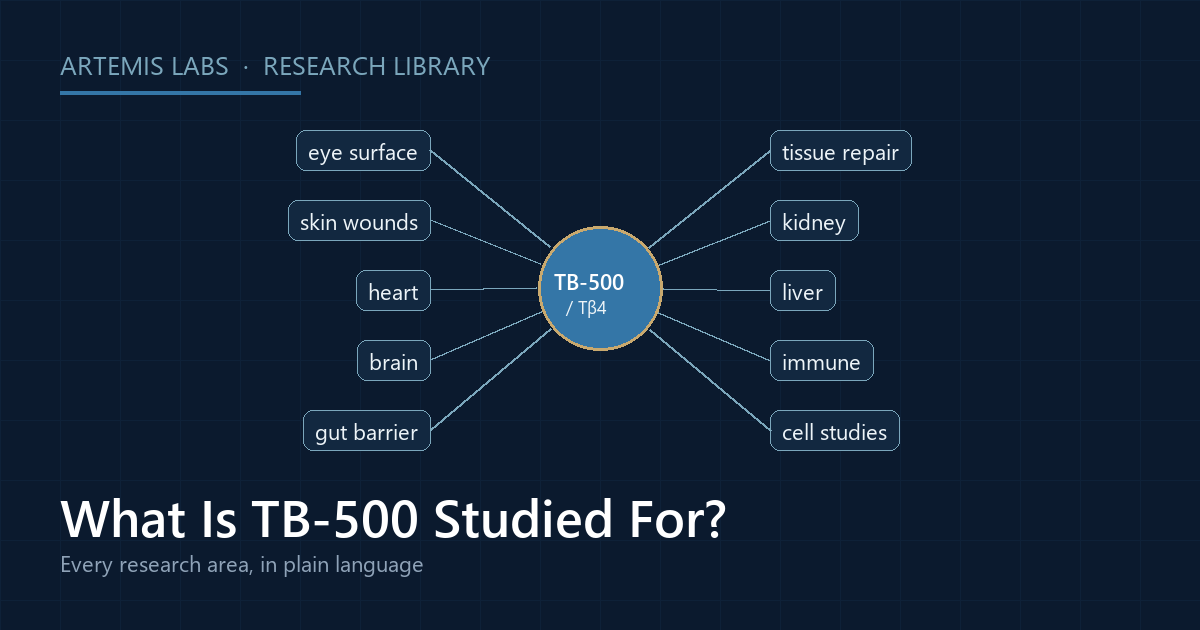
TB-500 is a seven-amino-acid fragment of thymosin beta-4. A plain-language tour of every research area the published record actually covers, and what it does not.
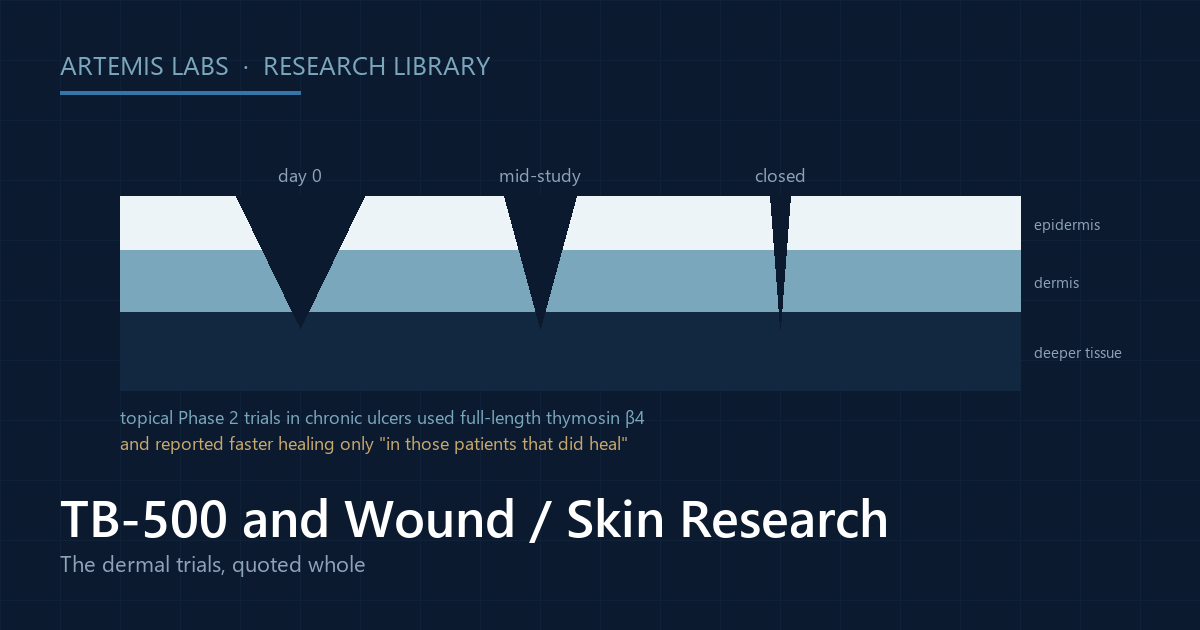
The human skin-wound trials often linked to TB-500 tested thymosin beta-4, the larger parent protein. Here is what those studies reported, and what they did not.
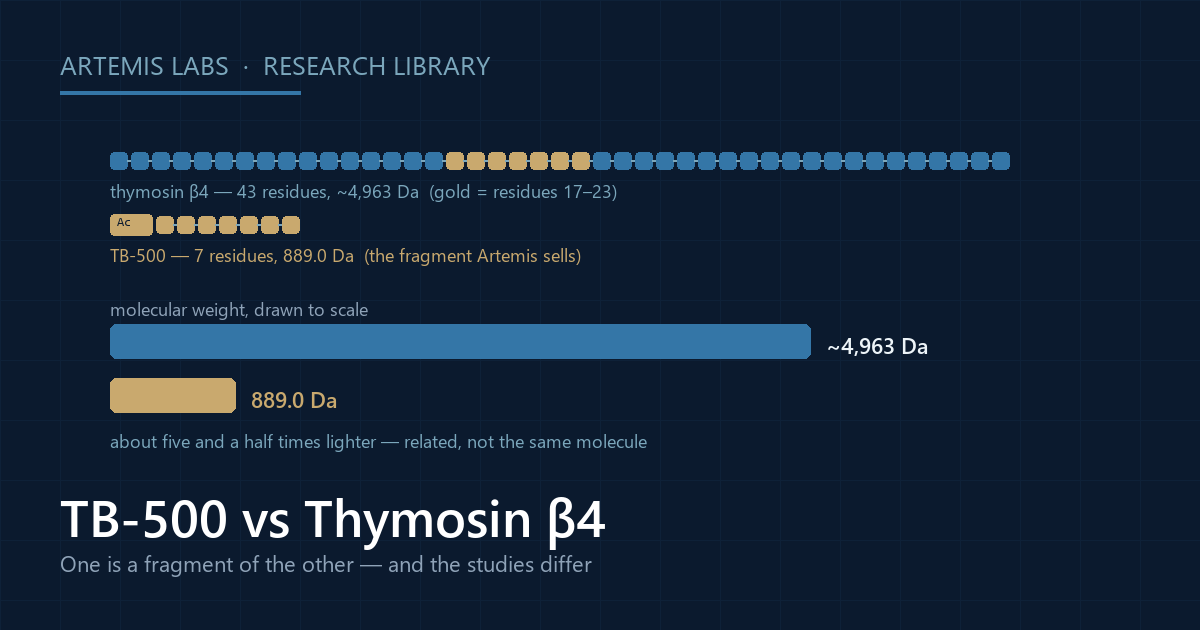
TB-500 is a seven-amino-acid fragment of thymosin beta-4, a 43-amino-acid protein about five times heavier. Here is what the published research actually tested.
TB-500 is a 7-amino-acid fragment of thymosin beta-4. Here is what repair research actually tested, which form it used, and what has never been studied in people.