24
Aug
Aug
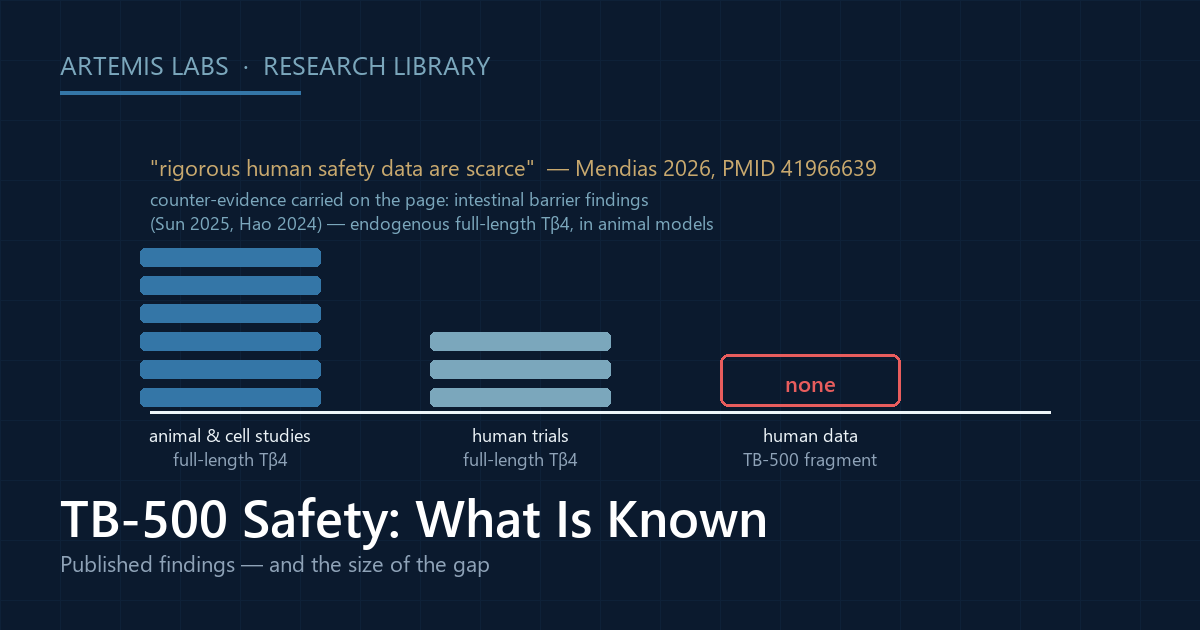
What published research reports about TB-500 and thymosin beta-4 safety, including the one human safety study, the negative findings, and the gaps nobody has filled.

What published research reports about TB-500 and thymosin beta-4 safety, including the one human safety study, the negative findings, and the gaps nobody has filled.
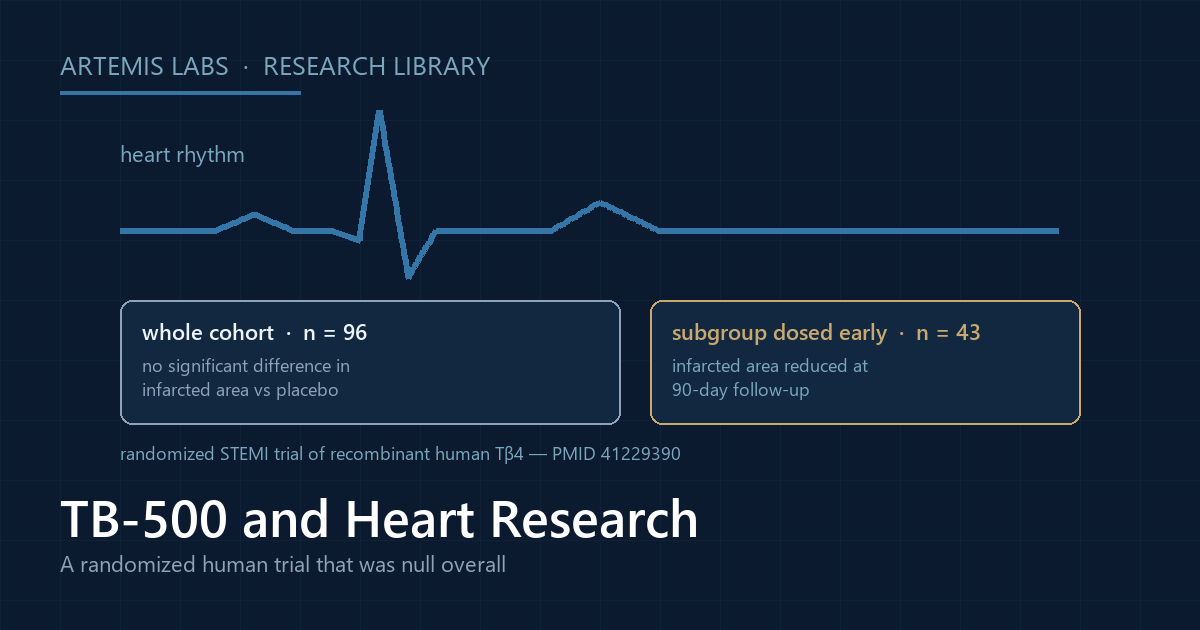
A randomized human trial of thymosin beta-4 after a heart attack was null overall, with a signal only in an early-dosing subgroup. Both halves explained.
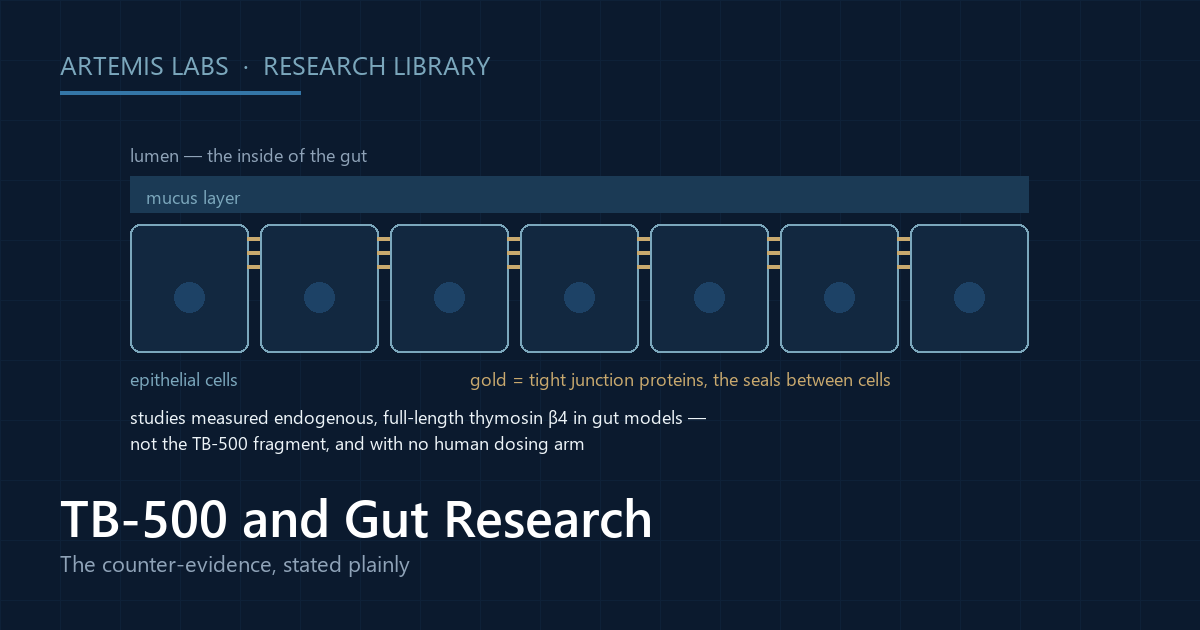
Two published studies found thymosin beta 4 weakened the gut lining in rats and mice. Here is what they measured, what they did not test, and why we publish it.
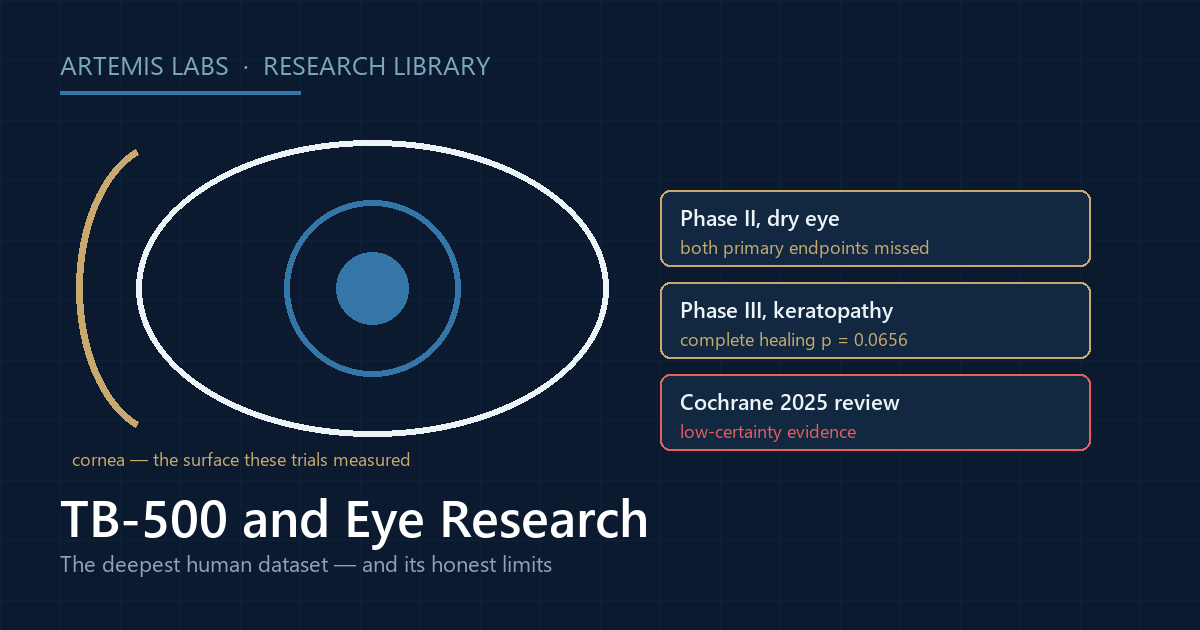
The eye is where thymosin beta-4 has the most human data. A plain-language look at the dry eye trials, the p=0.0656 Phase III, and what is still missing.
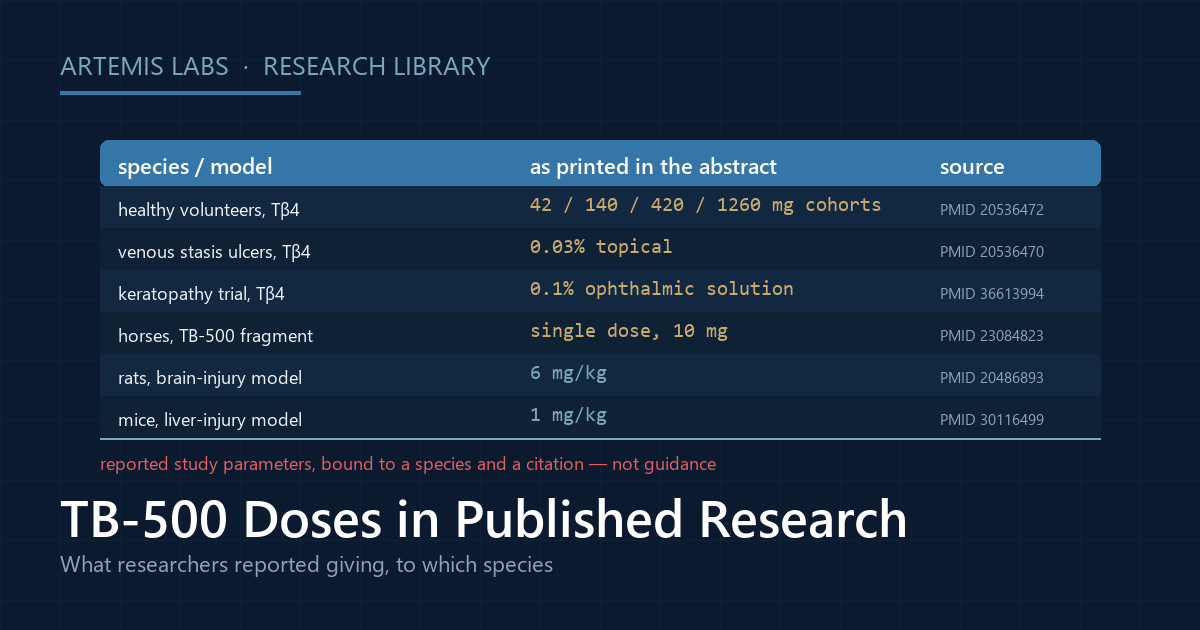
The published thymosin beta-4 study figures, the animal numbers, and the honest answer for TB-500 itself: no human dose has ever been published.
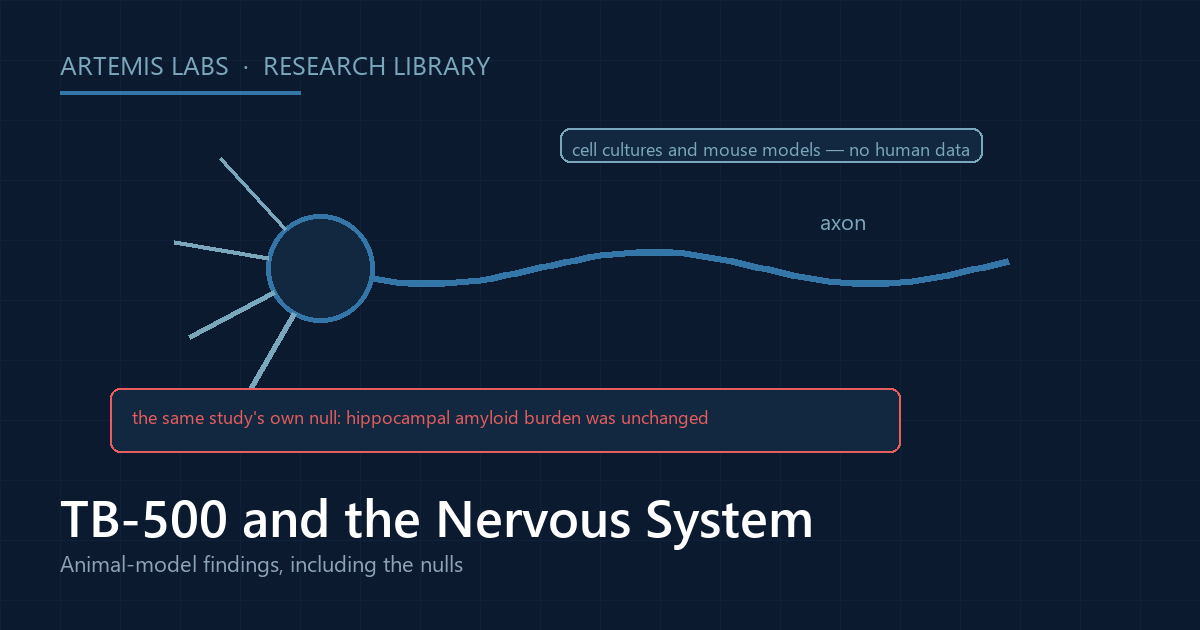
One published animal study gave TB-500 itself and measured brain outcomes. Here is what it reported, the result it did not find, and what is still missing.
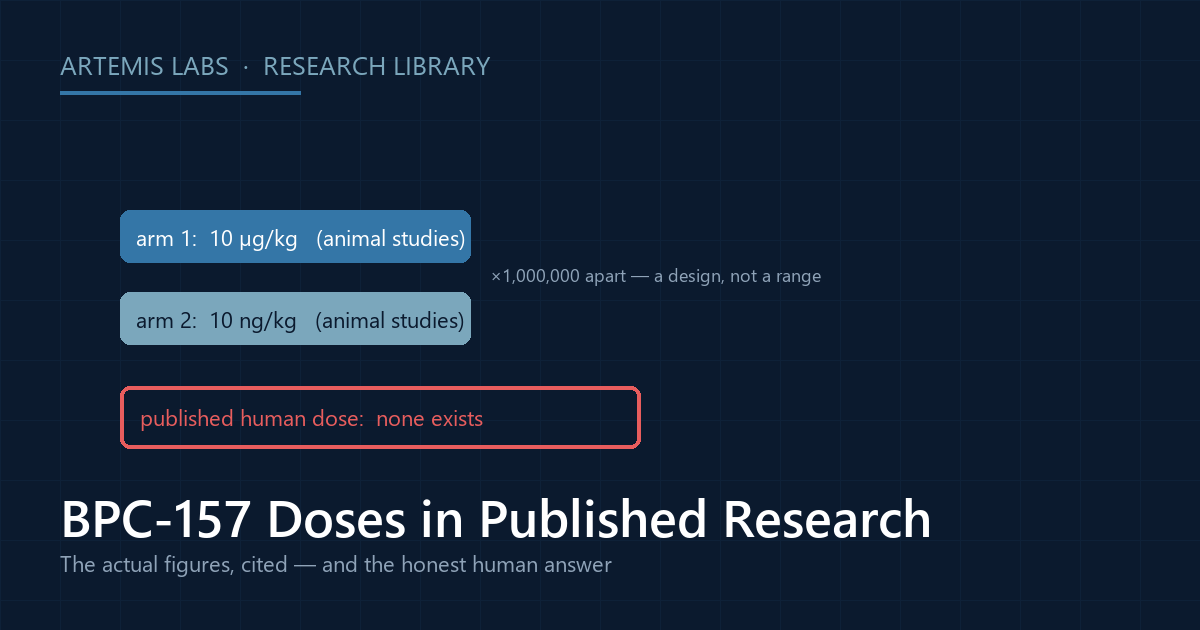
What amounts has BPC-157 research actually used? The published animal figures, the human-tissue concentrations, and the honest answer on human dosing: none is published.
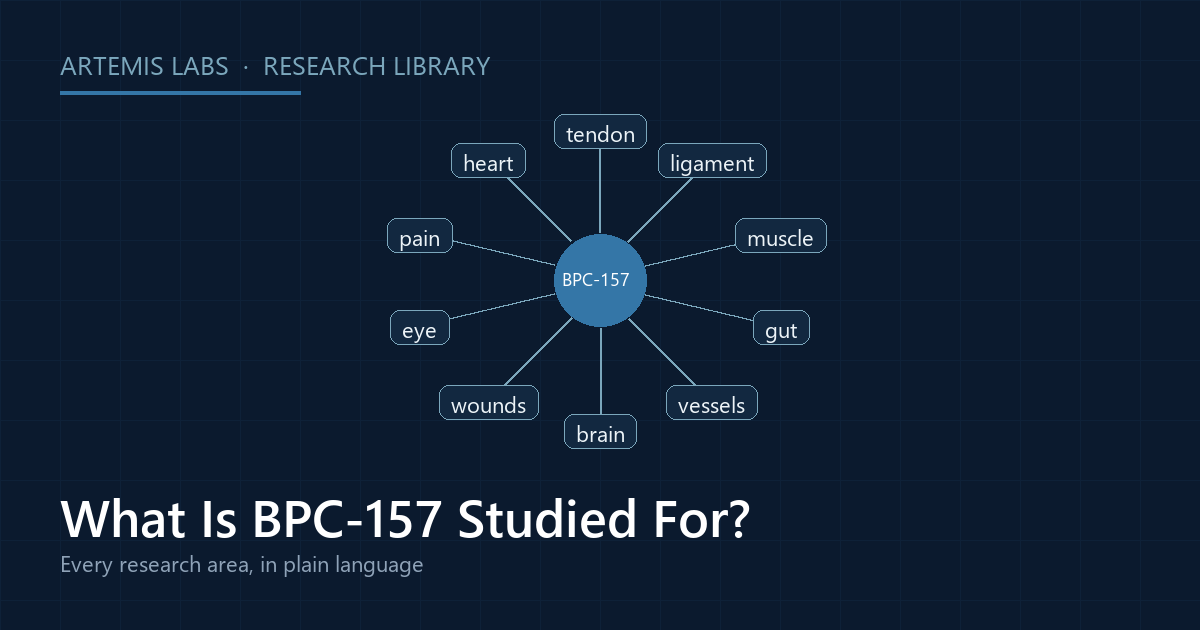
BPC-157 is studied in animal, cell, and tissue models of tendon, gut, blood vessel, nerve, and wound repair. A plain-language map of every research area.
A plain-language review of published BPC-157 wound research: a burn model, fistula repair in rats, and growth-factor comparisons. Animal and lab data only.
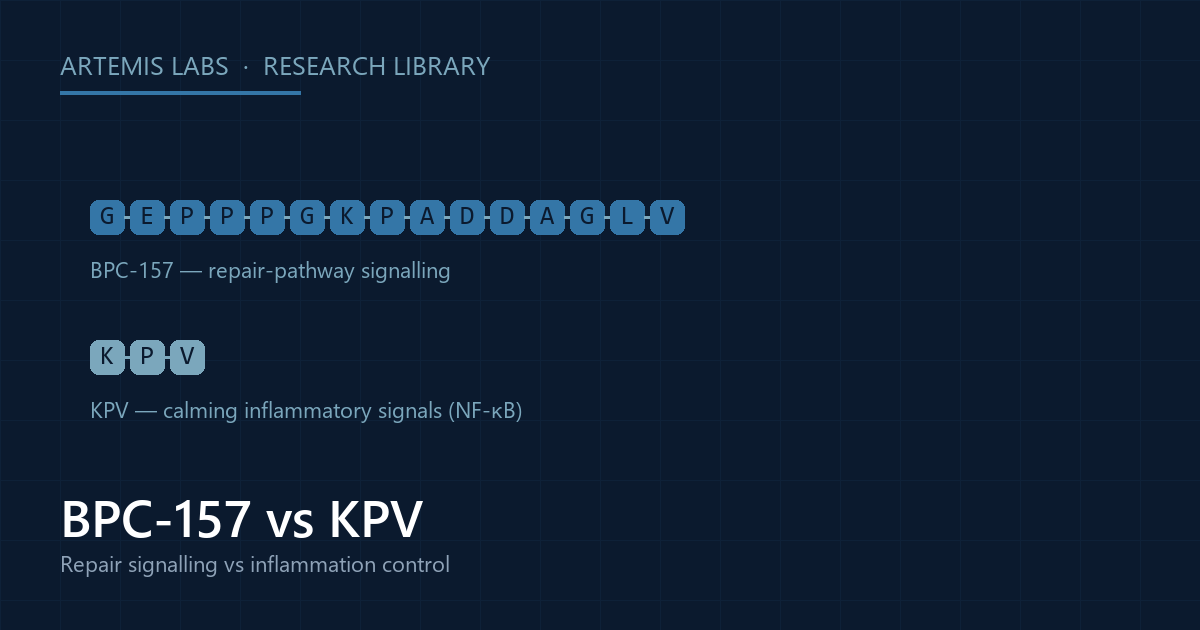
BPC-157 and KPV are studied for different things, and both appear in gut research. A plain-language look at what the published work covers and what it does not.