
Ipamorelin’s defining finding is that it released growth hormone in swine without raising ACTH or cortisol. Here is exactly what that study measured, and what it did not.
Peptide Research, Research Education
Sermorelin in Adults: What Exists and What Is a Different Molecule | Artemis Labs
28
Aug
Aug
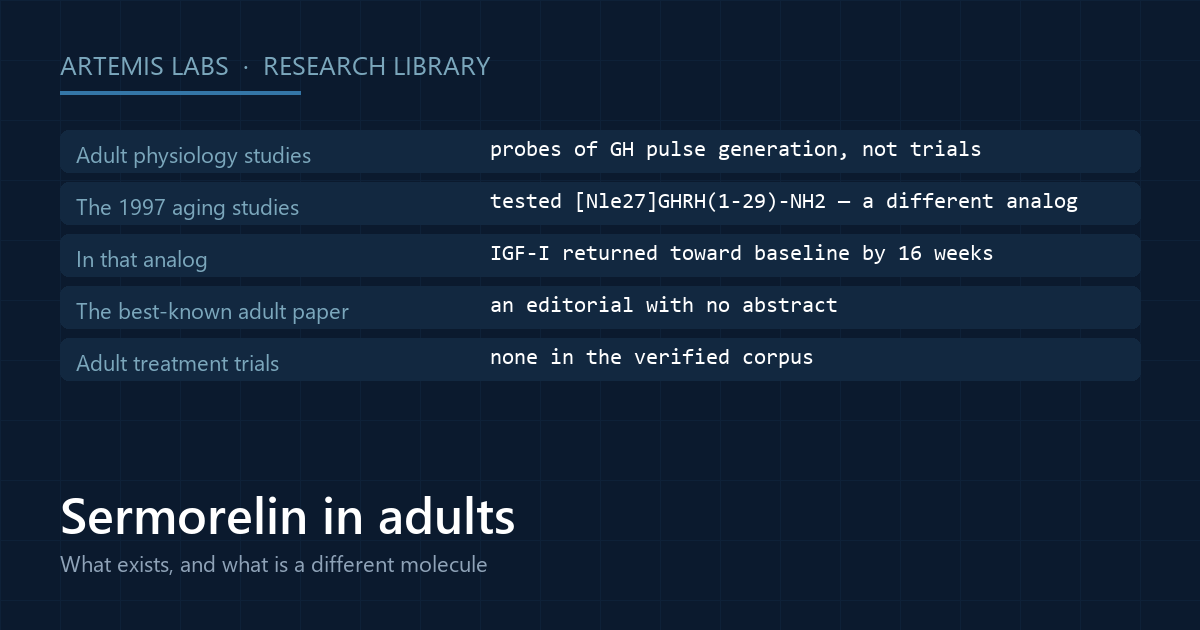
The adult sermorelin literature is mostly physiology probes. The two studies most often cited for aging tested a norleucine analog, not sermorelin, and the best-known adult framing is an editorial with no abstract.
The ghrelin receptor sits in the gut as well as the pituitary. Rodent studies of ipamorelin and bowel recovery led to the one human trial of the compound — which did not beat placebo.
Rat studies of ipamorelin measured bone length, bone mineral content and muscle tension. The results are more qualified than most summaries admit — including a finding that bone density did not change.
Peptide Research, Research Education
CJC-1295 and Ipamorelin Together: What the Record Contains | Artemis Labs
28
Aug
Aug
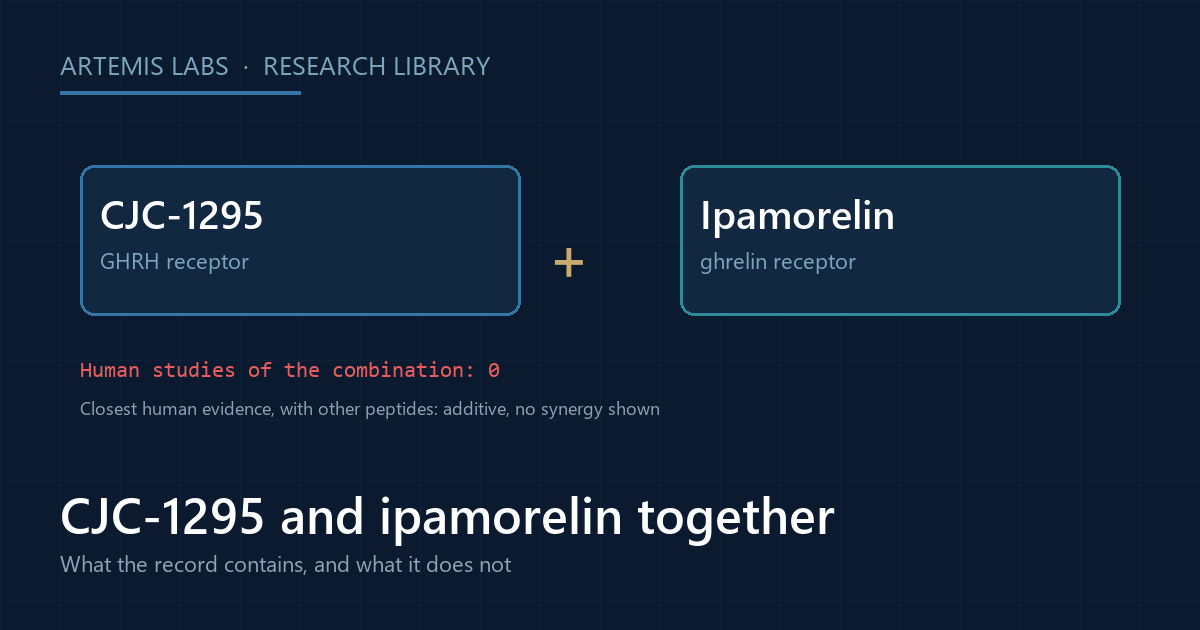
CJC-1295 and ipamorelin are sold as a pair. PubMed returns ten records mentioning both, all reviews, and no human study of the combination. What the closest related evidence actually shows.
Peptide Research, Research Education
What Is Tesamorelin Studied For? Research Overview | Artemis Labs
28
Aug
Aug
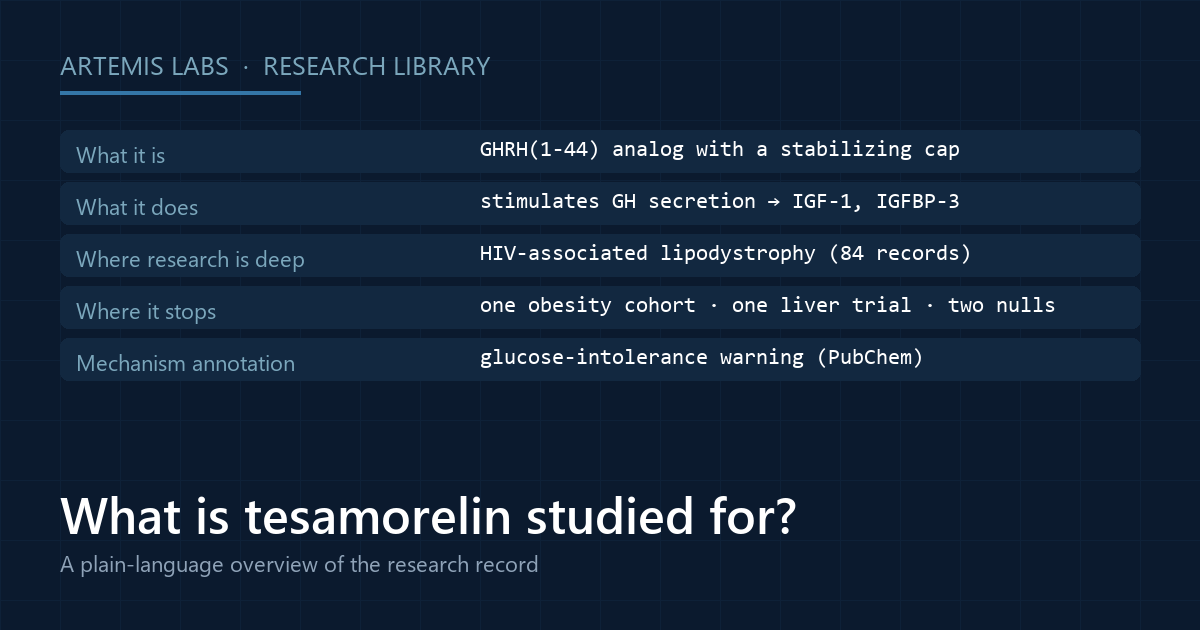
Tesamorelin is a modified GHRH analog studied almost entirely in HIV-associated lipodystrophy, where a licensed product has a Phase 3 record. What the research covers, where it stops, and what the mechanism annotation says.
Peptide Research, Research Education
Tesamorelin vs Sermorelin: Two GHRH Analogs, Different Records | Artemis Labs
28
Aug
Aug
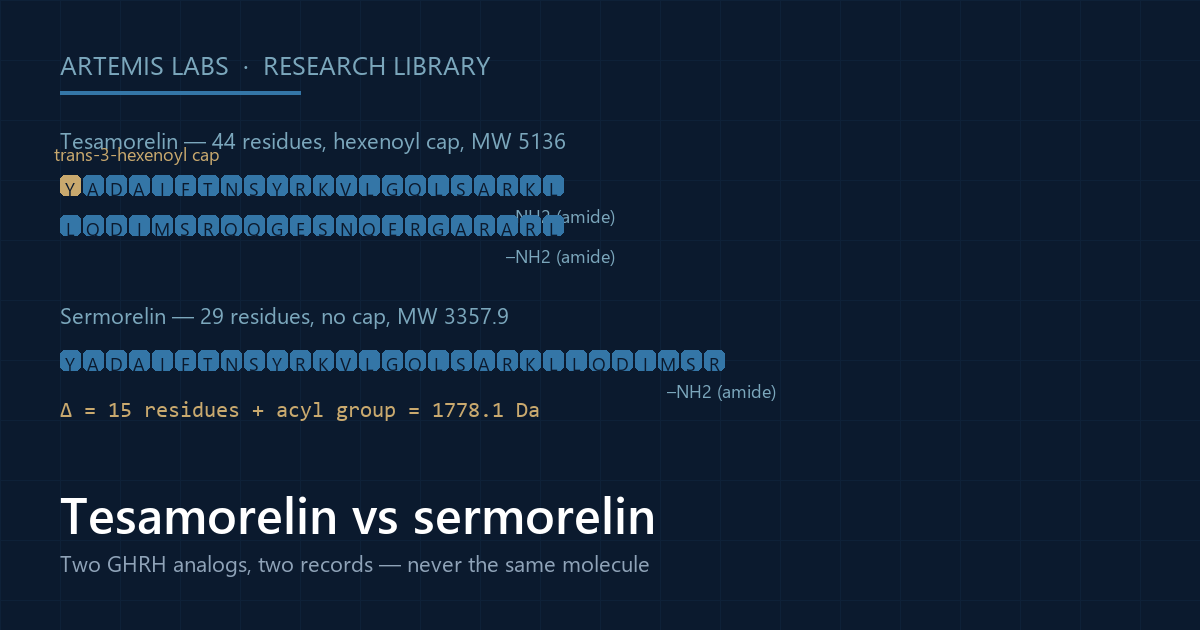
Tesamorelin and sermorelin are both GHRH analogs, but one is the full 44-residue hormone with a stabilizing cap and the other is a 29-residue fragment. Verified identity, half-life, regulatory and trial records, side by side.
Peptide Research, Research Education
Tesamorelin and Liver Fat: One Trial, Many Papers | Artemis Labs
28
Aug
Aug
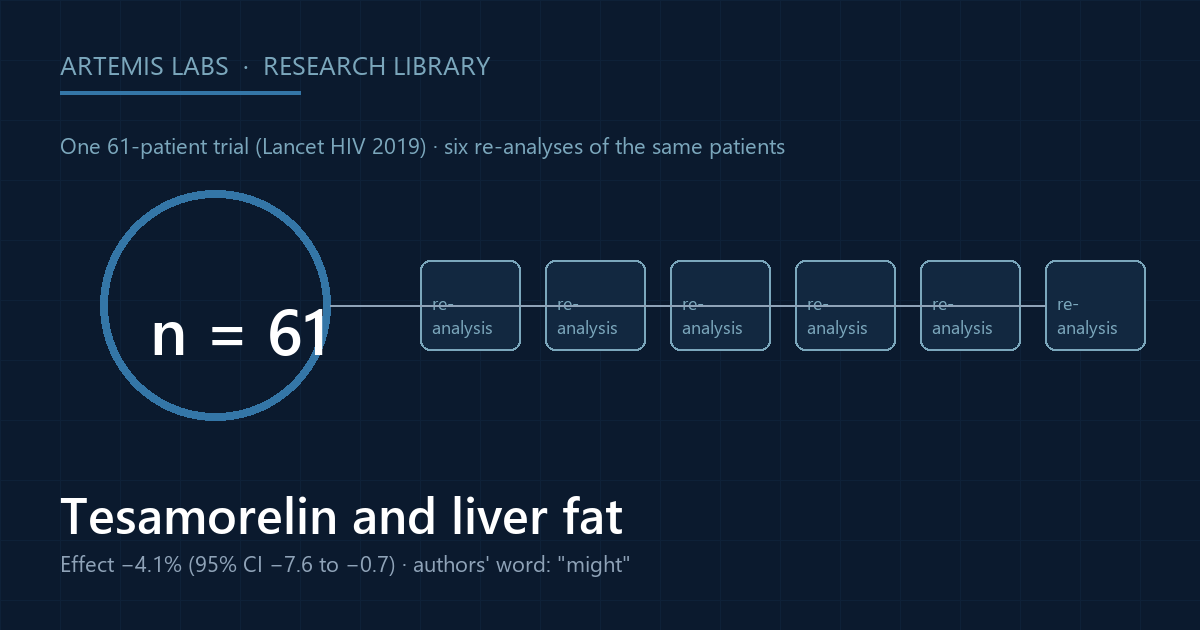
The tesamorelin liver-fat record is one 61-patient trial in people with HIV, published in Lancet HIV 2019 with the word “might”, and at least six later papers that re-analyze the same patients. How re-analysis inflates a lane.
Peptide Research, Research Education
Tesamorelin and Ipamorelin Together: What the Record Contains | Artemis Labs
28
Aug
Aug
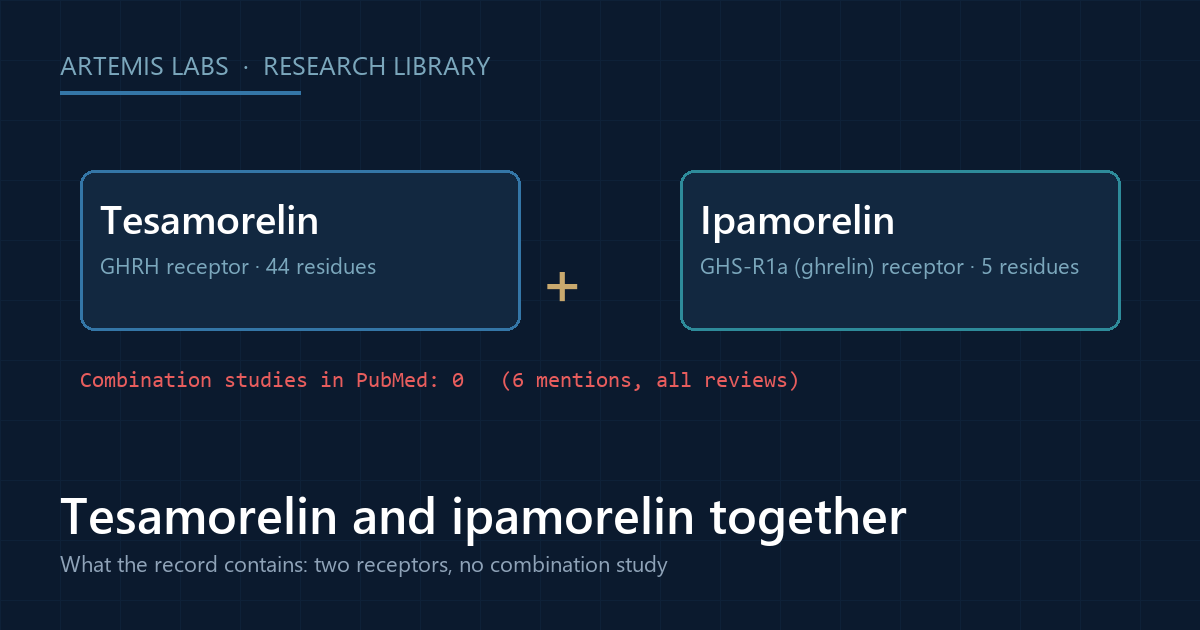
Tesamorelin and ipamorelin act on two different receptors and are sold together as a blend. The published record contains zero studies of the two compounds combined; the six papers that mention both are reviews.
Peptide Research, Research Education
Tesamorelin and Cognition: One Positive, Then Two Nulls | Artemis Labs
28
Aug
Aug
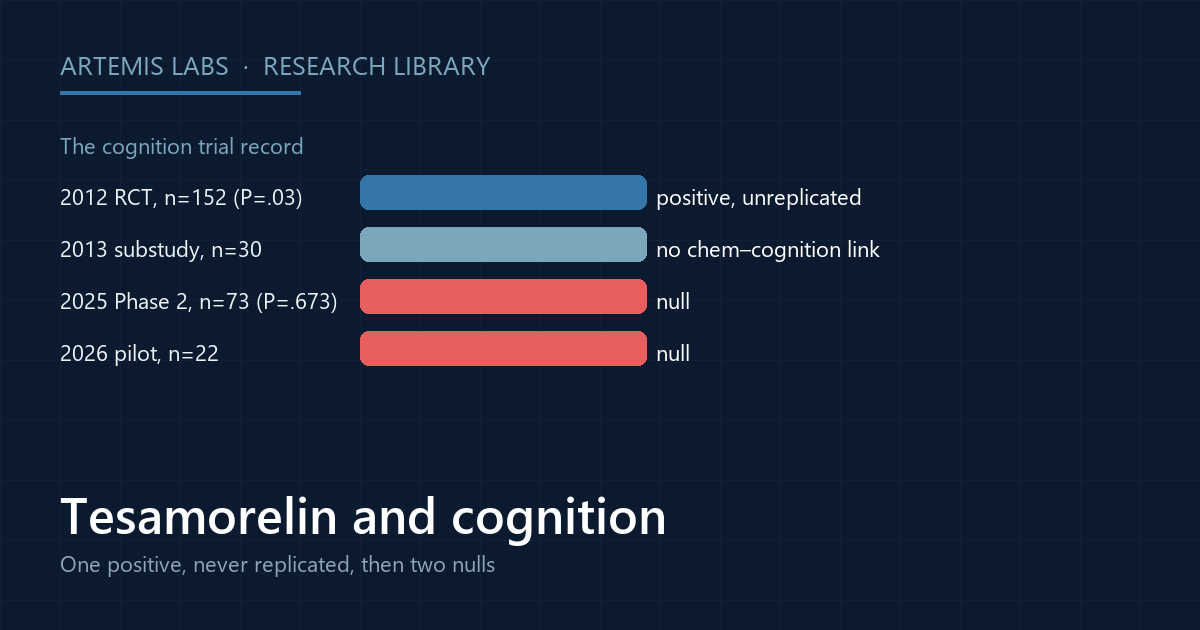
The tesamorelin cognition record: a 2012 trial in 152 older adults reported a favorable effect, never replicated; a 2025 Phase 2 trial and a 2026 pilot were both null. What each study found, in its own words.